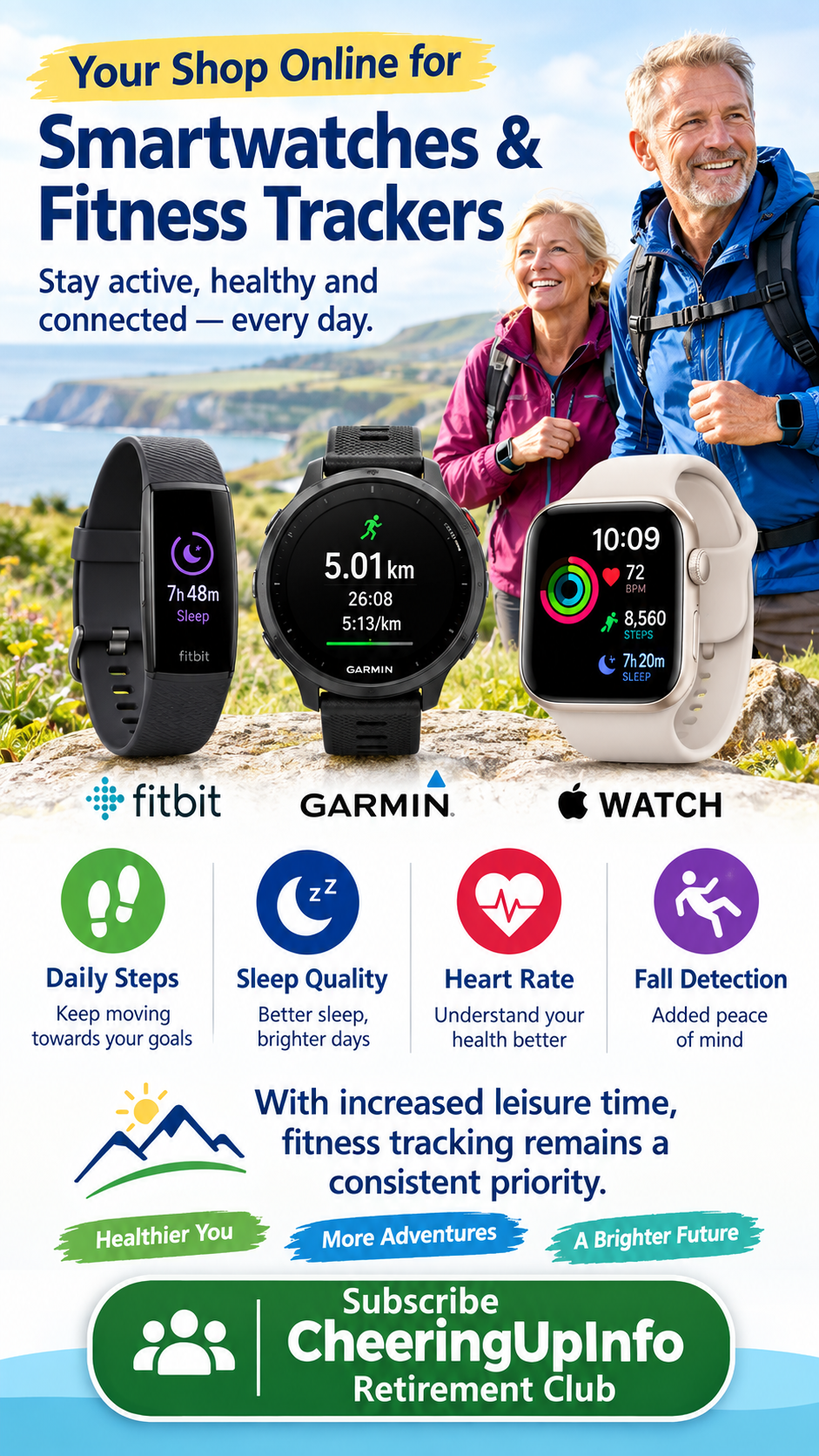
“CheeringupInfo Retirement Club recommends these gadgets and services as part of the solution to the problem of improving and maintaining fitness. With 67.4% of UK adults physically active but 22% still inactive, and average daily steps at just 6,478 against a recommended 7,000, the case for real-time tracking has never been clearer.”
What can tracking daily steps actually do for your health?
Tracking daily steps can close the gap between your current activity and the level associated with lower mortality risk. UK adults average 6,478 steps a day, yet The Lancet Public Health now suggests a target of 7,000 steps for adults — a figure only 14% of people are aware of. For those aged 75 and over, physical inactivity rises sharply to 31.6%, and for the 85+ group it reaches 54.4%. A wearable that counts steps makes that shortfall visible every day, turning a vague intention into a measurable behaviour.
- The average Brit takes 6,478 steps daily, leaving a meaningful gap to the 7,000-step threshold linked to better health outcomes.
- Only 14% of adults know the revised 7,000-step recommendation, meaning most people are tracking against the wrong target without realising it.
- Physical inactivity among the 75–84 age group stands at 31.6%, and among the 85+ group at 54.4% — the very groups most likely to benefit from gentle, consistent movement.63.7% of adults meet the 150-minutes-per-week activity guideline, but that still leaves over a third falling short.
How can a fitness tracker improve sleep quality?
A fitness tracker can improve sleep quality by making your actual sleep duration visible against the NHS-recommended seven to nine hours. The NHS advises adults to get seven to nine hours of sleep per night, with people over 65 needing seven to eight hours, yet the current UK average is just six hours and 30 minutes. That shortfall matters because both the quantity and quality of sleep affect how the body and mind function. Sleep tracking converts a subjective feeling into data you can act on.
- NHS guidance is clear: adults need 7–9 hours, and the over-65s need 7–8 hours.
- The UK average sleep duration is 6 hours 30 minutes, leaving most adults at least 30–90 minutes short of the minimum recommendation.
- Sleep is described by NHS clinicians as a “learned behaviour,” meaning tracking patterns is a practical first step towards improving it.
- Regular exercise each day, preferably in the morning, is an NHS-recommended sleep hygiene measure — the same exercise a step tracker encourages.
Why does continuous heart rate monitoring matter?
Continuous heart rate monitoring matters because atrial fibrillation often has no symptoms, yet it is a leading cause of preventable stroke. The British Heart Foundation reports that 1.5 million people in the UK are diagnosed with atrial fibrillation — 1 in 45 people — and an estimated 270,000 more remain undiagnosed and unaware. Someone with AF is five times more likely to have a potentially fatal or life-changing stroke, and AF contributes to one in five strokes. A smartwatch with heart rate monitoring can flag irregular rhythms that would otherwise go unnoticed.
- Diagnosed AF in the UK rose from 1 million in 2013 to over 1.5 million in 2023 — a 50% increase in a decade.
- At least 270,000 people in the UK are living with undiagnosed AF, with no awareness of their heightened stroke risk.
- Undiagnosed AF is found in 1% of the general population and 1.4% of those aged 65 or older.
- In one smart device study, 75% of patients sought medical attention because of a device alert, often in the absence of symptoms — and AF was detected in 30% of those cases.
What is the value of fall detection for older adults?
Fall detection has clear value for older adults because falls are the largest cause of emergency hospital admissions for people aged 65 and over. Around 30% of people aged 65 and above — 2.5 million people — and about half of those aged 80 and above will experience a fall at least once a year. In 2024 alone, there were over 284,280 ambulance callouts and 50,000 hospital admissions for fall-related emergencies among over-65s across the NHS. A wearable with fall detection can automatically alert emergency contacts when a fall occurs, reducing the time spent waiting for help.
- 2.5 million people aged 65+ and around half of those aged 80+ fall at least once annually.
- NHS ambulance services respond to approximately 700,000 emergency calls related to falls among patients aged 65 and over.
- Over 4 million hospital bed days annually in England are attributed to falls among the 65+ population.
- One fall-prevention technology pilot reduced fall rates by 31%, from 1.85 to 1.28 incidents per resident per month, and was projected to save £1.49 million annually across pilot homes.
Do fitness trackers offer good value for money?
Fitness trackers offer good value for money because peer-reviewed UK research shows they are cost-effective and often dominant compared to pharmaceutical prevention strategies. A 2025 economic evaluation published in BMC Digital Health found that wearable fitness trackers had a 94.8% probability of being cost-effective compared to metformin for preventing type 2 diabetes in the UK population, yielding higher quality-adjusted life years at lower costs. The same study described fitness trackers as “a cost-effective and scalable option for T2D prevention in the UK, offering good value even under conservative assumptions”.
- Wearable fitness trackers were a dominant strategy versus metformin, with an ICER of −£4,451.70 per QALY — meaning they improved health outcomes while reducing costs.
- The probabilistic sensitivity analysis showed a 94.8% probability of cost-effectiveness at the UK willingness-to-pay threshold of £20,000 per QALY.
- Entry-level trackers start at around £33–£49.99, while capable devices like the Fitbit Air start at £84.99 — a one-off cost against years of daily health data.
- The NHS already uses smart watches in activity reward programmes for type 2 diabetes, recognising them as an efficient delivery mechanism for behaviour change.
Which tracker features should you prioritise?
You should prioritise step counting, sleep tracking, continuous heart rate monitoring, and fall detection if you want a device that addresses the full picture of daily health. These four functions map directly onto the areas where UK public health data shows the greatest gaps: activity shortfalls, sleep deprivation, undiagnosed atrial fibrillation, and preventable falls. Fitbit, Garmin, and Apple Watch each cover these core features across a range of price points, from budget-friendly bands to advanced smartwatches.
- Step counting with a visible daily target helps close the 6,478-to-7,000 step gap identified in UK data.
- Sleep tracking against the NHS 7–9 hour guideline makes chronic short sleep measurable and actionable.
- Continuous heart rate monitoring can flag irregular rhythms in a population where 270,000 people are unknowingly living with AF.
- Fall detection provides an automatic safety net for the 30% of over-65s who will experience at least one fall this year.
- Devices start at £33 and scale to £719, meaning there is a value point for every budget and every level of need.
#TrackYiurHealthUK #CheeringUpInfo #RetirementClub #RetirementMagazine #RetirementTV
Get help to protect and grow your online sales of smartwatches and fitness trackers with CheeringUpInfo
Find out more about growing your sales of smartwatches and fitness trackers with CheeringUpInfo
Subscribe for free retirement lifestyle improvement ideas reviews and cost of living reduction tips
Connect with CheeringUpInfo for free retirement lifestyle improvement tips
Read more retirement lifestyle improvement articles and view videos for free
Stop scrolling if you’re over 65, or you love someone who is. This is the 5-number health check your wrist can run while you sleep.
CheeringUpInfo Retirement Club recommends these gadgets and services as part of the solution to improving and maintaining fitness.
Here’s the part nobody repeats: the UK average is 6,478 steps a day. The target linked to better health outcomes is 7,000. Only 14% of adults know that. And inactivity isn’t evenly spread — it’s 31.6% among 75–84s and 54.4% among 85+.
- Steps: 6,478 average vs 7,000 target. 14% awareness. 31.6% inactivity in 75–84s. 54.4% in 85+.
- Sleep: NHS says 7–9 hours for adults, 7–8 for over-65s. UK average is 6 hours 30 minutes. That’s a 30–90 minute shortfall, every night, measurable on a £33 band.
- Heart: 1.5 million diagnosed with atrial fibrillation in the UK. 270,000 undiagnosed. AF means 5x higher stroke risk and contributes to 1 in 5 strokes. In one smart device study, 75% of patients sought medical attention because of a device alert — and AF was detected in 30% of those cases.
- Falls: 30% of over-65s — 2.5 million people — fall at least once a year. Around half of over-80s do. NHS ambulance services respond to about 700,000 fall-related calls among 65+ patients. Over 4 million hospital bed days annually in England are attributed to falls in that group. One fall-prevention tech pilot cut fall rates 31%, from 1.85 to 1.28 incidents per resident per month, and was projected to save £1.49 million annually.
- Cost: Trackers start at £33. Fitbit Air starts at £84.99. A 2025 BMC Digital Health evaluation found wearables had a 94.8% probability of being cost-effective vs metformin for type 2 diabetes prevention in the UK — with an ICER of −£4,451.70 per QALY. Negative cost. Better outcomes. The NHS already uses smart watches in activity reward programmes for type 2 diabetes.
If number 4 didn’t make you check your own wrist, number 5 should make you check your bank balance. A one-off £33–£84.99 against 4 million fall-related bed days and 270,000 silent AF cases is not a gadget purchase. It’s a maths problem.
Email editor@cheeringup.info with subject “TRACKER” and ask for the CheeringUpInfo Retirement Club shortlist for Fitbit, Garmin and Apple Watch. Tell them your age and whether you want step, sleep, heart or fall alerts first. Do it before your next birthday — because the 75–84 inactivity stat is 31.6%, not 3%.
#CheeringUpInfo #TrackYourHealthUK
Features Smartwatch and Fitness Trackers UK
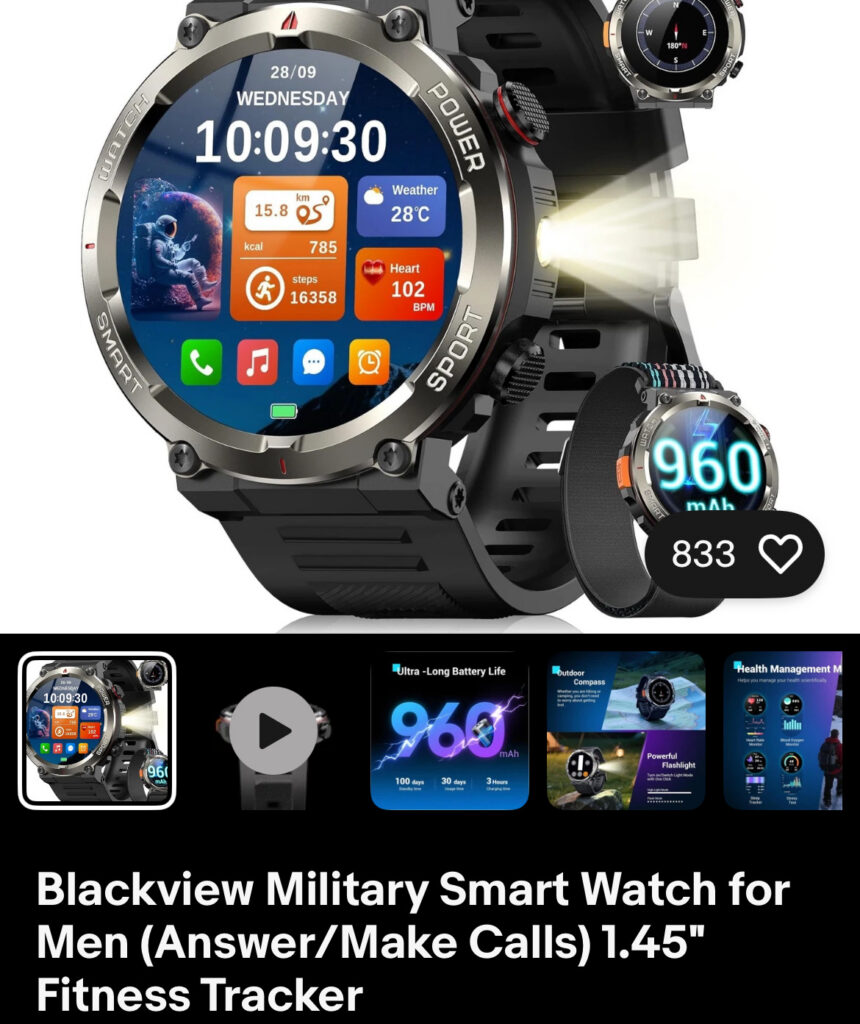
https://ebay.io/m/YrKrlC
As an eBay Partner, I may be compensated if you
make a purchase
#CheeringUpInfo #TrackYourHealthUK #RetirementClub #RetirementMagazine #RetirementTV
Smartwatches & Fitness Trackers UK: Steps, Sleep, Heart & Falls