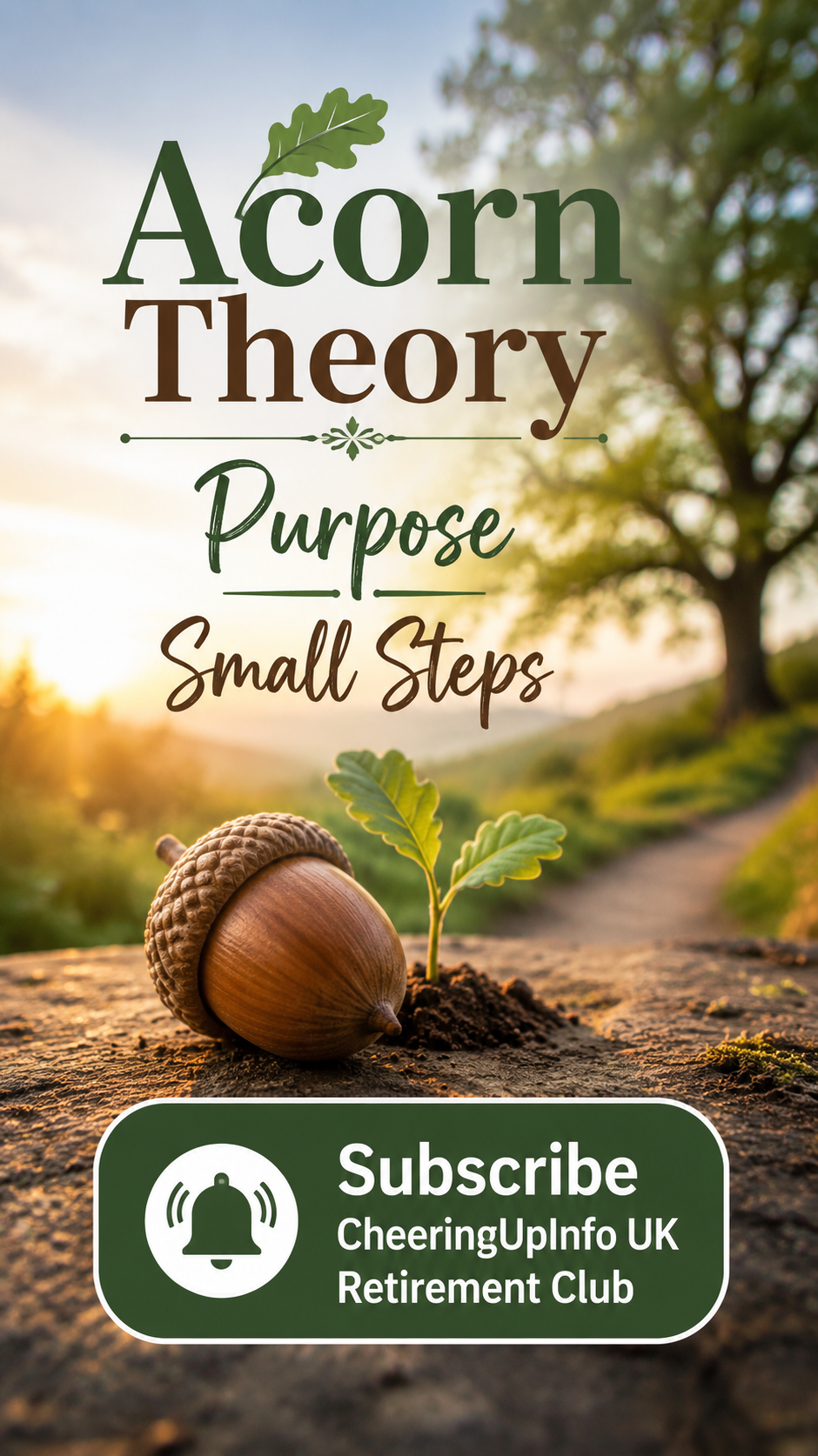
What Is Acorn Theory and Why Can’t You See Your Purpose Yet?
Acorn Theory, developed by psychologist James Hillman, proposes that you are born with a unique destiny or “calling” already inside you—just like an oak tree is already inside an acorn. It’s not about genetics or environment alone; it’s about that “particularity you feel to be you,” as Hillman put it . That nagging feeling that you’re here for something more? That’s your acorn trying to grow. The problem is, we’re conditioned to believe purpose is a destination we need to find—but really, it’s a process we need to unfold.
How Does “Not Knowing Your Calling” Actually Hold You Back?
Not knowing your purpose leads to anxiety, depression, and a persistent sense of dissatisfaction, as the gap between who you are and who you could be creates psychological tension . Research shows that 58% of women and 44% of men are open to a different career because they finally have a better idea of what they want from life . Yet, fear of stepping out of comfort zones (31%) and lack of confidence (31%) keep people stuck . Your acorn needs sunlight—but fear is a heavy rock.
Why Do Daily Small Steps Work Better Than Big “Life Changes”?
Daily small steps are the sunlight and water your acorn needs; they bypass the paralysis of “finding your calling” by making the process manageable and less intimidating. Hillman believed the image of your destiny is revealed slowly: “Unpacking the image takes a lifetime. It may be perceived all at once, but understood only slowly” . A 2,000-adult poll found many feel ready for a change within two years—not overnight . That’s the power of incremental action.
Is It Really “Never Too Late” to Start This Process?
According to recent UK data, 54% of women (and 41% of men) believe it’s never too late to pursue a new calling, despite the average person believing 52 is the age it becomes “too late” . Here are three facts that prove it’s never too late to be who you want to be:
- Fact 1: 45% of Brits regret not chasing their childhood dream job—but a fifth have already retrained to get back on track .
- Fact 2: 15% of all adults believe their current job doesn’t fit their lifestyle, with flexibility (32%) and fulfillment (32%) valued more as we age .
- Fact 3: British Gas engineer Kirsty Warren switched from social work to engineering at 36, proving that “whether you’re 26 or 46, if you’ve found your calling, go after it” .
What Does “Growing Down” Mean in Acorn Theory?
“Growing down” is Hillman’s concept of returning to your childhood impulses and fantasies to find the blueprint of your destiny, rather than always striving upwards . We spend our lives accumulating achievements (growing up), but we forget to excavate our true nature (growing down). Hillman urges us to reexamine childhood thoughts, accidents, and fantasies, as they “reflect the blueprints that give direction to the course of a biography” . It’s a process of digging deep, not climbing high.
How Do I Start Listening to My Acorn?
Start by identifying moments when you’ve felt most alive or curious, and take one small step toward that feeling today, regardless of whether it “makes sense” for your current life. Here’s how:
- Journal your childhood fantasies: What did you love before the world told you what to love?
- Identify inherited rules: What beliefs about yourself did you inherit from family or society that no longer serve you?
- Take one tiny action: If you dream of writing, write one sentence. If you dream of gardening, buy one seed. Growth is a verb.
#AcornTheory #Purpose #RetirementLifestyle #RetirementClub #RetirementMagazine
Get help to protect and grow your business faster with CheeringUpInfo targeted marketing at over 55s UK
Subscribe for free retirement lifestyle improvement ideas product reviews and cost of living reduction tips
Connect with us for free retirement lifestyle improvement tips
Read more retirement lifestyle improvement articles and view videos for free
Connect with us for free alerts to new retirement lifestyle improvement articles and videos
Acorn Theory: Why You Don’t Know Your Purpose Yet (And How Daily Small Steps Reveal It)