
Retirement UK: Why Men Over 55 Are Letting People Suck Dreams Out of Their Life

UK men over 55: only 9% are on track for a comfortable retirement. CheeringupInfo says manifesting is part of the fix. Stop letting people suck the dreams out of your retirement.

Are You Letting People Suck the Dreams Out of Your Retirement?

CheeringupInfo Retirement Club recommends manifesting methodology is a small part of the solution to the problem of over 55s in Uk having an unsatisfying retirement lifestyle based. And I’ll tell you why I’m sick and tired of watching decent men shuffle into a retirement that looks nothing like the one they deserved. “Just 9% of the working population are currently on track to achieve a comfortable lifestyle, while only 23% are saving enough for a moderate one” . That’s not a retirement crisis. That’s a mindset crisis dressed up as a money problem.

I’m over 55. I’ve watched mates retire with decent pensions and still end up sitting in front of daytime telly, waiting for the doctor’s appointment that never quite solves the emptiness. The problem isn’t the money. The problem is that for thirty years, they let other people tell them what retirement was supposed to look like. Now they’re living someone else’s script and wondering why it feels like a slow death.


Why Are Men Over 55 in the UK at the Greatest Risk from a Poor Mental Attitude?

Men over 55 in the UK are at the greatest risk from a poor mental attitude because the data shows they are the most isolated, the most medicated, and the least likely to ask for help when their mindset starts poisoning their health. The Institute for Fiscal Studies found that 22% of the poorest third of men aged 55–64 reported depressive symptoms, compared with just 5% in the highest-wealth third . That’s not a wealth gap. That’s a hope gap.

The Belonging Forum surveyed 10,000 UK adults and found that men aged 55–64 were the most likely age group to report having no close friends—15%, compared with just 4% of 18–24-year-olds . One in seven of you has nobody to call when the walls start closing in.

And here’s the bit that should make you furious. Independent Age’s evidence to Parliament states that depression affects 22% of men over 65, yet older people are more likely to be prescribed medication than referred to talking therapies . The system would rather numb you than fix you. But the system isn’t the only problem. Your own bloody mindset is.

Healthwatch Staffordshire heard directly from men over 55 and found that the lack of social opportunities had a significant impact on men’s mental well-being, with more than half feeling there is a lack of male-oriented activities in their local areas . You know what that tells me? Men are waiting for someone else to build them a life. And nobody is coming.


What Is Your Current Thought Pattern Actually Costing You?

Your current thought pattern is costing you years of vitality, connection, and purpose because it keeps you trapped in a waiting game that retirement was never designed to win. You’ve been sold a lie. The lie goes like this: work hard, save up, retire, then relax. And relaxation turns into rust.

Here’s what that waiting mindset actually produces:

  • You wait for permission. Permission to spend, permission to travel, permission to start something new. Nobody gives you permission in retirement. The permission slip never arrives.
  • You let others define “enough.” Financial advisers, well-meaning family members, the bloke down the pub—they all have opinions about what you should do with your time and money. You listen to them instead of yourself.
  • You treat retirement as an ending. The language you use matters. “I’ve finished work.” “I’m done.” “I’m taking it easy.” Every one of those phrases is a nail in the coffin of your own ambition.
  • You confuse comfort with contentment. Sitting still is not the same as being at peace. A comfortable chair in a quiet room is not a life. It’s a waiting room.
  • You let fear masquerade as prudence. “I can’t spend that.” “What if something goes wrong?” That’s not planning. That’s paralysis dressed up as responsibility.

The IFS data shows that health among men in their late 50s and early 60s has improved modestly over the past two decades, yet mental health problems have risen slightly . Your body is holding up. Your mind is the thing that’s failing. And nobody is going to save you from your own thinking.


How Do You Think Differently to Live a Better Life in Retirement?

You think differently by treating retirement as a launchpad for radical autonomy, not a slow fade into irrelevance, and by manifesting the life you want today so that every tomorrow is built on the same deliberate foundation. Manifesting isn’t woo-woo nonsense. It’s the discipline of deciding what you want and then acting as if you already have it—because the alternative is drifting into a life you never chose.

Here’s the shift. Stop asking what you can afford. Start asking what you’re building.

  • Decide who you are now. Not who you were in your career. Not who your wife or kids expect you to be. Who are you when nobody is watching? That’s the man you take into retirement.
  • Manifest daily, not someday. The life you want doesn’t start when the pension kicks in or when the mortgage clears. It starts the moment you stop waiting. Visualise the day you want and then go build a smaller version of it today.
  • Cut the drains. There are people in your life who suck the energy out of every room. Family obligations that feel like sentences. Friendships that are really just habits. The research on growth mindset in later life shows that Grit and Growth Mindset are key psychological resources for resilience and adaptation in older adulthood . You need that grit to say no to the drains.
  • Invest in your body like it’s your business. Optimal health isn’t vanity. It’s the engine of everything else. The IFS data shows mobility problems have declined among men aged 55–64, which means you have a physical platform to build on . Use it.
  • Build a “memory fund,” not just a pension pot. Aegon’s research encourages reframing retirement spending as an investment in joy, connection, and legacy . Your money is fuel for experiences, not a number to protect until you die.
  • · Reframe ageing itself. Research presented by Aegon shows that changing our mindset around ageing can help people face the future mentally and financially . The story you tell yourself about getting older is the story you live.

What Can You Expect to Discover with a Different Way of Thinking?

With a different way of thinking, you will discover that retirement is not a destination but a continuous expansion, and that the quality of your life is directly proportional to the quality of your decisions. Here’s what opens up:

  • Freedom that feels earned, not entitled. You stop waiting for the state or the pension provider to make you happy. You make yourself happy, and the rest becomes background noise.
  • A circle of men who actually build things. Not the ones who only talk about the past. The ones who are still creating, still curious, still pushing.
  • Health that improves, not just holds. When your mind has a purpose, your body follows. The ELSA research on growth mindset confirms that belief in the malleability of your capacities is a unique predictor of motivation and learning, even in later life .
  • Wealth that flows from authenticity. When you stop performing someone else’s version of retirement, you attract the right opportunities. That might be a side venture, a passion project, or simply the peace of knowing you’re spending on what matters.
  • A daily life you don’t need a holiday from. Every tomorrow starts to feel like today—deliberate, alive, and yours.

Who Typically Benefits Most from This Change?

The people who benefit most from this change are men over 55 who are tired of being told what retirement should look like, and who are willing to operate outside standard structures to attract pure abundance. That’s you if:

  • You’ve got a decent pension but still feel empty.
  • You’ve been told to “take it easy” and it makes your skin crawl.
  • You want more from the next twenty years than gardening and golf.
  • You’re ready to stop asking permission and start building.
  • You believe that your best years are not behind you, but ahead of you—and you’re prepared to prove it.

The men who don’t benefit are the ones who cling to the old script. The ones who think “manifesting” is a dirty word and “mindset” is something you leave at the office. They’ll keep taking the tablets and wondering why nothing changes.


When Will the Change to Your Quality of Retirement Lifestyle Begin?

The change to your quality of retirement lifestyle begins the moment you decide that today is the first day of the rest of your life, not the last day of your career. Not tomorrow. Not when the pension hits. Not when the kids move out. Now.

Aegon’s research encourages shifting mindset from ‘when’ to ‘now’ . That’s the switch. The second you stop treating retirement as something that happens to you and start treating it as something you build, everything changes. The first morning you wake up and deliberately choose what you’re going to create that day—that’s when it starts.


Where Can You Go with This Style of Thinking?

With this style of thinking, you can go anywhere you decide to go—because radical autonomy means you are no longer bound by the expectations of others, the limits of the state pension, or the stories you inherited about what it means to be an older man.

You can build a second career that feels like play. You can travel without waiting for the “right time.” You can invest in health, relationships, and ventures that light you up. You can become the man other men look at and say, “How the hell is he doing that?”

The data says only 9% of the working population is on track for a comfortable retirement . That means 91% are coasting toward a life they never consciously chose. Don’t be one of them.

The dreams you had when you were twenty are not dead. They’ve just been buried under thirty years of doing what you were told. Retirement is your chance to dig them up.

Start today. Every tomorrow depends on it.

#RetirementRebellion #CheeringupInfoRetirementClub #RetirementMagazine #RetirementTV #RetiredLifestyle

Get help to protect and grow your business faster by targeting your advertising and marketing at older people in the UK looking for quality goods and services at fair reasonable price

Find out more about business advertising and marketing with CheeringUpInfo

Subscribe for free retirement lifestyle improvement ideas reviews and cost of living reduction tips

Connect with us for free retirement lifestyle improvement tips

Read more retirement lifestyle improvement articles and view videos for free

Connect with CheeringUpInfo for free alerts to new articles and videos on retirement lifestyle improvement

Retirement UK: Why Men Over 55 Are Letting People Suck Dreams Out of Their Life

UK men over 55: only 9% are on track for a comfortable retirement. CheeringupInfo says manifesting is part of the fix. Stop letting people suck the dreams out of your retirement.

Are You Letting People Suck the Dreams Out of Your Retirement?

CheeringupInfo Retirement Club recommends manifesting methodology is a small part of the solution to the problem of over 55s in Uk having an unsatisfying retirement lifestyle based. And I’ll tell you why I’m sick and tired of watching decent men shuffle into a retirement that looks nothing like the one they deserved. “Just 9% of the working population are currently on track to achieve a comfortable lifestyle, while only 23% are saving enough for a moderate one” . That’s not a retirement crisis. That’s a mindset crisis dressed up as a money problem.

I’m over 55. I’ve watched mates retire with decent pensions and still end up sitting in front of daytime telly, waiting for the doctor’s appointment that never quite solves the emptiness. The problem isn’t the money. The problem is that for thirty years, they let other people tell them what retirement was supposed to look like. Now they’re living someone else’s script and wondering why it feels like a slow death.

Why Are Men Over 55 in the UK at the Greatest Risk from a Poor Mental Attitude?

Men over 55 in the UK are at the greatest risk from a poor mental attitude because the data shows they are the most isolated, the most medicated, and the least likely to ask for help when their mindset starts poisoning their health. The Institute for Fiscal Studies found that 22% of the poorest third of men aged 55–64 reported depressive symptoms, compared with just 5% in the highest-wealth third . That’s not a wealth gap. That’s a hope gap.

The Belonging Forum surveyed 10,000 UK adults and found that men aged 55–64 were the most likely age group to report having no close friends—15%, compared with just 4% of 18–24-year-olds . One in seven of you has nobody to call when the walls start closing in.

And here’s the bit that should make you furious. Independent Age’s evidence to Parliament states that depression affects 22% of men over 65, yet older people are more likely to be prescribed medication than referred to talking therapies . The system would rather numb you than fix you. But the system isn’t the only problem. Your own bloody mindset is.

Healthwatch Staffordshire heard directly from men over 55 and found that the lack of social opportunities had a significant impact on men’s mental well-being, with more than half feeling there is a lack of male-oriented activities in their local areas . You know what that tells me? Men are waiting for someone else to build them a life. And nobody is coming.

What Is Your Current Thought Pattern Actually Costing You?

Your current thought pattern is costing you years of vitality, connection, and purpose because it keeps you trapped in a waiting game that retirement was never designed to win. You’ve been sold a lie. The lie goes like this: work hard, save up, retire, then relax. And relaxation turns into rust.

Here’s what that waiting mindset actually produces:

  • You wait for permission. Permission to spend, permission to travel, permission to start something new. Nobody gives you permission in retirement. The permission slip never arrives.
  • You let others define “enough.” Financial advisers, well-meaning family members, the bloke down the pub—they all have opinions about what you should do with your time and money. You listen to them instead of yourself.
  • You treat retirement as an ending. The language you use matters. “I’ve finished work.” “I’m done.” “I’m taking it easy.” Every one of those phrases is a nail in the coffin of your own ambition.
  • You confuse comfort with contentment. Sitting still is not the same as being at peace. A comfortable chair in a quiet room is not a life. It’s a waiting room.
  • You let fear masquerade as prudence. “I can’t spend that.” “What if something goes wrong?” That’s not planning. That’s paralysis dressed up as responsibility.
  • The IFS data shows that health among men in their late 50s and early 60s has improved modestly over the past two decades, yet mental health problems have risen slightly . Your body is holding up. Your mind is the thing that’s failing. And nobody is going to save you from your own thinking.

How Do You Think Differently to Live a Better Life in Retirement?

You think differently by treating retirement as a launchpad for radical autonomy, not a slow fade into irrelevance, and by manifesting the life you want today so that every tomorrow is built on the same deliberate foundation. Manifesting isn’t woo-woo nonsense. It’s the discipline of deciding what you want and then acting as if you already have it—because the alternative is drifting into a life you never chose.

Here’s the shift. Stop asking what you can afford. Start asking what you’re building.

  • Decide who you are now. Not who you were in your career. Not who your wife or kids expect you to be. Who are you when nobody is watching? That’s the man you take into retirement.
  • Manifest daily, not someday. The life you want doesn’t start when the pension kicks in or when the mortgage clears. It starts the moment you stop waiting. Visualise the day you want and then go build a smaller version of it today.
  • Cut the drains. There are people in your life who suck the energy out of every room. Family obligations that feel like sentences. Friendships that are really just habits. The research on growth mindset in later life shows that Grit and Growth Mindset are key psychological resources for resilience and adaptation in older adulthood . You need that grit to say no to the drains.
  • Invest in your body like it’s your business. Optimal health isn’t vanity. It’s the engine of everything else. The IFS data shows mobility problems have declined among men aged 55–64, which means you have a physical platform to build on . Use it.
  • Build a “memory fund,” not just a pension pot. Aegon’s research encourages reframing retirement spending as an investment in joy, connection, and legacy . Your money is fuel for experiences, not a number to protect until you die.
  • · Reframe ageing itself. Research presented by Aegon shows that changing our mindset around ageing can help people face the future mentally and financially . The story you tell yourself about getting older is the story you live.
  • What Can You Expect to Discover with a Different Way of Thinking?

With a different way of thinking, you will discover that retirement is not a destination but a continuous expansion, and that the quality of your life is directly proportional to the quality of your decisions. Here’s what opens up:

  • Freedom that feels earned, not entitled. You stop waiting for the state or the pension provider to make you happy. You make yourself happy, and the rest becomes background noise.
  • A circle of men who actually build things. Not the ones who only talk about the past. The ones who are still creating, still curious, still pushing.
  • Health that improves, not just holds. When your mind has a purpose, your body follows. The ELSA research on growth mindset confirms that belief in the malleability of your capacities is a unique predictor of motivation and learning, even in later life .
  • Wealth that flows from authenticity. When you stop performing someone else’s version of retirement, you attract the right opportunities. That might be a side venture, a passion project, or simply the peace of knowing you’re spending on what matters.
  • A daily life you don’t need a holiday from. Every tomorrow starts to feel like today—deliberate, alive, and yours.
  • Who Typically Benefits Most from This Change?

The people who benefit most from this change are men over 55 who are tired of being told what retirement should look like, and who are willing to operate outside standard structures to attract pure abundance. That’s you if:

  • You’ve got a decent pension but still feel empty.
  • You’ve been told to “take it easy” and it makes your skin crawl.
  • You want more from the next twenty years than gardening and golf.
  • You’re ready to stop asking permission and start building.
  • You believe that your best years are not behind you, but ahead of you—and you’re prepared to prove it.
  • The men who don’t benefit are the ones who cling to the old script. The ones who think “manifesting” is a dirty word and “mindset” is something you leave at the office. They’ll keep taking the tablets and wondering why nothing changes.

When Will the Change to Your Quality of Retirement Lifestyle Begin?

The change to your quality of retirement lifestyle begins the moment you decide that today is the first day of the rest of your life, not the last day of your career. Not tomorrow. Not when the pension hits. Not when the kids move out. Now.

Aegon’s research encourages shifting mindset from ‘when’ to ‘now’ . That’s the switch. The second you stop treating retirement as something that happens to you and start treating it as something you build, everything changes. The first morning you wake up and deliberately choose what you’re going to create that day—that’s when it starts.

Where Can You Go with This Style of Thinking?

With this style of thinking, you can go anywhere you decide to go—because radical autonomy means you are no longer bound by the expectations of others, the limits of the state pension, or the stories you inherited about what it means to be an older man.

You can build a second career that feels like play. You can travel without waiting for the “right time.” You can invest in health, relationships, and ventures that light you up. You can become the man other men look at and say, “How the hell is he doing that?”

The data says only 9% of the working population is on track for a comfortable retirement . That means 91% are coasting toward a life they never consciously chose. Don’t be one of them.

The dreams you had when you were twenty are not dead. They’ve just been buried under thirty years of doing what you were told. Retirement is your chance to dig them up.

Start today. Every tomorrow depends on it.

#RetirementRebellion #CheeringupInfoRetirementClub #RetirementMagazine #RetirementTV #RetiredLifestyle

The Person You Are: How to Live the Life of That Person Every Day

Discover the neuroscience-backed secret to becoming your ideal self: act “as if” you already are that person. This post explains how embodying your aspirational identity today—through the psychological principle of “possible selves”—can transform your retirement reality. Join the CheeringUp.info Retirement Club to connect with like-minded individuals on this journey of self-reinvention.

What Is the Person I Am Meant to Become in Retirement?

The person you are meant to become is not a distant stranger waiting in the future; they are a version of you that already exists in your imagination, waiting to be embodied through action. This concept, rooted in the psychological theory of “possible selves,” suggests that your aspirations and fears about the future directly influence your current motivation and behaviour. For those in retirement, this is the perfect opportunity to define and live into that aspirational identity.


Why Should You Live the Life of That Person Every Day, Even If You Aren’t There Yet?

You should live the life of that person every single day because the gap between your current self and your ideal self is bridged by the practice of “acting as if.” The phrase “fake it till you make it” is not about deception; it’s a practical application of neuroplasticity, allowing your brain to rewire itself through consistent behaviour. William James, a highly influential philosopher, noted, “If you want a quality, act ‘as if’ you already had it” . By embodying the confident, engaged retiree you wish to be, you are accelerating that identity integration.

  • Neuroplasticity in Action: Your brain creates new neural pathways when you consistently act in a certain way. The more you show up as your future self, the more natural it becomes .
  • The Feedback Loop: Actions influence emotions as much as emotions influence actions. A forced smile can trigger a happier mood . The physical state of your body can directly impact your mood and cognition; for instance, raising your spine and holding your head up can lead to a boost in self-confidence .
  • Closing the Gap: As one executive coach noted, high performers consciously imagine their ideal future self’s reactions, tone, and attitude before the moment arrives. These future qualities act as an anchor, reducing burnout and increasing joy . One professional who adopted this strategy reported that within a month of consciously presenting as “cool, calm, and collected,” he stopped performing and started being .

How Does the “Possible Selves” Theory Support This Claim?

The “possible selves” theory provides the academic backbone for this mindset, showing that your vision of who you could become is a powerful motivator. According to this theory, individuals are driven to take actions that either move them toward their “ideal self” (a positive image worth pursuing) or away from their “feared self” (a negative image to be avoided) . In the context of retirement, this means that if you want to be an active, connected, and purposeful individual, you must create a vivid, detailed version of that self and take steps to live into it.

Research has found that informal learning accounts for 80% of personal knowledge and skills acquisition . For retirees, this means the vast majority of your growth comes from self-directed activities.

  • Fact 1: Your brain often cannot distinguish between a vividly imagined experience and a real one . This is why visualization is so powerful in rewiring limiting beliefs.
  • Fact 2: The Reticular Activating System (RAS) in your brain filters information based on your goals. When you act “as if,” you engage the RAS to notice opportunities that align with your aspirational identity .
  • Fact 3: According to research on “possible selves,” those who clearly express their future self-images are more inclined to implement the tactics needed to realize their goals .

What Are the Practical Steps to Embodying Your Ideal Retired Self?

Embodying your ideal retired self involves practical, daily habits that reinforce your new identity. You can start by defining three aspirational words that capture your best future self and setting them as reminders on your phone or calendar . This simple habit creates a “check-in” to ensure your actions align with the person you are becoming.

  • Dress the Part: Show up to your day dressed like the person you want to become. As one expert put it, “Energy matters” .
  • Take Brave Action Daily: As Franklin D. Roosevelt famously said, “Do the thing and you will have the power.” Power and confidence follow action, not the other way around . Don’t wait to feel ready; build confidence through momentum.
  • Journal from the Future: Write from the perspective of the version of you who has already “made it.” What are they doing? What do they feel? What are they grateful for? .
  • Use the “Best Possible Self” Exercise: Write for 20 minutes, three days in a row, about what your life will look like in several years if everything goes as well as possible. This has been shown to improve mood for up to three weeks .
  • Make a Pact: Commit to acting enthusiastic for 30 days. Track your mood, relationships, and productivity as enthusiasm goes from something you force to a habit that feels real .

What Role Does the CheeringUp.info Retirement Club Play in This Transformation?

The CheeringUp.info Retirement Club is your community for this transformation, providing a supportive environment to share your journey and find inspiration. Our online retirement club for over-55s in the UK helps you connect with like-minded people who are also actively designing their best retired lives. By engaging with our community, you are “surrounding yourself with evidence” that your vision is achievable .

#ActAsIf #RetirementGoals #CheeringUpClub #RetirementClub #RetirementMagazine

Get help to protect and grow your business faster more cost effectively with CheeringUpInfo

Find out more about CheeringUpInfo targeted marketing to over 55s and those planning for better retirement

Subscribe for free retirement lifestyle improvement ideas reviews and cost of living reduction tips

Connect with CheeringUpInfo for free retirement lifestyle improvement tips

Read more retirement lifestyle improvement articles and view videos for free

Connect with us for free alerts to new retirement lifestyle improvement articles and videos

Acorn Theory: Why You Don’t Know Your Purpose Yet (And How Daily Small Steps Reveal It)

Feeling lost? James Hillman’s Acorn Theory suggests you already contain your purpose—like an oak inside an acorn. You don’t find it all at once; you reveal it through daily small steps. Discover why it’s never too late to grow into who you were meant to be, backed by psychology and recent UK research.

What Is Acorn Theory and Why Can’t You See Your Purpose Yet?

Acorn Theory, developed by psychologist James Hillman, proposes that you are born with a unique destiny or “calling” already inside you—just like an oak tree is already inside an acorn. It’s not about genetics or environment alone; it’s about that “particularity you feel to be you,” as Hillman put it . That nagging feeling that you’re here for something more? That’s your acorn trying to grow. The problem is, we’re conditioned to believe purpose is a destination we need to find—but really, it’s a process we need to unfold.

How Does “Not Knowing Your Calling” Actually Hold You Back?

Not knowing your purpose leads to anxiety, depression, and a persistent sense of dissatisfaction, as the gap between who you are and who you could be creates psychological tension . Research shows that 58% of women and 44% of men are open to a different career because they finally have a better idea of what they want from life . Yet, fear of stepping out of comfort zones (31%) and lack of confidence (31%) keep people stuck . Your acorn needs sunlight—but fear is a heavy rock.

Why Do Daily Small Steps Work Better Than Big “Life Changes”?

Daily small steps are the sunlight and water your acorn needs; they bypass the paralysis of “finding your calling” by making the process manageable and less intimidating. Hillman believed the image of your destiny is revealed slowly: “Unpacking the image takes a lifetime. It may be perceived all at once, but understood only slowly” . A 2,000-adult poll found many feel ready for a change within two years—not overnight . That’s the power of incremental action.

Is It Really “Never Too Late” to Start This Process?

According to recent UK data, 54% of women (and 41% of men) believe it’s never too late to pursue a new calling, despite the average person believing 52 is the age it becomes “too late” . Here are three facts that prove it’s never too late to be who you want to be:

  • Fact 1: 45% of Brits regret not chasing their childhood dream job—but a fifth have already retrained to get back on track .
  • Fact 2: 15% of all adults believe their current job doesn’t fit their lifestyle, with flexibility (32%) and fulfillment (32%) valued more as we age .
  • Fact 3: British Gas engineer Kirsty Warren switched from social work to engineering at 36, proving that “whether you’re 26 or 46, if you’ve found your calling, go after it” .

What Does “Growing Down” Mean in Acorn Theory?

“Growing down” is Hillman’s concept of returning to your childhood impulses and fantasies to find the blueprint of your destiny, rather than always striving upwards . We spend our lives accumulating achievements (growing up), but we forget to excavate our true nature (growing down). Hillman urges us to reexamine childhood thoughts, accidents, and fantasies, as they “reflect the blueprints that give direction to the course of a biography” . It’s a process of digging deep, not climbing high.

How Do I Start Listening to My Acorn?

Start by identifying moments when you’ve felt most alive or curious, and take one small step toward that feeling today, regardless of whether it “makes sense” for your current life. Here’s how:

  • Journal your childhood fantasies: What did you love before the world told you what to love?
  • Identify inherited rules: What beliefs about yourself did you inherit from family or society that no longer serve you?
  • Take one tiny action: If you dream of writing, write one sentence. If you dream of gardening, buy one seed. Growth is a verb.

#AcornTheory #Purpose #RetirementLifestyle #RetirementClub #RetirementMagazine

Get help to protect and grow your business faster with CheeringUpInfo targeted marketing at over 55s UK

Find out more about targeting over 55s and those planning for a better retirement with better marketing ideas

Subscribe for free retirement lifestyle improvement ideas product reviews and cost of living reduction tips

Connect with us for free retirement lifestyle improvement tips

Read more retirement lifestyle improvement articles and view videos for free

Connect with us for free alerts to new retirement lifestyle improvement articles and videos

12 Retirement Challenges UK & Practical Solutions

Retirement. It’s a word that conjures up images of sun-drenched beaches, leisurely hobbies, and finally escaping the daily grind. But the reality for many can be quite different. Anxiety can creep in. What about healthcare costs? Will my savings last? What if I get bored? These are just a few of the common retirement worries that can keep retirees awake at night.

Facing Retirement: 12 Common Problems and How to Solve Them

This article will delve into the 12 most common retirement problems facing UK residents, offering practical solutions and actionable advice to help you navigate this exciting new chapter with confidence and ease.

1. Running Out of Money: This is arguably the biggest fear for most retirees. Inflation can erode purchasing power, unexpected medical expenses can drain savings, and longevity risk – living longer than anticipated – can significantly impact retirement income.

  • Solutions:
    • Diversify your investments: Don’t put all your eggs in one basket. A well-diversified portfolio across different asset classes (stocks, bonds, property) can help mitigate risk and potentially increase returns.   
    • Consider annuities: Annuities provide a guaranteed stream of income, which can be crucial for long-term financial security.   
    • Downsize your living expenses: Moving to a smaller home, reducing travel costs, and cutting back on discretionary spending can significantly stretch your retirement income.   
    • Explore part-time work options: Even a small part-time job can provide extra income and a sense of purpose.   

2. Healthcare Costs: Healthcare expenses can skyrocket in retirement.  Prescription drugs, long-term care, and unexpected medical emergencies can quickly deplete savings.   

  • Solutions:
    • Investigate private health insurance options: Private health insurance can provide valuable coverage for a variety of medical expenses.   
    • Maximise your NHS benefits: Understand your eligibility for NHS services and explore available support programmes.
    • Consider long-term care insurance: This type of insurance can help cover the costs of assisted living or nursing home care.
    • Maintain a healthy lifestyle: Regular exercise, a balanced diet, and preventative screenings can help reduce healthcare costs in the long run.

3. Boredom and Loneliness: Many retirees struggle with a lack of purpose and social interaction. The daily routine of work can disappear, leaving a void that can lead to feelings of isolation and depression.   

  • Solutions:
    • Pursue personal interests: Dedicate time to hobbies, volunteer work, or learning new skills.
    • Stay connected with loved ones: Make an effort to maintain social connections with family and friends.
    • Join social clubs or groups: Consider joining a book club, a sports team, or a community organisation.
    • Travel and explore: Travel can be an enriching experience and a great way to meet new people.

4. Cognitive Decline: Cognitive decline is a natural part of ageing, but it can significantly impact quality of life. Memory loss, difficulty concentrating, and challenges with decision-making can make everyday tasks more difficult.   

  • Solutions:
    • Stay mentally active: Engage in mentally stimulating activities such as puzzles, reading, and learning new languages.
    • Maintain a healthy lifestyle: Exercise, a healthy diet, and adequate sleep can help improve cognitive function.   
    • Consider cognitive training programmes: Brain training exercises can help improve memory, attention, and processing speed.   
    • Seek professional help if needed: If you are experiencing significant cognitive decline, consult with a doctor or a cognitive specialist.

5. Inflation: Inflation can erode the purchasing power of your retirement savings over time. This means that the cost of goods and services will increase, making it more difficult to maintain your desired standard of living.   

  • Solutions:
    • Invest in inflation-protected assets: Consider investing in assets such as Treasury Inflation-Protected Securities (TIPS) and inflation-linked bonds.
    • Adjust your spending habits: Regularly review your budget and make adjustments as needed to account for inflation.
    • Increase your income streams: Explore part-time work options or other ways to supplement your retirement income.

6. Longevity Risk: Living longer than expected can significantly impact your retirement finances. If your savings are not sufficient to cover your expenses over a longer lifespan, you may face financial hardship.   

  • Solutions:
    • Plan for a longer life expectancy: When creating your retirement plan, assume a longer life expectancy than you initially anticipate.
    • Consider annuities with longevity riders: These riders provide additional income in the later years of retirement.
    • Explore downsizing options: Downsizing your home can free up equity and reduce living expenses.   

7. Estate Planning: Proper estate planning is crucial to ensure that your assets are distributed according to your wishes and that your loved ones are protected.   

  • Solutions:
    • Create a will: A will outlines how you want your assets to be distributed after your death.   
    • Establish a power of attorney: A power of attorney allows you to designate someone to make financial and legal decisions on your behalf if you become incapacitated.   
    • Consider a trust: A trust can help manage your assets and protect them from estate taxes.   

8. Social Security: Understanding how to maximise your Social Security benefits is crucial. Claiming benefits at the optimal time can significantly impact your retirement income.

  • Solutions:
    • Delay claiming Social Security: Delaying claiming Social Security beyond full retirement age can result in higher monthly benefits.   
    • Coordinate benefits with your spouse: Strategic claiming decisions can maximise benefits for both spouses.
    • Consult with a Social Security expert: A Social Security expert can help you determine the optimal claiming strategy for your individual circumstances.

9. Cybersecurity Threats: Cybersecurity threats are a growing concern for retirees.  Phishing scams, identity theft, and online fraud can jeopardise your financial security.   

  • Solutions:
    • Be wary of phishing emails and phone calls: Never click on links or open attachments from unknown senders.
    • Use strong passwords and enable two-factor authentication: Protect your online accounts with strong passwords and enable two-factor authentication whenever possible.   
    • Be cautious about sharing personal information online: Avoid sharing sensitive information such as your Social Security number or bank account information online.   
    • Install anti-virus and anti-malware software: Protect your devices with reliable security software.

10. Adapting to New Roles and Relationships: Retirement can significantly impact family dynamics and social relationships. Adjusting to new roles and responsibilities can be challenging for both retirees and their loved ones.   

  • Solutions:
    • Communicate openly and honestly: Discuss your expectations and concerns with your family and friends.
    • Maintain a healthy balance between independence and interdependence: Find a balance between spending time alone and spending time with loved ones.
    • Seek support from other retirees: Connect with other retirees who are facing similar challenges.

11. Maintaining a Healthy Lifestyle: Maintaining a healthy lifestyle is crucial for both physical and mental well-being in retirement. Regular exercise, a balanced diet, and adequate sleep can help you enjoy a longer, healthier, and more fulfilling retirement.   

  • Solutions:
    • Engage in regular physical activity: Find activities that you enjoy and that fit your fitness level.
    • Eat a healthy diet: Focus on whole foods, fruits, vegetables, and lean protein.
    • Prioritize sleep: Aim for 7-8 hours of quality sleep per night.
    • Manage stress: Find healthy ways to manage stress, such as yoga, meditation, or spending time in nature.

12. Finding Meaning and Purpose: Many retirees struggle to find meaning and purpose in their lives after leaving the workforce.

  • Solutions:
    • Volunteer your time: Give back to your community by volunteering for a local charity or organisation.
    • Pursue a passion project: Dedicate time to a hobby or interest that you’ve always wanted to explore.
    • Mentor others: Share your knowledge and experience with younger generations.
  • Travel the world: Explore new cultures and broaden your horizons.
  • Start a business: Turn your passion into a profitable venture.

Retirement is a significant life transition. By proactively addressing these common challenges, you can increase your chances of enjoying a fulfilling and rewarding retirement.

Disclaimer: This article is for informational purposes only and does not constitute financial, investment, or legal advice. The information provided should not be relied upon as the sole basis for making any financial or other decisions.

Join our Retirement Club

Get help to protect and grow your business faster with CheeringupUpInfo

Find out more about Lifestyle Improvement Club Corporate Membership

Subscribe for free lifestyle improvement tips reviews and money saving ideas

Connect with us for free

Read more lifestyle improvement articles and view videos for free

Connect with us for free

Retirement Solutions UK

Read and view more :

  1. 12 Retirement Challenges UK & Practical Solutions – relevant for UK residents.
  2. How to Overcome Common Retirement Problems in the UK – retirement problem-solving.
  3. Retirement Planning Guide: 12 Key Issues & Solutions UK – a comprehensive retirement guide for readers who are actively seeking in-depth UK retirement information.
  4. Financial & Lifestyle Challenges in UK Retirement – help with both financial and lifestyle retirement concerns.
  5. Avoiding Common Retirement Mistakes: 12 Tips for UK Residents – for readers who are proactive about their retirement planning and want to prevent problems.

Retirement Solutions hashtags:

  1. #UKRetirement – UK audience interested in retirement.
  2. #RetirementPlanningUK – targeting those actively planning for their retirement in the UK.
  3. #FinancialFreedomUK – those seeking financial independence and security in retirement in UK.
  4. #RetirementLivingUK – focuses on the lifestyle aspects of retirement in the UK.
  5. #RetirementSolutions – retirement problem-solving in the UK.

Retirement Fun: Boost Your Life and Business with CheeringupInfo

Discover a Brighter Retirement: Connect, Engage, and Thrive

Are you over 55 and looking to make the most of your golden years? Our guide reveals the secrets to a fulfilling retirement filled with fun, friendship, and new adventures. Learn how to stay connected, explore new hobbies, and build a thriving social life. Business owners, discover how to tap into the over-55 market and create targeted campaigns that resonate. Join the Cheeringup.info Retirement Club today and unlock a world of possibilities!

The Power of Connection: How Cheeringup.info Retirement Club Can Spark Joy in Your Life After 55

As we enter the vibrant chapter of life beyond 55, staying connected with others becomes more crucial than ever. Strong social connections are the cornerstone of not just happiness but also physical and mental well-being.

The Science of Connection

Loneliness and social isolation are growing concerns globally, particularly among older adults. Research consistently shows that social connection is vital for maintaining cognitive health, reducing stress, and boosting the immune system. Loneliness, on the other hand, has been linked to a higher risk of heart disease, stroke, dementia, and even early mortality.

Strong social bonds provide a sense of belonging, purpose, and security. When we share experiences, laughter, and support with others, it activates the brain’s reward system, releasing feel-good chemicals like dopamine and oxytocin. These chemicals contribute to feelings of happiness, reduce stress hormones, and strengthen the body’s resilience to disease.

Unveiling the Joy of Online and Offline Connections

The good news is that there are a multitude of ways to stay connected, both online and offline. Here’s how engaging in a more connected life can benefit you:

Offline Connections:

  • Reconnect with old friends: Dust off those address books and reignite childhood friendships. Plan outings, share stories, and reminisce about cherished memories.
  • Join local clubs and activities: Explore your passions and interests by joining a book club, a walking group, a cooking class, or a volunteer organisation.
  • Strengthen family ties: Make a conscious effort to spend quality time with your children and grandchildren. Organise regular family dinners, game nights, or outings.

Online Connections:

  • Social media for good: Social media platforms are not just for the young. Join groups dedicated to your hobbies, reconnect with distant relatives, or discover new communities that share your interests.
  • Online courses and activities: Embrace the power of technology! Learn a new language, take a virtual art class, or participate in online discussions on topics that pique your curiosity.
  • Video calls and online chats: Stay connected with loved ones who live far away through regular video calls and online chats. The ability to see and hear someone can significantly enhance communication and foster stronger connections.

Cheeringup.info Retirement Club: Your Portal to a More Joyful Life

Cheeringup.info Retirement Club is a specially curated platform designed to empower individuals over 55 in the UK to unlock a world of connection and fun. Here’s what sets us apart:

A Thriving Online Community:

  • Connect with like-minded individuals over 55 across the UK. Share stories, participate in discussions, and build lasting friendships online.

Engaging Offline Events and Activities:

  • Participate in local meet-ups, workshops, and social events organised by the Cheeringup.info Retirement Club.
  • Explore new interests, reconnect with your community, and have fun in a safe and inclusive environment.
  • Our events calendar is designed to cater to diverse interests, whether you enjoy board games, theatre outings, or volunteering opportunities.

Corporate Membership Benefits

  • Foster a positive and connected work environment for employees over 55 by offering access to the Cheeringup.info Retirement Club resources.
  • Enhance employee well-being and create a sense of community while boosting morale and retention rates.
  • Provide valuable resources and support to help employees navigate the transition into retirement when the time comes.
  • Access exclusive forums dedicated to various interests, from travel and gardening to technology and healthcare.
  • Find companionship and support through a network of peers who understand the unique joys and challenges of life after 55.
  • Promote and market your business to over-55s and those planning for retirement.

Join the Cheeringup.info Retirement Club Today!

Don’t let life after 55 be a solitary journey. Embrace the power of connection and unlock a world of laughter, friendship, and new experiences. Join the Cheeringup.info Retirement Club today and discover a vibrant community waiting to welcome you with open arms.

Subscribe to the Retirement Club! Start your membership today and find the joy of connection that’s been waiting for you.

Together, let’s turn your retirement years into a time of endless adventures, lasting friendships, and a life that truly cheers you up!

Join Retirement Club

Over 55s and businesses can join here

Get help to protect and grow your business

Find out more

Subscribe for free lifestyle improvement tips and reviews

Connect with us

Read more lifestyle improvement articles for free

Connect with us

Top UK Retirement Planning Tips : Ensure A Happy and Secure Future

Discover how UK residents can secure a comfortable retirement despite current financial challenges. Our expert analysis, based on Scottish Widows’ 2024 retirement report, reveals critical insights into savings trends and highlights the urgent need for better retirement planning. Learn why proactive financial planning is essential and explore how the Cheeringup.info Retirement Club can be your go-to resource for achieving financial stability in your golden years. Join us today and take the first step towards a secure and happy retirement.

For a detailed guide and practical tips, read the full article now.

Is It Possible for People in the UK to Save Enough for a Happy Retirement?

Retirement planning is a critical aspect of financial well-being. For those in the UK, the journey to a secure and comfortable retirement seems increasingly daunting. The latest annual retirement report by Scottish Widows, published in July 2024, sheds light on the challenges and opportunities facing UK residents as they save for their golden years. This article explores the findings of the report, emphasises the importance of improved retirement planning, introduces the Cheeringup.info Retirement Club as a valuable tool, and provides a call to action for individuals and advisers alike.

Financial Analysis Based on Scottish Widows’ 2024 Report

The 2024 Scottish Widows retirement report reveals a troubling trend: only 35% of UK residents are saving enough to meet their basic retirement needs, down from 38% the previous year. This decline means that an additional 1.2 million people are at risk of financial hardship in retirement. The cost-of-living crisis is a significant factor, with more than half of UK adults now expecting to work longer than they would like, on average by seven years.

Moreover, over a quarter of those who have made retirement plans doubt they will ever afford to stop working entirely. The report also highlights a worrying gap between the desired retirement age and the adequacy of pension savings, with only 34% of respondents feeling they are adequately preparing for retirement. This underscores the need for better retirement planning and financial resilience throughout life.

Why Better Retirement Planning Is Essential

The need for improved retirement planning in the UK is critical for several reasons:

  1. Rising Life Expectancy: People are living longer, which means they need more savings to sustain themselves through potentially decades of retirement.
  2. Inflation and Cost of Living: The cost of living continues to rise, eroding the purchasing power of savings.
  3. Reliance on State Pension: With 54% of respondents relying on the state pension to form a significant portion of their retirement income, there is a risk that this support may not be sufficient or even available in the future.
  4. Inadequate Savings Rates: Despite the recommendation that individuals save at least 12% of their annual income for retirement, many fall short due to lack of awareness and engagement.

These factors highlight the urgent need for individuals to take a proactive approach to retirement planning to avoid financial insecurity in their later years.

Cheeringup.info Retirement Club: A Tool for Better Planning

To address these challenges, the Cheeringup.info Retirement Club offers a comprehensive platform for individuals and financial advisers. This club provides access to valuable resources, tools, and a community of like-minded individuals focused on achieving a secure retirement. Key features include:

  • Educational Resources: Articles, webinars, and guides on various aspects of retirement planning.
  • Financial Tools: Calculators and planning tools to help estimate retirement needs and track progress.
  • Community Support: A network of peers and experts to share experiences and advice.
  • Professional Advice: Access to financial advisers who can provide personalised guidance.

By joining the Cheeringup.info Retirement Club, individuals can take advantage of these resources to better plan for their future and avoid the pitfalls highlighted in the Scottish Widows report.

Call to Action

The importance of proper retirement planning cannot be overstated. We encourage individuals in the UK, along with financial advisers, to join the Cheeringup.info Retirement Club. This platform offers the tools, resources, and support needed to navigate the complexities of retirement planning and ensure a secure and happy retirement.

In conclusion, while the current landscape of retirement savings in the UK presents significant challenges, there are steps that individuals can take to improve their financial resilience. By leveraging the insights from the Scottish Widows report and utilising tools like the Cheeringup.info Retirement Club, UK residents can work towards a more secure and fulfilling retirement.

Join the Cheeringup.info Retirement Club today and start planning for a better tomorrow.

Join Retirement Club

Persons planning for or in retirement may wish to consider joining our Retirement Club for life-long membership of a club to help improve retirement lifestyle. People who offer products or services targeting particular the over 55s in UK including those planning for retirement such as but not limited to financial advisers, may wish to join our Retirement Club for 12 months to discover ways to increase their business revenue whilst helping others interested in improving their retirement in the UK.

Get help to protect and grow your business in the UK

Find out more

Subscribe for free lifestyle improvement tips, hacks and reviews

Connect with us

Read more lifestyle improvement articles for free

Connect with us

Read More :

  1. UK retirement planning tips
  2. How to save for retirement in the UK
  3. Best retirement strategies UK
  4. Secure your UK retirement
  5. Financial planning for UK retirees
  6. Boost your UK pension savings
  7. Essential retirement advice UK
  8. Scottish Widows retirement report 2024
  9. UK retirement savings guide
  10. Cheeringup.info Retirement Club benefits

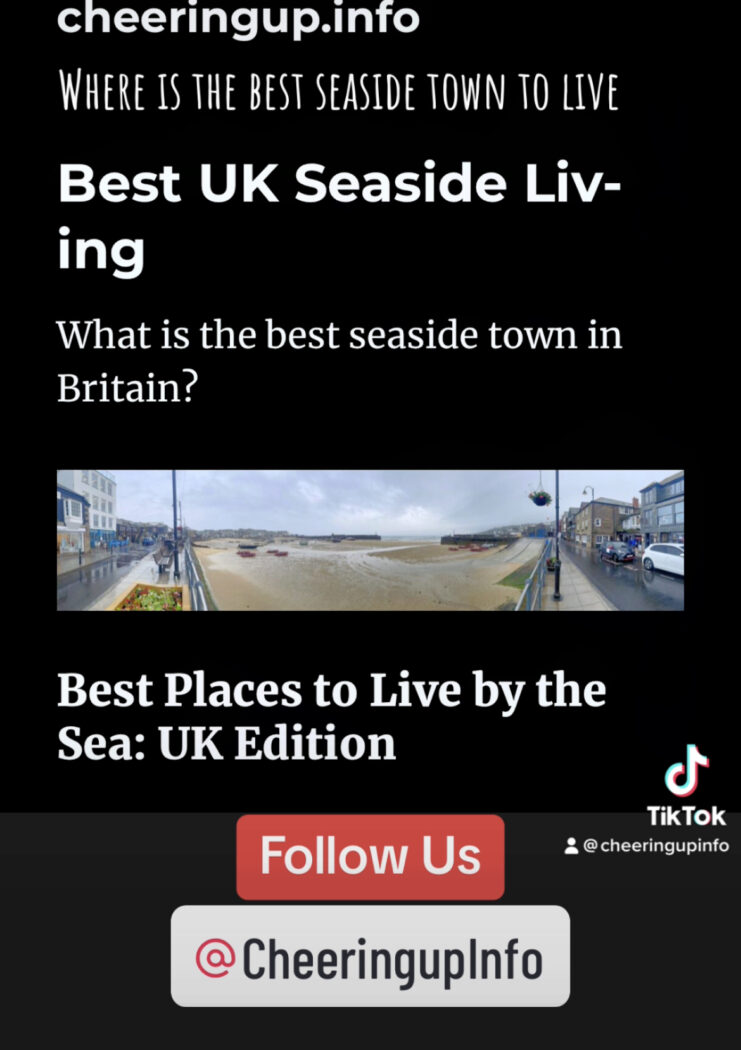
Best UK Seaside Living

What is the best seaside town in Britain?

Best Places to Live by the Sea: UK Edition

Living by the sea is a dream shared by many. The soothing sound of waves, the salty breeze, and the stunning coastal views create an idyllic lifestyle that attracts people from all walks of life. The United Kingdom, with its rich maritime heritage and diverse coastline, offers numerous coastal towns and cities that provide an exceptional quality of life. In this article, we will explore some of the best places to live by the sea in the UK, highlighting their unique characteristics, attractions, and advantages.

  1. Brighton, East Sussex. Brighton, located on the south coast of England, is a vibrant and diverse city renowned for its bohemian atmosphere and lively entertainment scene. The city boasts a beautiful pebble beach, lined with colorful beach huts and a bustling promenade. Residents of Brighton enjoy a thriving arts and music scene, a wide range of restaurants and cafes, and excellent educational institutions. With its close proximity to London, Brighton offers the perfect balance between city living and coastal charm.
  2. St Ives, Cornwall. Nestled in the picturesque county of Cornwall, St Ives is a charming seaside town that has captivated artists and visitors for centuries. Its narrow cobbled streets, art galleries, and sandy beaches make it an appealing place to call home. St Ives is known for its unique light, which has inspired numerous artists, and its stunning coastal scenery, including the iconic Godrevy Lighthouse. The town also offers a thriving culinary scene, with a variety of seafood restaurants and traditional Cornish pubs.
  3. Edinburgh, Scotland. While not directly on the coast, Edinburgh, the capital of Scotland, offers residents the opportunity to live within close proximity to stunning coastal landscapes. With its dramatic cliffs, rugged shores, and panoramic views of the North Sea, Edinburgh provides a unique blend of historical charm and natural beauty. The city itself is steeped in history, with its medieval Old Town and elegant Georgian New Town. Edinburgh’s vibrant cultural scene, renowned festivals, and world-class universities add to its appeal as a place to live.
  4. Bournemouth, Dorset. Situated on the south coast of England, Bournemouth boasts seven miles of sandy beaches, making it a popular destination for sun-seekers and water enthusiasts. The town offers a range of recreational activities, from watersports to coastal walks, and is home to beautiful parks and gardens. Bournemouth’s thriving economy, excellent transport links, and vibrant nightlife contribute to its reputation as a desirable place to live for families, professionals, and retirees alike.
  5. Portrush, Northern Ireland. For those seeking a more rugged coastal experience, Portrush in Northern Ireland offers a unique blend of natural beauty and outdoor adventures. Located on the stunning Causeway Coast, Portrush is famous for its pristine beaches, championship golf courses, and the iconic Giant’s Causeway. The town also hosts various water sports events, including the annual Atlantic Sessions music festival. With its friendly community and breathtaking landscapes, Portrush provides an escape from the hustle and bustle of city life.
  6. Whitstable, Kent. Known as the “Pearl of Kent,” Whitstable is a charming seaside town famous for its oysters and picturesque harbour. The town’s maritime heritage is evident in its colorful beach huts, fishing boats, and traditional fish markets. Whitstable offers a relaxed and laid-back lifestyle, with its boutique shops, art galleries, and seafood restaurants drawing visitors from far and wide. Residents can enjoy sailing, kayaking, and beachcombing along the pebbled shoreline, creating an authentic seaside experience.

Living by the sea in the United Kingdom provides a unique and enriching lifestyle. Whether you prefer the cosmopolitan vibe of Brighton, the artistic allure of St Ives, or the rugged beauty of Portrush, there is a coastal town or city in the UK to suit every taste. These best places to live by the sea offer not only stunning natural surroundings but also a range of cultural, recreational, and educational opportunities. Embracing the sea breeze and the sense of tranquility that comes with coastal living can truly enhance one’s quality of life. So, why not make your dream of living by the sea a reality in one of these exceptional locations in the UK?

More lifestyle improvement articles videos and reviews

Best UK Seaside Living

Why Ignoring Your Balance Could be Harming Your Health

The Unexpected Connection Between Good Balance and Optimal Health

Improving your balance can have numerous benefits for your overall health and well-being. Here are just a few ways that improving your balance can improve your health:

The Missing Piece to Your Health Puzzle: Improve Your Balance and See the Difference

  1. Reduced risk of falls and injuries: Poor balance can lead to falls, which can result in serious injuries, particularly for older adults. By improving your balance, you can reduce your risk of falling and the potential for injury.
  2. Improved physical fitness: Balance exercises can help improve your overall physical fitness, as they require the use of multiple muscle groups and can increase your strength and coordination.
  3. Better posture and alignment: Good balance can help you maintain proper posture and alignment, which can help reduce muscle strain and prevent injuries.
  4. Enhanced sports performance: Many sports, such as surfing, skating, and skiing, require good balance. By improving your balance, you can improve your performance in these and other sports.
  5. Increased mental clarity and concentration: Balance exercises can also have a positive impact on your brain function. They can help improve your focus, concentration, and mental clarity.

There are many ways to improve your balance, including:

  1. Practicing balance exercises: There are numerous balance exercises you can do to improve your balance. Some examples include standing on one foot, walking heel-to-toe in a straight line, and practicing tai chi or yoga.
  2. Incorporating balance training into your workouts: You can also incorporate balance training into your regular workouts, such as by using a balance board or BOSU ball.
  3. Wearing proper footwear: Wearing shoes with good support and stability can help improve your balance. Avoid wearing high heels or shoes with slippery soles.
  4. Maintaining a healthy diet and weight: A healthy diet and maintaining a healthy weight can help improve your balance.

Improving your balance can have numerous benefits for your overall health and well-being. By incorporating balance exercises into your routine and wearing proper footwear, you can reduce your risk of falls, improve your physical fitness, and enhance your sports performance, among other benefits.

  • Click on Like Button to sign up for free for lifestyle improvement tips via your preferred social media App; or email editor@cheeringup.info to subscribe for free to our lifestyle improvement tips reviews and deals newsletter

More ways to improve your health wealth and happiness in the UK

Balance Challenge with Eyes – for 8 secs!

Balancing on your weaker leg with your eyes closed can be a challenging exercise that can help improve your balance and strengthen the muscles in your leg. Here’s a step-by-step guide to performing this exercise:

  1. Find a clear and open space where you have enough room to extend your leg and move your arms for balance if needed.
  2. Stand tall with your feet hip-width apart and your arms relaxed at your sides.
  3. Identify your weaker leg, which is the leg you want to focus on during this exercise.
  4. Lift your weaker leg off the ground slightly, bending it at the knee and keeping your foot a few inches above the floor.
  5. Once you feel stable, close your eyes gently, but make sure you maintain your balance.
  6. Engage your core muscles by pulling your belly button towards your spine. This will help stabilize your body.
  7. Focus on a spot in front of you, even with your eyes closed, to help maintain your balance.
  8. Hold the position for 8 seconds, maintaining your balance on your weaker leg with your eyes closed.
  9. If you feel like you’re losing your balance, you can gently tap your toes down to the ground to regain stability.
  10. After 8 seconds, open your eyes and slowly lower your foot back to the ground.
  11. Rest for a few moments before repeating the exercise for additional sets if desired.
  12. repeat exercise on stronger leg.

Remember, it’s normal to feel a bit wobbly or unsteady when you first attempt this exercise. With practice, your balance will improve over time. If you find it too challenging, you can start by reducing the duration and gradually increase it as you become more comfortable and confident with the exercise.

From Better Posture to Reduced Risk of Falls: How Improving Your Balance Can Transform Your Health