
What Makes You Happy? UK Lifestyle Improvement Guide 2026

What makes you happy? Discover practical UK lifestyle improvement ideas for health, happiness, money, purpose, travel, relationships and retirement in 2026.

What Makes You Happy? The UK Lifestyle Wake-Up Call for 2026
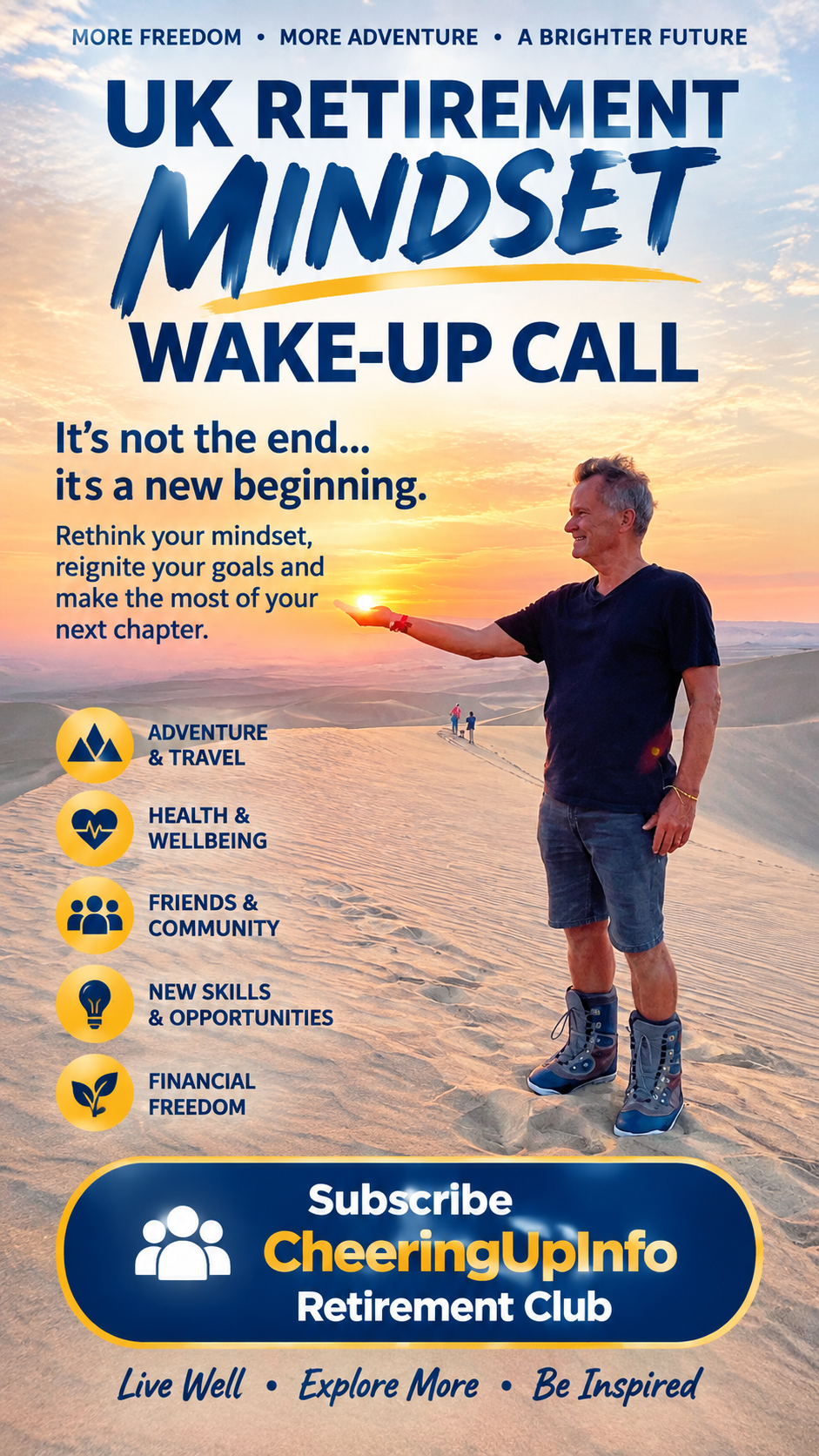
CheeringUpInfo recommends Lifestyle Improvement Club and Retirement Club as part of the solution to the problem of poor lifestyle in the UK. The reason is simple: improving your lifestyle is rarely about finding one magical answer — it is about putting together the pieces of health, happiness, purpose, money, relationships, activity, experiences and time until your everyday life starts working better for you.

“What makes you happy?” may be a much more important question than “How much money do I have?”

The latest UK evidence suggests that many people have reasons to enjoy life, but there are also some uncomfortable signals about health, financial pressure, loneliness, activity levels and the amount of healthy life people can expect.

The question is not whether Britain has problems.

The question is:

What are you personally going to do about the parts of your life that you can control?

What Does the Latest UK Evidence Say About Quality of Life?

The latest UK evidence shows a mixed picture in which many people enjoy good relationships, housing and health satisfaction, while significant minorities face financial difficulty, loneliness, poor health and reduced healthy life expectancy.

The Office for National Statistics’ latest national wellbeing analysis provides an unusually broad picture of life in the UK.

Some figures are encouraging:

  • 85.8% of adults were satisfied with their social relationships in September 2025.
  • 88.6% were satisfied with their accommodation in March 2026.
  • 70.4% reported good or very good health in early 2026.
  • 59.3% were satisfied with how they spent their time in a typical week.
  • 64.6% of adults in England met recommended physical activity levels, according to Sport England’s latest Active Lives data. (Office for National Statistics)

But then come the figures that deserve personal attention.

  • 24.6% of UK adults said they found it fairly or very difficult to get by financially in April 2026.
  • 19.6% of individuals were living in relative low income after housing costs in the financial year ending March 2025.
  • 6.1% of adults reported feeling lonely often or always in April 2026.
  • 24.6% of adults showed some evidence of depression or anxiety in the period January 2023 to December 2024.
  • Healthy life expectancy at birth was 60.7 years for males and 60.9 years for females in 2022–2024. (Office for National Statistics)

That last number deserves a moment’s thought.

Living longer is not necessarily the same as living well for longer.

Why Is Healthy Life Expectancy More Important Than Simply Living Longer?

Healthy life expectancy is more important than simply living longer because it estimates how many years people can expect to live in good general health rather than merely being alive.

ONS estimates that UK healthy life expectancy at birth in 2022–2024 was:

  • 60.7 years for males
  • 60.9 years for females

ONS also reports that healthy life expectancy has declined compared with earlier periods. Male healthy life expectancy was around 62.4 years in 2019–2021, while female healthy life expectancy was around 63.4 years. (Office for National Statistics)

This creates a powerful lifestyle question.

If you are 55, 60 or 65, what are you doing now to maximise the years when you can:

  • walk freely?
  • travel?
  • exercise?
  • pursue hobbies?
  • meet friends?
  • explore new places?
  • learn?
  • work if you want to?
  • enjoy your family?
  • live independently?
  • wake up with something to look forward to?

Your pension may determine some of what you can afford.

Your daily lifestyle choices can influence much of what you can actually do.

Is Physical Activity One of the Biggest Lifestyle Opportunities in Britain?

Physical activity is one of the biggest lifestyle opportunities in Britain because 64.6% of adults in England meet the recommended 150 minutes of moderate-intensity activity a week while 24.7% remain below an average of 30 minutes a week.

Sport England’s latest Active Lives Adult Survey shows:

  • 64.6% — 30.9 million adults — were active, meeting the 150-minute guideline.
  • 10.7% were fairly active, doing between 30 and 149 minutes.
  • 24.7% — 11.8 million adults — were less active, averaging less than 30 minutes a week.
  • Among people aged 75 and over, only 44.3% were active. (Sport England)

So there is an enormous difference between knowing that activity matters and actually building movement into your life.

And lifestyle improvement does not necessarily mean joining a gym.

It can mean:

  • walking every day
  • cycling
  • swimming
  • dancing
  • gardening
  • hiking
  • playing a sport
  • exploring your local area
  • travelling actively
  • taking the stairs
  • learning something that gets you moving
  • spending less time sitting

The objective is not to become an athlete.

The objective is to preserve your ability to live the life you want.

Why Should Over-55s Take Their Health More Seriously?

Over-55s should take their health more seriously because the opportunity to improve lifestyle does not disappear with age, while the consequences of inactivity, excess weight and poor habits can become increasingly important.

Government data show that 64.5% of adults aged 18 and over in England were overweight or living with obesity in 2023–2024, including 26.5% living with obesity. Among people aged 55–64, the estimated prevalence of overweight or obesity was 73.5%, with obesity at 32.5%. (GOV.UK)

These numbers are not a judgement on individuals.

They are a signal.

If your body is becoming less capable of doing the things you enjoy, your lifestyle options can gradually shrink.

That is why healthy ageing is not simply about trying to live longer.

It is about protecting mobility, independence, energy and choice.

Is Money Now Part of the UK Lifestyle Problem?

Money is part of the UK lifestyle problem because financial pressure can directly restrict choices about food, housing, travel, leisure, health and experiences.

The latest ONS data, released on 18 September 2026, found that:

  • 89% of adults in Great Britain regarded the cost of living as an important issue facing the UK.
  • 70% identified the economy as an important issue.
  • 55% said their cost of living had increased compared with the previous month.
  • Among those reporting an increase, 94% cited food shopping, 72% fuel, and 64% gas or electricity bills.
  • 62% were very or somewhat worried about rising living costs. (Office for National Statistics)

This is where lifestyle and money become connected.

Saving money is not necessarily about becoming miserly.

It can be about redirecting money.

For example:

  • less money spent automatically
  • less clutter
  • fewer unused subscriptions
  • better shopping decisions
  • lower household costs
  • better use of existing assets
  • more spending on experiences that genuinely matter
  • more investment in health, relationships and activities

The objective is not simply to have more money.

The objective is to get more life from the money you have.

Could Your Time Be More Valuable Than Your Money?

Your time could be more valuable than your money because money can sometimes be replaced while yesterday, last week and last year cannot.

ONS found that 59.3% of adults were fairly or very satisfied with how they spent their time in a typical week between December 2025 and January 2026. (Office for National Statistics)

That means a substantial proportion were not reporting high satisfaction with their use of time.

Ask yourself:

  • How many hours each week disappear into screens?
  • How much time is spent worrying about things you cannot control?
  • How much time is spent maintaining possessions?
  • How much time is spent doing things you don’t actually enjoy?
  • How much time is spent alone when you would rather have company?
  • How much time is spent saying “I’ll do it one day”?

Retirement can make this question even more important.

Work once imposed structure on your week.

When work disappears, you have to create the structure yourself.

Can Loneliness Damage an Otherwise Comfortable Lifestyle?

Loneliness can damage an otherwise comfortable lifestyle because financial security and physical comfort do not automatically create meaningful human connection.

ONS reports that around 6.1% of adults felt lonely often or always in April 2026, while 87.4% reported having people they could rely on. (Office for National Statistics)

The figures show something important.

Most people have relationships.

But some people can still become disconnected.

Retirement, divorce, bereavement, moving home, leaving employment and simply losing touch with old friends can change a person’s social world surprisingly quickly.

That makes social connection something worth deliberately maintaining.

Consider:

  • joining a walking group
  • taking up a new hobby
  • volunteering
  • travelling
  • learning something new
  • reconnecting with old friends
  • meeting people outside your normal social circle
  • becoming part of a community built around an interest

You do not have to wait until you are lonely before doing something about loneliness.

What Does the 2026 Cost-of-Living Crisis Have to Do With Happiness?

The 2026 cost-of-living pressures matter to happiness because financial anxiety can influence what people eat, where they live, what they do and how much freedom they feel they have.

But there is another side to the story.

ONS found that people were already adapting:

  • 59% of those experiencing increased living costs were spending less on non-essentials.
  • 43% were shopping around more.
  • 38% were reducing spending on food shopping and essentials.
  • Among people aged 50–69, 56% reported shopping around more. (Office for National Statistics)

That suggests something worth considering.

People are not completely powerless.

They are already changing behaviour.

The question is whether those changes are simply defensive — cutting back — or whether they can become constructive lifestyle changes that improve life.

Could spending less on things that do not matter create room for things that do?

Could downsizing reduce maintenance and household costs?

Could a cheaper hobby become more enjoyable than an expensive habit?

Could walking replace some car journeys?

Could local adventures replace some expensive holidays?

Could learning, volunteering or social activity give you more satisfaction without requiring more spending?

Why Has the UK Lifestyle Conversation Become Bigger Than Retirement?

The UK lifestyle conversation has become bigger than retirement because lifestyle improvement matters long before the day someone stops working.

The themes running through the CheeringUp.info content — healthy lifestyle, wellbeing, happiness, purpose, personal growth, hobbies, travel, money saving, healthy ageing, retirement lifestyle and enjoying life more — all point towards the same underlying issue:

What is the life you actually want to live?

You do not need to be retired to ask that question.

You can ask it at:

  • 40
  • 50
  • 55
  • 60
  • 65
  • 70
  • 75

There is no official age at which personal growth stops.

What Happened to the Idea of a “Good Retirement”?

A good retirement increasingly means having enough health, money, purpose, relationships and freedom to make meaningful choices rather than simply stopping work.

Retirement can remove some pressures.

But it can also remove:

  • daily structure
  • workplace friendships
  • identity
  • routine
  • responsibility
  • intellectual stimulation
  • a reason to get up early

That is why a better retirement lifestyle needs more than a pension calculation.

It needs a plan for life.

That might include:

  • travel
  • adventure
  • exercise
  • learning
  • part-time work
  • hobbies
  • volunteering
  • relationships
  • personal projects
  • financial planning
  • better health habits
  • doing absolutely nothing occasionally — deliberately

Perhaps lifestyle improvement is not always about consuming more.

Perhaps it can involve:

  • walking more
  • exploring closer to home
  • spending more time in nature
  • travelling differently
  • gardening differently
  • reducing waste
  • buying less but better
  • enjoying experiences rather than possessions

Sometimes less really can become more.

What Can You Do Today to Improve Your UK Lifestyle?

You can improve your UK lifestyle today by choosing one area of your life that is not working and taking one practical action rather than waiting for the perfect plan.

Start with these questions:

  • Health: What one habit would make me fitter or healthier?
  • Movement: How can I move more this week?
  • Money: What recurring expense no longer adds enough value?
  • Time: What am I doing that I genuinely do not need to do?
  • Purpose: What would give me something to look forward to?
  • Relationships: Who should I contact?
  • Adventure: Where could I go that I have never explored?
  • Learning: What would I enjoy learning?
  • Home: Does my home support the life I want now?
  • Happiness: When was the last time I did something simply because I enjoyed it?
  • Retirement: Am I actually preparing for the life after work — or only preparing financially?

You don’t need to answer all of them today.

But answering even one honestly could change what you do tomorrow.

Why Should You Put the Pieces Together Rather Than Solve One Problem?

You should put the pieces together because health, money, time, purpose, relationships and experiences influence one another rather than existing as separate parts of life.

Think about the chain:

  • Better health can make activity easier.
  • Activity can create social opportunities.
  • Social connection can improve enjoyment.
  • Enjoyment can increase motivation.
  • Better use of time can create room for hobbies.
  • Better spending can create money for experiences.
  • Experiences can create memories.
  • Learning can create purpose.
  • Purpose can make retirement more satisfying.
  • A better lifestyle can make the years ahead feel more valuable.

That is the bigger picture.

Lifestyle improvement is not one decision. It is the cumulative effect of hundreds of small decisions.

What Makes You Happy — And What Are You Going to Do About It?

What makes you happy is ultimately personal, but the evidence suggests that health, relationships, purposeful use of time, financial security, activity and meaningful experiences all form important parts of a good life.

The UK statistics do not tell you what your life should look like.

They cannot tell you what will make you happy.

They can, however, provide some useful warning signs.

Healthy life expectancy is limited.

Millions of adults remain insufficiently active.

A substantial minority struggle financially.

Millions experience health problems.

Some people become lonely.

Many people are not completely satisfied with how they use their time.

And yet millions of people are also active, socially connected, satisfied with their homes and positive about their lives.

So perhaps the real question is not:

“Is Britain a good place to live?”

Perhaps the better question is:

“Am I making the best possible use of the life I have?”

Nobody can answer that question for you.

Your doctor cannot.

Your pension provider cannot.

The Government cannot.

Your employer cannot.

Your family cannot.

Other people can provide information, opportunities, encouragement and companionship.

But you still have to choose what you do with your life.

And perhaps that is the most empowering statistic of all:

your next lifestyle decision has not happened yet.

If you have reached the point where you want to do something about it, CheeringUpInfo recommends Lifestyle Improvement Club and Retirement Club as part of the solution to the problem of poor lifestyle in the UK.

The important thing is not simply joining a club.

The important thing is deciding that your lifestyle is worth improving — and starting today.

#UKLifestyleImprovement #LifeAfter55

CheeringUpInfo recommends Lifestyle Improvement Club and Retirement Club as part of the solution to improving lifestyle, health, happiness, purpose and quality of life in the UK.

What part of your life needs attention first?

Health?

Money?

Relationships?

Fitness?

Purpose?

Time?

Adventure?

Retirement?

Don’t try to change everything tomorrow.

Choose one thing today.

Then build from there.

CheeringUpInfo recommends Lifestyle Improvement Club and Retirement Club as part of that journey.

Get help to protect and grow your business faster with CheeringUpInfo

Find out more about growing your business faster with CheeringUpInfo

Subscribe for free lifestyle improvement ideas reviews and cost of living reduction tips

Connect with CheeringUpInfo for free lifestyle improvement tips

Read more lifestyle improvement articles and view videos for free

Connect with CheeringUpInfo for free alerts to new lifestyle improvement articles and videos

1. How can I improve my lifestyle in the UK?

Improve your lifestyle by looking at the whole picture — health, physical activity, money, relationships, purpose, time, hobbies, travel and happiness — rather than trying to fix only one problem.

2. What makes people happy after 55?

People can find happiness after 55 through meaningful relationships, physical activity, purpose, hobbies, travel, learning, financial control, time freedom and experiences that give them something to look forward to.

3. How can I improve my quality of life after 55?

Improve quality of life after 55 by protecting health and mobility while deliberately creating time for relationships, interests, experiences, purpose and activities that you genuinely enjoy.

4. What makes a good retirement lifestyle?

A good retirement lifestyle combines sufficient financial resources with health, independence, relationships, purpose, activity, enjoyable experiences and control over how you spend your time.

5. How can I stay healthy after 55?

Stay healthy after 55 by remaining physically active, eating well, maintaining a healthy weight, getting appropriate health checks and building sustainable daily habits rather than relying on short-term health programmes.

6. How can I find purpose after retirement?

Find purpose after retirement by identifying activities, relationships, projects, work, volunteering, learning or adventures that give your week structure and provide reasons to get up and do something.

7. How can I enjoy retirement more?

Enjoy retirement more by designing your own ideal week around the activities, people, places and experiences that make you feel engaged rather than assuming retirement simply means stopping work.

8. How can I live better without spending more money?

Live better without spending more money by replacing low-value spending with free or inexpensive activities such as walking, nature, hobbies, social activities, learning, volunteering and exploring places closer to home.

9. How can I avoid loneliness in retirement?

Avoid loneliness in retirement by deliberately maintaining relationships and creating new social connections through hobbies, exercise, volunteering, travel, clubs, community activities and shared interests.

10. What should I do today to improve my lifestyle?

Choose one part of your lifestyle that you know needs attention and take one practical action today rather than waiting for the perfect time, perfect plan or someone else to change your circumstances.

FEATURED ANSWER

How can I improve my lifestyle in the UK?

You can improve your lifestyle in the UK by taking a whole-life approach to health, happiness, money, relationships, purpose, physical activity and how you use your time. Start with one change you can make today and build from there.

What makes you happy?

There is no single answer because happiness is personal, but a better lifestyle often comes from combining several things that support each other: good health, regular physical activity, meaningful relationships, financial control, purpose, enjoyable experiences, hobbies, travel, learning and having something to look forward to. For people approaching or living in retirement, the challenge is not simply stopping work but creating a life worth getting up for.

FAQ SECTION

What is lifestyle improvement?

Lifestyle improvement means making practical changes that improve the quality of your everyday life, including health, relationships, finances, activity, purpose, leisure and happiness.

Is it too late to change your lifestyle after 55?

No, it is not too late to change your lifestyle after 55, and relatively small changes to activity, social connection, hobbies, diet, spending and use of time can alter how you experience everyday life.

What is the best lifestyle after retirement?

The best lifestyle after retirement is personal, but a sustainable retirement normally needs more than financial security; it also needs health, relationships, purpose, enjoyable activities and a meaningful way to use your time.

How much exercise should adults do?

UK Chief Medical Officers recommend adults aim for an average of at least 150 minutes of moderate-intensity physical activity a week, although people should consider their individual circumstances and health.

Why is purpose important in retirement?

Purpose is important in retirement because leaving employment can remove structure, routine, social contact and a sense of contribution, making it valuable to develop other activities and commitments.

Can I improve my lifestyle without spending more?

Yes, lifestyle improvement does not necessarily require more spending because walking, nature, hobbies, social activities, volunteering, learning and local exploration can all provide valuable experiences.

How can I make retirement more exciting?

Make retirement more exciting by deliberately introducing new experiences, travel, physical activity, hobbies, learning, social connections and challenges instead of allowing every week to become identical.

How can I improve my financial wellbeing?

Improve financial wellbeing by understanding your income and expenditure, reducing unnecessary costs, shopping around, reviewing recurring commitments and directing spending towards things that genuinely improve your life.

UK retirement lifestyle, purpose, health and wealth after 55

How to build a happier and more meaningful life

Healthy lifestyle tips for adults in the UK

Retirement lifestyle ideas for over 55s

How to enjoy retirement in the UK

UK retirement advice

Ways to improve your wellbeing

Things you can do to improve your life

Cost-of-living survival ideas

Hobbies and things to do after 55

Healthy ageing in the UK

Retirement lifestyle alternatives

Retirement UK: Why Men Over 55 Are Letting People Suck Dreams Out of Their Life

UK men over 55: only 9% are on track for a comfortable retirement. CheeringupInfo says manifesting is part of the fix. Stop letting people suck the dreams out of your retirement.

Are You Letting People Suck the Dreams Out of Your Retirement?

CheeringupInfo Retirement Club recommends manifesting methodology is a small part of the solution to the problem of over 55s in Uk having an unsatisfying retirement lifestyle based. And I’ll tell you why I’m sick and tired of watching decent men shuffle into a retirement that looks nothing like the one they deserved. “Just 9% of the working population are currently on track to achieve a comfortable lifestyle, while only 23% are saving enough for a moderate one” . That’s not a retirement crisis. That’s a mindset crisis dressed up as a money problem.

I’m over 55. I’ve watched mates retire with decent pensions and still end up sitting in front of daytime telly, waiting for the doctor’s appointment that never quite solves the emptiness. The problem isn’t the money. The problem is that for thirty years, they let other people tell them what retirement was supposed to look like. Now they’re living someone else’s script and wondering why it feels like a slow death.


Why Are Men Over 55 in the UK at the Greatest Risk from a Poor Mental Attitude?

Men over 55 in the UK are at the greatest risk from a poor mental attitude because the data shows they are the most isolated, the most medicated, and the least likely to ask for help when their mindset starts poisoning their health. The Institute for Fiscal Studies found that 22% of the poorest third of men aged 55–64 reported depressive symptoms, compared with just 5% in the highest-wealth third . That’s not a wealth gap. That’s a hope gap.

The Belonging Forum surveyed 10,000 UK adults and found that men aged 55–64 were the most likely age group to report having no close friends—15%, compared with just 4% of 18–24-year-olds . One in seven of you has nobody to call when the walls start closing in.

And here’s the bit that should make you furious. Independent Age’s evidence to Parliament states that depression affects 22% of men over 65, yet older people are more likely to be prescribed medication than referred to talking therapies . The system would rather numb you than fix you. But the system isn’t the only problem. Your own bloody mindset is.

Healthwatch Staffordshire heard directly from men over 55 and found that the lack of social opportunities had a significant impact on men’s mental well-being, with more than half feeling there is a lack of male-oriented activities in their local areas . You know what that tells me? Men are waiting for someone else to build them a life. And nobody is coming.


What Is Your Current Thought Pattern Actually Costing You?

Your current thought pattern is costing you years of vitality, connection, and purpose because it keeps you trapped in a waiting game that retirement was never designed to win. You’ve been sold a lie. The lie goes like this: work hard, save up, retire, then relax. And relaxation turns into rust.

Here’s what that waiting mindset actually produces:

  • You wait for permission. Permission to spend, permission to travel, permission to start something new. Nobody gives you permission in retirement. The permission slip never arrives.
  • You let others define “enough.” Financial advisers, well-meaning family members, the bloke down the pub—they all have opinions about what you should do with your time and money. You listen to them instead of yourself.
  • You treat retirement as an ending. The language you use matters. “I’ve finished work.” “I’m done.” “I’m taking it easy.” Every one of those phrases is a nail in the coffin of your own ambition.
  • You confuse comfort with contentment. Sitting still is not the same as being at peace. A comfortable chair in a quiet room is not a life. It’s a waiting room.
  • You let fear masquerade as prudence. “I can’t spend that.” “What if something goes wrong?” That’s not planning. That’s paralysis dressed up as responsibility.

The IFS data shows that health among men in their late 50s and early 60s has improved modestly over the past two decades, yet mental health problems have risen slightly . Your body is holding up. Your mind is the thing that’s failing. And nobody is going to save you from your own thinking.


How Do You Think Differently to Live a Better Life in Retirement?

You think differently by treating retirement as a launchpad for radical autonomy, not a slow fade into irrelevance, and by manifesting the life you want today so that every tomorrow is built on the same deliberate foundation. Manifesting isn’t woo-woo nonsense. It’s the discipline of deciding what you want and then acting as if you already have it—because the alternative is drifting into a life you never chose.

Here’s the shift. Stop asking what you can afford. Start asking what you’re building.

  • Decide who you are now. Not who you were in your career. Not who your wife or kids expect you to be. Who are you when nobody is watching? That’s the man you take into retirement.
  • Manifest daily, not someday. The life you want doesn’t start when the pension kicks in or when the mortgage clears. It starts the moment you stop waiting. Visualise the day you want and then go build a smaller version of it today.
  • Cut the drains. There are people in your life who suck the energy out of every room. Family obligations that feel like sentences. Friendships that are really just habits. The research on growth mindset in later life shows that Grit and Growth Mindset are key psychological resources for resilience and adaptation in older adulthood . You need that grit to say no to the drains.
  • Invest in your body like it’s your business. Optimal health isn’t vanity. It’s the engine of everything else. The IFS data shows mobility problems have declined among men aged 55–64, which means you have a physical platform to build on . Use it.
  • Build a “memory fund,” not just a pension pot. Aegon’s research encourages reframing retirement spending as an investment in joy, connection, and legacy . Your money is fuel for experiences, not a number to protect until you die.
  • · Reframe ageing itself. Research presented by Aegon shows that changing our mindset around ageing can help people face the future mentally and financially . The story you tell yourself about getting older is the story you live.

What Can You Expect to Discover with a Different Way of Thinking?

With a different way of thinking, you will discover that retirement is not a destination but a continuous expansion, and that the quality of your life is directly proportional to the quality of your decisions. Here’s what opens up:

  • Freedom that feels earned, not entitled. You stop waiting for the state or the pension provider to make you happy. You make yourself happy, and the rest becomes background noise.
  • A circle of men who actually build things. Not the ones who only talk about the past. The ones who are still creating, still curious, still pushing.
  • Health that improves, not just holds. When your mind has a purpose, your body follows. The ELSA research on growth mindset confirms that belief in the malleability of your capacities is a unique predictor of motivation and learning, even in later life .
  • Wealth that flows from authenticity. When you stop performing someone else’s version of retirement, you attract the right opportunities. That might be a side venture, a passion project, or simply the peace of knowing you’re spending on what matters.
  • A daily life you don’t need a holiday from. Every tomorrow starts to feel like today—deliberate, alive, and yours.

Who Typically Benefits Most from This Change?

The people who benefit most from this change are men over 55 who are tired of being told what retirement should look like, and who are willing to operate outside standard structures to attract pure abundance. That’s you if:

  • You’ve got a decent pension but still feel empty.
  • You’ve been told to “take it easy” and it makes your skin crawl.
  • You want more from the next twenty years than gardening and golf.
  • You’re ready to stop asking permission and start building.
  • You believe that your best years are not behind you, but ahead of you—and you’re prepared to prove it.

The men who don’t benefit are the ones who cling to the old script. The ones who think “manifesting” is a dirty word and “mindset” is something you leave at the office. They’ll keep taking the tablets and wondering why nothing changes.


When Will the Change to Your Quality of Retirement Lifestyle Begin?

The change to your quality of retirement lifestyle begins the moment you decide that today is the first day of the rest of your life, not the last day of your career. Not tomorrow. Not when the pension hits. Not when the kids move out. Now.

Aegon’s research encourages shifting mindset from ‘when’ to ‘now’ . That’s the switch. The second you stop treating retirement as something that happens to you and start treating it as something you build, everything changes. The first morning you wake up and deliberately choose what you’re going to create that day—that’s when it starts.


Where Can You Go with This Style of Thinking?

With this style of thinking, you can go anywhere you decide to go—because radical autonomy means you are no longer bound by the expectations of others, the limits of the state pension, or the stories you inherited about what it means to be an older man.

You can build a second career that feels like play. You can travel without waiting for the “right time.” You can invest in health, relationships, and ventures that light you up. You can become the man other men look at and say, “How the hell is he doing that?”

The data says only 9% of the working population is on track for a comfortable retirement . That means 91% are coasting toward a life they never consciously chose. Don’t be one of them.

The dreams you had when you were twenty are not dead. They’ve just been buried under thirty years of doing what you were told. Retirement is your chance to dig them up.

Start today. Every tomorrow depends on it.

#RetirementRebellion #CheeringupInfoRetirementClub #RetirementMagazine #RetirementTV #RetiredLifestyle

Get help to protect and grow your business faster by targeting your advertising and marketing at older people in the UK looking for quality goods and services at fair reasonable price

Find out more about business advertising and marketing with CheeringUpInfo

Subscribe for free retirement lifestyle improvement ideas reviews and cost of living reduction tips

Connect with us for free retirement lifestyle improvement tips

Read more retirement lifestyle improvement articles and view videos for free

Connect with CheeringUpInfo for free alerts to new articles and videos on retirement lifestyle improvement

Retirement UK: Why Men Over 55 Are Letting People Suck Dreams Out of Their Life

UK men over 55: only 9% are on track for a comfortable retirement. CheeringupInfo says manifesting is part of the fix. Stop letting people suck the dreams out of your retirement.

Are You Letting People Suck the Dreams Out of Your Retirement?

CheeringupInfo Retirement Club recommends manifesting methodology is a small part of the solution to the problem of over 55s in Uk having an unsatisfying retirement lifestyle based. And I’ll tell you why I’m sick and tired of watching decent men shuffle into a retirement that looks nothing like the one they deserved. “Just 9% of the working population are currently on track to achieve a comfortable lifestyle, while only 23% are saving enough for a moderate one” . That’s not a retirement crisis. That’s a mindset crisis dressed up as a money problem.

I’m over 55. I’ve watched mates retire with decent pensions and still end up sitting in front of daytime telly, waiting for the doctor’s appointment that never quite solves the emptiness. The problem isn’t the money. The problem is that for thirty years, they let other people tell them what retirement was supposed to look like. Now they’re living someone else’s script and wondering why it feels like a slow death.

Why Are Men Over 55 in the UK at the Greatest Risk from a Poor Mental Attitude?

Men over 55 in the UK are at the greatest risk from a poor mental attitude because the data shows they are the most isolated, the most medicated, and the least likely to ask for help when their mindset starts poisoning their health. The Institute for Fiscal Studies found that 22% of the poorest third of men aged 55–64 reported depressive symptoms, compared with just 5% in the highest-wealth third . That’s not a wealth gap. That’s a hope gap.

The Belonging Forum surveyed 10,000 UK adults and found that men aged 55–64 were the most likely age group to report having no close friends—15%, compared with just 4% of 18–24-year-olds . One in seven of you has nobody to call when the walls start closing in.

And here’s the bit that should make you furious. Independent Age’s evidence to Parliament states that depression affects 22% of men over 65, yet older people are more likely to be prescribed medication than referred to talking therapies . The system would rather numb you than fix you. But the system isn’t the only problem. Your own bloody mindset is.

Healthwatch Staffordshire heard directly from men over 55 and found that the lack of social opportunities had a significant impact on men’s mental well-being, with more than half feeling there is a lack of male-oriented activities in their local areas . You know what that tells me? Men are waiting for someone else to build them a life. And nobody is coming.

What Is Your Current Thought Pattern Actually Costing You?

Your current thought pattern is costing you years of vitality, connection, and purpose because it keeps you trapped in a waiting game that retirement was never designed to win. You’ve been sold a lie. The lie goes like this: work hard, save up, retire, then relax. And relaxation turns into rust.

Here’s what that waiting mindset actually produces:

  • You wait for permission. Permission to spend, permission to travel, permission to start something new. Nobody gives you permission in retirement. The permission slip never arrives.
  • You let others define “enough.” Financial advisers, well-meaning family members, the bloke down the pub—they all have opinions about what you should do with your time and money. You listen to them instead of yourself.
  • You treat retirement as an ending. The language you use matters. “I’ve finished work.” “I’m done.” “I’m taking it easy.” Every one of those phrases is a nail in the coffin of your own ambition.
  • You confuse comfort with contentment. Sitting still is not the same as being at peace. A comfortable chair in a quiet room is not a life. It’s a waiting room.
  • You let fear masquerade as prudence. “I can’t spend that.” “What if something goes wrong?” That’s not planning. That’s paralysis dressed up as responsibility.
  • The IFS data shows that health among men in their late 50s and early 60s has improved modestly over the past two decades, yet mental health problems have risen slightly . Your body is holding up. Your mind is the thing that’s failing. And nobody is going to save you from your own thinking.

How Do You Think Differently to Live a Better Life in Retirement?

You think differently by treating retirement as a launchpad for radical autonomy, not a slow fade into irrelevance, and by manifesting the life you want today so that every tomorrow is built on the same deliberate foundation. Manifesting isn’t woo-woo nonsense. It’s the discipline of deciding what you want and then acting as if you already have it—because the alternative is drifting into a life you never chose.

Here’s the shift. Stop asking what you can afford. Start asking what you’re building.

  • Decide who you are now. Not who you were in your career. Not who your wife or kids expect you to be. Who are you when nobody is watching? That’s the man you take into retirement.
  • Manifest daily, not someday. The life you want doesn’t start when the pension kicks in or when the mortgage clears. It starts the moment you stop waiting. Visualise the day you want and then go build a smaller version of it today.
  • Cut the drains. There are people in your life who suck the energy out of every room. Family obligations that feel like sentences. Friendships that are really just habits. The research on growth mindset in later life shows that Grit and Growth Mindset are key psychological resources for resilience and adaptation in older adulthood . You need that grit to say no to the drains.
  • Invest in your body like it’s your business. Optimal health isn’t vanity. It’s the engine of everything else. The IFS data shows mobility problems have declined among men aged 55–64, which means you have a physical platform to build on . Use it.
  • Build a “memory fund,” not just a pension pot. Aegon’s research encourages reframing retirement spending as an investment in joy, connection, and legacy . Your money is fuel for experiences, not a number to protect until you die.
  • · Reframe ageing itself. Research presented by Aegon shows that changing our mindset around ageing can help people face the future mentally and financially . The story you tell yourself about getting older is the story you live.
  • What Can You Expect to Discover with a Different Way of Thinking?

With a different way of thinking, you will discover that retirement is not a destination but a continuous expansion, and that the quality of your life is directly proportional to the quality of your decisions. Here’s what opens up:

  • Freedom that feels earned, not entitled. You stop waiting for the state or the pension provider to make you happy. You make yourself happy, and the rest becomes background noise.
  • A circle of men who actually build things. Not the ones who only talk about the past. The ones who are still creating, still curious, still pushing.
  • Health that improves, not just holds. When your mind has a purpose, your body follows. The ELSA research on growth mindset confirms that belief in the malleability of your capacities is a unique predictor of motivation and learning, even in later life .
  • Wealth that flows from authenticity. When you stop performing someone else’s version of retirement, you attract the right opportunities. That might be a side venture, a passion project, or simply the peace of knowing you’re spending on what matters.
  • A daily life you don’t need a holiday from. Every tomorrow starts to feel like today—deliberate, alive, and yours.
  • Who Typically Benefits Most from This Change?

The people who benefit most from this change are men over 55 who are tired of being told what retirement should look like, and who are willing to operate outside standard structures to attract pure abundance. That’s you if:

  • You’ve got a decent pension but still feel empty.
  • You’ve been told to “take it easy” and it makes your skin crawl.
  • You want more from the next twenty years than gardening and golf.
  • You’re ready to stop asking permission and start building.
  • You believe that your best years are not behind you, but ahead of you—and you’re prepared to prove it.
  • The men who don’t benefit are the ones who cling to the old script. The ones who think “manifesting” is a dirty word and “mindset” is something you leave at the office. They’ll keep taking the tablets and wondering why nothing changes.

When Will the Change to Your Quality of Retirement Lifestyle Begin?

The change to your quality of retirement lifestyle begins the moment you decide that today is the first day of the rest of your life, not the last day of your career. Not tomorrow. Not when the pension hits. Not when the kids move out. Now.

Aegon’s research encourages shifting mindset from ‘when’ to ‘now’ . That’s the switch. The second you stop treating retirement as something that happens to you and start treating it as something you build, everything changes. The first morning you wake up and deliberately choose what you’re going to create that day—that’s when it starts.

Where Can You Go with This Style of Thinking?

With this style of thinking, you can go anywhere you decide to go—because radical autonomy means you are no longer bound by the expectations of others, the limits of the state pension, or the stories you inherited about what it means to be an older man.

You can build a second career that feels like play. You can travel without waiting for the “right time.” You can invest in health, relationships, and ventures that light you up. You can become the man other men look at and say, “How the hell is he doing that?”

The data says only 9% of the working population is on track for a comfortable retirement . That means 91% are coasting toward a life they never consciously chose. Don’t be one of them.

The dreams you had when you were twenty are not dead. They’ve just been buried under thirty years of doing what you were told. Retirement is your chance to dig them up.

Start today. Every tomorrow depends on it.

#RetirementRebellion #CheeringupInfoRetirementClub #RetirementMagazine #RetirementTV #RetiredLifestyle

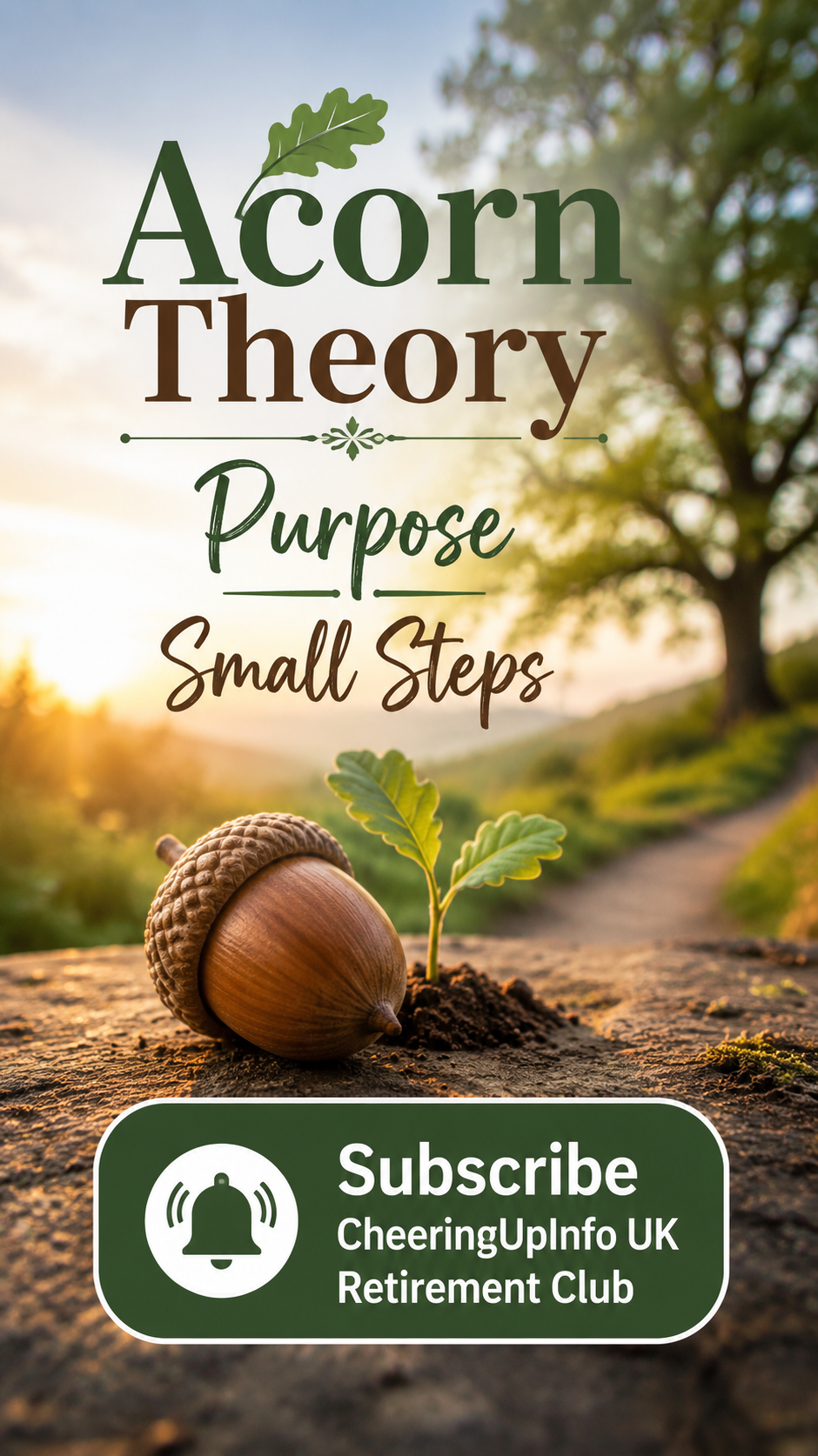
Acorn Theory: Why You Don’t Know Your Purpose Yet (And How Daily Small Steps Reveal It)

Feeling lost? James Hillman’s Acorn Theory suggests you already contain your purpose—like an oak inside an acorn. You don’t find it all at once; you reveal it through daily small steps. Discover why it’s never too late to grow into who you were meant to be, backed by psychology and recent UK research.

What Is Acorn Theory and Why Can’t You See Your Purpose Yet?

Acorn Theory, developed by psychologist James Hillman, proposes that you are born with a unique destiny or “calling” already inside you—just like an oak tree is already inside an acorn. It’s not about genetics or environment alone; it’s about that “particularity you feel to be you,” as Hillman put it . That nagging feeling that you’re here for something more? That’s your acorn trying to grow. The problem is, we’re conditioned to believe purpose is a destination we need to find—but really, it’s a process we need to unfold.

How Does “Not Knowing Your Calling” Actually Hold You Back?

Not knowing your purpose leads to anxiety, depression, and a persistent sense of dissatisfaction, as the gap between who you are and who you could be creates psychological tension . Research shows that 58% of women and 44% of men are open to a different career because they finally have a better idea of what they want from life . Yet, fear of stepping out of comfort zones (31%) and lack of confidence (31%) keep people stuck . Your acorn needs sunlight—but fear is a heavy rock.

Why Do Daily Small Steps Work Better Than Big “Life Changes”?

Daily small steps are the sunlight and water your acorn needs; they bypass the paralysis of “finding your calling” by making the process manageable and less intimidating. Hillman believed the image of your destiny is revealed slowly: “Unpacking the image takes a lifetime. It may be perceived all at once, but understood only slowly” . A 2,000-adult poll found many feel ready for a change within two years—not overnight . That’s the power of incremental action.

Is It Really “Never Too Late” to Start This Process?

According to recent UK data, 54% of women (and 41% of men) believe it’s never too late to pursue a new calling, despite the average person believing 52 is the age it becomes “too late” . Here are three facts that prove it’s never too late to be who you want to be:

  • Fact 1: 45% of Brits regret not chasing their childhood dream job—but a fifth have already retrained to get back on track .
  • Fact 2: 15% of all adults believe their current job doesn’t fit their lifestyle, with flexibility (32%) and fulfillment (32%) valued more as we age .
  • Fact 3: British Gas engineer Kirsty Warren switched from social work to engineering at 36, proving that “whether you’re 26 or 46, if you’ve found your calling, go after it” .

What Does “Growing Down” Mean in Acorn Theory?

“Growing down” is Hillman’s concept of returning to your childhood impulses and fantasies to find the blueprint of your destiny, rather than always striving upwards . We spend our lives accumulating achievements (growing up), but we forget to excavate our true nature (growing down). Hillman urges us to reexamine childhood thoughts, accidents, and fantasies, as they “reflect the blueprints that give direction to the course of a biography” . It’s a process of digging deep, not climbing high.

How Do I Start Listening to My Acorn?

Start by identifying moments when you’ve felt most alive or curious, and take one small step toward that feeling today, regardless of whether it “makes sense” for your current life. Here’s how:

  • Journal your childhood fantasies: What did you love before the world told you what to love?
  • Identify inherited rules: What beliefs about yourself did you inherit from family or society that no longer serve you?
  • Take one tiny action: If you dream of writing, write one sentence. If you dream of gardening, buy one seed. Growth is a verb.

#AcornTheory #Purpose #RetirementLifestyle #RetirementClub #RetirementMagazine

Get help to protect and grow your business faster with CheeringUpInfo targeted marketing at over 55s UK

Find out more about targeting over 55s and those planning for a better retirement with better marketing ideas

Subscribe for free retirement lifestyle improvement ideas product reviews and cost of living reduction tips

Connect with us for free retirement lifestyle improvement tips

Read more retirement lifestyle improvement articles and view videos for free

Connect with us for free alerts to new retirement lifestyle improvement articles and videos

12 Retirement Challenges UK & Practical Solutions

Retirement. It’s a word that conjures up images of sun-drenched beaches, leisurely hobbies, and finally escaping the daily grind. But the reality for many can be quite different. Anxiety can creep in. What about healthcare costs? Will my savings last? What if I get bored? These are just a few of the common retirement worries that can keep retirees awake at night.

Facing Retirement: 12 Common Problems and How to Solve Them

This article will delve into the 12 most common retirement problems facing UK residents, offering practical solutions and actionable advice to help you navigate this exciting new chapter with confidence and ease.

1. Running Out of Money: This is arguably the biggest fear for most retirees. Inflation can erode purchasing power, unexpected medical expenses can drain savings, and longevity risk – living longer than anticipated – can significantly impact retirement income.

  • Solutions:
    • Diversify your investments: Don’t put all your eggs in one basket. A well-diversified portfolio across different asset classes (stocks, bonds, property) can help mitigate risk and potentially increase returns.   
    • Consider annuities: Annuities provide a guaranteed stream of income, which can be crucial for long-term financial security.   
    • Downsize your living expenses: Moving to a smaller home, reducing travel costs, and cutting back on discretionary spending can significantly stretch your retirement income.   
    • Explore part-time work options: Even a small part-time job can provide extra income and a sense of purpose.   

2. Healthcare Costs: Healthcare expenses can skyrocket in retirement.  Prescription drugs, long-term care, and unexpected medical emergencies can quickly deplete savings.   

  • Solutions:
    • Investigate private health insurance options: Private health insurance can provide valuable coverage for a variety of medical expenses.   
    • Maximise your NHS benefits: Understand your eligibility for NHS services and explore available support programmes.
    • Consider long-term care insurance: This type of insurance can help cover the costs of assisted living or nursing home care.
    • Maintain a healthy lifestyle: Regular exercise, a balanced diet, and preventative screenings can help reduce healthcare costs in the long run.

3. Boredom and Loneliness: Many retirees struggle with a lack of purpose and social interaction. The daily routine of work can disappear, leaving a void that can lead to feelings of isolation and depression.   

  • Solutions:
    • Pursue personal interests: Dedicate time to hobbies, volunteer work, or learning new skills.
    • Stay connected with loved ones: Make an effort to maintain social connections with family and friends.
    • Join social clubs or groups: Consider joining a book club, a sports team, or a community organisation.
    • Travel and explore: Travel can be an enriching experience and a great way to meet new people.

4. Cognitive Decline: Cognitive decline is a natural part of ageing, but it can significantly impact quality of life. Memory loss, difficulty concentrating, and challenges with decision-making can make everyday tasks more difficult.   

  • Solutions:
    • Stay mentally active: Engage in mentally stimulating activities such as puzzles, reading, and learning new languages.
    • Maintain a healthy lifestyle: Exercise, a healthy diet, and adequate sleep can help improve cognitive function.   
    • Consider cognitive training programmes: Brain training exercises can help improve memory, attention, and processing speed.   
    • Seek professional help if needed: If you are experiencing significant cognitive decline, consult with a doctor or a cognitive specialist.

5. Inflation: Inflation can erode the purchasing power of your retirement savings over time. This means that the cost of goods and services will increase, making it more difficult to maintain your desired standard of living.   

  • Solutions:
    • Invest in inflation-protected assets: Consider investing in assets such as Treasury Inflation-Protected Securities (TIPS) and inflation-linked bonds.
    • Adjust your spending habits: Regularly review your budget and make adjustments as needed to account for inflation.
    • Increase your income streams: Explore part-time work options or other ways to supplement your retirement income.

6. Longevity Risk: Living longer than expected can significantly impact your retirement finances. If your savings are not sufficient to cover your expenses over a longer lifespan, you may face financial hardship.   

  • Solutions:
    • Plan for a longer life expectancy: When creating your retirement plan, assume a longer life expectancy than you initially anticipate.
    • Consider annuities with longevity riders: These riders provide additional income in the later years of retirement.
    • Explore downsizing options: Downsizing your home can free up equity and reduce living expenses.   

7. Estate Planning: Proper estate planning is crucial to ensure that your assets are distributed according to your wishes and that your loved ones are protected.   

  • Solutions:
    • Create a will: A will outlines how you want your assets to be distributed after your death.   
    • Establish a power of attorney: A power of attorney allows you to designate someone to make financial and legal decisions on your behalf if you become incapacitated.   
    • Consider a trust: A trust can help manage your assets and protect them from estate taxes.   

8. Social Security: Understanding how to maximise your Social Security benefits is crucial. Claiming benefits at the optimal time can significantly impact your retirement income.

  • Solutions:
    • Delay claiming Social Security: Delaying claiming Social Security beyond full retirement age can result in higher monthly benefits.   
    • Coordinate benefits with your spouse: Strategic claiming decisions can maximise benefits for both spouses.
    • Consult with a Social Security expert: A Social Security expert can help you determine the optimal claiming strategy for your individual circumstances.

9. Cybersecurity Threats: Cybersecurity threats are a growing concern for retirees.  Phishing scams, identity theft, and online fraud can jeopardise your financial security.   

  • Solutions:
    • Be wary of phishing emails and phone calls: Never click on links or open attachments from unknown senders.
    • Use strong passwords and enable two-factor authentication: Protect your online accounts with strong passwords and enable two-factor authentication whenever possible.   
    • Be cautious about sharing personal information online: Avoid sharing sensitive information such as your Social Security number or bank account information online.   
    • Install anti-virus and anti-malware software: Protect your devices with reliable security software.

10. Adapting to New Roles and Relationships: Retirement can significantly impact family dynamics and social relationships. Adjusting to new roles and responsibilities can be challenging for both retirees and their loved ones.   

  • Solutions:
    • Communicate openly and honestly: Discuss your expectations and concerns with your family and friends.
    • Maintain a healthy balance between independence and interdependence: Find a balance between spending time alone and spending time with loved ones.
    • Seek support from other retirees: Connect with other retirees who are facing similar challenges.

11. Maintaining a Healthy Lifestyle: Maintaining a healthy lifestyle is crucial for both physical and mental well-being in retirement. Regular exercise, a balanced diet, and adequate sleep can help you enjoy a longer, healthier, and more fulfilling retirement.   

  • Solutions:
    • Engage in regular physical activity: Find activities that you enjoy and that fit your fitness level.
    • Eat a healthy diet: Focus on whole foods, fruits, vegetables, and lean protein.
    • Prioritize sleep: Aim for 7-8 hours of quality sleep per night.
    • Manage stress: Find healthy ways to manage stress, such as yoga, meditation, or spending time in nature.

12. Finding Meaning and Purpose: Many retirees struggle to find meaning and purpose in their lives after leaving the workforce.

  • Solutions:
    • Volunteer your time: Give back to your community by volunteering for a local charity or organisation.
    • Pursue a passion project: Dedicate time to a hobby or interest that you’ve always wanted to explore.
    • Mentor others: Share your knowledge and experience with younger generations.
  • Travel the world: Explore new cultures and broaden your horizons.
  • Start a business: Turn your passion into a profitable venture.

Retirement is a significant life transition. By proactively addressing these common challenges, you can increase your chances of enjoying a fulfilling and rewarding retirement.

Disclaimer: This article is for informational purposes only and does not constitute financial, investment, or legal advice. The information provided should not be relied upon as the sole basis for making any financial or other decisions.

Join our Retirement Club

Get help to protect and grow your business faster with CheeringupUpInfo

Find out more about Lifestyle Improvement Club Corporate Membership

Subscribe for free lifestyle improvement tips reviews and money saving ideas

Connect with us for free

Read more lifestyle improvement articles and view videos for free

Connect with us for free

Retirement Solutions UK

Read and view more :

  1. 12 Retirement Challenges UK & Practical Solutions – relevant for UK residents.
  2. How to Overcome Common Retirement Problems in the UK – retirement problem-solving.
  3. Retirement Planning Guide: 12 Key Issues & Solutions UK – a comprehensive retirement guide for readers who are actively seeking in-depth UK retirement information.
  4. Financial & Lifestyle Challenges in UK Retirement – help with both financial and lifestyle retirement concerns.
  5. Avoiding Common Retirement Mistakes: 12 Tips for UK Residents – for readers who are proactive about their retirement planning and want to prevent problems.

Retirement Solutions hashtags:

  1. #UKRetirement – UK audience interested in retirement.
  2. #RetirementPlanningUK – targeting those actively planning for their retirement in the UK.
  3. #FinancialFreedomUK – those seeking financial independence and security in retirement in UK.
  4. #RetirementLivingUK – focuses on the lifestyle aspects of retirement in the UK.
  5. #RetirementSolutions – retirement problem-solving in the UK.

Enhancing Your Retirement Years: Practical Steps to Improve Your Lifestyle

What does living well in retirement look like for you?

Improving Your Retirement Lifestyle: A Guide for UK Retirees

Retirement is a significant phase in life, often viewed with a mixture of excitement and apprehension. For many, it represents a well-deserved break from the hustle and bustle of working life, a time to enjoy the fruits of their labour. However, for some UK retirees, the reality of retirement may not match the dreams they once had, often due to lifestyle decisions made earlier in life. This article explores the unique challenges that retirees in UK face and the importance of making informed decisions to ensure a fulfilling retirement. We will explore the types of lifestyle decisions made earlier in life that can impact retirement and suggest actionable solutions to improve your retirement lifestyle today.

Transforming Your Retirement: Strategies for a Better Lifestyle in the UK

Want a better retirement? What does that look like for you? How can we help you?

Lifestyle Decisions That Can Impact Retirement in the UK

  1. Financial Planning and Savings One of the most significant decisions affecting retirement lifestyle is financial planning. Many individuals, in their younger years, may not have prioritised saving for retirement or invested in a pension plan. This lack of foresight can result in limited financial resources during retirement, leading to a constrained lifestyle. In the UK, the State Pension alone often does not suffice to maintain a comfortable standard of living. Those who did not plan for additional savings or investments may find themselves struggling to cover even the basic costs of living, let alone enjoy a leisurely retirement.
  2. Health and Wellness Choices Decisions related to health and wellness made earlier in life can have a profound impact on retirement. Poor diet, lack of exercise, smoking, and excessive alcohol consumption can lead to chronic health conditions, such as diabetes, heart disease, and arthritis. These conditions can reduce the quality of life in retirement, lead to increased medical expenses, and limit one’s ability to engage in physical activities or travel.
  3. Career Choices and Work-Life Balance The career paths we choose and the balance we maintain between work and personal life can also influence our retirement. Some individuals may have chosen high-stress jobs that offered substantial financial rewards but took a toll on their health and personal relationships. Others may have opted for careers that provided fulfillment but offered lower financial returns, impacting their savings potential. Additionally, those who prioritised work over personal relationships may find themselves isolated or without a strong social support network in retirement.
  4. Social and Relationship Investments Building and maintaining strong social relationships is crucial for a fulfilling retirement. Decisions around investing time in friendships, community, and family relationships can affect one’s social support network later in life. Those who neglected their social life or failed to build meaningful connections may find themselves feeling lonely and isolated in retirement, which can negatively impact mental health and overall well-being.
  5. Geographical Location Choices Decisions about where to live during one’s working years can also impact retirement lifestyle. Some retirees may find themselves living in locations that are not conducive to ageing, such as homes that require significant upkeep or areas with limited access to healthcare facilities and social amenities. Others may have chosen to live in areas with a high cost of living, which can strain their retirement budget.
  6. Mindset and Attitude Towards Retirement Lastly, one’s mindset and attitude towards retirement can play a significant role. Individuals who viewed retirement as a distant concern or who failed to consider how they would spend their time may find themselves unprepared for the psychological transition from work to retirement. A lack of purpose or direction can lead to feelings of boredom, depression, or anxiety in retirement.

Solutions and Actions to Improve Your Retirement Lifestyle Now

Recognising the impact of past decisions on your current retirement lifestyle is the first step towards improvement. While we cannot change the past, we can take proactive steps to enhance our quality of life in retirement. Here are some practical solutions and actions you can take to improve your retirement lifestyle today:

Reassess and Optimise Your Financial Situation

  • Create a Budget: Start by creating a comprehensive budget that outlines your current expenses and income. This will help you understand your financial situation better and identify areas where you can cut costs. Focus on essential expenses first, such as housing, utilities, food, and healthcare, and then consider discretionary spending.
  • Explore Additional Income Streams: If your retirement savings are insufficient, consider exploring additional income streams. This could include part-time work, freelance opportunities, or turning a hobby into a small business. Many retirees find fulfillment in continuing to work in some capacity, especially if it involves something they are passionate about.
  • Consider Downsizing: If you own a home, consider whether downsizing could be a viable option. Moving to a smaller, more manageable property can free up equity and reduce maintenance costs, providing additional financial resources for your retirement years.
  • Review Your Investments and Pensions: If you have any investments or pension plans, review them to ensure they are performing well. Consider consulting with a financial adviser to explore ways to optimise your investments and ensure a steady income stream throughout retirement.

Prioritise Health and Wellness

  • Adopt a Healthy Diet and Exercise Routine: It’s never too late to improve your health. Focus on adopting a balanced diet rich in fruits, vegetables, lean proteins, and whole grains. Regular exercise, such as walking, swimming, or yoga, can help maintain mobility, strength, and overall health. Many local communities in the UK offer free or low-cost exercise programmes for seniors.
  • Regular Health Check-ups: Schedule regular check-ups with your healthcare provider to monitor any existing health conditions and prevent potential health issues from worsening. Early detection and management are key to maintaining a good quality of life in retirement.
  • Mental Health and Well-being: Pay attention to your mental health. Engage in activities that promote mental well-being, such as meditation, mindfulness, or hobbies that bring joy and fulfillment. If you feel isolated or depressed, consider speaking with a mental health professional or joining support groups.

Strengthen Social Connections and Build a Support Network

  • Reconnect with Old Friends and Family: Reach out to old friends or family members with whom you may have lost contact. Building or rekindling relationships can provide emotional support and reduce feelings of loneliness.
  • Join Clubs and Community Groups: Consider joining local clubs, community groups, or volunteering organisations. Engaging in social activities can help build new friendships and provide a sense of purpose and belonging. Many retirees find great satisfaction in giving back to their communities through volunteer work.
  • Embrace Technology: Learn to use technology to stay connected with loved ones who may live far away. Video calls, social media, and online communities can help bridge the distance and provide opportunities for social interaction.

Explore New Hobbies and Interests

  • Discover New Passions: Retirement is an excellent time to explore new hobbies or interests you may not have had time for earlier in life. Consider activities such as gardening, painting, writing, or learning a musical instrument. Engaging in creative pursuits can provide mental stimulation and a sense of accomplishment.
  • Lifelong Learning: Consider taking up new educational opportunities. Many universities and colleges in the UK offer free or discounted courses for retirees. Learning a new skill or subject can be intellectually stimulating and provide a sense of purpose.
  • Travel and Exploration: If health and finances permit, consider travelling to new places, even if it’s just exploring local attractions or nearby towns. Travel can provide new experiences, broaden your horizons, and create lasting memories.

Reevaluate Your Living Situation

  • Assess Your Home Environment: Consider whether your current living situation is suitable for your retirement lifestyle. If your home is too large, difficult to maintain, or not accessible, consider moving to a more manageable property or a retirement community that offers amenities and social activities.
  • Explore Retirement Communities: Retirement communities can offer a range of benefits, including social activities, healthcare facilities, and a sense of community. If you feel isolated or overwhelmed in your current home, a retirement community might provide a better quality of life.
  • Consider Multigenerational Living: For some, living with family members can provide emotional support, companionship, and shared living expenses. Discuss with your family whether multigenerational living could be a viable option.

Cultivate a Positive Mindset and Embrace Change

  • Adopt a Growth Mindset: Approach retirement with a growth mindset, viewing it as an opportunity to learn, grow, and experience new things. Be open to change and willing to adapt to new circumstances. A positive attitude can significantly impact your overall well-being.
  • Set New Goals and Objectives: Setting new goals can provide direction and motivation in retirement. These goals can be related to personal growth, health, relationships, or hobbies. Having a sense of purpose can enhance your sense of fulfillment and satisfaction in retirement.
  • Practice Gratitude and Mindfulness: Practicing gratitude and mindfulness can help you focus on the positives in your life and reduce stress and anxiety. Consider keeping a gratitude journal or engaging in daily mindfulness exercises to promote a positive outlook.

Seek Professional Guidance

  • Consult a Financial Adviser: If you are unsure about your financial situation or need help planning for the future, consider consulting a financial adviser. They can provide expert guidance on managing your finances, optimising your investments, and ensuring a comfortable retirement.
  • Work with a Life Coach: A life coach can help you navigate the emotional and psychological aspects of retirement, set meaningful goals, and develop strategies to improve your overall quality of life. They can provide personalised support and guidance tailored to your unique needs and circumstances.

Stay Informed and Engaged with the World

  • Keep Up with Current Events: Staying informed about current events and trends can help you feel connected to the world and provide topics of conversation with others. It can also provide opportunities to engage in meaningful discussions or advocate for causes you care about.
  • Engage in community activities or local governance. Many retirees find fulfillment in participating in community activities or contributing to local governance. This can provide a sense of purpose and allow you to use your skills and experience to benefit your community.

Embrace Technology and Digital Literacy

  • Learn Digital Skills: Embrace technology by learning digital skills that can enhance your lifestyle. Whether it’s using the internet for online shopping, staying in touch with loved ones via social media, or managing your finances with online banking, digital literacy can open up new possibilities and make day-to-day life more convenient.
  • Stay Safe Online: As you explore digital spaces, ensure that you are aware of online safety. Learn to recognise scams and protect your personal information online. Many local councils and organisations offer free courses on digital literacy and online safety for seniors.

Plan for the Future with Peace of Mind

  • Review Legal and Financial Documents: Ensure that all your legal and financial documents are up-to-date. This includes your will, power of attorney, and any health directives. Having these documents in place can provide peace of mind and ensure that your wishes are followed in case of any unforeseen circumstances.
  • Discuss End-of-Life Plans: While it can be a difficult conversation, discussing your end-of-life wishes with your family can alleviate stress and ensure that everyone is on the same page. This planning can also help prevent future conflicts and provide clarity for your loved ones.

Conclusion

Retirement is a journey, not a destination. While past decisions have undoubtedly shaped your present circumstances, they do not have to define your future. By reassessing your current situation, making proactive choices, and embracing new opportunities, you can significantly improve your retirement lifestyle. Remember, it’s never too late to make positive changes. Good advice to all UK retirees is to focus on what you can control, stay positive, and seek out new experiences and connections that bring joy and fulfillment. Your retirement years can be some of the most rewarding and enriching years of your life, filled with growth, exploration, and contentment. Embrace this new chapter with an open mind and a proactive spirit, and you’ll find that improving your retirement lifestyle is entirely within your reach.

Join our Retirement Club

People planning for their retirement or already retired will benefit from Retirement Club membership. Business leaders or business owners will benefit from Corporate membership.

Subscribe for free lifestyle improvement tips and reviews

Connect with us

Read more lifestyle improvement articles and videos for free

Connect with us

Over-55s: Why Gratitude Beats Another Cruise

Your retirement ‘to-do list’ is stealing your peace. Here’s the 10-second fix.

Over-55s in the UK — this story is your pause button.

You’ve earned rest. Not restlessness.

  • “74% of retirees say gratitude = higher daily happiness” – Age UK / LSE, 2024
  • “Only 23% say more money = better retirement” – UK Retirement Wisdom Survey, 2025
  • “62% feel better after less social media comparison” – CheeringUp.info data, 2026

What you already have right now:
☕ A quiet morning with no rush
🌼 A small garden or sunny windowsill
📞 A friend who still calls
🕊️ Health to watch another sunset

That’s the real retirement wealth.

Pause this video. Look around. Drop ONE emoji in comments for what you’re grateful for today.
🌅 🫖 🌸 👵 👴 ☕

Stop chasing. Start enjoying.

👉 Join CheeringUp.info Retirement Club – free for UK over-55s.

#RetirementGratitudeUK #Over55TikTok #CheeringUpRetirementClub #RetirementClub #RetirementMagazine

Bluebells Haredene Woods Longhorsley Northumberland