
Stop Chasing & Just Be: The Art of Flânerie for a Better Retirement | CheeringUp.info

Discover how embracing the French art of flânerie can transform your retirement. Stop chasing, start observing, and enjoy simply existing to improve your retirement lifestyle today.

Stop Chasing, Start Living: Embracing the Art of Flânerie in Retirement

Why Embrace the Flâneur Lifestyle in Retirement?

Retirement is the ultimate opportunity to trade the relentless chase for a life of quiet observation, exactly as the flâneur does. The philosophy of flânerie—wandering with intention and observing without interacting—directly counters the “busy” mindset many retirees struggle to leave behind . For author Erika Owen, tapping into this simple act of wandering has made her more calm, creative, and accepting of change . It is not about being lazy; it is about being present.

How Do I Start My Journey as a Retired Flâneur?

You start by simply taking a walk with no destination, allowing yourself to be a passive observer of the world around you. “Flaneuring is experiencing your environment without interacting with it,” explains Owen . This is a toolkit you can use anywhere . It involves:

  • Walking without a specific purpose.
  • Observing the details you usually miss.
  • Refraining from checking your phone.
  • Accepting changes in plans (like a blocked path) as part of the experience.
  • Viewing the world as a spectator, not a participant.

This practice has helped people feel more connected to their bodies, aware of physical sensations and the simple joy of movement .

What Are the Key Benefits of Slowing Down and Observing?

Adopting the flâneur mindset can spark creativity, reduce stress, and improve your overall well-being in retirement. Embracing this intentional wandering supports a more mindful mentality . Owen notes that after making a deliberate effort to incorporate more spontaneity into her life, she experienced several positive impacts:

  • Rediscovered Creativity: Inspiration strikes far more often when you’re not looking for it.
  • A Calmer Mindset: You will find yourself with less emotional clutter to “work through.”
  • Increased Perspective: Annoying moments (like a delayed train) become less annoying when you have another option (like walking).
  • A Better Connection to Your Body: You become more aware of your physical self and its capabilities.

How Does This Philosophy Improve Health and Happiness in the UK?

With UK healthy life expectancy falling, prioritising mental and physical well-being through mindful practices is more critical than ever. Recent data reveals that people in the UK can now expect to spend fewer years in ‘good’ health . The Office for National Statistics (ONS) data for 2022-24 shows healthy life expectancy has dropped to its lowest level since records began in 2011-13 . This has prompted concerns about a “growing chasm” of poor health before the State Pension age (rising to 67) kicks in .

The flâneur lifestyle directly addresses this by promoting a slower, more observant pace of life. As the French philosopher Jean-Jacques Rousseau suggested, “The world is the book of those who walk.” By simply wandering and observing, you can reduce stress and improve mental health, which is vital as the UK’s happiness ranking has also declined (from 18th to 21st place globally).

3 Facts to Back Up This Philosophy

  1. Creativity Boost: Inspiration strikes far more often when you are not looking for it, making wandering a powerful tool for mental stimulation .
  2. Stress Reduction: Flaneuring helps you become a calmer person, with less mental clutter to “work through” during quiet moments .
  3. Health Imperative: As of 2022-24, UK healthy life expectancy for men is 60.7 years and for women 60.9 years, the lowest level on record, highlighting the need for a gentler retirement lifestyle .

#RetirementLifestyle #Flaneur #MindfulRetirement #RetirementMagazine #RetirementClub

Get help to protect and grow your business faster targeting over 55s and those planning for retirement

Find out more about growing your business faster with CheeringUpInfo targeted marketing

Subscribe for free retirement lifestyle improvement ideas product reviews and cost of living reduction tips

Connect with CheeringUpInfo for free retirement lifestyle improvement tips

Read more retirement lifestyle improvement articles and view videos for free

Connect with CheeringUpInfo for free alerts to new retirement lifestyle improvement articles and videos

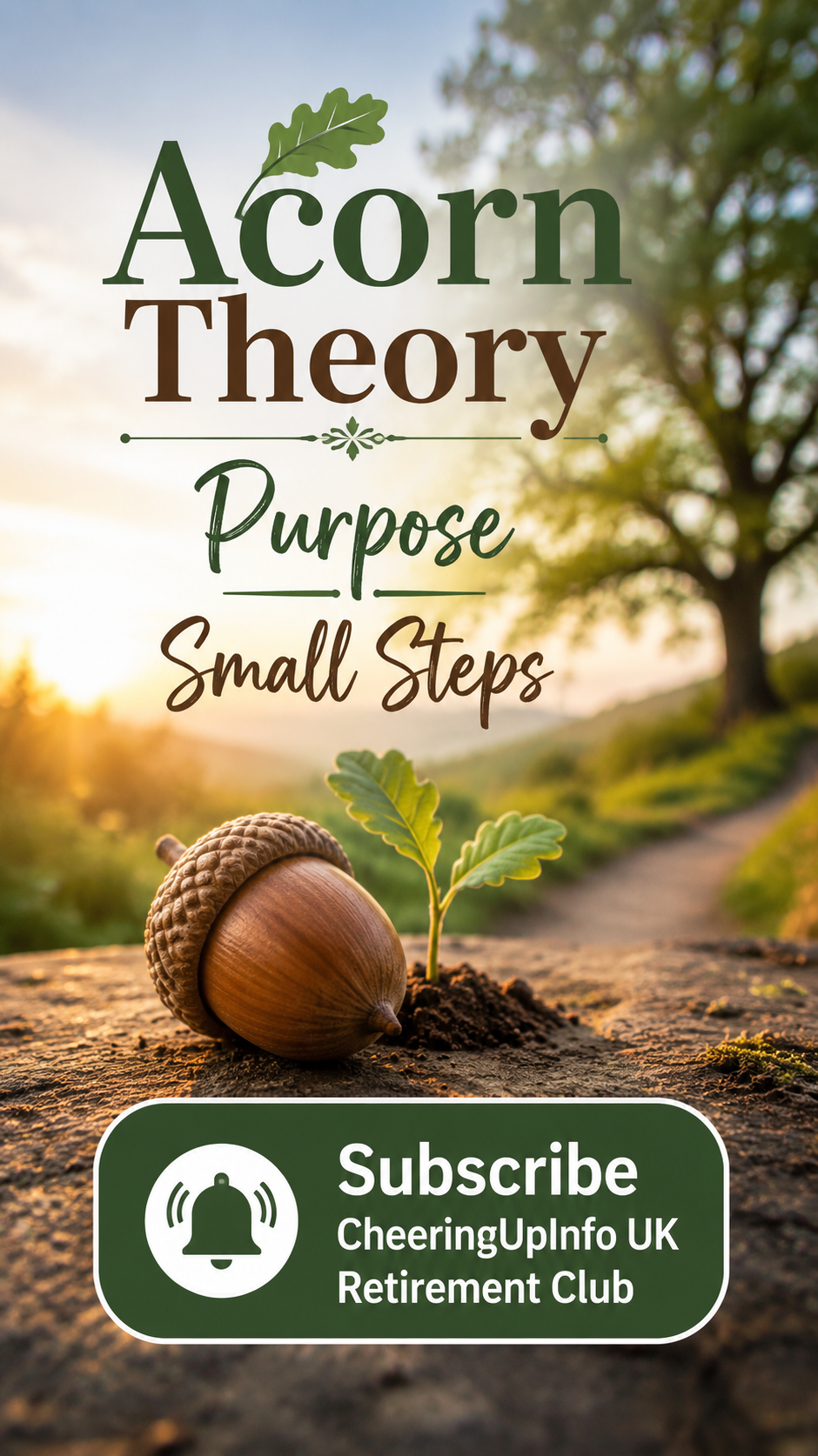
Acorn Theory: Why You Don’t Know Your Purpose Yet (And How Daily Small Steps Reveal It)

Feeling lost? James Hillman’s Acorn Theory suggests you already contain your purpose—like an oak inside an acorn. You don’t find it all at once; you reveal it through daily small steps. Discover why it’s never too late to grow into who you were meant to be, backed by psychology and recent UK research.

What Is Acorn Theory and Why Can’t You See Your Purpose Yet?

Acorn Theory, developed by psychologist James Hillman, proposes that you are born with a unique destiny or “calling” already inside you—just like an oak tree is already inside an acorn. It’s not about genetics or environment alone; it’s about that “particularity you feel to be you,” as Hillman put it . That nagging feeling that you’re here for something more? That’s your acorn trying to grow. The problem is, we’re conditioned to believe purpose is a destination we need to find—but really, it’s a process we need to unfold.

How Does “Not Knowing Your Calling” Actually Hold You Back?

Not knowing your purpose leads to anxiety, depression, and a persistent sense of dissatisfaction, as the gap between who you are and who you could be creates psychological tension . Research shows that 58% of women and 44% of men are open to a different career because they finally have a better idea of what they want from life . Yet, fear of stepping out of comfort zones (31%) and lack of confidence (31%) keep people stuck . Your acorn needs sunlight—but fear is a heavy rock.

Why Do Daily Small Steps Work Better Than Big “Life Changes”?

Daily small steps are the sunlight and water your acorn needs; they bypass the paralysis of “finding your calling” by making the process manageable and less intimidating. Hillman believed the image of your destiny is revealed slowly: “Unpacking the image takes a lifetime. It may be perceived all at once, but understood only slowly” . A 2,000-adult poll found many feel ready for a change within two years—not overnight . That’s the power of incremental action.

Is It Really “Never Too Late” to Start This Process?

According to recent UK data, 54% of women (and 41% of men) believe it’s never too late to pursue a new calling, despite the average person believing 52 is the age it becomes “too late” . Here are three facts that prove it’s never too late to be who you want to be:

  • Fact 1: 45% of Brits regret not chasing their childhood dream job—but a fifth have already retrained to get back on track .
  • Fact 2: 15% of all adults believe their current job doesn’t fit their lifestyle, with flexibility (32%) and fulfillment (32%) valued more as we age .
  • Fact 3: British Gas engineer Kirsty Warren switched from social work to engineering at 36, proving that “whether you’re 26 or 46, if you’ve found your calling, go after it” .

What Does “Growing Down” Mean in Acorn Theory?

“Growing down” is Hillman’s concept of returning to your childhood impulses and fantasies to find the blueprint of your destiny, rather than always striving upwards . We spend our lives accumulating achievements (growing up), but we forget to excavate our true nature (growing down). Hillman urges us to reexamine childhood thoughts, accidents, and fantasies, as they “reflect the blueprints that give direction to the course of a biography” . It’s a process of digging deep, not climbing high.

How Do I Start Listening to My Acorn?

Start by identifying moments when you’ve felt most alive or curious, and take one small step toward that feeling today, regardless of whether it “makes sense” for your current life. Here’s how:

  • Journal your childhood fantasies: What did you love before the world told you what to love?
  • Identify inherited rules: What beliefs about yourself did you inherit from family or society that no longer serve you?
  • Take one tiny action: If you dream of writing, write one sentence. If you dream of gardening, buy one seed. Growth is a verb.

#AcornTheory #Purpose #RetirementLifestyle #RetirementClub #RetirementMagazine

Get help to protect and grow your business faster with CheeringUpInfo targeted marketing at over 55s UK

Find out more about targeting over 55s and those planning for a better retirement with better marketing ideas

Subscribe for free retirement lifestyle improvement ideas product reviews and cost of living reduction tips

Connect with us for free retirement lifestyle improvement tips

Read more retirement lifestyle improvement articles and view videos for free

Connect with us for free alerts to new retirement lifestyle improvement articles and videos

Thompson’s Rock: The Ultimate Summer Solstice Experience for the CheeringUp.info Retirement Club

Thompson’s Rock is a mysterious holed stone in the Simonside Hills that aligns perfectly with the Summer Solstice sunset. Created as a prehistoric solar observatory and discovered in 1987 by David Thompson, this 5-tonne rock offers a spectacular light show for a few minutes every June. This review by the CheeringUp.info Retirement Club details what it is, where to find it, and why it is a must-visit.

Thompson’s Rock: Why Is This Ancient Solstice Stone a Must-Visit for Your CheeringUp.info Retirement Club Adventure?

What Is Thompson’s Rock, and Why Does It Matter for the Summer Solstice?

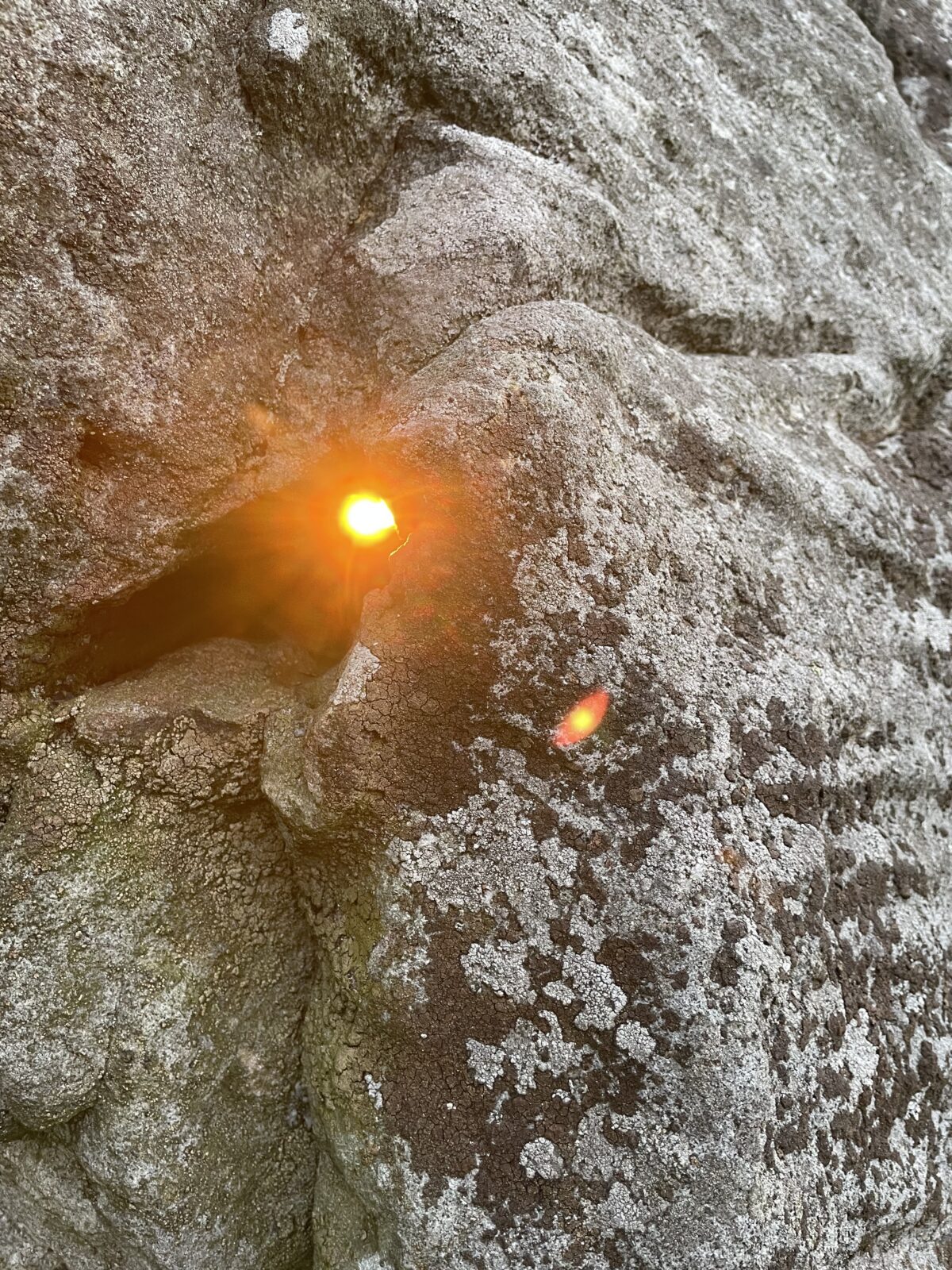
Thompson’s Rock is a fascinating holed stone perched on the slopes of the Simonside Hills in Northumberland that comes alive during the Summer Solstice . This isn’t just a rock; it’s a “Solar Observatory” where the setting sun on the longest day of the year shines perfectly through a man-made or natural hole, creating a spectacular light effect . For the CheeringUp.info Retirement Club, it’s an opportunity to connect with ancient history, marvel at the ingenuity of our ancestors, and experience a unique event that combines walking, archaeology, and astronomy.

Who Created Thompson’s Rock and Why Was It Built?

While it was discovered in 1987 by the late David Thompson, the origin of the hole remains a mystery as it has “never been studied by a qualified archaeologist” . The stone itself is estimated to weigh “4 or 5 tonnes” . The leading theory suggests the hole, whether natural or enhanced, was deliberately positioned to function as a prehistoric calendar, aligning with the “midsummer sunset over Yarnspath Law” . A detailed study by Crispian Oates confirmed that the sight-line through the hole has an “azimuthal alignment of 132.2-312.2° which corresponds with the azimuth of the present winter solstice sunrise and the summer solstice sunset at a latitude of 55° north” . This incredible accuracy suggests it was a vital tool for ancient communities to mark the changing seasons.

Where Is Thompson’s Rock Located?

Thompson’s Rock is located in the Simonside Hills, just inside Northumberland National Park, southwest of the town of Rothbury. It sits specifically on the “lower slopes of the easternmost Simonside Hill, The Beacon” . This hidden gem is off the beaten path and is not signposted, but its secluded location adds to its magic and mystery.

When Is the Best Time to Visit Thompson’s Rock?

The absolute best time to visit is during the Summer Solstice, around June 20th to 21st, to witness the sun shining through the hole . “At the summer solstice sunset, the sun shines through the hole producing the dramatic effect of a bright light in the centre of the stone” . The effect is so precise that the sun shines through the hole for “about 8 minutes” . However, for a quieter, contemplative experience, the days just before or after the solstice are also excellent, as you can still see the alignment. Visiting at any time of year offers a great walk with stunning views over the Northumberland countryside.

How to Find Thompson’s Rock Easily: A Step-by-Step Guide

Finding Thompson’s Rock is straightforward if you know the route. It’s a short walk that is perfect for the CheeringUp.info Retirement Club.

  • Park at Lordenshaw Car Park: This is the nearest and most convenient starting point . It’s “only 700 metres from car park to stone” .
  • Follow the Path to Simonside Ridge: From the car park, “head straight up onto the Simonside ridge” .
  • Take the Right Fork: “Follow the path as it forks to the right” .
  • Look for the Narrow Heather Path: As you “approach the final ascent for The Beacon, turn right onto a narrow path through the heather” .
  • Spot the Largest Rock: “Thompson’s Rock is easy to spot, it’s the biggest there” among a group of rocks on the flat area .

Stats and Facts to Back Up the Importance of Thompson’s Rock

  • Precise Alignment: The hole is aligned to an azimuth of 312.2° for the summer solstice sunset .
  • Size and Weight: The rock is estimated to weigh between 4 and 5 tonnes .
  • Length of the Hole: The hole runs for an impressive 150cm (1.5 meters) through the rock .
  • Viewing Time: The sun shines through the hole for approximately 8 minutes at the solstice .
  • Age of Surrounding History: The area is steeped in history, with Bronze Age rock art nearby dating back between 6,000 and 3,500 years .

CheeringUp.info Retirement Club encourages you to add this incredible experience to your bucket list. It’s a chance to step back in time, enjoy the great outdoors, and witness a celestial event that has been celebrated for millennia.

Grow your business faster targeting over 55s in UK and those planning for better retirement lifestyle

Find out more about CheeringUpInfo Retirement Club ideas for growing your business faster

Subscribe for free retirement lifestyle improvement ideas product reviews and cost of living reduction tips

Connect with CheeringUpInfo for free retirement lifestyle improvement tips

Read more retirement lifestyle improvement articles and view videos for free

Connect with CheeringUpInfo for free alerts to new retirement lifestyle improvement articles and videos

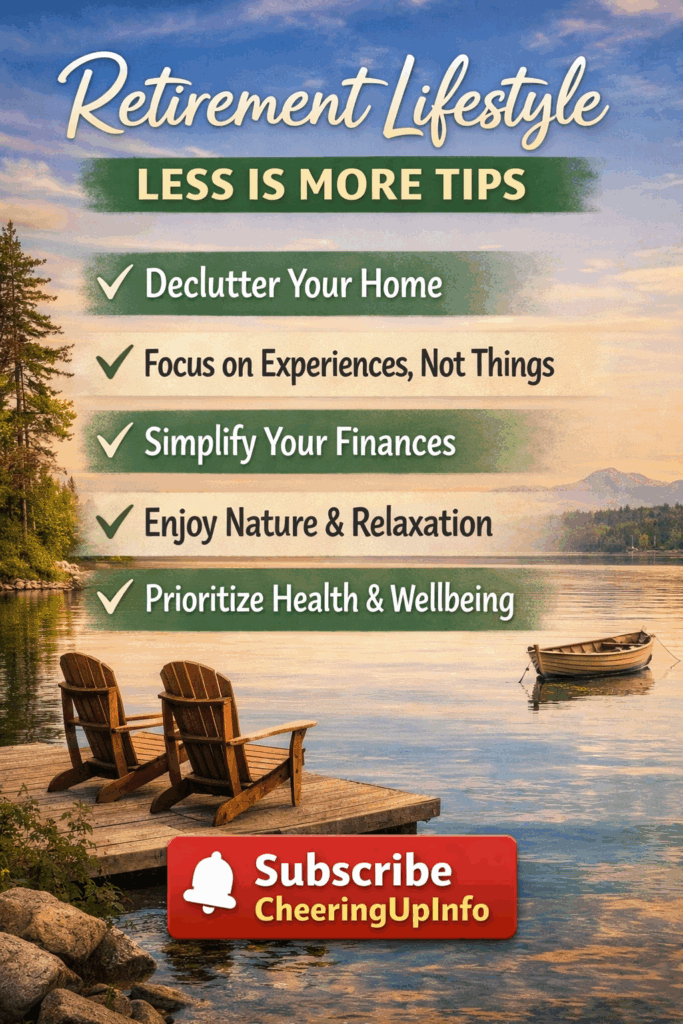
Enhancing Your Retirement Years: Practical Steps to Improve Your Lifestyle

What does living well in retirement look like for you?

Improving Your Retirement Lifestyle: A Guide for UK Retirees

Retirement is a significant phase in life, often viewed with a mixture of excitement and apprehension. For many, it represents a well-deserved break from the hustle and bustle of working life, a time to enjoy the fruits of their labour. However, for some UK retirees, the reality of retirement may not match the dreams they once had, often due to lifestyle decisions made earlier in life. This article explores the unique challenges that retirees in UK face and the importance of making informed decisions to ensure a fulfilling retirement. We will explore the types of lifestyle decisions made earlier in life that can impact retirement and suggest actionable solutions to improve your retirement lifestyle today.

Transforming Your Retirement: Strategies for a Better Lifestyle in the UK

Want a better retirement? What does that look like for you? How can we help you?

Lifestyle Decisions That Can Impact Retirement in the UK

  1. Financial Planning and Savings One of the most significant decisions affecting retirement lifestyle is financial planning. Many individuals, in their younger years, may not have prioritised saving for retirement or invested in a pension plan. This lack of foresight can result in limited financial resources during retirement, leading to a constrained lifestyle. In the UK, the State Pension alone often does not suffice to maintain a comfortable standard of living. Those who did not plan for additional savings or investments may find themselves struggling to cover even the basic costs of living, let alone enjoy a leisurely retirement.
  2. Health and Wellness Choices Decisions related to health and wellness made earlier in life can have a profound impact on retirement. Poor diet, lack of exercise, smoking, and excessive alcohol consumption can lead to chronic health conditions, such as diabetes, heart disease, and arthritis. These conditions can reduce the quality of life in retirement, lead to increased medical expenses, and limit one’s ability to engage in physical activities or travel.
  3. Career Choices and Work-Life Balance The career paths we choose and the balance we maintain between work and personal life can also influence our retirement. Some individuals may have chosen high-stress jobs that offered substantial financial rewards but took a toll on their health and personal relationships. Others may have opted for careers that provided fulfillment but offered lower financial returns, impacting their savings potential. Additionally, those who prioritised work over personal relationships may find themselves isolated or without a strong social support network in retirement.
  4. Social and Relationship Investments Building and maintaining strong social relationships is crucial for a fulfilling retirement. Decisions around investing time in friendships, community, and family relationships can affect one’s social support network later in life. Those who neglected their social life or failed to build meaningful connections may find themselves feeling lonely and isolated in retirement, which can negatively impact mental health and overall well-being.
  5. Geographical Location Choices Decisions about where to live during one’s working years can also impact retirement lifestyle. Some retirees may find themselves living in locations that are not conducive to ageing, such as homes that require significant upkeep or areas with limited access to healthcare facilities and social amenities. Others may have chosen to live in areas with a high cost of living, which can strain their retirement budget.
  6. Mindset and Attitude Towards Retirement Lastly, one’s mindset and attitude towards retirement can play a significant role. Individuals who viewed retirement as a distant concern or who failed to consider how they would spend their time may find themselves unprepared for the psychological transition from work to retirement. A lack of purpose or direction can lead to feelings of boredom, depression, or anxiety in retirement.

Solutions and Actions to Improve Your Retirement Lifestyle Now

Recognising the impact of past decisions on your current retirement lifestyle is the first step towards improvement. While we cannot change the past, we can take proactive steps to enhance our quality of life in retirement. Here are some practical solutions and actions you can take to improve your retirement lifestyle today:

Reassess and Optimise Your Financial Situation

  • Create a Budget: Start by creating a comprehensive budget that outlines your current expenses and income. This will help you understand your financial situation better and identify areas where you can cut costs. Focus on essential expenses first, such as housing, utilities, food, and healthcare, and then consider discretionary spending.
  • Explore Additional Income Streams: If your retirement savings are insufficient, consider exploring additional income streams. This could include part-time work, freelance opportunities, or turning a hobby into a small business. Many retirees find fulfillment in continuing to work in some capacity, especially if it involves something they are passionate about.
  • Consider Downsizing: If you own a home, consider whether downsizing could be a viable option. Moving to a smaller, more manageable property can free up equity and reduce maintenance costs, providing additional financial resources for your retirement years.
  • Review Your Investments and Pensions: If you have any investments or pension plans, review them to ensure they are performing well. Consider consulting with a financial adviser to explore ways to optimise your investments and ensure a steady income stream throughout retirement.

Prioritise Health and Wellness

  • Adopt a Healthy Diet and Exercise Routine: It’s never too late to improve your health. Focus on adopting a balanced diet rich in fruits, vegetables, lean proteins, and whole grains. Regular exercise, such as walking, swimming, or yoga, can help maintain mobility, strength, and overall health. Many local communities in the UK offer free or low-cost exercise programmes for seniors.
  • Regular Health Check-ups: Schedule regular check-ups with your healthcare provider to monitor any existing health conditions and prevent potential health issues from worsening. Early detection and management are key to maintaining a good quality of life in retirement.
  • Mental Health and Well-being: Pay attention to your mental health. Engage in activities that promote mental well-being, such as meditation, mindfulness, or hobbies that bring joy and fulfillment. If you feel isolated or depressed, consider speaking with a mental health professional or joining support groups.

Strengthen Social Connections and Build a Support Network

  • Reconnect with Old Friends and Family: Reach out to old friends or family members with whom you may have lost contact. Building or rekindling relationships can provide emotional support and reduce feelings of loneliness.
  • Join Clubs and Community Groups: Consider joining local clubs, community groups, or volunteering organisations. Engaging in social activities can help build new friendships and provide a sense of purpose and belonging. Many retirees find great satisfaction in giving back to their communities through volunteer work.
  • Embrace Technology: Learn to use technology to stay connected with loved ones who may live far away. Video calls, social media, and online communities can help bridge the distance and provide opportunities for social interaction.

Explore New Hobbies and Interests

  • Discover New Passions: Retirement is an excellent time to explore new hobbies or interests you may not have had time for earlier in life. Consider activities such as gardening, painting, writing, or learning a musical instrument. Engaging in creative pursuits can provide mental stimulation and a sense of accomplishment.
  • Lifelong Learning: Consider taking up new educational opportunities. Many universities and colleges in the UK offer free or discounted courses for retirees. Learning a new skill or subject can be intellectually stimulating and provide a sense of purpose.
  • Travel and Exploration: If health and finances permit, consider travelling to new places, even if it’s just exploring local attractions or nearby towns. Travel can provide new experiences, broaden your horizons, and create lasting memories.

Reevaluate Your Living Situation

  • Assess Your Home Environment: Consider whether your current living situation is suitable for your retirement lifestyle. If your home is too large, difficult to maintain, or not accessible, consider moving to a more manageable property or a retirement community that offers amenities and social activities.
  • Explore Retirement Communities: Retirement communities can offer a range of benefits, including social activities, healthcare facilities, and a sense of community. If you feel isolated or overwhelmed in your current home, a retirement community might provide a better quality of life.
  • Consider Multigenerational Living: For some, living with family members can provide emotional support, companionship, and shared living expenses. Discuss with your family whether multigenerational living could be a viable option.

Cultivate a Positive Mindset and Embrace Change

  • Adopt a Growth Mindset: Approach retirement with a growth mindset, viewing it as an opportunity to learn, grow, and experience new things. Be open to change and willing to adapt to new circumstances. A positive attitude can significantly impact your overall well-being.
  • Set New Goals and Objectives: Setting new goals can provide direction and motivation in retirement. These goals can be related to personal growth, health, relationships, or hobbies. Having a sense of purpose can enhance your sense of fulfillment and satisfaction in retirement.
  • Practice Gratitude and Mindfulness: Practicing gratitude and mindfulness can help you focus on the positives in your life and reduce stress and anxiety. Consider keeping a gratitude journal or engaging in daily mindfulness exercises to promote a positive outlook.

Seek Professional Guidance

  • Consult a Financial Adviser: If you are unsure about your financial situation or need help planning for the future, consider consulting a financial adviser. They can provide expert guidance on managing your finances, optimising your investments, and ensuring a comfortable retirement.
  • Work with a Life Coach: A life coach can help you navigate the emotional and psychological aspects of retirement, set meaningful goals, and develop strategies to improve your overall quality of life. They can provide personalised support and guidance tailored to your unique needs and circumstances.

Stay Informed and Engaged with the World

  • Keep Up with Current Events: Staying informed about current events and trends can help you feel connected to the world and provide topics of conversation with others. It can also provide opportunities to engage in meaningful discussions or advocate for causes you care about.
  • Engage in community activities or local governance. Many retirees find fulfillment in participating in community activities or contributing to local governance. This can provide a sense of purpose and allow you to use your skills and experience to benefit your community.

Embrace Technology and Digital Literacy

  • Learn Digital Skills: Embrace technology by learning digital skills that can enhance your lifestyle. Whether it’s using the internet for online shopping, staying in touch with loved ones via social media, or managing your finances with online banking, digital literacy can open up new possibilities and make day-to-day life more convenient.
  • Stay Safe Online: As you explore digital spaces, ensure that you are aware of online safety. Learn to recognise scams and protect your personal information online. Many local councils and organisations offer free courses on digital literacy and online safety for seniors.

Plan for the Future with Peace of Mind

  • Review Legal and Financial Documents: Ensure that all your legal and financial documents are up-to-date. This includes your will, power of attorney, and any health directives. Having these documents in place can provide peace of mind and ensure that your wishes are followed in case of any unforeseen circumstances.
  • Discuss End-of-Life Plans: While it can be a difficult conversation, discussing your end-of-life wishes with your family can alleviate stress and ensure that everyone is on the same page. This planning can also help prevent future conflicts and provide clarity for your loved ones.

Conclusion

Retirement is a journey, not a destination. While past decisions have undoubtedly shaped your present circumstances, they do not have to define your future. By reassessing your current situation, making proactive choices, and embracing new opportunities, you can significantly improve your retirement lifestyle. Remember, it’s never too late to make positive changes. Good advice to all UK retirees is to focus on what you can control, stay positive, and seek out new experiences and connections that bring joy and fulfillment. Your retirement years can be some of the most rewarding and enriching years of your life, filled with growth, exploration, and contentment. Embrace this new chapter with an open mind and a proactive spirit, and you’ll find that improving your retirement lifestyle is entirely within your reach.

Join our Retirement Club

People planning for their retirement or already retired will benefit from Retirement Club membership. Business leaders or business owners will benefit from Corporate membership.

Subscribe for free lifestyle improvement tips and reviews

Connect with us

Read more lifestyle improvement articles and videos for free

Connect with us

Over-55s: Why Gratitude Beats Another Cruise

Your retirement ‘to-do list’ is stealing your peace. Here’s the 10-second fix.

Over-55s in the UK — this story is your pause button.

You’ve earned rest. Not restlessness.

  • “74% of retirees say gratitude = higher daily happiness” – Age UK / LSE, 2024
  • “Only 23% say more money = better retirement” – UK Retirement Wisdom Survey, 2025
  • “62% feel better after less social media comparison” – CheeringUp.info data, 2026

What you already have right now:
☕ A quiet morning with no rush
🌼 A small garden or sunny windowsill
📞 A friend who still calls
🕊️ Health to watch another sunset

That’s the real retirement wealth.

Pause this video. Look around. Drop ONE emoji in comments for what you’re grateful for today.
🌅 🫖 🌸 👵 👴 ☕

Stop chasing. Start enjoying.

👉 Join CheeringUp.info Retirement Club – free for UK over-55s.

#RetirementGratitudeUK #Over55TikTok #CheeringUpRetirementClub #RetirementClub #RetirementMagazine

Bluebells Haredene Woods Longhorsley Northumberland