The Person You Are: How to Live the Life of That Person Every Day

Discover the neuroscience-backed secret to becoming your ideal self: act “as if” you already are that person. This post explains how embodying your aspirational identity today—through the psychological principle of “possible selves”—can transform your retirement reality. Join the CheeringUp.info Retirement Club to connect with like-minded individuals on this journey of self-reinvention.

What Is the Person I Am Meant to Become in Retirement?

The person you are meant to become is not a distant stranger waiting in the future; they are a version of you that already exists in your imagination, waiting to be embodied through action. This concept, rooted in the psychological theory of “possible selves,” suggests that your aspirations and fears about the future directly influence your current motivation and behaviour. For those in retirement, this is the perfect opportunity to define and live into that aspirational identity.


Why Should You Live the Life of That Person Every Day, Even If You Aren’t There Yet?

You should live the life of that person every single day because the gap between your current self and your ideal self is bridged by the practice of “acting as if.” The phrase “fake it till you make it” is not about deception; it’s a practical application of neuroplasticity, allowing your brain to rewire itself through consistent behaviour. William James, a highly influential philosopher, noted, “If you want a quality, act ‘as if’ you already had it” . By embodying the confident, engaged retiree you wish to be, you are accelerating that identity integration.

  • Neuroplasticity in Action: Your brain creates new neural pathways when you consistently act in a certain way. The more you show up as your future self, the more natural it becomes .
  • The Feedback Loop: Actions influence emotions as much as emotions influence actions. A forced smile can trigger a happier mood . The physical state of your body can directly impact your mood and cognition; for instance, raising your spine and holding your head up can lead to a boost in self-confidence .
  • Closing the Gap: As one executive coach noted, high performers consciously imagine their ideal future self’s reactions, tone, and attitude before the moment arrives. These future qualities act as an anchor, reducing burnout and increasing joy . One professional who adopted this strategy reported that within a month of consciously presenting as “cool, calm, and collected,” he stopped performing and started being .

How Does the “Possible Selves” Theory Support This Claim?

The “possible selves” theory provides the academic backbone for this mindset, showing that your vision of who you could become is a powerful motivator. According to this theory, individuals are driven to take actions that either move them toward their “ideal self” (a positive image worth pursuing) or away from their “feared self” (a negative image to be avoided) . In the context of retirement, this means that if you want to be an active, connected, and purposeful individual, you must create a vivid, detailed version of that self and take steps to live into it.

Research has found that informal learning accounts for 80% of personal knowledge and skills acquisition . For retirees, this means the vast majority of your growth comes from self-directed activities.

  • Fact 1: Your brain often cannot distinguish between a vividly imagined experience and a real one . This is why visualization is so powerful in rewiring limiting beliefs.
  • Fact 2: The Reticular Activating System (RAS) in your brain filters information based on your goals. When you act “as if,” you engage the RAS to notice opportunities that align with your aspirational identity .
  • Fact 3: According to research on “possible selves,” those who clearly express their future self-images are more inclined to implement the tactics needed to realize their goals .

What Are the Practical Steps to Embodying Your Ideal Retired Self?

Embodying your ideal retired self involves practical, daily habits that reinforce your new identity. You can start by defining three aspirational words that capture your best future self and setting them as reminders on your phone or calendar . This simple habit creates a “check-in” to ensure your actions align with the person you are becoming.

  • Dress the Part: Show up to your day dressed like the person you want to become. As one expert put it, “Energy matters” .
  • Take Brave Action Daily: As Franklin D. Roosevelt famously said, “Do the thing and you will have the power.” Power and confidence follow action, not the other way around . Don’t wait to feel ready; build confidence through momentum.
  • Journal from the Future: Write from the perspective of the version of you who has already “made it.” What are they doing? What do they feel? What are they grateful for? .
  • Use the “Best Possible Self” Exercise: Write for 20 minutes, three days in a row, about what your life will look like in several years if everything goes as well as possible. This has been shown to improve mood for up to three weeks .
  • Make a Pact: Commit to acting enthusiastic for 30 days. Track your mood, relationships, and productivity as enthusiasm goes from something you force to a habit that feels real .

What Role Does the CheeringUp.info Retirement Club Play in This Transformation?

The CheeringUp.info Retirement Club is your community for this transformation, providing a supportive environment to share your journey and find inspiration. Our online retirement club for over-55s in the UK helps you connect with like-minded people who are also actively designing their best retired lives. By engaging with our community, you are “surrounding yourself with evidence” that your vision is achievable .

#ActAsIf #RetirementGoals #CheeringUpClub #RetirementClub #RetirementMagazine

Get help to protect and grow your business faster more cost effectively with CheeringUpInfo

Find out more about CheeringUpInfo targeted marketing to over 55s and those planning for better retirement

Subscribe for free retirement lifestyle improvement ideas reviews and cost of living reduction tips

Connect with CheeringUpInfo for free retirement lifestyle improvement tips

Read more retirement lifestyle improvement articles and view videos for free

Connect with us for free alerts to new retirement lifestyle improvement articles and videos

Stop Chasing & Just Be: The Art of Flânerie for a Better Retirement | CheeringUp.info

Discover how embracing the French art of flânerie can transform your retirement. Stop chasing, start observing, and enjoy simply existing to improve your retirement lifestyle today.

Stop Chasing, Start Living: Embracing the Art of Flânerie in Retirement

Why Embrace the Flâneur Lifestyle in Retirement?

Retirement is the ultimate opportunity to trade the relentless chase for a life of quiet observation, exactly as the flâneur does. The philosophy of flânerie—wandering with intention and observing without interacting—directly counters the “busy” mindset many retirees struggle to leave behind . For author Erika Owen, tapping into this simple act of wandering has made her more calm, creative, and accepting of change . It is not about being lazy; it is about being present.

How Do I Start My Journey as a Retired Flâneur?

You start by simply taking a walk with no destination, allowing yourself to be a passive observer of the world around you. “Flaneuring is experiencing your environment without interacting with it,” explains Owen . This is a toolkit you can use anywhere . It involves:

  • Walking without a specific purpose.
  • Observing the details you usually miss.
  • Refraining from checking your phone.
  • Accepting changes in plans (like a blocked path) as part of the experience.
  • Viewing the world as a spectator, not a participant.

This practice has helped people feel more connected to their bodies, aware of physical sensations and the simple joy of movement .

What Are the Key Benefits of Slowing Down and Observing?

Adopting the flâneur mindset can spark creativity, reduce stress, and improve your overall well-being in retirement. Embracing this intentional wandering supports a more mindful mentality . Owen notes that after making a deliberate effort to incorporate more spontaneity into her life, she experienced several positive impacts:

  • Rediscovered Creativity: Inspiration strikes far more often when you’re not looking for it.
  • A Calmer Mindset: You will find yourself with less emotional clutter to “work through.”
  • Increased Perspective: Annoying moments (like a delayed train) become less annoying when you have another option (like walking).
  • A Better Connection to Your Body: You become more aware of your physical self and its capabilities.

How Does This Philosophy Improve Health and Happiness in the UK?

With UK healthy life expectancy falling, prioritising mental and physical well-being through mindful practices is more critical than ever. Recent data reveals that people in the UK can now expect to spend fewer years in ‘good’ health . The Office for National Statistics (ONS) data for 2022-24 shows healthy life expectancy has dropped to its lowest level since records began in 2011-13 . This has prompted concerns about a “growing chasm” of poor health before the State Pension age (rising to 67) kicks in .

The flâneur lifestyle directly addresses this by promoting a slower, more observant pace of life. As the French philosopher Jean-Jacques Rousseau suggested, “The world is the book of those who walk.” By simply wandering and observing, you can reduce stress and improve mental health, which is vital as the UK’s happiness ranking has also declined (from 18th to 21st place globally).

3 Facts to Back Up This Philosophy

  1. Creativity Boost: Inspiration strikes far more often when you are not looking for it, making wandering a powerful tool for mental stimulation .
  2. Stress Reduction: Flaneuring helps you become a calmer person, with less mental clutter to “work through” during quiet moments .
  3. Health Imperative: As of 2022-24, UK healthy life expectancy for men is 60.7 years and for women 60.9 years, the lowest level on record, highlighting the need for a gentler retirement lifestyle .

#RetirementLifestyle #Flaneur #MindfulRetirement #RetirementMagazine #RetirementClub

Get help to protect and grow your business faster targeting over 55s and those planning for retirement

Find out more about growing your business faster with CheeringUpInfo targeted marketing

Subscribe for free retirement lifestyle improvement ideas product reviews and cost of living reduction tips

Connect with CheeringUpInfo for free retirement lifestyle improvement tips

Read more retirement lifestyle improvement articles and view videos for free

Connect with CheeringUpInfo for free alerts to new retirement lifestyle improvement articles and videos

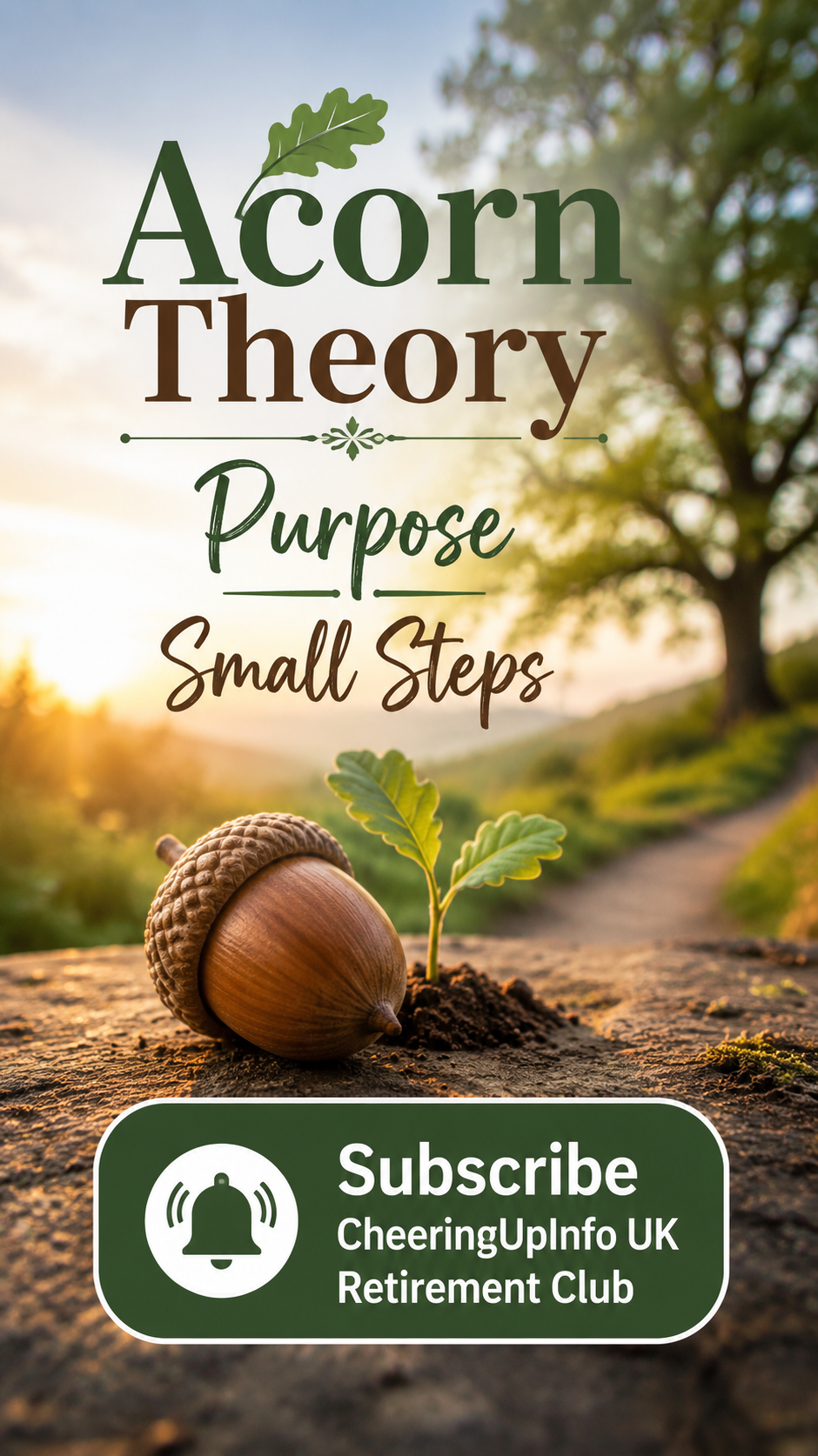
Acorn Theory: Why You Don’t Know Your Purpose Yet (And How Daily Small Steps Reveal It)

Feeling lost? James Hillman’s Acorn Theory suggests you already contain your purpose—like an oak inside an acorn. You don’t find it all at once; you reveal it through daily small steps. Discover why it’s never too late to grow into who you were meant to be, backed by psychology and recent UK research.

What Is Acorn Theory and Why Can’t You See Your Purpose Yet?

Acorn Theory, developed by psychologist James Hillman, proposes that you are born with a unique destiny or “calling” already inside you—just like an oak tree is already inside an acorn. It’s not about genetics or environment alone; it’s about that “particularity you feel to be you,” as Hillman put it . That nagging feeling that you’re here for something more? That’s your acorn trying to grow. The problem is, we’re conditioned to believe purpose is a destination we need to find—but really, it’s a process we need to unfold.

How Does “Not Knowing Your Calling” Actually Hold You Back?

Not knowing your purpose leads to anxiety, depression, and a persistent sense of dissatisfaction, as the gap between who you are and who you could be creates psychological tension . Research shows that 58% of women and 44% of men are open to a different career because they finally have a better idea of what they want from life . Yet, fear of stepping out of comfort zones (31%) and lack of confidence (31%) keep people stuck . Your acorn needs sunlight—but fear is a heavy rock.

Why Do Daily Small Steps Work Better Than Big “Life Changes”?

Daily small steps are the sunlight and water your acorn needs; they bypass the paralysis of “finding your calling” by making the process manageable and less intimidating. Hillman believed the image of your destiny is revealed slowly: “Unpacking the image takes a lifetime. It may be perceived all at once, but understood only slowly” . A 2,000-adult poll found many feel ready for a change within two years—not overnight . That’s the power of incremental action.

Is It Really “Never Too Late” to Start This Process?

According to recent UK data, 54% of women (and 41% of men) believe it’s never too late to pursue a new calling, despite the average person believing 52 is the age it becomes “too late” . Here are three facts that prove it’s never too late to be who you want to be:

  • Fact 1: 45% of Brits regret not chasing their childhood dream job—but a fifth have already retrained to get back on track .
  • Fact 2: 15% of all adults believe their current job doesn’t fit their lifestyle, with flexibility (32%) and fulfillment (32%) valued more as we age .
  • Fact 3: British Gas engineer Kirsty Warren switched from social work to engineering at 36, proving that “whether you’re 26 or 46, if you’ve found your calling, go after it” .

What Does “Growing Down” Mean in Acorn Theory?

“Growing down” is Hillman’s concept of returning to your childhood impulses and fantasies to find the blueprint of your destiny, rather than always striving upwards . We spend our lives accumulating achievements (growing up), but we forget to excavate our true nature (growing down). Hillman urges us to reexamine childhood thoughts, accidents, and fantasies, as they “reflect the blueprints that give direction to the course of a biography” . It’s a process of digging deep, not climbing high.

How Do I Start Listening to My Acorn?

Start by identifying moments when you’ve felt most alive or curious, and take one small step toward that feeling today, regardless of whether it “makes sense” for your current life. Here’s how:

  • Journal your childhood fantasies: What did you love before the world told you what to love?
  • Identify inherited rules: What beliefs about yourself did you inherit from family or society that no longer serve you?
  • Take one tiny action: If you dream of writing, write one sentence. If you dream of gardening, buy one seed. Growth is a verb.

#AcornTheory #Purpose #RetirementLifestyle #RetirementClub #RetirementMagazine

Get help to protect and grow your business faster with CheeringUpInfo targeted marketing at over 55s UK

Find out more about targeting over 55s and those planning for a better retirement with better marketing ideas

Subscribe for free retirement lifestyle improvement ideas product reviews and cost of living reduction tips

Connect with us for free retirement lifestyle improvement tips

Read more retirement lifestyle improvement articles and view videos for free

Connect with us for free alerts to new retirement lifestyle improvement articles and videos

Slow living benefits for over 55s in the UK

UK retirees seeking lifestyle improvements

The Life-Changing Power of Slow Living for the Over-55s in the UK: A Complete Guide

Why Slow Living Could Be Your Missing Key to Happiness

In our hyper-connected, fast-paced world, a quiet revolution is taking place among the UK’s over-55 population. Increasing numbers are discovering that the secret to a fulfilling later life isn’t more – more activities, more possessions, more commitments – but less, done better and with greater presence.

“We’re witnessing a fundamental shift in how people approach their later years,” observes Dr. Sarah Brewer, longevity expert and author of Live Longer, Live Better. “The over-55s are rejecting society’s obsession with speed and productivity in favour of what I call ‘conscious ageing’ – living with intention, attention and appreciation.”

This comprehensive guide goes beyond superficial tips to explore how embracing slow living can transform your health, relationships, finances and overall wellbeing. Packed with:

  • Groundbreaking scientific research on ageing and wellbeing
  • Real-life case studies from UK slow living practitioners
  • Expert insights from gerontologists, financial planners and lifestyle coaches
  • Practical challenges and action plans you can implement immediately

Whether you’re approaching retirement, recently retired or well into your later years, this guide will show you how to craft a life of greater meaning, connection and joy by embracing the power of slow.


The Science and Philosophy of Slow Living

Understanding the Slow Living Movement

Slow living isn’t about doing everything at a snail’s pace – it’s about doing the right things at the right pace. Emerging from Italy’s Slow Food Movement in the 1980s as a protest against fast food culture, the philosophy has since expanded into a comprehensive approach to modern living.

“Slow living is essentially about reclaiming your attention and aligning your daily life with your deepest values,” explains Carl Honoré, author of the international bestseller In Praise of Slow. “For the over-55s, it offers particularly powerful benefits because it helps counteract many of the psychological and physiological challenges of ageing.”

Why Slow Living Resonates with the Over-55s

A 2023 study by Age UK revealed startling statistics:

  • 72% of over-55s reported feeling “constantly rushed” despite being retired
  • 65% said they experienced more stress post-retirement than anticipated
  • 82% wished they had more “quality time” with loved ones

Dr. Rebecca Harris, gerontologist at the University of Bristol, explains: “As we age, our relationship with time fundamentally changes. The over-55s often experience what we call ‘time compression’ – the sensation that time is accelerating. Slow living practices help expand our perception of time by bringing us into the present moment.”

The Neuroscience of Slowing Down

Groundbreaking research in neuroplasticity shows that our brains remain adaptable throughout life. A 2022 Cambridge University study found that mindfulness practices common in slow living:

  • Increase grey matter density in memory-related brain regions
  • Strengthen the prefrontal cortex, improving decision-making
  • Reduce amygdala activity, decreasing stress responses

“What’s remarkable,” notes Dr. Harris, “is that these changes were particularly pronounced in participants over 60, suggesting older brains may be especially responsive to slow living practices.”


The Transformative Health Benefits of Slow Living

1. Mental Wellbeing: From Stress to Serenity

Dr. Rangan Chatterjee, BBC presenter and author of The Stress Solution, explains: “Chronic stress accelerates cellular ageing through telomere shortening. Slow living practices like mindfulness and nature immersion activate the parasympathetic nervous system, which acts as an anti-ageing mechanism.”

Case Study: Margaret’s Transformation
Margaret, 67, a retired teacher from Brighton, struggled with:

  • Chronic insomnia
  • Retirement-related anxiety
  • Feeling “useless” without work structure

Her slow living prescription:

  1. Digital sunset (no screens after 7pm)
  2. Morning pages journaling (3 handwritten pages each morning)
  3. Daily “forest bathing” in Stanmer Park

“Within three months, my sleep improved dramatically,” Margaret reports. “I’ve rediscovered my love for watercolours and actually enjoy my own company now.”

2. Physical Health: Movement That Matters

Unlike punishing exercise regimens, slow living promotes sustainable movement:

ActivityProven BenefitsIdeal For
Tai ChiImproves balance (reducing fall risk by 43%)Arthritis sufferers
GardeningLowers dementia risk by 36% (Exeter University)Those with limited mobility
Nordic Walking40% more calorie burn than regular walkingCardiovascular health

“The key is consistency over intensity,” emphasises Dr. Muir Gray, NHS adviser on healthy ageing. “Ten minutes of daily gentle movement beats one hour of weekly intense exercise for longevity benefits.”

3. Cognitive Benefits: Keeping the Mind Agile

Dr. Angela Clow’s research at Westminster University demonstrates how slow hobbies create cognitive reserve:

  • Learning a language: Increases grey matter density
  • Playing chess: Enhances strategic thinking
  • Playing musical instruments: Improves neural connectivity

“The brain needs novelty, but without time pressure,” Dr. Clow explains. “This combination is perfect for maintaining cognitive function as we age.”


Slow Travel – The Art of Journeying Mindfully

Why Slow Travel Transforms Later-Life Adventures

Pauline Kenny, founder of Slow Europe, observes: “Traditional tourism often leaves older travellers exhausted. Slow travel aligns perfectly with the needs of over-55s by prioritising depth over distance, experience over checklist tourism.”

The Slow Travel Advantage:

Traditional TravelSlow Travel
Packed itinerariesSpontaneous exploration
Tourist hotspotsLocal hidden gems
Jet lagNatural rhythms
Surface experiencesMeaningful connections

Inspiring Slow Travel Ideas for Over-55s

UK Canal Boating Holidays

  • Route suggestion: The Llangollen Canal (7 days)
  • Highlights:
  • Walking pace travel (max 4mph)
  • Quaint waterside pubs
  • Operating locks (gentle physical activity)
  • Cost: From £1,200/week (shared between 4)

“It’s the perfect blend of gentle adventure and relaxation,” says Derek, 71, who holidays annually with his canal boat group.

European House Sitting

  • How it works: Care for homes/pets in exchange for free accommodation
  • Best platforms: TrustedHousesitters, MindMyHouse
  • Ideal locations: Rural France, Italian countryside

Case Study: Susan’s Year of Slow Travel
Susan, 68, spent 2023 house sitting in:

  • A Provençal vineyard
  • A Tuscan farmhouse
  • A Portuguese coastal village
    “I’ve lived like a local across Europe for a fraction of hotel costs,” she says.

Pilgrimage Walking (The Slowest Travel)

  • Camino de Santiago: The Portuguese route (gentler terrain)
  • UK alternatives:
  • St Cuthbert’s Way (Scotland/England border)
  • Pilgrims’ Way to Canterbury

Slow Home Living – Creating Your Personal Sanctuary

The Psychology of Slow Spaces

Julia Atkinson-Dunn, slow living advocate and author, explains: “Our homes should be our sanctuaries, especially as we age. A slow home isn’t about aesthetic perfection – it’s about creating spaces that support how you truly want to live.”

The 5 Pillars of Slow Home Living:

Intentional Spaces

  • Designate areas for specific activities (reading nook, craft corner)
  • Remove multi-purpose clutter

Natural Elements

  • Maximise natural light
  • Incorporate wood, stone and plants

Tech Boundaries

  • Create screen-free zones
  • Implement “digital sunsets”

Sensory Comfort

  • Soft textiles
  • Soothing colour palettes
  • Ambient lighting

Ease of Movement

  • Age-friendly design
  • Clear pathways
  • Comfortable seating

Case Study: John & Linda’s Downsizing Journey
This York couple transformed their living space by:

  • Implementing the “one in, one out” rule
  • Creating a dedicated slow living room (no TV, just books and music)
  • Designing a low-maintenance garden with raised beds

“Our home now feels like a daily retreat rather than a maintenance burden,” Linda shares.


Slow Finances – Redefining Wealth in Later Life

The New Retirement Economics

Sarah Coles, personal finance analyst at Hargreaves Lansdown, notes: “The traditional retirement model is broken. People are living longer but often worrying more about money. Slow finances offer a sustainable alternative.”

Principles of Slow Finance:

‘Enough Mindset’

  • Distinguish between needs and wants
  • Practice conscious consumption

Sustainable Withdrawal Strategies

  • The 3.5% rule (safer than traditional 4%)
  • Bucket strategy for market downturns

Experimental Spending

  • Prioritise meaningful experiences
  • The “20-year test” (“Will this matter in 20 years?”)

Case Study: Geoff’s Investment Transformation
Geoff, 68, shifted from active trading to slow investing:

  • Moved to dividend-paying stocks
  • Implemented a three-bucket system:
  1. Immediate cash needs
  2. 3-5 year bonds
  3. Long-term growth funds
    “I sleep better and my portfolio grows steadily,” he reports.

Your 7-Day Slow Living Challenge

Day 1: Digital Detox

  • No screens before breakfast/after dinner
  • Try analog alternatives (physical books, handwritten letters)

Day 2: Mindful Eating

  • Prepare one meal from scratch
  • Eat without distractions

Day 3: Nature Immersion

  • 30+ minutes outdoors
  • Practice “forest bathing”

Day 4: Financial Review

  • Cancel one unused subscription
  • Set up a “slow spending” tracker

Day 5: Social Slowdown

  • One quality conversation (no multitasking)
  • Write a heartfelt letter

Day 6: Home Sanctuary

  • Declutter one space
  • Create a slow living corner

Day 7: Reflection

  • Journal about your experience
  • Plan ongoing slow living practices

Conclusion: Your Slow Living Blueprint

The Slower You Go The More You’ll Notice!

Slow living isn’t about withdrawing from life – it’s about engaging with it more deeply. As Dr. Brewer concludes: “The slower you go, the more you’ll discover that true richness comes not from accumulation, but from appreciation.”

Your Next Steps:

  1. Start small – Pick one element from this guide to implement
  2. Build gradually – Add new practices as habits form
  3. Share the journey – Inspire others in your community

Remember, as Carl Honoré reminds us: “Slowing down isn’t about giving up – it’s about gearing up for what truly matters.” Your most fulfilling years may well be ahead of you, waiting to be discovered at the perfect pace – yours.

Join our Retirement Club today

Get help to protect and grow your business faster with CheeringUpInfo

Find out more about Lifestyle Improvement Club Corporate Membership here

Subscribe for free retirement lifestyle improvement tips reviews and money saving ideas

Connect with us for free retirement lifestyle improvement tips

Read more retirement lifestyle improvement articles and view videos for free

Connect with us for retirement lifestyle improvement articles and videos alerts to inform your retirement life decision making

Slow Living After 55: How to Enjoy Life’s Simple Pleasures

Read and view more:

How to embrace slow living after retirement UK

Best slow travel ideas for seniors in the UK

Mindful living tips for over 55s to reduce stress

Simple living strategies for UK retirees on a budget

Archived articles:

1. #SlowLivingUK

2. #Over55AndThriving

3. #MindfulRetirement

4. #SlowTravelUK

5. #SimplifyAfter50

Bonus Articles :

  • #UKRetirementLife
  • #ConsciousAgeing

How to maintain desired retirement lifestyle in UK despite economic crisis for 55 plus age group

Riding Out the Storm: A Gen X Guide to Thriving in Retirement

April 2025. Halifax, England. The headlines scream of economic turmoil. Inflation, a beast many thought tamed, is stirring again. Wars rage in distant lands, disrupting supply chains and fueling uncertainty. Tariffs, those blunt instruments of trade, threaten to choke off growth. Here in the UK, the legacy of COVID-era money printing by central banks is colliding head-on with these global shocks, creating a perfect storm.   

Consider this: A recent survey reveals that 75% of UK adults over 55 are now “very concerned” about the impact of the current economic climate on their retirement savings. That’s a chilling statistic, isn’t it? For Generation X, those born between the mid-1960s and early 1980s, many of whom are now in their late 40s and 50s, this unfolding crisis presents a unique challenge. The comfortable retirement they envisioned, built on decades of hard work and careful saving, suddenly feels precarious.

Retirement Club Magazine article
Recession Proof Retirement UK

Why is the UK economy facing such headwinds, and why does it disproportionately hurt the over-55s and those already in retirement? Let’s break it down.

The UK’s Economic Tightrope Walk

Several interconnected factors are contributing to the current economic struggles in the United Kingdom:

  1. The Lingering Shadow of COVID-19: The pandemic triggered unprecedented levels of government spending and quantitative easing (printing money) to support businesses and individuals. While necessary at the time the amount printed was excessive and prolonged, this has contributed to inflationary pressures as the economy reopened and demand surged. All that extra money sloshing around? It devalued your existing retirement savings.
  2. Global Geopolitical Instability: The ongoing conflicts and rising international tensions are disrupting energy markets, increasing commodity prices, and creating uncertainty for businesses. Think about the price of petrol at the pump or the rising cost of your energy bills – these are direct consequences of global instability.   
  3. Supply Chain Disruptions: The pandemic exposed vulnerabilities in global supply chains. Now, geopolitical issues and trade barriers are exacerbating these problems, leading to shortages of goods and higher prices for consumers. Remember when you couldn’t find certain items on supermarket shelves? That’s a supply chain issue biting.   
  4. Inflationary Pressures: A confluence of factors – the money supply increase, rising energy costs, and supply chain bottlenecks – has driven inflation to levels not seen in decades. This erodes the purchasing power of savings and makes everyday living more expensive. Your pension income simply doesn’t stretch as far.   
  5. Stagnant Wage Growth: While inflation has soared, wage growth for many has not kept pace, meaning real incomes are falling. This is particularly tough for those on fixed incomes, like many retirees. Imagine trying to pay for groceries when your pension has stayed the same but the prices have jumped!
  6. The Impact of Tariffs and Trade Barriers: Evolving global trade relationships have introduced new complexities and costs for businesses, potentially impacting economic growth and contributing to higher prices. Businesses facing higher import costs often pass those costs onto consumers.   

A Perfect Storm for the Over-55s and Retirees

This economic maelstrom is particularly damaging for those over 55 and already in retirement for several crucial reasons:

  • Erosion of Savings: Inflation directly diminishes the real value of their accumulated savings and pensions. A fixed pension income buys less and less each month.   
  • Reduced Investment Returns: Economic uncertainty often leads to lower returns on investments, making it harder for pension pots to grow or even maintain their value. The stock market can be a bumpy ride during turbulent times.
  • Increased Cost of Living: Rising energy bills, food prices, and care costs disproportionately affect those on fixed incomes. These are essential expenses that can’t easily be cut back.
  • Longer Life Expectancy: People are living longer, meaning their retirement savings need to last for a more extended period. Economic downturns that deplete savings early in retirement can have devastating long-term consequences.   
  • Limited Earning Potential: For those approaching or in retirement, the ability to significantly increase their income through employment is often limited. Finding a new job in your late 50s or 60s isn’t always straightforward.
  • Psychological Impact: The anxiety and stress of seeing their hard-earned savings dwindle can take a significant toll on the mental well-being of this age group. The fear of running out of money in retirement is a heavy burden.

But hold on! Before you throw your hands up in despair, remember this: Generation X is nothing if not resilient! We’ve navigated economic ups and downs before. We’ve adapted to technological shifts and cultural changes. And we can ride out this storm too. It requires a proactive and strategic approach.

Retirement Club Magazine article
Economic Depression Proof Retirement UK

Here are nine powerful ways that the over-55s in the UK can protect themselves from current and medium-term economic problems and ensure their retirement finances can still deliver the lifestyle they desire:

1. Take a Hard Look at Your Budget and Cut Unnecessary Spending

This might seem obvious, but it’s the bedrock of financial resilience. Now is the time for a forensic examination of your outgoings.

  • Track Your Spending: Use budgeting apps, spreadsheets, or even a notebook to meticulously record where your money is going for at least a month. You might be surprised by those small, regular expenses that add up. That daily takeaway coffee? Those impulse online purchases? They can take a significant bite out of your finances.
  • Categorise Expenses: Divide your spending into essential (housing, food, utilities, healthcare) and non-essential (entertainment, dining out, subscriptions).
  • Identify Areas for Reduction: Be honest with yourself. Which non-essential expenses can you reduce or eliminate? Could you downsize your TV package? Bring lunch from home more often? Review those multiple streaming subscriptions – do you really need them all?
  • Negotiate Bills: Don’t be afraid to haggle with your utility providers, internet company, and insurance providers. You might be able to secure a better deal just by asking! Comparison websites are your friend here. For example, you could call your broadband provider and say you’ve seen a cheaper deal elsewhere – they might just match it.
  • Consider Energy Efficiency: Invest in energy-saving measures for your home, such as switching to energy-efficient light bulbs, improving insulation, or getting a smart thermostat. While there’s an initial cost, the long-term savings on your energy bills can be substantial. Think about draught-proofing windows and doors – it’s a relatively cheap way to save energy.   

2. Re-evaluate Your Investment Portfolio with a Focus on Risk and Income

If you have investments, particularly within your pension, now is the time to review your asset allocation with a qualified financial adviser.

  • Assess Your Risk Tolerance: As you approach and enter retirement, your ability to withstand significant investment losses typically decreases. Your portfolio might need to become more conservative. This doesn’t mean abandoning growth altogether, but it might involve shifting a larger portion of your assets into lower-risk investments like bonds or diversified funds with a track record of stability.   
  • Consider Income-Generating Assets: Explore investments that provide a regular income stream, such as dividend-paying stocks or high-quality bonds. These can help supplement your pension income and reduce the need to draw down heavily on your capital. Remember, dividends aren’t guaranteed and can fluctuate.   
  • Diversification is Key: Don’t put all your eggs in one basket! Ensure your portfolio is well-diversified across different asset classes, sectors, and geographies to mitigate risk. If one sector underperforms, others might hold steady.
  • Long-Term Perspective: Try to avoid making rash decisions based on short-term market fluctuations. Remember that investing is a long-term game. Panic selling during a downturn can lock in losses.   
  • Seek Professional Advice: A qualified financial adviser can help you assess your individual circumstances, understand your risk tolerance, and develop a suitable investment strategy for the current economic climate. They can also help you navigate the complexities of pension drawdown.   

3. Delay Retirement (If Feasible) and Consider Part-Time Work

For those approaching retirement, even a short delay can significantly boost your financial security.   

  • Continue Building Your Pension Pot: Working for an extra few years means more contributions to your pension, allowing it more time to grow and benefit from potential market recovery.
  • Reduce Drawdown Pressure: Delaying retirement means you won’t need to start drawing on your pension savings as soon, giving them more time to accumulate.
  • Maintain Income and Benefits: Continuing to work provides a regular income stream and access to potential employment benefits like health insurance.   
  • Explore Flexible Work Options: If full-time work isn’t appealing, consider part-time employment, consultancy roles, or freelance work. This can provide a valuable income supplement and keep you mentally and socially engaged. Think about your skills and how they could be applied in a flexible way. For example, a retired teacher could offer tutoring services.

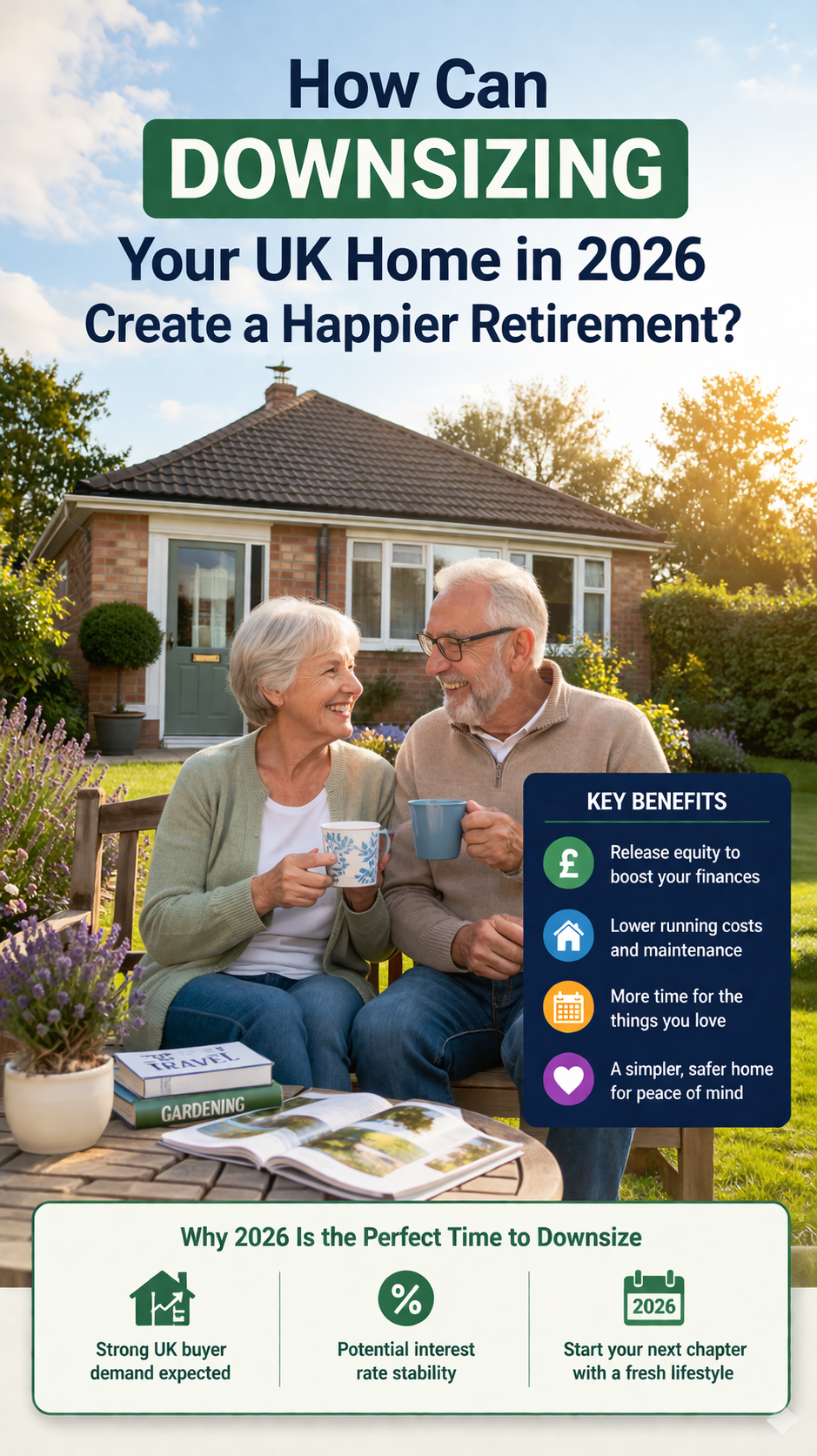
4. Explore Options for Downsizing Your Home

For many over-55s, their property represents a significant portion of their wealth. Downsizing to a smaller, less expensive home can unlock capital and reduce living costs.   

  • Release Equity: Selling a larger property and buying a smaller one can free up a substantial lump sum that can be used to boost your retirement savings or provide additional income. Imagine the financial freedom of having a significant cash injection!   
  • Reduce Maintenance and Running Costs: Smaller homes typically have lower utility bills, council tax, and maintenance costs. This can free up a significant portion of your monthly budget. Think about less gardening, less cleaning, and lower energy bills.
  • Consider Location: Downsizing might allow you to move to a more convenient location, closer to family, friends, or amenities, potentially reducing transportation costs.   
  • Explore Retirement Communities: These communities often offer age-appropriate housing, social activities, and sometimes even care services, providing a supportive environment for later life. However, be sure to carefully consider the costs and fees involved.
  • Weigh the Emotional Aspects: Downsizing can be emotionally challenging, especially if you’ve lived in your home for many years. Carefully consider the emotional impact and discuss it with your family.   

5. Strategize Your Pension Drawdown Carefully

If you’re already in retirement and drawing from your pension, it’s crucial to have a sustainable drawdown strategy.

  • Sustainable Withdrawal Rates: Avoid withdrawing too much too quickly. Aim for a sustainable withdrawal rate (typically around 3-4% per year) to ensure your pension pot lasts throughout your retirement. Withdrawing too much early on can significantly deplete your funds, especially during a downturn.   
  • Phased Retirement: If you’re transitioning into retirement, consider a phased approach where you gradually reduce your working hours while drawing a smaller amount from your pension.   
  • Regular Reviews: Review your drawdown strategy regularly with a financial adviser, especially in light of changing economic conditions and your personal circumstances.
  • Consider Annuities (with Caution): Annuities can provide a guaranteed income stream for life, offering security against longevity risk. However, consider the current interest rate environment and potential loss of flexibility before committing a significant portion of your pension to an annuity. Shop around for the best rates and understand the different types of annuities available.   
  • Tax-Efficient Withdrawals: Work with a financial adviser to understand the most tax-efficient way to draw down your pension savings.   

6. Explore Opportunities for Generating Additional Income in Retirement

Retirement doesn’t necessarily mean a complete cessation of income-generating activities.

  • Part-Time Work or Consulting: Utilise your skills and experience for part-time work or consulting in your field. This can provide a valuable income supplement and keep you mentally active.
  • Monetize Hobbies and Skills: Turn your passions into a source of income. Can you sell your artwork? Offer gardening services? Tutor students in a subject you excel in?   
  • Consider Rental Income: If you have a spare room, consider taking in a lodger (if your health and circumstances allow).
  • Explore Online Opportunities: The internet offers various ways to earn income, from online tutoring to freelance writing to selling crafts on platforms like Etsy.
  • Be Aware of Benefit Implications: If you are receiving state benefits, be sure to understand how additional income might affect your eligibility.

7. Understand and Claim Available Government Benefits

Make sure you are receiving all the state benefits you are entitled to.

  • Pension Credit: This provides extra money to help with living costs if you’re over State Pension age and on a low income. Many eligible people don’t claim it!
  • Attendance Allowance: If you have a disability and need help with personal care, you may be eligible for this non-means-tested benefit.
  • Winter Fuel Payment and Cold Weather Payment: These provide financial assistance with heating costs during the winter months.
  • Council Tax Reduction: You may be eligible for a reduction in your council tax bill depending on your circumstances.
  • Check the GOV.UK website and consult with organisations like Age UK or Citizens Advice to ensure you are claiming everything you are entitled to. They can provide invaluable assistance in navigating the benefits system.

8. Build and Maintain an Emergency Fund

An emergency fund can provide a crucial safety net to cover unexpected expenses without derailing your retirement finances.   

  • Aim for 3-6 Months of Essential Living Expenses: This will help you weather unexpected costs like home repairs, medical bills, or a temporary loss of income.
  • Keep it Easily Accessible: Store your emergency fund in a readily accessible savings account, not tied up in long-term investments.   
  • Top it Up Regularly: Make it a habit to contribute to your emergency fund whenever possible. Even small amounts can add up over time.

9. Stay Informed and Seek Professional Advice

The economic landscape is constantly evolving. Staying informed and seeking professional guidance is crucial.

Generation X: Forging a Resilient Retirement

The current economic climate presents significant challenges, but it doesn’t have to derail your retirement dreams. By taking proactive steps, carefully managing your finances, and seeking professional guidance, Generation X in the UK can build a resilient retirement that allows them to live the life they want. It requires vigilance, adaptability, and a willingness to make informed decisions. But remember, you’ve navigated challenges before, and with the right strategies, you can ride out this storm too and enjoy the retirement you’ve worked so hard for!

Join our Retirement Club

Get help to protect and grow your retirement related business

Find out more about your business development opportunities

Subscribe for free retirement lifestyle improvement tips reviews and money saving ideas

Connect with us for free

Read more retirement lifestyle improvement articles and view videos

Connect with us for free

Gen X Guide to Thriving in Retirement

Read more retirement lifestyle improvement articles:

  1. How can UK Gen X protect retirement savings from recession 2025
  2. Best ways for over 55 UK residents to safeguard retirement income during economic downturn
  3. Strategies for UK pre-retirees to recession-proof their pension funds after COVID money printing
  4. Protecting my UK retirement nest egg from inflation and war as a Gen Xer
  5. How to maintain desired retirement lifestyle in UK despite economic crisis for 55 plus age group

Relevant hashtags:

  1. #UKRetirementPlanning
  2. #GenXFinanceUK
  3. #RecessionProofRetirement
  4. #Over55MoneyUK
  5. #SecureYourFutureUK
  6. #RetirementTV
  7. #RetirementMagazine
  8. #Over55s