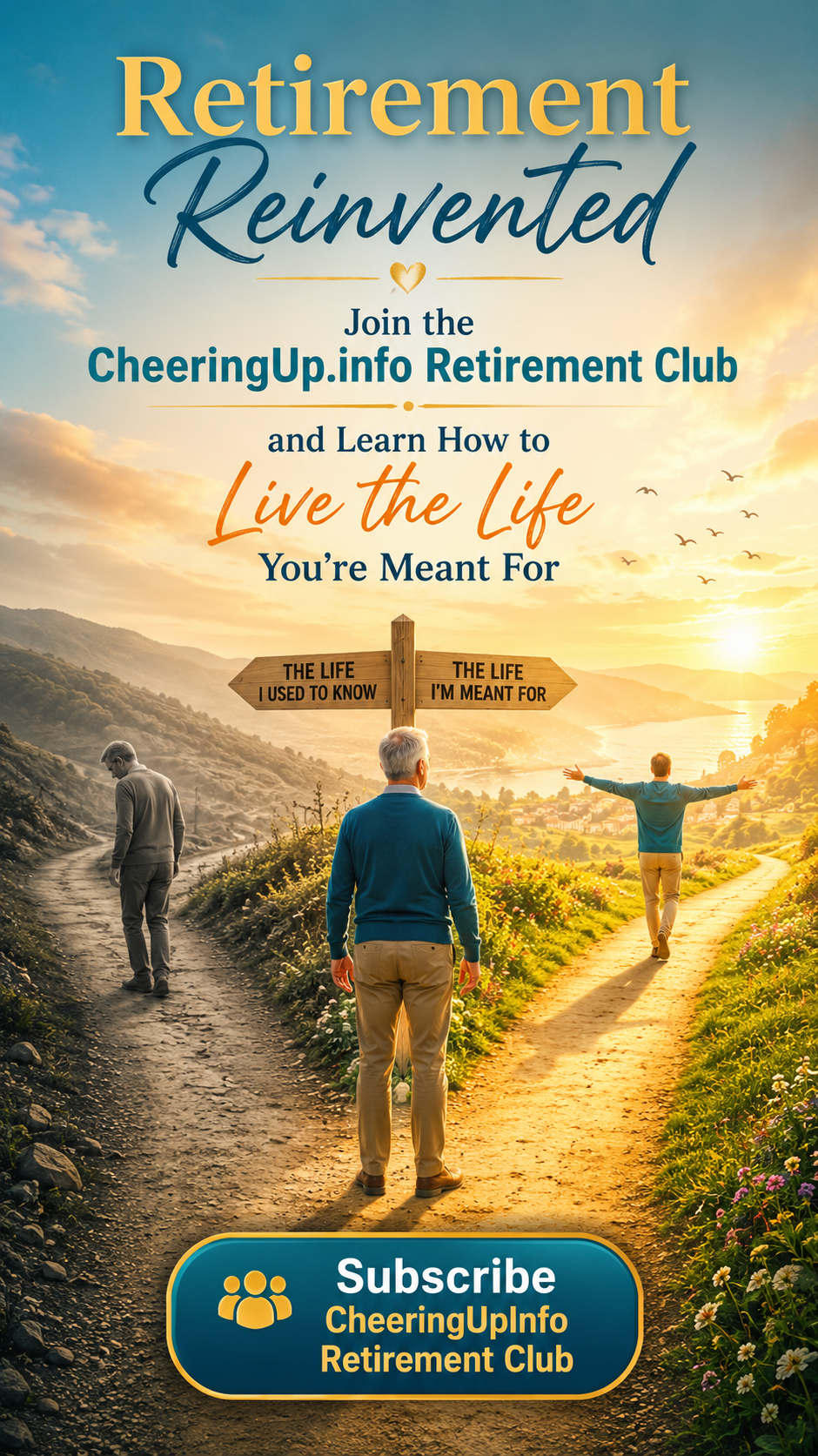
Discover the neuroscience-backed secret to becoming your ideal self: act “as if” you already are that person. This post explains how embodying your aspirational identity today—through the psychological principle of “possible selves”—can transform your retirement reality. Join the CheeringUp.info Retirement Club to connect with like-minded individuals on this journey of self-reinvention.
What Is the Person I Am Meant to Become in Retirement?
The person you are meant to become is not a distant stranger waiting in the future; they are a version of you that already exists in your imagination, waiting to be embodied through action. This concept, rooted in the psychological theory of “possible selves,” suggests that your aspirations and fears about the future directly influence your current motivation and behaviour. For those in retirement, this is the perfect opportunity to define and live into that aspirational identity.
Why Should You Live the Life of That Person Every Day, Even If You Aren’t There Yet?
You should live the life of that person every single day because the gap between your current self and your ideal self is bridged by the practice of “acting as if.” The phrase “fake it till you make it” is not about deception; it’s a practical application of neuroplasticity, allowing your brain to rewire itself through consistent behaviour. William James, a highly influential philosopher, noted, “If you want a quality, act ‘as if’ you already had it” . By embodying the confident, engaged retiree you wish to be, you are accelerating that identity integration.
Neuroplasticity in Action: Your brain creates new neural pathways when you consistently act in a certain way. The more you show up as your future self, the more natural it becomes .
The Feedback Loop: Actions influence emotions as much as emotions influence actions. A forced smile can trigger a happier mood . The physical state of your body can directly impact your mood and cognition; for instance, raising your spine and holding your head up can lead to a boost in self-confidence .
Closing the Gap: As one executive coach noted, high performers consciously imagine their ideal future self’s reactions, tone, and attitude before the moment arrives. These future qualities act as an anchor, reducing burnout and increasing joy . One professional who adopted this strategy reported that within a month of consciously presenting as “cool, calm, and collected,” he stopped performing and started being .
How Does the “Possible Selves” Theory Support This Claim?
The “possible selves” theory provides the academic backbone for this mindset, showing that your vision of who you could become is a powerful motivator. According to this theory, individuals are driven to take actions that either move them toward their “ideal self” (a positive image worth pursuing) or away from their “feared self” (a negative image to be avoided) . In the context of retirement, this means that if you want to be an active, connected, and purposeful individual, you must create a vivid, detailed version of that self and take steps to live into it.
Research has found that informal learning accounts for 80% of personal knowledge and skills acquisition . For retirees, this means the vast majority of your growth comes from self-directed activities.
Fact 1: Your brain often cannot distinguish between a vividly imagined experience and a real one . This is why visualization is so powerful in rewiring limiting beliefs.
Fact 2: The Reticular Activating System (RAS) in your brain filters information based on your goals. When you act “as if,” you engage the RAS to notice opportunities that align with your aspirational identity .
Fact 3: According to research on “possible selves,” those who clearly express their future self-images are more inclined to implement the tactics needed to realize their goals .
What Are the Practical Steps to Embodying Your Ideal Retired Self?
Embodying your ideal retired self involves practical, daily habits that reinforce your new identity. You can start by defining three aspirational words that capture your best future self and setting them as reminders on your phone or calendar . This simple habit creates a “check-in” to ensure your actions align with the person you are becoming.
Dress the Part: Show up to your day dressed like the person you want to become. As one expert put it, “Energy matters” .
Take Brave Action Daily: As Franklin D. Roosevelt famously said, “Do the thing and you will have the power.” Power and confidence follow action, not the other way around . Don’t wait to feel ready; build confidence through momentum.
Journal from the Future: Write from the perspective of the version of you who has already “made it.” What are they doing? What do they feel? What are they grateful for? .
Use the “Best Possible Self” Exercise: Write for 20 minutes, three days in a row, about what your life will look like in several years if everything goes as well as possible. This has been shown to improve mood for up to three weeks .
Make a Pact: Commit to acting enthusiastic for 30 days. Track your mood, relationships, and productivity as enthusiasm goes from something you force to a habit that feels real .
What Role Does the CheeringUp.info Retirement Club Play in This Transformation?
The CheeringUp.info Retirement Club is your community for this transformation, providing a supportive environment to share your journey and find inspiration. Our online retirement club for over-55s in the UK helps you connect with like-minded people who are also actively designing their best retired lives. By engaging with our community, you are “surrounding yourself with evidence” that your vision is achievable .
Connect with Others: Join clubs, groups, or classes to meet new people and avoid isolation. The CheeringUp.info Retirement Club offers opportunities for online and face-to-face activities, day trips, and active retirement ideas .
Give Back and Share Your Wisdom: Retirement is an opportunity to use your talents, knowledge, and resources to help others, which is a fulfilling way to give back. Share your experiences and mentor others in the CheeringUp.info Retirement Club.
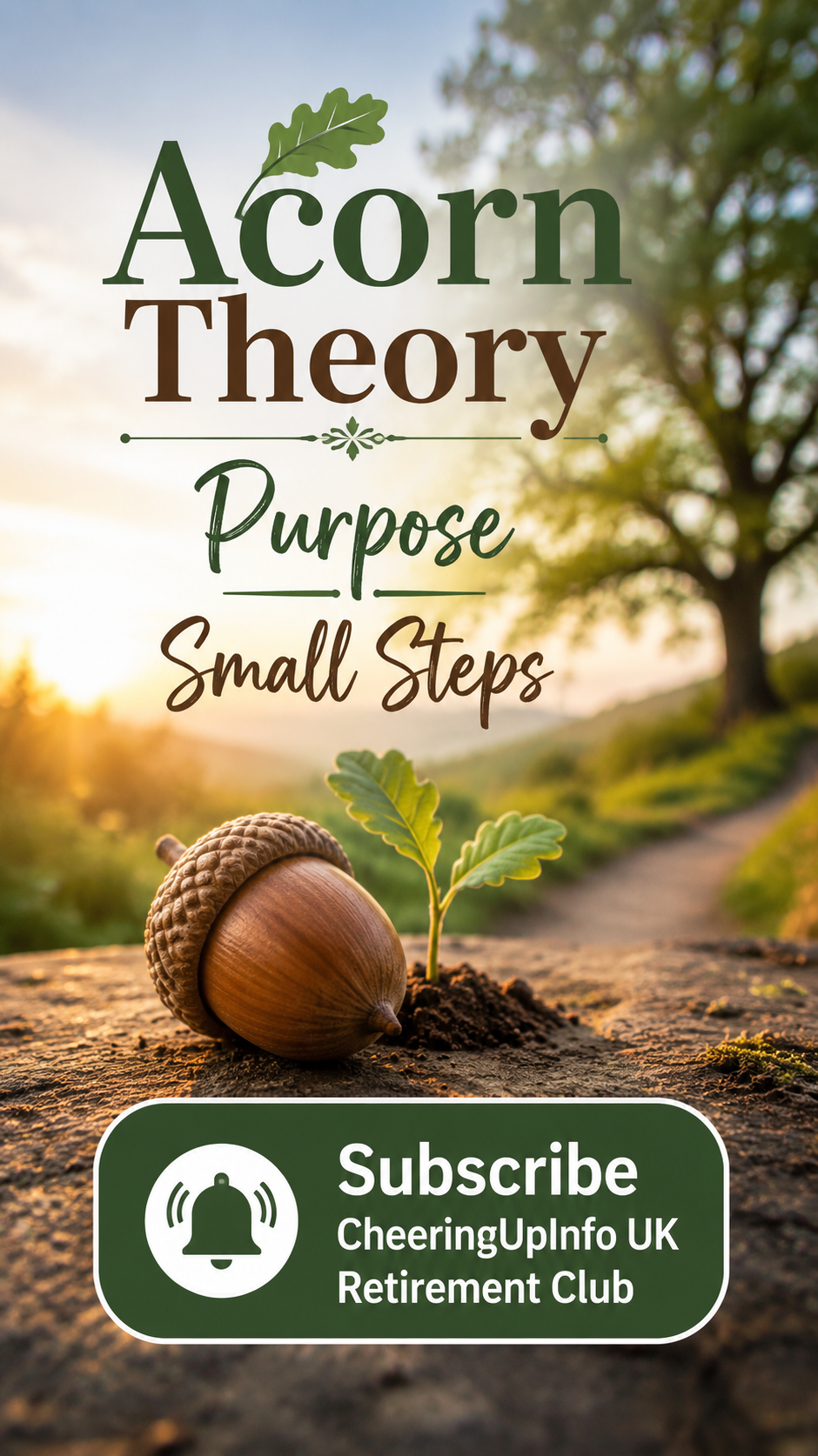
Feeling lost? James Hillman’s Acorn Theory suggests you already contain your purpose—like an oak inside an acorn. You don’t find it all at once; you reveal it through daily small steps. Discover why it’s never too late to grow into who you were meant to be, backed by psychology and recent UK research.
What Is Acorn Theory and Why Can’t You See Your Purpose Yet?
Acorn Theory, developed by psychologist James Hillman, proposes that you are born with a unique destiny or “calling” already inside you—just like an oak tree is already inside an acorn. It’s not about genetics or environment alone; it’s about that “particularity you feel to be you,” as Hillman put it . That nagging feeling that you’re here for something more? That’s your acorn trying to grow. The problem is, we’re conditioned to believe purpose is a destination we need to find—but really, it’s a process we need to unfold.
How Does “Not Knowing Your Calling” Actually Hold You Back?
Not knowing your purpose leads to anxiety, depression, and a persistent sense of dissatisfaction, as the gap between who you are and who you could be creates psychological tension . Research shows that 58% of women and 44% of men are open to a different career because they finally have a better idea of what they want from life . Yet, fear of stepping out of comfort zones (31%) and lack of confidence (31%) keep people stuck . Your acorn needs sunlight—but fear is a heavy rock.
Why Do Daily Small Steps Work Better Than Big “Life Changes”?
Daily small steps are the sunlight and water your acorn needs; they bypass the paralysis of “finding your calling” by making the process manageable and less intimidating. Hillman believed the image of your destiny is revealed slowly: “Unpacking the image takes a lifetime. It may be perceived all at once, but understood only slowly” . A 2,000-adult poll found many feel ready for a change within two years—not overnight . That’s the power of incremental action.
Is It Really “Never Too Late” to Start This Process?
According to recent UK data, 54% of women (and 41% of men) believe it’s never too late to pursue a new calling, despite the average person believing 52 is the age it becomes “too late” . Here are three facts that prove it’s never too late to be who you want to be:
Fact 1: 45% of Brits regret not chasing their childhood dream job—but a fifth have already retrained to get back on track .
Fact 2: 15% of all adults believe their current job doesn’t fit their lifestyle, with flexibility (32%) and fulfillment (32%) valued more as we age .
Fact 3: British Gas engineer Kirsty Warren switched from social work to engineering at 36, proving that “whether you’re 26 or 46, if you’ve found your calling, go after it” .
What Does “Growing Down” Mean in Acorn Theory?
“Growing down” is Hillman’s concept of returning to your childhood impulses and fantasies to find the blueprint of your destiny, rather than always striving upwards . We spend our lives accumulating achievements (growing up), but we forget to excavate our true nature (growing down). Hillman urges us to reexamine childhood thoughts, accidents, and fantasies, as they “reflect the blueprints that give direction to the course of a biography” . It’s a process of digging deep, not climbing high.
How Do I Start Listening to My Acorn?
Start by identifying moments when you’ve felt most alive or curious, and take one small step toward that feeling today, regardless of whether it “makes sense” for your current life. Here’s how:
Journal your childhood fantasies: What did you love before the world told you what to love?
Identify inherited rules: What beliefs about yourself did you inherit from family or society that no longer serve you?
Take one tiny action: If you dream of writing, write one sentence. If you dream of gardening, buy one seed. Growth is a verb.
Are you interested in personal growth and relationship improvement?
Ever felt like you’re speaking a foreign language in your closest relationships? You’re pouring your heart out, yet the message isn’t landing. They seem distant. You feel unheard. It’s frustrating, right? Here’s the truth: we all have unique ways of expressing and receiving love. Dr. Gary Chapman, in his seminal work, identified five distinct “love languages” that shape our emotional connections. Understanding these languages isn’t just a fluffy concept. It’s the key to unlocking deeper, more fulfilling relationships. Imagine this: a study revealed that couples who actively speak each other’s primary love languages report significantly higher levels of relationship satisfaction. That’s a game-changer! You want to connect? You want to feel truly seen? We need to talk about love languages. Let’s dig in. I’m going to show you how to identify your own, and your loved ones’ love languages. You’ll learn how to speak them fluently. You’ll find practical, actionable steps to transform your interactions. Forget generic advice. This is about real, tangible improvements. Let’s make your relationships thrive!
Over 55s Love Languages
Decoding the Language of Love
In the realm of human connection, love is the universal language, or so we believe. Yet, just as dialects enrich and diversify spoken languages, love manifests in distinct ways. Dr. Gary Chapman, a renowned marriage counselor, introduced the concept of “love languages” in his groundbreaking book, “The 5 Love Languages: The Secret to Love That Lasts.” He proposed that individuals primarily express and experience love through one or two of five specific channels: Words of Affirmation, Acts of Service, Receiving Gifts, Quality Time, and Physical Touch.
Communicate Love UK
What Are Love Languages?
These aren’t just abstract ideas. They are the fundamental ways we feel valued and appreciated. When we communicate love in a manner that resonates with our partner’s primary love language, we create a deeper emotional connection. Conversely, when we miss the mark, even well-intentioned expressions of affection can fall flat. It’s the difference between hearing a beautiful melody and understanding the underlying rhythm.
Why Knowing Love Languages Is Important
Understanding love languages is akin to having a roadmap for your relationships. It provides clarity, direction, and a deeper understanding of your own and others’ emotional needs. Here’s why it’s so crucial:
Enhanced Communication: When you speak your partner’s love language, you are essentially communicating in a way they understand and appreciate. This reduces misunderstandings and fosters a sense of being heard.
Strengthened Emotional Bonds: By consistently expressing love in a meaningful way, you build a stronger emotional connection. This creates a sense of security, trust, and intimacy.
Reduced Conflict: Many relationship conflicts stem from unmet emotional needs. Knowing love languages helps you address these needs proactively, minimising the likelihood of resentment and frustration.
Increased Relationship Satisfaction: When both partners feel loved and appreciated, the overall satisfaction of the relationship significantly improves. This leads to a happier, more fulfilling partnership.
Personal Growth: Understanding love languages isn’t just about others. It’s also about self-awareness. By identifying your own love language, you gain insight into your emotional needs and learn how to communicate them effectively.
Preventing Misinterpretations: We often give love how we want to receive it. This can lead to misinterpretations when our partner’s love language differs from our own. Knowing the difference prevents this.
Cultivating Empathy: Learning about love languages fosters empathy and understanding. You begin to appreciate the unique ways in which others experience love, leading to more compassionate interactions.
The Five Love Languages: A Deep Dive
Let’s explore each of the five love languages in detail, providing practical examples and actionable strategies for expressing and receiving love.
1. Words of Affirmation
For individuals whose primary love language is Words of Affirmation, verbal expressions of love, appreciation, and encouragement are paramount. It’s about feeling valued and recognised through spoken or written words.
Description:
This love language revolves around expressing affection through compliments, words of praise, encouragement, and appreciation.
It’s about acknowledging and affirming the other person’s qualities, achievements, and efforts.
Words can build up or tear down, and for these individuals, positive words have a profound impact.
Practical Examples:
Verbal Compliments: “You look amazing today.” “I’m so proud of how hard you’ve been working.” “I admire your dedication.”
Words of Appreciation: “Thank you for making dinner. It was delicious.” “I appreciate you listening to me.” “I’m grateful for your support.”
Encouraging Words: “You’ve got this! I believe in you.” “Don’t give up. You’re capable of great things.”
Written Notes: Leave a love note on the fridge, send a heartfelt email, or write a card expressing your feelings.
Verbal Affirmations in Public: “I’m so lucky to have you in my life.” said infront of mutual friends.
Specific Compliments: Instead of “you look nice” say “that dress really brings out the colour of your eyes, you look stunning.”
How to Speak This Language:
Be sincere and specific in your compliments.
Express your appreciation regularly.
Use encouraging words to motivate and uplift.
Don’t underestimate the power of a simple “I love you.”
Avoid negative or demeaning language.
2. Acts of Service
For those whose primary love language is Acts of Service, actions speak louder than words. It’s about feeling loved and cared for through helpful gestures and practical assistance.
Description:
This love language focuses on performing tasks and chores that relieve the other person’s burdens.
It’s about demonstrating love through helpful actions rather than just words.
It’s about showing consideration and taking initiative to make their life easier.
Practical Examples:
Household Chores: Doing the dishes, laundry, or grocery shopping.
Running Errands: Picking up dry cleaning, mailing packages, or getting groceries.
Helping with Projects: Assisting with home repairs, gardening, or organising.
Preparing Meals: Cooking a favorite meal or packing a lunch.
Offering Assistance: “Can I help you with that?” “Let me take care of that for you.”
Taking Initiative: Not waiting to be asked, but proactively identifying and addressing needs.
How to Speak This Language:
Identify and address your partner’s specific needs.
Be proactive and take initiative.
Follow through on your commitments.
Don’t expect praise for every action; genuine helpfulness is its own reward.
Ask what you can do to help.
3. Receiving Gifts
For individuals whose primary love language is Receiving Gifts, tangible symbols of love and affection hold significant meaning. It’s not about the monetary value of the gift, but the thought and effort behind it.
Description:
This love language revolves around receiving thoughtful and meaningful gifts.
It’s about feeling valued and cherished through tangible expressions of love.
The gift itself is a symbol of the giver’s love and thoughtfulness.
Practical Examples:
Thoughtful Presents: A book they’ve been wanting, a piece of jewellery, or a personalised item.
Small Tokens of Affection: Flowers, chocolates, or a handwritten card.
Gifts of Time: Planning a surprise outing or creating a personalised experience.
Gifts That Show You Listen: A gift that relates to a hobby they have recently mentioned.
Surprise Gifts: Random gifts that are not tied to any specific occasion.
Remembering Special Occasions: Birthdays, anniversaries, and other important dates.
How to Speak This Language:
Put thought and effort into selecting gifts.
Consider the recipient’s preferences and interests.
Don’t focus on the monetary value of the gift; thoughtfulness is key.
Present gifts with sincerity and affection.
Remember small gestures are just as important as big ones.
4. Quality Time
For those whose primary love language is Quality Time, undivided attention and focused interaction are essential. It’s about feeling valued and appreciated through shared experiences and meaningful conversations.
Description:
This love language centres around spending focused, uninterrupted time together.
It’s about giving your undivided attention and engaging in meaningful activities.
It’s about creating shared memories and fostering a sense of connection.
Practical Examples:
Engaging in Shared Activities: Going for a walk, playing a game, or watching a movie together.
Active Listening: Putting away distractions and truly focusing on what the other person is saying.
Shared Meals: Enjoying meals together without distractions like phones or television.
Planning Dates: Setting aside dedicated time for outings and activities.
Eye Contact: Maintaining eye contact during conversations to show attentiveness.
Eliminating Distractions: Turning off phones and other devices to focus on the person.
How to Speak This Language:
Give your undivided attention.
Engage in activities that both of you enjoy.
Prioritise quality time in your schedule.
Be present in the moment.
Avoid distractions during interactions.
5. Physical Touch
For individuals whose primary love language is Physical Touch, physical expressions of affection are paramount. It’s about feeling loved and connected through touch, whether it’s a hug, a kiss, or a gentle touch on the arm.
Description:
This love language revolves around physical expressions of affection.
It’s about feeling loved and connected through touch.
Physical touch can convey a sense of security, comfort, and intimacy.
Practical Examples:
Hugs and Kisses: Offering warm hugs and affectionate kisses.
Holding Hands: Holding hands while walking or sitting together.
Cuddling: Cuddling on the couch while watching a movie.
Massages: Giving a relaxing massage to relieve stress.
Gentle Touches: Placing a hand on their shoulder or arm during conversation.
Physical Proximity: Simply sitting close to each other.
How to Speak This Language:
Initiate physical contact regularly.
Be mindful of the type of touch that is appreciated.
Use touch to convey affection, comfort, and support.
Respect boundaries and avoid unwanted touch.
Be aware that even small touches can make a large impact.
Identifying Your Love Language
Understanding your own love language is the first step toward building healthier relationships. Here are some strategies for identifying your primary love language:
Reflect on Your Past Experiences:
Think about times when you felt most loved and appreciated.
Consider what actions or words made you feel valued.
Identify patterns in your emotional responses.
Consider What You Crave Most:
What do you long for most in your relationships?
What makes you feel neglected or unloved?
Your deepest desires often reveal your primary love language.
Take Online Quizzes:
Numerous online quizzes can help you identify your love language.
These quizzes present scenarios and ask you to choose your preferred responses.
While not definitive, they can provide valuable insights.
Pay Attention to Your Complaints:
What do you most often complain about in your relationships?
Often what we complain about the most, is the love language that we are missing.
If you complain about lack of time, it is likely quality time is important.
Analyse What You Naturally Give:
We often give love how we want to receive it.
If you are constantly doing acts of service for others, that is likely one of your primary love languages.
Identifying Others’ Love Languages
Understanding your loved ones’ love languages is equally important. Here are some ways to identify their primary love languages:
Observe Their Reactions:
Pay attention to how they respond to different expressions of love.
Notice what actions or words make them light up.
Their positive reactions will reveal their preferred love language.
Listen to Their Complaints:
Listen carefully to their concerns and complaints.
Their complaints often highlight unmet emotional needs.
If they frequently mention feeling neglected, quality time may be important.
Consider Their Requests:
Pay attention to their requests and suggestions.
Their requests often indicate their preferred love language.
If they ask for help with tasks, acts of service may be meaningful.
Pay attention to what they do for others:
As stated earlier, we often give love how we want to receive it.
Ask Directly:
Have an open and honest conversation about love languages.
Ask them directly what makes them feel loved and appreciated.
Their direct answers will provide valuable insights.
Speaking Multiple Love Languages
While everyone has primary love languages, it’s beneficial to learn to speak multiple languages. This allows you to connect with a wider range of people and create more fulfilling relationships.
Flexibility and Adaptability:
Being able to speak multiple love languages makes you more adaptable.
You can adjust your expressions of love to meet the needs of different people.
This flexibility enhances your ability to connect with others.
Enhanced Communication:
Speaking multiple love languages improves communication.
You can express love in a variety of ways, ensuring your message is received.
This reduces misunderstandings and fosters deeper connections.
Stronger Relationships:
Speaking multiple love languages strengthens relationships.
You can meet the emotional needs of your loved ones more effectively.
This leads to greater satisfaction and fulfillment in your relationships.
Overcoming Challenges
Speaking a different love language than your own can be challenging. Here are some strategies for overcoming these challenges:
Practice and Patience:
Learning a new love language takes time and effort.
Be patient with yourself and your partner.
Practice expressing love in new ways regularly.
Seek Guidance and Support:
Read books, articles, or listen to podcasts about love languages.
Seek guidance from a relationship counselor or therapist.
Support each other in your efforts to learn and grow.
Communicate Openly:
Talk openly with your partner about your love languages.
Share your needs and preferences.
Be honest about your challenges and successes.
Small Steps:
You do not have to become fluent overnight.
Start with small steps.
One kind word, one small act of service, can make a difference.
Remember Intentions:
Even if you do not perform a love language perfectly, the intention is what counts.
Your partner will appreciate the effort.
Love Languages in Different Relationships
Love languages are not limited to romantic relationships. They apply to all types of relationships, including friendships, family relationships, and professional relationships.
Friendships:
Understanding your friends’ love languages can deepen your connection.
Expressing appreciation and support in meaningful ways strengthens friendships.
Quality time and words of affirmation are often valued in friendships.
Family Relationships:
Love languages are essential in family relationships.
Parents can use love languages to connect with their children.
Children can use love languages to express love and appreciation for their parents.
Professional Relationships:
Love languages can enhance professional relationships.
Expressing appreciation for colleagues’ contributions fosters a positive work environment.
Recognising and valuing colleagues’ efforts improves teamwork.
The Importance of Self-Love
Understanding your love language is not just about connecting with others. It’s also about connecting with yourself.
Self-Awareness:
Identifying your love language enhances self-awareness.
You gain insight into your emotional needs and preferences.
Knowing your love language helps you set boundaries.
You know what you need to feel loved and valued.
This empowers you to protect your emotional well-being.
Conclusion
Love languages are a powerful tool for enhancing relationships. By understanding and speaking the languages of love, we can create deeper connections, foster greater intimacy, and build more fulfilling relationships. Whether it’s through words of affirmation, acts of service, receiving gifts, quality time, or physical touch, expressing love in meaningful ways transforms our interactions and enriches our lives. Remember, it’s not just about giving love; it’s about giving love in a way that is received and appreciated. By embracing the concept of love languages, we unlock the potential for more loving, compassionate, and fulfilling relationships.
Get help to protect and grow your business faster with CheeringUpInfo
How to make a successful and practical personal improvement strategy?
Becoming the Best Person to Spend the Rest of Your Life With: A Guide to Self-Improvement and Personal Growth
Finding the right person to spend the rest of your life with is a journey that begins within yourself. Before seeking companionship from others, it’s essential to focus on becoming the best version of yourself. This article will explore actionable steps and mindset shifts to help you cultivate the qualities and attributes that will not only attract the right partner but also lay the foundation for a fulfilling and lasting relationship.
Self-Reflection and Awareness Before embarking on any journey of self-improvement, it’s crucial to take the time for self-reflection and cultivate self-awareness. Ask yourself meaningful questions about your values, goals, strengths, and areas for growth. Journaling, meditation, and therapy are powerful tools to deepen your understanding of yourself and identify areas where you can evolve.
Setting Personal Goals Define clear, achievable goals for various aspects of your life, including career, health, relationships, and personal development. Setting goals provides direction and motivation, helping you stay focused on continuous improvement. Break down larger goals into smaller, actionable steps to make progress more manageable and measurable.
Embracing Growth Mindset Cultivate a growth mindset, believing that your abilities and intelligence can be developed through dedication and hard work. Embrace challenges as opportunities for growth, learn from failures, and celebrate successes along the way. Adopting a growth mindset fosters resilience, adaptability, and a willingness to continually improve.
Prioritising Self-Care Make self-care a non-negotiable priority in your life. Nurture your physical, emotional, and mental well-being through regular exercise, healthy eating, adequate sleep, and stress management techniques. Practice self-compassion and kindness towards yourself, recognising that self-care is essential for sustainable personal growth.
Cultivating Emotional Intelligence Develop your emotional intelligence by honing your ability to recognise, understand, and manage your own emotions, as well as empathise with others. Practice active listening, effective communication, and conflict resolution skills to navigate relationships with empathy, compassion, and authenticity.
Fostering Healthy Relationships Surround yourself with supportive, uplifting individuals who encourage your growth and well-being. Cultivate deep, meaningful connections built on trust, respect, and mutual understanding. Set healthy boundaries to protect your energy and prioritise relationships that nourish your soul.
Continuous Learning and Development Commit to lifelong learning and personal development to expand your knowledge, skills, and perspective. Seek out opportunities for formal education, skill-building workshops, online courses, and mentorship to enhance your personal and professional growth. Stay curious, open-minded, and receptive to new experiences and ideas.
Practicing Gratitude and Positivity Cultivate a mindset of gratitude and positivity by focusing on the blessings and abundance in your life. Keep a gratitude journal, regularly reflecting on the things you’re thankful for, no matter how small. Practice positive affirmations, visualisation, and mindfulness to cultivate optimism and resilience.
Living with Purpose and Meaning Align your actions with your values and passions to live a purpose-driven life. Clarify your purpose and mission, and strive to make a meaningful difference in the world. Pursue activities and pursuits that bring you joy, fulfillment, and a sense of contribution to something greater than yourself.
Embracing Imperfection and Growth Finally, embrace imperfection as a natural part of the human experience and celebrate your progress, not perfection. Recognise that personal growth is an ongoing journey, and setbacks are opportunities for learning and refinement. Approach life with humility, authenticity, and a willingness to embrace change.
Conclusion:
Becoming the best person you want to spend the rest of your life with is a lifelong journey of self-discovery, growth, and evolution. By prioritising self-awareness, personal development, and cultivating healthy habits and relationships, you can create a fulfilling and meaningful life that attracts the right partner and nurtures a lasting, loving relationship. Remember, the most important relationship you’ll ever have is the one you have with yourself.