Taste the Magic of Northumberland: Your Guide to the Best Local Eats
For Diners: Discover Your Next Favourite Meal in Northumberland
The Best Places to Eat in Northumberland: A Complete Guide
CheeringUp.info invites you on a delicious journey through Northumberland’s vibrant culinary scene. From coastal villages serving up the freshest catch to cosy country pubs with roaring fires and innovative fine-dining restaurants, we’ve scoured the county to bring you the “Best Places To Eat.”
Northumberland’s food story is one of authenticity and flavour. Our directory celebrates everything that makes dining here special: locally sourced ingredients, passionate chefs, and unforgettable atmospheres.
Whether you’re a resident looking for a new weekend haunt or a visitor planning your trip, CheeringUp.info is your go-to resource. Our curated listings include:
Seafood Sensations: Find rustic fish shacks and acclaimed restaurants serving daily-landed lobster, crab, and famous Craster kippers.
Hearty Pub Grub: Discover welcoming inns and historic pubs perfect for a Sunday roast, a pint of local ale, and a moment of pure comfort.
Hidden Gems & Unique Experiences: From a restaurant in a stunning treehouse to a cafe overlooking a nature reserve, we highlight the dining spots that are truly one-of-a-kind.
Local Delights: Indulge in unique Northumbrian treats like singing hinnies, border tarts, and local ice cream from award-winning dairies.
Call to Action: Don’t just visit Northumberland—taste it. Start exploring the “Best Places To Eat” today at CheeringUp.info. Your next delicious adventure awaits!
Discover Coastal Eateries & Seafood Restaurants
Northumberland’s 100-mile coastline is a foodie’s dream. The air is crisp, the views are spectacular, and the seafood is unparalleled in its freshness. From the bustling fishing port of Amble to the historic harbour town of Berwick-upon-Tweed, our guide shines a light on the coastal eateries that make the most of this natural larder.
Imagine tucking into a plate of crabs and lobster caught just hours before, or savouring a traditional smoked Craster kipper from the very smokehouses that have perfected the craft for centuries. Whether you’re after a fine-dining experience with a sea view or a simple, rustic shack where you can enjoy fish and chips by the waves, you’ll find the perfect spot in our curated list. We celebrate the places where passionate local chefs transform the day’s catch into unforgettable meals, giving you a true taste of Northumberland’s seaside charm.
Traditional Pubs & Hearty Meals in Northumberland
There’s nothing quite like the warmth of a traditional Northumberland pub. With their stone walls, roaring fireplaces, and friendly welcomes, they are the very heart of the community and the perfect place to refuel after a day of exploring castles or hiking the stunning countryside. Our guide highlights the best pubs across the county, from historic coaching inns in market towns like Alnwick and Hexham to cosy rural havens tucked away in the Cheviot Hills.
Here, the focus is on hearty, comforting food made with locally sourced ingredients. Think tender lamb from the nearby hills, rich beef stews, and a classic Sunday roast that’s truly unbeatable. Wash it all down with a pint of local ale from a Northumberland brewery for the ultimate taste of true British hospitality. Whether you’re a local seeking your new favourite spot for a classic meal or a visitor looking for an authentic experience, our list of traditional pubs and eateries has you covered.
Find Unique Cafes & Hidden Gems
Northumberland is full of surprises, and its dining scene is no exception. Beyond the well-known pubs and coastal eateries, you’ll discover a treasure trove of unique cafes and hidden gems, each offering a memorable experience. We’ve uncovered the best kept secrets—from quirky, independent coffee shops to tearooms steeped in history.
Imagine sipping a latte inside a massive second-hand bookshop, surrounded by floor-to-ceiling shelves, or enjoying a homemade cake in a charming carriage at a restored railway station. Some of our favourite finds include cafes with breathtaking views of Hadrian’s Wall, artisan bakeries famous for their afternoon teas, and even a bistro built within a tree canopy.
These hidden gems are where local flavour and a dash of character truly come to life. They are the perfect stops to relax and refuel, providing not just delicious food and drink, but also a story to take home. Explore our guide to find your next unforgettable, off-the-beaten-path culinary adventure.
Promote Your Northumberland Restaurant on Our Guide
Scroll down!
For Restaurants: Promote Your Business and Reach New Customers
Showcase Your Taste of Northumberland: Get Listed on CheeringUp.info
Are you a restaurant, pub, or café in Northumberland with a passion for great food and a unique story to tell? CheeringUp.info is building the definitive guide to the county’s best dining experiences, and we want to feature you.
Local diners and tourists alike are actively searching for authentic, high-quality places to eat. By listing your business on our “Best Places To Eat in Northumberland” page, you can:
Increase Your Visibility: Stand out in a crowded market and get your business in front of thousands of potential customers.
Tell Your Story: Our profiles go beyond basic listings. We highlight your unique selling points, whether it’s your commitment to local produce, a memorable atmosphere, or a menu that captivates.
Attract Visitors & Residents: Tap into the growing local and tourist market. Our platform is a trusted resource for people looking to plan their next meal out.
Join a Curated Community: Be part of a selective guide that champions the best of what Northumberland has to offer, giving your business a stamp of quality and recognition.
Why partner with CheeringUp.info? We are dedicated to promoting the best of Northumberland. Our marketing efforts, from social media campaigns to local partnerships, are all designed to drive traffic directly to our directory and, in turn, to your door.
Call to Action: It’s time to put your business on the map. To learn more about how to promote your venue on CheeringUp.info, contact us today at editor@cheeringup.info or visit our partner page at e-partners
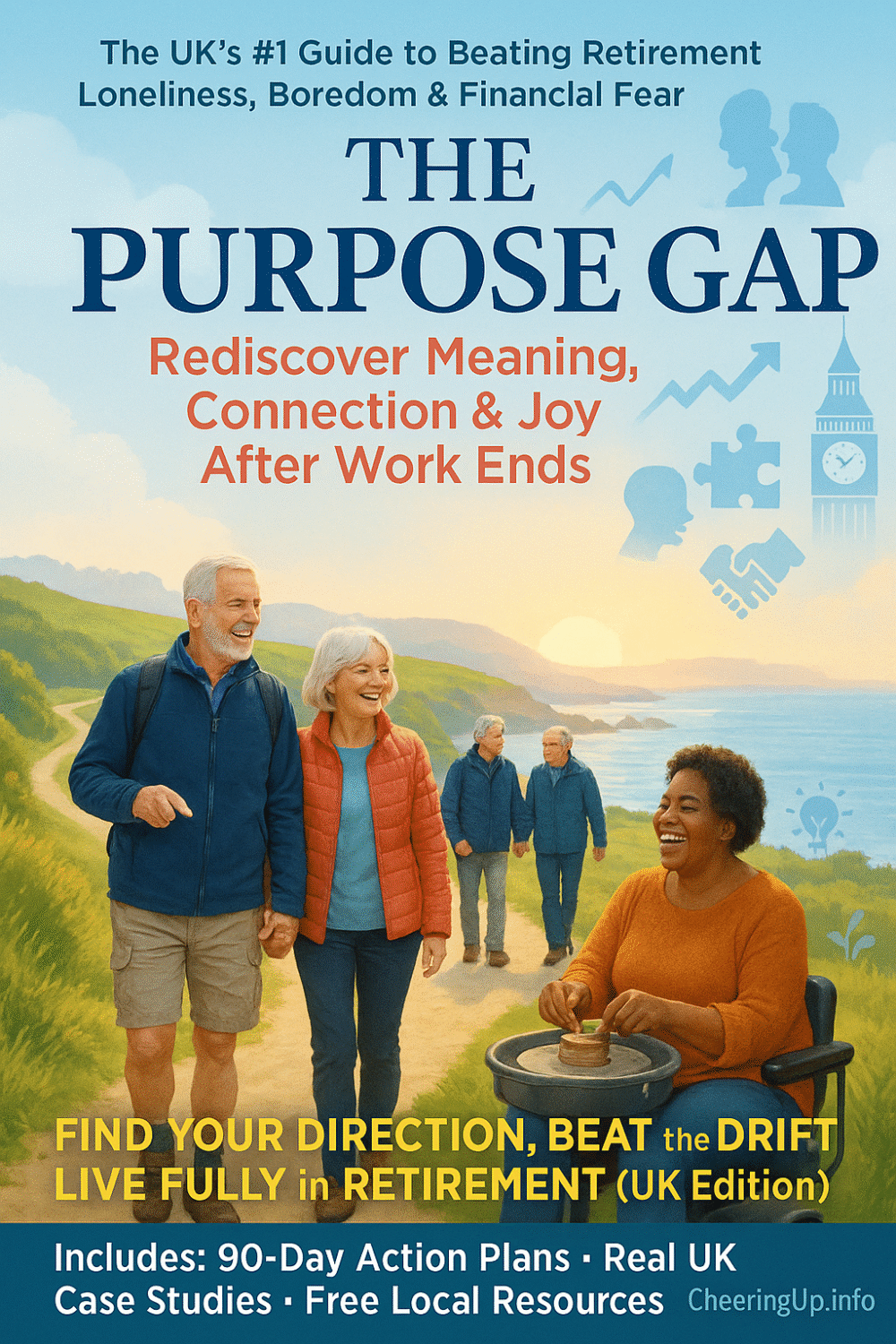
The Purpose Gap: Solving Post-Retirement Drift in the UK
Struggling with retirement loneliness or boredom? Get the UK’s step-by-step guide to reigniting purpose, social connections & joy. Scroll down to read Retirement Club eBook now!
Struggling to find purpose after retirement?
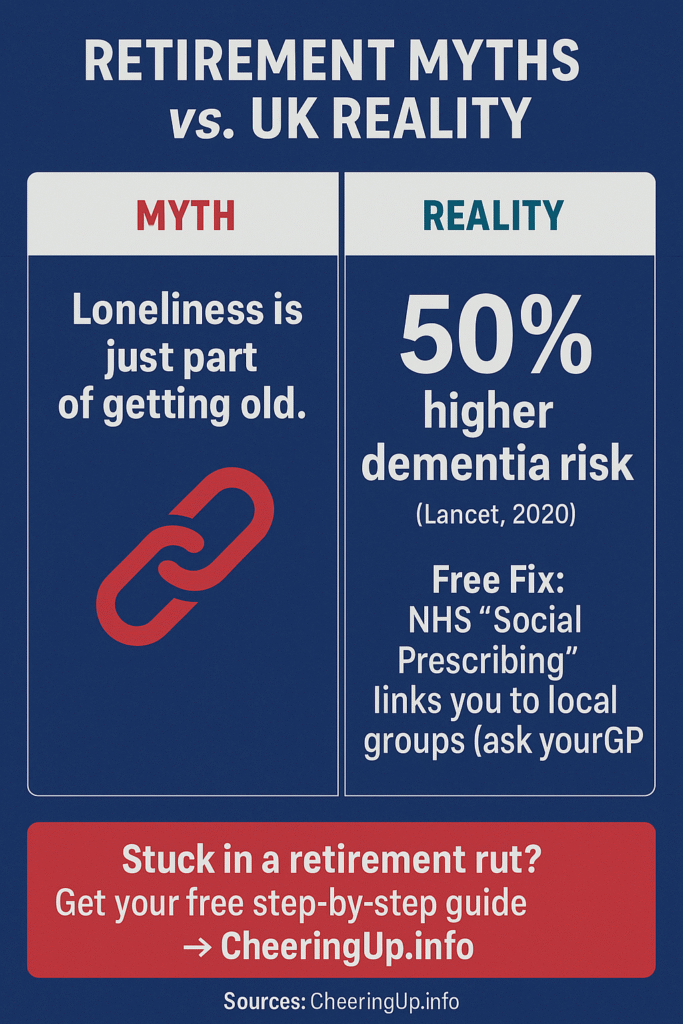
You’re not alone. 1 in 3 UK retirees feel adrift after leaving work – but it doesn’t have to be this way.
The Purpose Gap: Solving Post-Retirement Drift in the UK
Your step-by-step roadmap to a fulfilling later life. Packed with real British case studies and actionable strategies, this guide reveals:
✅ How to rebuild identity beyond your career (the NHS-approved 4-pillar method)
✅ UK-specific solutions for loneliness, boredom and financial worries
✅ 90-day plans to rediscover passion – from volunteering to starting a “hobby hustle”
✅ Free local resources (apps, clubs, grants) you never knew existed
Written in clear, jargon-free language by UK retirement experts.
Pay for eBook now and get today:
🔹 Discount off Retirement Club One-Off Lifetime Fee
EBook will be viewed by you online or a pdf will be emailed to you. Note: eBook will NOT be posted to you.
How to Reignite Passion, Connection, and Meaning in Later Life
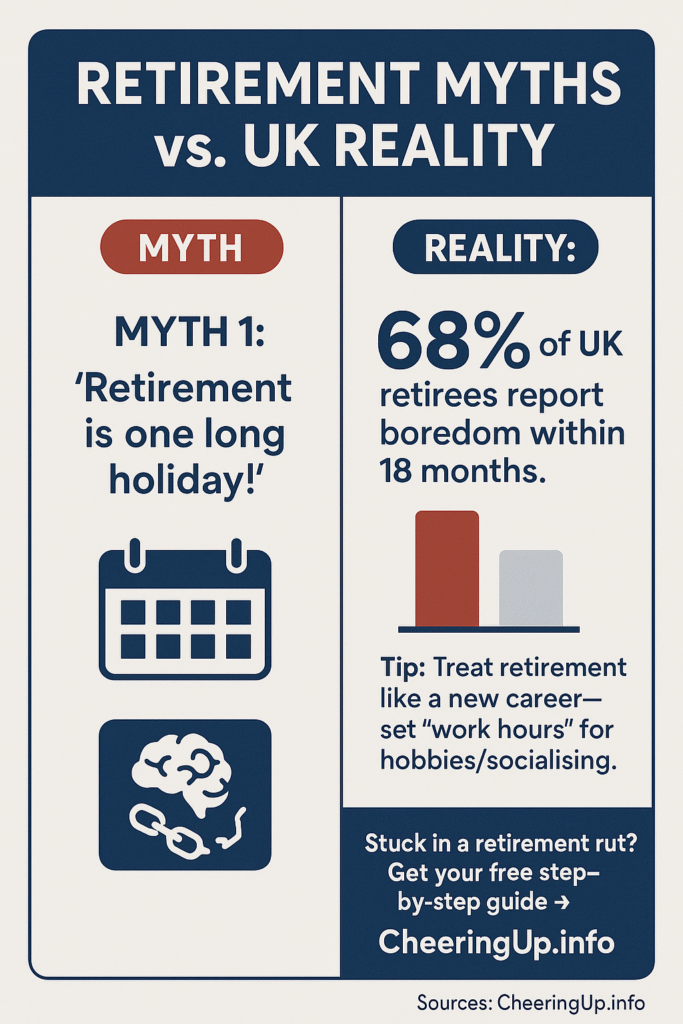
Did you know? Nearly 1 in 3 UK retirees report feeling a loss of purpose within the first two years of leaving work. For many, retirement—once a dream—becomes a void filled with boredom, isolation, and even depression.
The problem isn’t just emotional. Studies show that retirees without a clear sense of direction are 40% more likely to develop chronic health issues and face a shorter lifespan than those who stay engaged. The UK’s ageing population can’t afford to ignore this crisis.
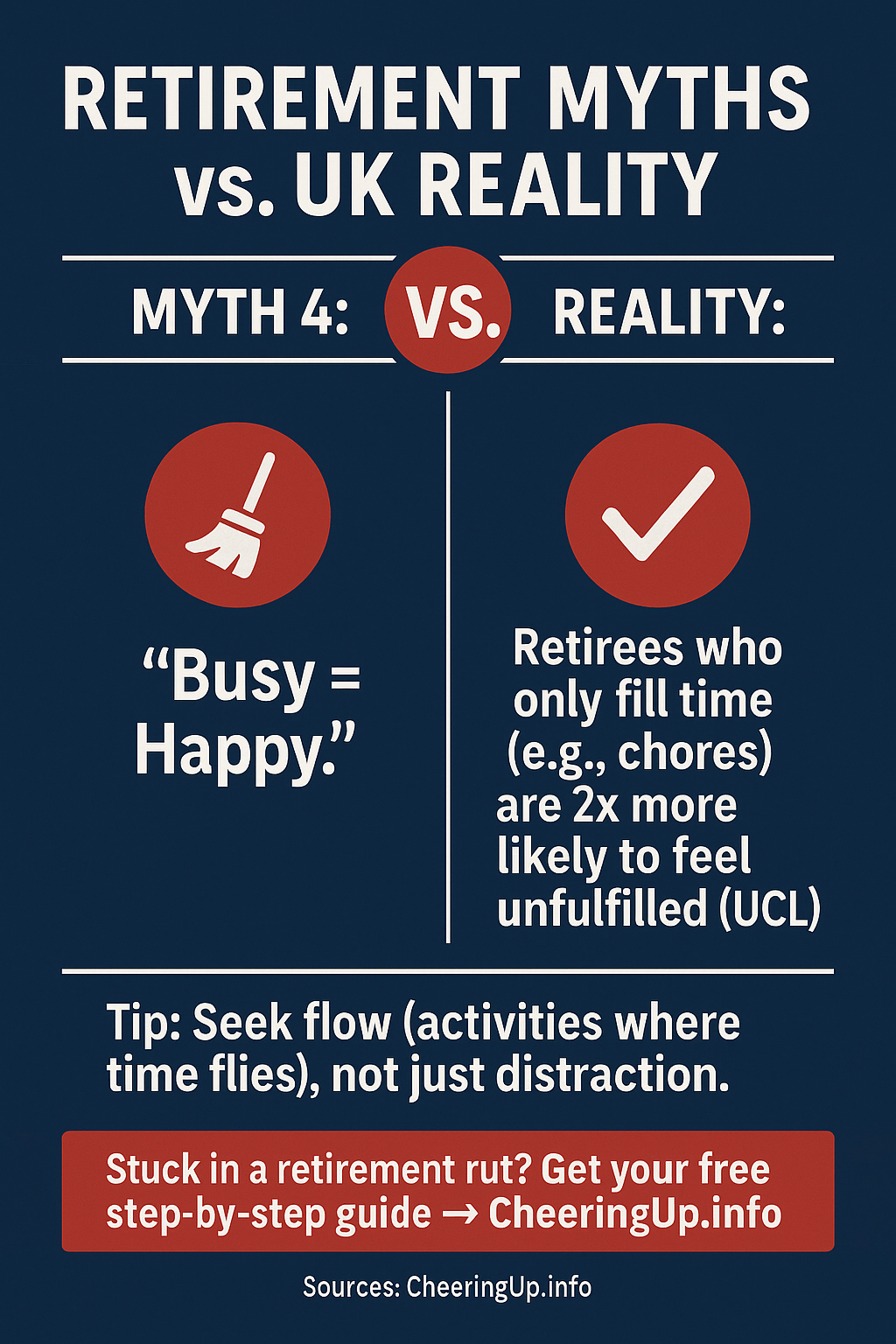
This isn’t just about “staying busy”—it’s about redesigning later life with intention.
Welcome to CheeringUp.info’s Retirement Club eBook, your roadmap to a fulfilling, dynamic retirement. Inside, you’ll find:
✅ The Hidden Costs of Drifting – Why lack of direction harms mental & physical health ✅ Step-by-Step Strategies – How to rebuild purpose, social bonds, and daily structure ✅ Real-Life Case Studies – Retirees who transformed their lives (and how you can too) ✅ Free UK Resources – Apps, communities, and expert-backed tools (including CheeringUp.info’s services)
This isn’t fluff. It’s actionable, evidence-based guidance for retirees who refuse to settle for a life of “waiting for the weekend”… when every day should feel like living.
Let’s fix the purpose gap.
TABLE OF CONTENTS
CHAPTER 1: THE PROBLEM – WHY RETIREMENT CAN GO WRONG
CHAPTER 2: THE SOLUTIONS – BUILDING A LIFE THAT EXCITES YOU AGAIN
CHAPTER 3: CASE STUDIES – HOW 5 UK RETIREES REINVENTED THEIR LIVES
CHAPTER 4: YOUR STEP-BY-STEP RETIREMENT REINVENTION PLAN
CHAPTER 5: THE MONEY MINDSET – FUNDING YOUR DREAM RETIREMENT WITHOUT STRESS
CHAPTER 6: LATER LIFE LOVE & CONNECTION – BUILDING RELATIONSHIPS THAT THRIVE POST-RETIREMENT
CHAPTER 7: THE VITALITY BLUEPRINT – STAYING SHARP, STRONG & ENERGISED FOR DECADES
CHAPTER 8: LEGACY & MEANING – HOW TO LEAVE YOUR MARK WITHOUT WRITING A MEMOIR
CHAPTER 9: THE FREEDOM EXPERIMENT – TEST-DRIVING YOUR DREAM RETIREMENT LIFESTYLE
CHAPTER 10: THE RESILIENCE HANDBOOK – BOUNCING BACK WHEN RETIREMENT DOESN’T GO TO PLAN
CHAPTER 1: THE PROBLEM – WHY RETIREMENT CAN GO WRONG
Retirement is sold as freedom. Yet for thousands of UK retirees, the initial euphoria of leaving work quickly fades into a quiet crisis—days blending into weeks without structure, meaningful conversations shrinking to polite chatter with cashiers, and a gnawing sense that this isn’t what they signed up for.
The Stark Statistics: UK-Specific Challenges
Age UK reports that 1.4 million older people in the UK are chronically lonely.
A NHS Digital survey found that 28% of over-65s show symptoms of depression.
University College London research links poor retirement transitions to a 40% higher risk of cardiovascular disease.
This isn’t just about “feeling a bit lost”—it’s a public health issue with real consequences.
The 5 Hidden Triggers of Post-Retirement Drift
1. Identity Loss: “Who Am I Now?”
Problem: For decades, your job gave you status, routine, and purpose. Retirement strips that away overnight. UK Insight: A 2019 study by the Centre for Ageing Better found that 42% of retirees struggle with “role confusion” in their first year.
Real-life example:
“I was ‘Dave the IT manager’ for 30 years. Now, at coffee mornings, I’m just ‘Dave who used to work.’ It’s like I’ve become invisible.” — Dave, 67, Birmingham
2. Social Collapse: The Friendship Recession
Problem: Work colleagues disappear, friends relocate to be near grandchildren, and local clubs feel cliquey. UK Reality:
43% of over-60s rely solely on family for social interaction (English Longitudinal Study of Ageing).
Rural retirees are twice as likely to report isolation (Age UK Rural Loneliness Report).
The spiral: No office chats → Fewer invites → Staying home → Friends assume you’re busy → Isolation deepens.
3. Decision Fatigue: Too Much Freedom
Problem: Without a boss or deadlines, even simple choices (“Should I garden or call someone?”) become paralysing. Science says:
University of Kent research shows retirees who lack self-set routines are 3x more likely to report low life satisfaction.
Fixable, but few realise it:
“I’d wander around the house, thinking, ‘I could do anything… so why am I doing nothing?’” — Susan, 71, Manchester
4. The “Invisible Tax” of Boredom
Problem: Days filled with TV and chores accelerate cognitive decline. Shocking data:
A 2023 Lancet study tied prolonged boredom in retirees to a 30% faster memory decline.
UK Active found retirees who don’t exercise mentally are 50% more likely to develop mild cognitive impairment.
5. The Contribution Crisis
Problem: Humans need to feel useful. Retirement can feel like being “put out to pasture.” UK Opportunity gap:
67% of retirees want to volunteer but don’t know where to start (NCVO).
Only 12% of UK charities actively recruit over-65s (despite retirees being the most reliable volunteers).
CHAPTER 2: THE SOLUTIONS – BUILDING A LIFE THAT EXCITES YOU AGAIN
Why Most Retirement Advice Fails (And What Works Instead)
Generic advice like “stay busy” or “travel more” doesn’t cut it. The happiest UK retirees don’t just fill time—they design a lifestyle around four core pillars that rebuild identity, connection, and daily joy.
The 4-Pillar Retirement Success Framework
(Developed from UK case studies and ageing research)
Health & Energy (Move well, eat well, sleep well)
Social & Community (Deep connections, not just acquaintances)
“Retirement isn’t about slowing down—it’s about finally steering your own ship!”
Next Chapter Preview: “Case Studies: How 5 UK Retirees Reinvented Their Lives (Including a 79-Year-Old Who Became a TikTok Gardener!)”
CHAPTER 3: CASE STUDIES – HOW 5 UK RETIREES REINVENTED THEIR LIVES
Why Real Stories Matter More Than Theory
Inspiration is useless without a roadmap. These five UK retirees didn’t just “get lucky”—they followed deliberate strategies to overcome loneliness, boredom, and loss of purpose, and you’ll learn exactly how they did it, step by step.
How to Use This Chapter
Read the case studies for motivation.
Follow the action plans to replicate their success.
Use the UK resources they used (all free/low-cost).
CASE STUDY 1: From Redundancy to Community Leader
Name: Derek, 67 Was: Factory manager (made redundant at 65) Struggle: Felt “thrown away” by society, drank alone most days. Breakthrough: Now runs a men’s mental health group in Liverpool.
Derek’s Step-by-Step Turnaround
Month 1: The Wake-Up Call
Action: His daughter staged an “intervention” with Andy’s Man Club (free UK men’s talks).
Key Step: Attended just one meeting (“I cried hearing others felt the same”).
Month 2: Small Wins
Routine Fix: Switched morning TV for a walk to the newsagent (chatting with the clerk).
Pillar Boost: Trained as a mental health first aider (free via Mind UK).
Now: Hosts weekly “Shed & Share” sessions at his local community centre.
💡 Your Replication Plan:
If you’re isolated: Commit to one group (search “men’s/women’s groups near me” on MeetUp).
Today: Call The Silver Line (0800 4 70 80 90) for a friendly chat.
CASE STUDY 2: The Widow Who Became a TikTok Gardener
Name: Pat, 79 Was: School secretary, widowed at 75. Struggle: “The house was so quiet, I talked to the microwave.” Breakthrough:12K TikTok followers for her “Grandma’s Garden Tips.”
Pat’s Step-by-Step Turnaround
Week 1: Digital Baby Steps
Action: Asked her grandson to teach her one app (TikTok).
Key Step: Filmed a 30-second clip of her repotting a fern (“My hands shook!”).
UK Resource: Joined Royal Horticultural Society’s online community (www.rhs.org.uk).
Year 1: Unexpected Fame
Pillar Boost: Local nursery invited her to host a workshop.
Now: Earns £200/month from TikTok’s Creator Fund.
💡 Your Replication Plan:
If you’re tech-wary: Book a free Digital Eagles session at Barclays (www.digitalskills.uk).
Today: Film one short clip (even just your garden/cooking).
CASE STUDY 3: The CEO Who Found Joy as a Tour Guide
Name: Sarah, 70 Was: Corporate CEO, retired at 68. Struggle: “I missed the adrenaline of leading teams.” Breakthrough: Leads historical walking tours in Edinburgh.
Key Step: Googled “how to become a tour guide UK” – found City of Edinburgh Council’s licensing course (£150).
Month 4: Test Run
Routine Fix: Practiced on friends (“I made them rate me out of 10!”).
UK Resource: Used TourGuideSpark (free script templates).
Year 2: Thriving
Pillar Boost: Hired by a luxury travel company for private groups.
Now: Earns £3K/month in peak season.
💡 Your Replication Plan:
If you miss work structure: Search “become a [your skill] tutor/consultant UK”.
Today: Volunteer as a National Trust guide (training provided).
CASE STUDY 4: The Shy Retiree Who Built a Supper Club
Name: Amina, 66 Was: Librarian, “always the quiet one.” Struggle: “I ate dinner with the radio for 3 years.” Breakthrough: Runs a Pakistani cooking club in Birmingham.
Amina’s Step-by-Step Turnaround
Week 1: Micro-Goal
Action: Invited one neighbour for chai (“I rehearsed for hours”).
Key Step: Neighbour suggested “Why not teach us your recipes?”
Month 2: Safe Space
Routine Fix: Started with 4 people max (“Less pressure”).
UK Resource: Got a £500 grant from her council’s “Community Kitchen” fund.
Now:30-person waitlist, featured in Birmingham Mail.
💡 Your Replication Plan:
If you’re shy: Start with 1:1 meetups (e.g., “Walk & Talk” groups).
Today: Google “[your city] + community grants” for funding.
CASE STUDY 5: The Ex-Builder Who Beat Depression with Drama
Name: Tony, 71 Was: Construction worker, forced to retire after a fall. Struggle: “I sat in my shed crying, missing my crew.” Breakthrough: Performs in amateur theatre (even got a standing ovation!).
Tony’s Step-by-Step Turnaround
Month 1: Desperation Move
Action: Saw a flyer for “Over 60s Drama Taster” at his library.
Key Step: Almost left at halftime (“Then someone laughed at my joke”).
Month 6: New Identity
Routine Fix: Memorised lines while walking his dog.
UK Resource: Found LADS (Later Age Drama Society) for scripts.
Now:Tour’s care homes with comedy shows.
💡 Your Replication Plan:
If you feel “stuck”: Try one taster session (drama, choir, art).
Today: Search “amateur theatre near me” on AmDram.
YOUR 30-DAY “CASE STUDY” CHALLENGE
Week 1: Pick Your Role Model
[ ] Choose one case study that resonates.
[ ] Copy their first step (e.g., attend one group, film one clip).
Week 2: Steal Their Strategy
[ ] Use their UK resource (e.g., Men’s Sheds, Digital Eagles).
[ ] Adapt one habit (e.g., Tony’s “learn while walking”).
Week 3: Customise It
[ ] Add your twist (e.g., “I’ll host a knitting club, not cooking”).
[ ] Tell one person your plan (accountability!).
Week 4: Lock It In
[ ] Book next month’s activity (e.g., RHS workshop).
[ ] Join CheeringUp.info’s Case Study Group (monthly Zoom Q&A).
UK RESOURCES FROM THIS CHAPTER
Andy’s Man Club (Free men’s mental health talks)
Digital Eagles (Barclays’ free tech training)
AmDram (Find local theatre groups)
CHAPTER 4: YOUR STEP-BY-STEP RETIREMENT REINVENTION PLAN
Why Most Retirement Plans Fail (And How Yours Won’t)
Good intentions aren’t enough. Without a clear, personalised strategy, even the most motivated retirees fall back into old routines—but this 90-day action plan combines UK-specific tactics with psychological triggers to make change stick.
Legal Volunteering:Support Through Court (help vulnerable navigate courts)
CheeringUp.info’s “90-Day Planner”: Printable templates + video guides.
Next Chapter Preview: “The Money Mindset: How to Fund Your Dream Retirement Without Stress (UK Grants, Tax Hacks & Side Hustles)”
CHAPTER 5: THE MONEY MINDSET – FUNDING YOUR DREAM RETIREMENT WITHOUT STRESS
Why Financial Freedom Isn’t Just About Your Pension
Running out of money is scary. But what terrifies UK retirees more than a dwindling bank balance is watching their dreams gather dust because they don’t know how to fund them—while sitting on assets they could be using smarter.
The UK Retirement Finance Trap
63% of retirees don’t touch their pension pots for fear of “running out” (Money and Pensions Service).
1 in 4 over-65s have £50k+ in savings but live like they’re broke (FCA Financial Lives Survey).
82% admit they’ve never claimed benefits they’re entitled to (Age UK).
This chapter fixes that. No jargon—just actionable UK strategies to: ✔ Stretch your money further without risk ✔ Unlock hidden income streams ✔ Fund passions (travel, hobbies, grandkids) guilt-free
PHASE 1: THE RETIREMENT FINANCE RESET (DAYS 1-14)
Step 1: The “3-Bucket” Money Audit
Goal: See exactly where your money can work harder.
Bucket
What Goes In
UK-Specific Action
Essentials
Bills, food, meds
Check eligibility for Council Tax Reduction (avg. £600/yr savings)
Lifestyle
Holidays, hobbies, grandkids
Use Senior Railcard (£30/yr, 1/3 off travel)
Legacy
Inheritance, gifts
Explore £3k/yr gift allowance to reduce IHT
➔ Your Task: List last month’s spending in these buckets using MoneySavingExpert’s Budget Planner.
Step 2: Claim Your “Missing Money”
UK Retirees Leave £3.4 Billion Unclaimed Yearly (Independent Age).
Checklist: ☑ Pension Credit (Even £1/week qualifies for free TV licence, council tax help) → gov.uk/pension-credit ☑ Attendance Allowance (£68/week if you have a disability) → Age UK’s Benefits Calculator ☑ Winter Fuel Payment (£100-£300/year) → No application needed if on State Pension
Pro Tip: Book a free 1:1 session with your local Citizens Advice to check eligibility.
PHASE 2: SMARTER INCOME STREAMS (DAYS 15-45)
Strategy 1: The “5% Rule” for Pension Drawdown
Problem: Fear leads to under-spending or reckless withdrawals.
UK Solution:
Take no more than 5% yearly from your pot (adjust for inflation).
Use the MoneyHelper Drawdown Calculator to test scenarios.
Top up tax-free: Use your £12,570 Personal Allowance first.
Example: £100k pot → £5k/yr = £416/month + State Pension.
CheeringUp.info’s “Money Map”: Visual guide to tax-free retirement income.
Next Chapter Preview: “Later Life Love & Connection: How to Build Relationships That Thrive Post-Retirement (Dating, Friendships & Community)”
CHAPTER 6: LATER LIFE LOVE & CONNECTION – BUILDING RELATIONSHIPS THAT THRIVE POST-RETIREMENT
Why Retirement Can Be the Best Time for Love (and Friendship)
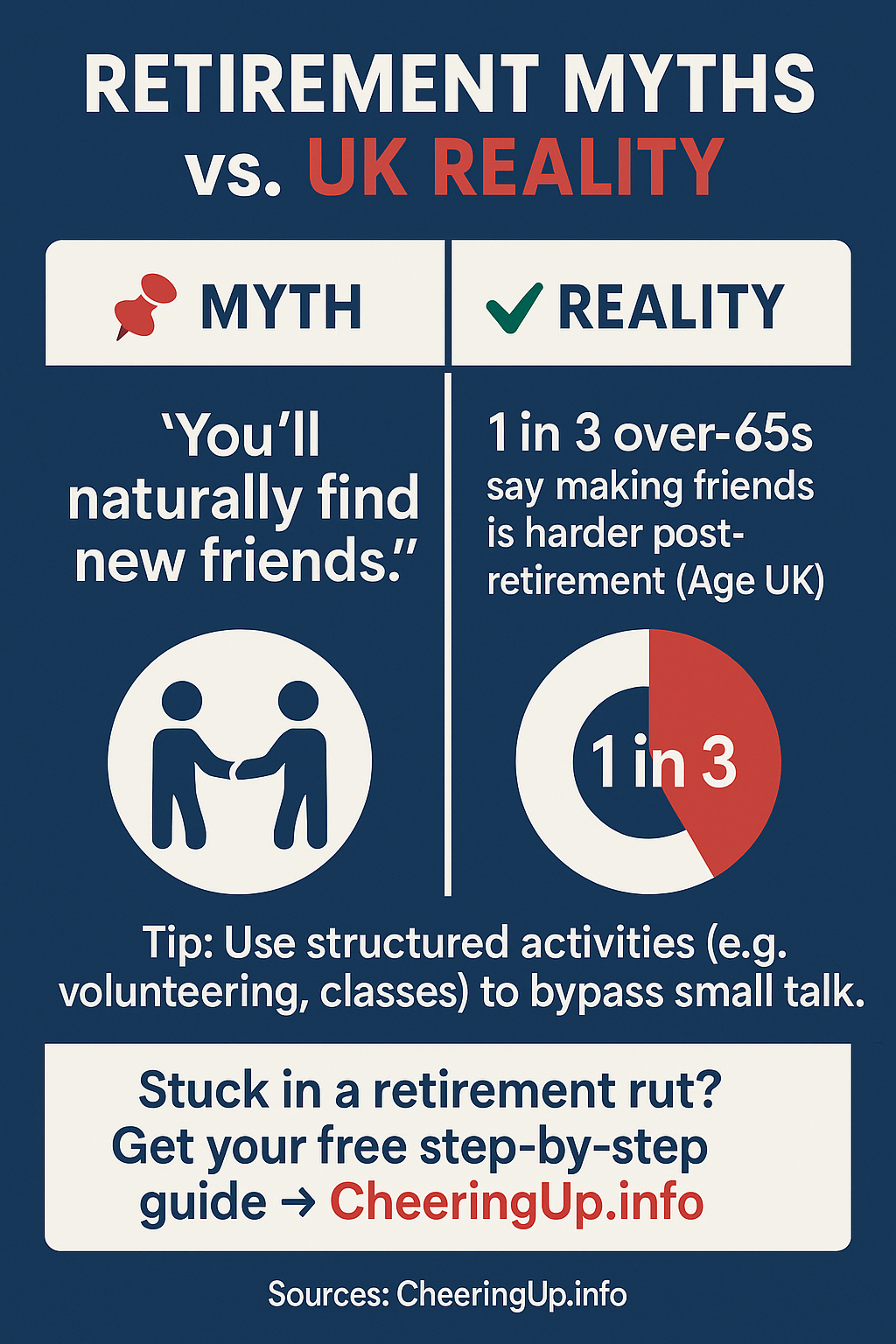
Loneliness is deadlier than obesity. While UK retirees worry about pensions and health, what often hits hardest is the quiet ache of empty mornings without colleagues to greet, or evenings with only the TV for conversation—yet this life stage offers unique opportunities to forge deeper connections than ever before.
45% of over-65s say making new friends feels “impossible” (Age UK)
Divorce rates for 60+ have tripled since 1990 (ONS)
1 in 3 widowed retirees go a full week without a meaningful conversation (Cruse Bereavement Care)
But here’s the hope: ✔ Retirees have more time for quality relationships ✔ Shared life experience creates faster emotional intimacy ✔ UK communities offer untapped ways to connect (no dating apps required)
CheeringUp.info “Connection Calendar”: Monthly social challenge PDF
Next Chapter Preview: “The Vitality Blueprint: Science-Backed Ways to Stay Sharp, Strong & Energised for Decades”
CHAPTER 7: THE VITALITY BLUEPRINT – STAYING SHARP, STRONG & ENERGISED FOR DECADES
Why Retirement Shouldn’t Mean Decline
Your best years could still be ahead. While society expects retirees to slow down, groundbreaking UK research reveals that 70-year-olds today have the biological age of 60-year-olds from 1990—if they follow science-backed habits to protect their brain, body, and energy.
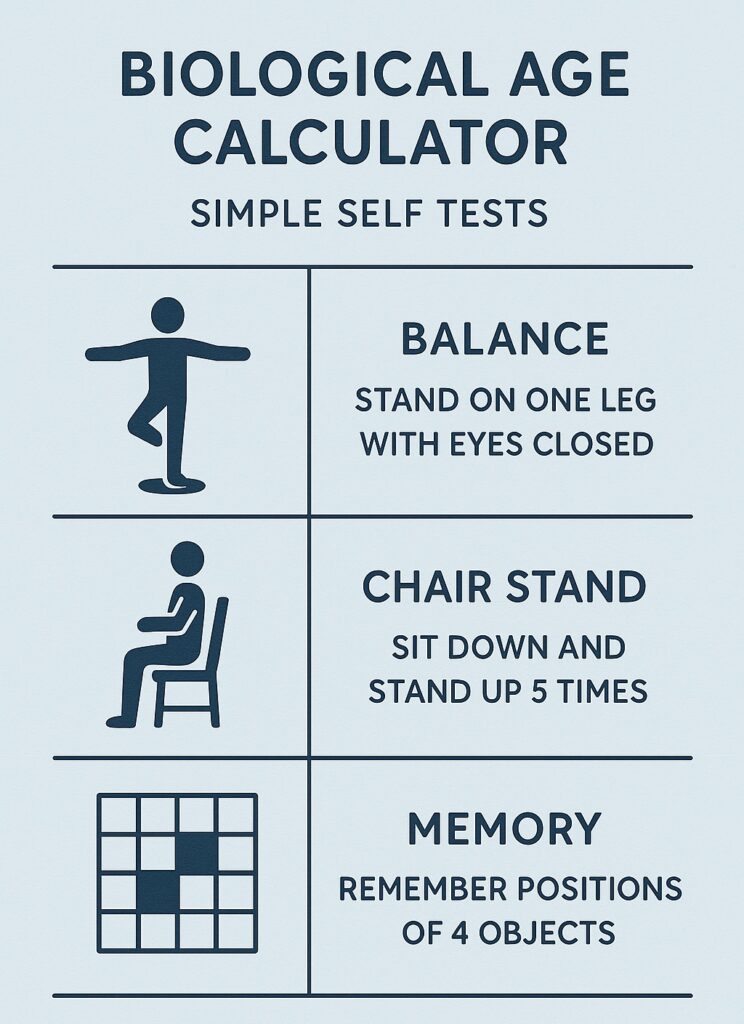
Simple Self-Tests to Estimate How Old Your Body Really Feels
1. One-Leg Stand Test (Balance)
Test: Stand on one leg, eyes open.
Timer starts once foot is lifted.
Score Yourself:
30+ seconds = Age 20–30
20–29 sec = Age 31–40
10–19 sec = Age 41–50
<10 sec = Age 51+
Tip: Repeat 3 times and take your best score.
2. Sit-to-Stand Test (Leg Strength & Coordination)
Test: Sit in a chair, arms crossed. Stand up and sit down 10 times as fast as you can.
Time it!
<10 seconds = Age 20–30
11–14 sec = Age 31–40
15–19 sec = Age 41–50
20+ sec = Age 51+
3. Memory Recall Test (Cognitive Function)
Test: Look at a list of 10 words for 30 seconds. Wait 1 minute, then write down as many as you remember.
Score Yourself:
9–10 words = Age 20–30
7–8 words = Age 31–40
5–6 words = Age 41–50
<5 words = Age 51+
4. Resting Heart Rate (Cardiovascular Health)
Test: Count your pulse for 60 seconds while resting.
Score Yourself:
60–70 bpm = Age 20–30
71–75 bpm = Age 31–40
76–80 bpm = Age 41–50
81+ bpm = Age 51+
5. Waist-to-Height Ratio (Metabolic Health)
Test: Measure waist (cm) ÷ height (cm)
Score Yourself:
<0.5 = Age 20–30
0.5–0.54 = Age 31–40
0.55–0.59 = Age 41–50
0.6+ = Age 51+
6. Reaction Time Test (Nerve Health)
Test: Drop a ruler between two fingers and try to catch it.
Score (where you catch it):
6–10 cm = Age 20–30
11–15 cm = Age 31–40
16–20 cm = Age 41–50
21+ cm = Age 51+
Now Add Up Your Results
Most of your scores fall in which age group?
That’s your estimated biological age!
Want to Get Younger?
Improve sleep, exercise, diet, stress, and social life. Your biological age can drop with better habits!
Next Chapter Preview: “Legacy & Meaning: How to Leave Your Mark (Without Writing a Memoir)”
CHAPTER 8: LEGACY & MEANING – HOW TO LEAVE YOUR MARK WITHOUT WRITING A MEMOIR
Why Legacy Matters More Than Ever in Retirement
Your story doesn’t end at retirement. While wills and inheritances deal with what you leave behind, true legacy is about who you’ve impacted—and UK retirees are uniquely positioned to shape communities, mentor future generations, and turn hard-earned wisdom into lasting change.
The UK Legacy Gap
68% of over-65s want to “give back” but don’t know where to start (NCVO)
Only 12% have documented life lessons for their family (Saga survey)
Local charities report 40% volunteer shortages in skills like budgeting, mentoring (UK Community Foundations)
This chapter isn’t about obituaries—it’s your toolkit for living legacy.
CheeringUp.info “Legacy Planner”: Step-by-step PDF with templates
Next Chapter Preview: “The Freedom Experiment: How to Test-Drive Your Dream Retirement Lifestyle Before Committing”
CHAPTER 9: THE FREEDOM EXPERIMENT – TEST-DRIVING YOUR DREAM RETIREMENT LIFESTYLE
Why You Should “Try Before You Buy” in Retirement
Retirement is too important to leave to chance. Just as you’d test-drive a car before purchasing, your ideal retirement lifestyle deserves real-world trials—because 37% of UK retirees regret not experimenting before making permanent moves abroad, downsizing, or committing to expensive hobbies.
The UK Retirement Reality Check
Top 3 Regrets: Moving too fast (42%), overspending early (38%), underestimating loneliness (55%) (Saga Retirement Survey 2023)
Good News: It costs 90% less to test a lifestyle for 3 months than to fix a mistake
Hidden Gem: Many UK councils offer “retirement taster programmes” (e.g., Glasgow’s “Later Life Lab”)
This chapter is your blueprint for low-risk, high-reward experimentation.
PART 1: THE 4-STEP FREEDOM EXPERIMENT FRAMEWORK
Step 1: Define Your “What Ifs”
UK-Specific Dream Scenarios to Test: ✅ “What if I split my year between the UK and Spain?” ✅ “What if I traded my garden for an allotment + city flat?” ✅ “What if I turned my woodworking hobby into a market stall?”
Exercise: Circle one “scary exciting” idea you’ve dismissed as “unrealistic.”
Next Chapter Preview: “The Resilience Handbook: Bouncing Back When Retirement Doesn’t Go to Plan”
CHAPTER 10: THE RESILIENCE HANDBOOK – BOUNCING BACK WHEN RETIREMENT DOESN’T GO TO PLAN
Why Even the Best-Laid Retirement Plans Need a Plan B
Life doesn’t stop at retirement. Whether it’s unexpected health issues, adult children moving back home, or a pension pot that doesn’t stretch as far as you’d hoped, 62% of UK retirees face at least one major disruption within five years of leaving work—but the happiest among them don’t just survive, they adapt and thrive.
The UK Retirement Reality Check
1 in 4 retirees become unpaid carers within 3 years (Carers UK)
40% of pensioners experience a “financial shock” (£2k+ unexpected cost) yearly (ILC UK)
“Boomerang Kids” now cost retirees £360/month on average (Legal & General)
This chapter is your toolkit for navigating the unexpected—with dignity, humour, and grit.
How to Find Purpose in Retirement: The Adlerian Secret to a New Life with CheeringUpInfo
Retirement is often marketed as a “conclusion”—a reward for past labor. Freudian thinking would have you dwell on the loss of your professional identity or “stew” over missed opportunities. Adlerian psychology flips the script: retirement is not the end of a career; it is the beginning of a new Social Task.
In Adler’s view, your value isn’t tied to your previous job title, but to your Social Interest (Gemeinschaftsgefühl). Retirement is the ultimate opportunity to redesign your “Lifestyle” toward a goal that actually matters to you.
The Adlerian Retirement Shift: From “Was” to “Will Be”
Reject the “Inferiority” of Ageing: Society may suggest you are “phasing out,” but Adler argues that inferiority is only a feeling, not a fact. Use this stage to strive for a new kind of “superiority”—mastering a craft, mentoring others, or contributing to your community.
Teleological Planning: Don’t look back at the 40 years you “gave up.” Look forward to the impact you want to have in the next 20. Your “goal” (Teleology) is what defines your happiness now, not your old payroll status.
The Creative Power of the Third Act: You are the “Artist of your Life.” Retirement is a blank canvas where you choose the colors, no longer restricted by a corporate palette.
Alright, alright, settle down there! Before we dive into the nitty-gritty of what truly makes us over-55s tick, let’s be honest: retirement isn’t exactly synonymous with rocking chairs and bingo nights anymore (although, hey, if that’s your jam, then more power to you!).
Retired In UK getting fitRetiree enjoying a sailing adventure in the MediterraneanRetiree enjoying an adventurous hike in the scenic Scottish HighlandsPeru Retirement IdeasRetirement Ideas GuatemalaUK woman reflecting on her poor retirement lifestyle due to past decisionsHealth in Retirement: Fitness, Diet, or Mindfulness – What’s Your Priority? 🏃♂️🍎🧘♀️ Share your health tips and routines! #HealthyRetirement #Wellness #RetirementClub #MyRetirementStory #RetirementMagazine #OldDigitalNomad #InvestInYoursel #HealthyAgeing #MindfulLivingNo right answer! Being free to do what you want vs knowing you are secure financially are 2 very different retirement goals. What’s More Important in Retirement? 💰 Share your thoughts and strategies! #RetirementPlanning #FinancialFreedom #RetirementClub #MyRetirementStory #CheeringupInfo #RetirementMagazine #OldDigitalNomad #RetirementGoalsHappy In Love Over 55s UKFun For Over 55s
What Matters Most to the Over-55s in the UK: A Guide for Businesses and Retirees Alike
The truth is, our generation is a powerhouse. We’ve got decades of experience under our belts, a zest for life that some youngsters can only dream of, and let’s not forget, a healthy dose of wanderlust (and maybe a few more wrinkles around the eyes). But with all this amazingness comes a new set of priorities. So, what exactly does matter (Retired Lives Matter!) to us as we navigate this exciting chapter called retirement? Buckle up, because we’re about to explore the top nine things that make our hearts sing (and our wallets happy, of course).
This article is your one-stop shop for cracking the code on the over-55s market in the UK. Whether you’re a business looking to connect with this dynamic demographic or a fellow retiree seeking inspiration, this is your guide to a fulfilling and prosperous third act. And hey, by the end of it, you might even want to consider joining our exclusive Cheeringup.info Retirement Club – a place where savvy over 55s like ourselves can connect, share tips, and access exclusive deals (think discounts on everything from cruises to wrinkle cream – we’ve got you covered!).
1. Health and Wellbeing:
This one’s a no-brainer, isn’t it? As we age, our health becomes paramount. We’re not just talking about avoiding doctor’s visits (although that’s certainly a goal!). For many of us, it’s about proactively managing our health and embracing a holistic approach to wellbeing.
What this means for businesses:
Focus on preventative care: Offer services like fitness classes, nutrition counselling, and mental health support programmes.
Promote healthy ageing: Partner with healthcare providers to offer health screenings, wellness workshops, and educational resources.
What this means for retirees:
Prioritise regular exercise: Find activities you enjoy, whether it’s walking, swimming, dancing, or gardening.
Nourish your body: Focus on a balanced diet, incorporating plenty of fruits, vegetables, and whole grains.
Mind your mental health: Practice mindfulness techniques, engage in social activities, and pursue hobbies that bring you joy.
2. Financial Security:
Let’s be honest, financial security is a major concern for many retirees. We want to ensure that we can enjoy our golden years without worrying about money.
With more time on our hands, many of us are eager to explore the world. Whether it’s a road trip across the UK or a backpacking adventure in Southeast Asia, travel is a top priority for many retirees.
What this means for businesses:
Offer travel-related products and services: Partner with travel agencies, airlines, and hotels to offer exclusive deals and packages for seniors.
Create travel-inspired experiences: Host travel talks, film screenings, and cultural events to inspire wanderlust.
Develop accessible travel options: Offer travel packages specifically designed for seniors, with options for accessible transportation and accommodations.
What this means for retirees:
Plan your dream trips: Research destinations, book flights and accommodations, and create detailed itineraries.
Embrace adventure travel: Step outside your comfort zone and try new things, whether it’s hiking in the mountains or learning a new language.
Travel sustainably: Choose eco-friendly accommodations, support local businesses, and minimise your environmental impact.
4. Social Connection:
As we age, maintaining social connections becomes increasingly important. Whether it’s spending time with family and friends, volunteering in the community, or joining social clubs, staying connected is crucial for our overall wellbeing.
What this means for businesses:
Create community spaces: Host social events, workshops, and meetups for seniors.
Encourage volunteerism:Partner with local charities to offer volunteer opportunities for seniors.
Leverage technology: Utilise social media and online platforms to connect seniors with each other and with the community.
What this means for retirees:
Join clubs and groups: Explore local clubs and groups that align with your interests, such as book clubs, gardening clubs, or hiking groups.
Volunteer your time: Give back to the community by volunteering at local charities or schools.
Stay connected with loved ones: Make an effort to stay in touch with family and friends, whether through phone calls, video calls, or visits.
5. Intellectual Stimulation:
Retirement doesn’t mean the end of learning. In fact, many retirees are eager to continue learning and exploring new interests.
What this means for businesses:
Offer educational programmes:Partner with universities and colleges to offer continuing education courses and workshops for seniors.
Provide access to information: Offer online resources, libraries, and access to technology to facilitate lifelong learning.
Encourage creativity: Support creative endeavours by offering art classes, writing workshops, and music lessons.
Develop user-friendly technology: Design products and services that are easy for seniors to use and understand.
Embrace digital communication: Utilise email, social media, and other digital channels to communicate with seniors.
What this means for retirees:
Embrace technology: Learn how to use smartphones, tablets, and computers to stay connected and informed.
Explore online resources: Utilise online resources for entertainment, education, and social interaction.
Stay informed about scams: Be aware of common online scams and take steps to protect yourself from cybercrime.
7. Leisure and Recreation:
Retirement is the perfect time to indulge in your passions and pursue leisure activities.
What this means for businesses:
Offer a variety of leisure options: Provide access to recreational facilities such as golf courses, swimming pools, and fitness centres.
Host entertainment events: Organise concerts, theatre performances, and other cultural events for seniors.
Promote local attractions: Highlight local attractions and tourist destinations that are appealing to seniors.
What this means for retirees:
Explore local attractions: Discover hidden gems in your local area, such as museums, galleries, and parks.
Pursue your hobbies: Dedicate time to your favourite hobbies, whether it’s gardening, painting, or playing a musical instrument.
Enjoy the simple pleasures: Spend time in nature, read a good book, or simply relax and enjoy the peace and quiet.
8. Community Engagement:
Many retirees are eager to give back to their communities and make a positive impact.
What this means for businesses:
Support community initiatives:Partner with local charities and organisations to support community projects.
Encourage community involvement: Create opportunities for seniors to volunteer their time and skills.
Promote intergenerational programmes: Foster connections between seniors and younger generations.
What this means for retirees:
Volunteer your time and skills: Get involved in local charities, community groups, and volunteer organisations.
Mentor young people: Share your wisdom and experience with younger generations.
Become an advocate for seniors’ issues: Raise awareness of issues that are important to seniors and advocate for change.
9. Comfort and Convenience:
As we age, comfort and convenience become increasingly important.
What this means for businesses:
Offer convenient delivery and home services: Provide home delivery options, in-home services, and online ordering to cater to the needs of seniors who may have limited mobility.
Design products with ease of use in mind: Create products that are easy to use and understand, with features such as large buttons, clear instructions, and intuitive interfaces.
Provide excellent customer service: Offer personalised customer service that is responsive, helpful, and respectful of seniors’ needs and preferences.
What this means for retirees:
Embrace technology: Utilise technology to simplify daily tasks, such as online shopping, bill payment, and home security.
Optimise your home: Make your home more comfortable and accessible by installing grab bars, ramps, and other assistive devices.
Seek out convenient services: Take advantage of home delivery services, meal delivery programs, and other services that can make life easier.
Conclusion
The over-55s market in the UK is a dynamic and growing segment with unique needs and preferences. By understanding what truly matters to this demographic, businesses can effectively connect with this valuable market and build strong, long-term relationships.
For retirees, this article provides valuable insights into how to live a fulfilling and prosperous life in retirement. By prioritising health and wellbeing, financial security, social connection, and personal growth, you can create a retirement that is truly enriching and rewarding.
Join the Cheeringup.info Retirement Club
Ready to connect with other savvy seniors, access exclusive deals, and unlock a world of retirement possibilities? Join the Cheeringup.info Retirement Club today! As a member, you’ll gain access to:
Exclusive discounts and offers: Enjoy exclusive discounts on travel, dining, entertainment, and more.
Expert advice and guidance: Access valuable resources and expert advice on topics such as health, finance, and travel.
A vibrant community: Connect with other retirees who share your interests and passions.
Exclusive events and activities: Participate in exciting events and activities designed specifically for retirees.
Imagine a safety deposit box, not for cash, but for your entire life’s work. This isn’t just about safeguarding your wealth; it’s about controlling how it grows and who benefits from it, both during your lifetime and beyond. Enter the UK Private Trust – a powerful legal structure that can revolutionise how you manage your assets and plan for the future.
The Invisible Hand: Navigating UK Private Trusts for Wealth Preservation and Intergenerational Transfer
The beauty of a UK Private Trust lies in its flexibility. It’s like a bespoke suit, tailored precisely to your individual needs and circumstances. You, as the settlor, decide what assets go into the trust (think property, investments, even cryptocurrency!) and how they are managed. You appoint trustees, the individuals responsible for overseeing the trust and ensuring its objectives are met.
But here’s the magic: the trust itself is a separate legal entity. This means the assets within the trust are legally distinct from your personal estate. This separation offers significant advantages, particularly in terms of asset protection. Imagine a scenario where you face a legal claim. In most cases, your personal assets are at risk. However, with a well-structured trust, your trust assets remain shielded, providing a crucial layer of protection for your loved ones.
Now, let’s address the elephant in the room: tax. UK Private Trusts are not immune to taxation, but with careful planning, you can significantly minimise your tax liability. By strategically structuring the trust and utilising available tax exemptions and allowances, you can optimise income tax and capital gains tax throughout your lifetime and upon your death.
Furthermore, the trust provides a powerful tool for intergenerational wealth transfer. You can design the trust to provide for your children and grandchildren, ensuring their financial security and supporting their future aspirations. Whether you’re looking to provide for education, establish a family business, or simply ensure your wealth is passed on responsibly, a well-structured trust can help you achieve your goals.
This article will delve deeper into the intricacies of UK Private Trusts, exploring their key features, benefits, and considerations. We’ll guide you through the process of incorporating existing and future assets, including cryptocurrencies and properties, both private and commercial. We’ll also discuss strategies for optimising tax efficiency and ensuring a smooth and seamless transition of wealth to the next generation.
So, if you’re serious about protecting your wealth, minimising your tax burden, and ensuring a secure financial future for your loved ones, join us on this journey to unlock the power of UK Private Trusts.
Incorporating Cryptocurrencies and Properties into UK Private Trusts
One of the most significant advantages of UK Private Trusts is their adaptability. They can accommodate a wide range of assets, including the increasingly important world of cryptocurrencies and the ever-evolving landscape of property ownership.
Cryptocurrencies:
The integration of cryptocurrencies into a UK Private Trust requires careful consideration. While the regulatory landscape surrounding cryptocurrencies is still evolving, trusts can provide a framework for managing and transferring these digital assets.
Holding and Managing Cryptocurrencies: Cryptocurrencies can be held directly within the trust. This involves appointing trustees with the necessary expertise to understand and manage these assets.
Tax Implications: The tax treatment of cryptocurrencies within a trust is complex and subject to ongoing developments. It’s crucial to seek professional advice to understand the potential tax implications and optimise your tax position.
Succession Planning: Trusts can facilitate the smooth transfer of cryptocurrency holdings to beneficiaries upon the settlor’s death or according to specific criteria outlined in the trust deed.
Properties:
Both residential and commercial properties can be seamlessly incorporated into a UK Private Trust.
Residential Properties: Including your primary residence or investment properties within a trust can offer significant asset protection benefits. It can also provide flexibility in managing property income and passing on property ownership to future generations.
Commercial Properties: Incorporating commercial properties into a trust can offer various advantages, such as:
Asset Protection: Protecting the property from potential business liabilities.
Succession Planning: Facilitating the smooth transfer of ownership to the next generation of family members or business partners.
Tax Optimisation: Potentially reducing inheritance tax and capital gains tax liabilities.
Strategies for Tax Efficiency
Tax planning is crucial when establishing and managing a UK Private Trust. By carefully considering the following strategies, you can significantly minimise your tax liability:
Income Tax:
Utilisation of Tax-Free Bands: Utilise the available income tax-free allowances for trust income to minimise tax liabilities.
Distribution Strategies: Strategically distribute trust income to minimise overall tax burdens on both the trust and the beneficiaries.
Capital Gains Tax:
Annual Exempt Amount: Utilise the annual exempt amount for capital gains tax to minimise tax liabilities on the sale of trust assets.
Business Property Relief: If the trust holds qualifying business assets, you may be eligible for business property relief, which can significantly reduce capital gains tax liabilities.
Inheritance Tax:
7-Year Rule: Utilise the 7-year rule, which allows assets to fall out of your estate for inheritance tax purposes if they have been held in trust for at least 7 years.
Potentially Exempt Transfers: Make use of potentially exempt transfers (PETs) to minimise inheritance tax liabilities.
Intergenerational Wealth Transfer
A key objective of many UK Private Trusts is to facilitate the smooth and responsible transfer of wealth across generations. Here are some key considerations:
Succession Planning: Clearly define the succession plan within the trust deed, outlining how and when assets will be distributed to beneficiaries.
Beneficiary Protection: Implement safeguards to protect vulnerable beneficiaries, such as minors or those with special needs.
Family Harmony: Consider the potential impact of the trust on family dynamics and strive to ensure a fair and equitable distribution of assets.
Setting Up a UK Private Trust: A 9-Step Plan
Consult with a Professional:Seek expert advice from a qualified trust and estate lawyer. They will guide you through the entire process, ensuring your trust is structured effectively and complies with all relevant legal requirements.
Define Your Objectives: Clearly define your goals for the trust. What are you hoping to achieve? Are you primarily focused on asset protection, tax minimisation, or intergenerational wealth transfer?
Choose Your Trustees: Select individuals who are trustworthy, competent, and willing to assume the responsibilities of trusteeship.
Draft the Trust Deed: The trust deed is the legal document that outlines the terms and conditions of the trust. Ensure it is drafted accurately and comprehensively.
Fund the Trust: Transfer the assets you wish to include in the trust. This may involve transferring ownership of property, transferring funds from bank accounts, or transferring shares in companies.
Obtain Tax Advice: Consult with a tax adviser to understand the potential tax implications of the trust and explore strategies for minimising your tax liability.
Review and Update: Regularly review and update the trust deed as needed to reflect changes in your circumstances, family dynamics, and tax laws.
Maintain Proper Records: Maintain accurate and up-to-date records of all trust transactions and activities.
Communicate with Beneficiaries: Maintain open and transparent communication with beneficiaries regarding the trust and its objectives.
Conclusion
UK Private Trusts offer a powerful and versatile tool for wealth preservation, tax planning, and intergenerational wealth transfer. By carefully considering your individual needs and circumstances, you can leverage the unique advantages of this legal structure to achieve your financial and personal goals.
Disclaimer: This article provides general information only and does not constitute legal or financial advice. You should always consult with qualified professionals for advice tailored to your specific circumstances.
Get help to protect and grow your business faster with CheeringupInfo
Feeling burnt out? You’re not alone. A recent study by the UK Health Security Agency revealed that over 70% of British workers are experiencing high levels of stress, leaving many feeling exhausted and disillusioned.
6 Wellness Travel Trends for 2025: Recharge, Rejuvenate, Redefine Your Escape
But here’s the good news: wellness travel is booming! It’s no longer just about sightseeing and souvenirs. Today’s British travellers are seeking meaningful experiences that nourish the mind, body, and soul. Are you in the travel industry, eager to attract this growing market? Or are you a travel enthusiast, ready to craft your next adventure with intention? This article is your roadmap!
We’ve unpacked 6 of the hottest trends shaping the future of wellness travel in 2025. From personalised retreats to immersive cultural experiences that ignite your spirit, these insights will help you design a getaway that leaves you feeling truly rejuvenated.
Ready to turn your next trip into a transformative journey? Let’s dive in!
1. Personalised Retreats: Tailored Experiences for Every Traveller
Gone are the days of cookie-cutter travel packages. Today’s discerning travellers are seeking unique and personalised experiences that cater to their specific needs and interests. This trend sees the rise of boutique retreats, wellness camps, and bespoke travel agencies that curate highly individualised itineraries. Imagine a yoga retreat specifically designed for your flexibility level, a culinary adventure that explores your favourite cuisines, or a digital detox retreat tailored to your tech-dependence.
For Travel Businesses:
Offer customisable packages: Allow travellers to choose their own adventure by offering a range of activities, accommodation options, and wellness treatments.
Invest in personalised consultations: Offer pre-trip consultations to understand individual traveller needs and preferences.
Leverage technology: Utilise AI-powered travel planning tools to create bespoke itineraries with ease.
2. The Rise of “Slow Travel”: Embracing the Journey, Not Just the Destination
In our fast-paced world, slow travel offers a much-needed antidote. This philosophy encourages travellers to slow down, savour the moment, and immerse themselves in the local culture. Instead of rushing from one tourist trap to the next, slow travellers prioritise meaningful connections with locals, exploring hidden gems, and embracing the journey itself. This could involve staying in a local homestay, learning a new skill from a local artisan, or simply spending time wandering through a charming market.
For Travel Businesses:
Promote slow travel experiences: Highlight local experiences, such as cooking classes, guided nature walks, and cultural workshops.
Encourage longer stays: Offer discounts for extended stays to encourage travellers to explore a destination more deeply.
Partner with local communities: Collaborate with local businesses and organisations to create authentic and sustainable travel experiences.
3. Wellness Tech Integration: Bringing the Spa to Your Smartphone
Technology is revolutionising the wellness travel experience. From virtual yoga classes and meditation apps to AI-powered wellness trackers and personalised nutrition plans, travellers can now seamlessly integrate wellness practices into their journeys. This trend also sees the rise of “smart hotels” with features like in-room wellness pods, voice-activated spa treatments, and personalised sleep experiences.
For Travel Businesses:
Embrace technology: Offer complimentary access to wellness apps and virtual fitness classes.
Invest in smart hotel technology: Integrate smart features like voice-activated lighting and temperature controls to enhance the guest experience.
Utilize data analytics: Collect data on guest preferences to personalise wellness offerings and improve services.
4. The “Mindful Adventure” Trend: Exploring Nature with Intention
Combining the thrill of adventure with the tranquility of mindfulness, this trend sees travellers seeking out experiences that connect them with nature while cultivating inner peace. Think mindful hiking retreats, meditation retreats in stunning natural settings, and surf camps with a focus on mindfulness and self-awareness. These experiences offer a unique opportunity to challenge yourself physically while also cultivating inner peace and a deeper appreciation for the natural world.
For Travel Businesses:
Offer mindful adventure packages: Combine outdoor activities like hiking, kayaking, and surfing with mindfulness practices such as yoga, meditation, and breathwork.
Partner with local guides: Collaborate with experienced guides who can share their knowledge of the local environment and facilitate mindful experiences.
Create a serene environment: Offer tranquil spaces for relaxation and reflection, such as meditation gardens or yoga pavilions.
5. Cultural Immersion: Connecting with Local Communities
Gone are the days of simply observing local cultures from a distance. Today’s travellers are seeking authentic and meaningful connections with local communities. This trend sees a rise in volunteer tourism, cultural exchange programmes, and homestays that allow travellers to immerse themselves in local life, learn about local traditions, and contribute to the community.
For Travel Businesses:
Offer cultural immersion programmes: Partner with local organisations to offer volunteer opportunities, cultural exchange programs, and language classes.
Promote responsible tourism: Encourage travellers to respect local customs and traditions and support local businesses.
Highlight the benefits of cultural exchange: Emphasise the personal and social benefits of connecting with local communities.
6. The Rise of “Wellness Workations”: Combining Work and Wellness
With the rise of remote work, many are embracing the “workation” – a blend of work and vacation. This trend sees travellers seeking destinations that offer a balance of work and leisure, with high-speed internet, comfortable co-working spaces, and access to wellness amenities. Think beachside villas with dedicated workspaces, mountain retreats with high-speed internet, and city hotels with state-of-the-art business centers and on-site gyms.
For Travel Businesses:
Create dedicated workspaces: Offer high-speed Wi-Fi, comfortable co-working spaces, and business centres for remote workers.
Promote wellness amenities: Highlight on-site gyms, yoga studios, and spa services that cater to the needs of busy professionals.
Offer flexible packages: Provide options for extended stays and flexible booking options to accommodate the needs of digital nomads.
Overcoming the Fear of Spending in Retirement: How to Enjoy Your Nest Egg to the Fullest
Retirement is often envisioned as a time of relaxation, enjoyment, and freedom—a reward for decades of hard work and disciplined saving. However, many retirees struggle to spend the money they’ve accumulated, even after carefully planning and saving for their golden years. This hesitance is often due to a major factor: the fear of running out of money. It’s a widespread concern that can prevent retirees from fully enjoying the fruits of their labour.
While frugality is a valuable trait, being overly cautious with spending can lead to a less fulfilling lifestyle. In this article, we’ll explore why retirees are often reluctant to spend their savings, how this affects their quality of life, and offer practical tips on how to get more comfortable with spending money in retirement.
Why Do Retirees Struggle to Spend Their Money?
Fear of Running Out of Money The most common reason retirees hesitate to spend their savings is the fear of outliving their money. This concern is not unfounded—people are living longer than ever, and the cost of living, including healthcare, continues to rise. Many retirees worry that unexpected expenses could deplete their funds, leaving them vulnerable in their later years. This fear can be compounded by a lack of confidence in their financial planning or the unpredictability of market returns.
Lack of Financial Literacy or Planning Even those who have managed to accumulate a significant nest egg may lack a comprehensive financial plan for retirement. Without a clear understanding of their income streams, expenses, and potential risks, retirees may default to spending as little as possible. This caution is a protective measure against the unknown, but it can also prevent them from fully enjoying their retirement.
Psychological Barriers and Frugality Mindset For many retirees, frugality is a habit ingrained over a lifetime. They have spent decades prioritising saving over spending, often at the expense of immediate gratification. This mindset doesn’t automatically shift when they retire; the idea of spending money, especially on non-essentials, can evoke feelings of guilt or anxiety. This psychological barrier can be hard to overcome, even when they have the means to comfortably spend more.
Unpredictable Health Costs Healthcare costs are a significant concern for retirees, where medical expenses can be unpredictable and substantial. Even in countries with public healthcare, retirees may face out-of-pocket expenses for private care or specialised treatments. The fear of incurring high medical costs in the future often leads retirees to hold onto their savings rather than spending them on leisure or discretionary activities.
Desire to Leave a Legacy Many retirees aim to leave a financial legacy for their children, grandchildren, or charitable causes. This goal can sometimes overshadow their desire to spend money on themselves. While leaving an inheritance is a noble intention, it can contribute to a reluctance to enjoy their savings during their lifetime.
The Impact of Not Spending in Retirement
While saving and cautious spending are essential for financial security, there is a downside to being overly frugal in retirement. Many retirees end up not enjoying their hard-earned savings because of their fear of financial insecurity. This can lead to:
Reduced Quality of Life: Retirees who are too afraid to spend their money may miss out on opportunities for travel, hobbies, social activities, and other experiences that could enhance their quality of life.
Unfulfilled Retirement Goals: Those who plan their retirement with dreams of certain activities, travel, or lifestyle improvements may find these dreams unfulfilled if they are too cautious with spending.
How to Get More Comfortable with Spending in Retirement
It is essential for retirees to strike a balance between preserving their savings and enjoying their retirement. Here are some strategies to help retirees feel more comfortable with spending:
Create a Detailed Retirement Spending Plan Developing a comprehensive retirement spending plan can provide clarity and peace of mind. This plan should include a detailed budget outlining fixed and variable expenses, such as housing, healthcare, food, and entertainment. Incorporating discretionary spending categories, like travel or hobbies, can help retirees see how much they can comfortably spend without jeopardizing their financial future. Working with a financial adviser to develop this plan can be particularly beneficial, as they can offer insights and help retirees understand their financial situation better.
Understand Your Sources of Income It’s essential to understand all potential income sources in retirement. This includes private pensions, Social Security benefits, dividends, interest from savings, and withdrawals from retirement accounts. Knowing these income streams can help retirees feel more confident about their financial stability and less fearful about spending.
Build a Cash Reserve for Emergencies One way to mitigate the fear of unexpected expenses is to set aside a cash reserve specifically for emergencies. This fund should be separate from other savings and investments and cover unexpected medical expenses, home repairs, or other urgent needs. Knowing there is a safety net can reduce anxiety about spending.
Adopt a Flexible Withdrawal Strategy Many financial experts recommend a flexible withdrawal strategy, which adjusts based on market performance and personal needs. Instead of sticking rigidly to a set percentage or amount, retirees can adjust their withdrawals annually based on their financial situation and market conditions. This approach can help mitigate the fear of depleting savings too quickly.
Consider a Financial Professional’s Guidance Working with a financial adviser can provide retirees with the reassurance they need. An advisor can help develop a sustainable spending plan, recommend withdrawal strategies, and adjust plans as needed. This guidance can provide a level of comfort that retirees may not achieve on their own.
Practice Mindful Spending Encouraging retirees to spend mindfully can be a powerful tool. This means focusing on spending money on things that genuinely bring joy or enhance life quality. It could be travel, dining out with friends, pursuing hobbies, or supporting a meaningful cause. Being intentional about spending can alleviate some guilt and make spending more gratifying.
Regularly Review and Adjust Your Financial Plan Retirement is a long phase of life that can last several decades. It is crucial to regularly review and adjust financial plans to reflect changing circumstances, needs, and goals. An annual review with a financial planner can ensure that retirees stay on track with their spending and savings.
Embrace the Joy of Giving For those who want to leave a legacy but are also interested in enjoying their retirement, charitable giving can be a satisfying compromise. Donating to a cause or organisation that one is passionate about can bring immense joy and fulfillment, and it can also provide tax benefits in some cases.
Shift the Mindset from Saving to Spending Retirees need to mentally shift from a saving mindset to a spending mindset. This doesn’t mean abandoning all financial caution, but rather understanding that retirement is the time to use the money they’ve accumulated to enjoy life. This shift can take time and effort, but it’s a crucial part of enjoying retirement to the fullest.
Set Personal Spending Goals Just as people set saving goals during their working years, retirees can set spending goals. These goals could be travel plans, upgrading a home, or even regular social outings. Having these goals gives a sense of purpose to spending and can make retirees feel more comfortable about using their funds.
Focus on Experiences Over Material Possessions Research suggests that spending money on experiences rather than material possessions leads to greater happiness. Experiences such as travel, dining, and hobbies provide lasting memories and a sense of fulfillment, making the spending feel more worthwhile.
Balance Between Longevity and Lifestyle Retirees should aim to strike a balance between preserving their nest egg for longevity and living a fulfilling lifestyle. This balance can be achieved through careful planning and regular financial check-ins.
Utilise Annuities for Peace of Mind Annuities can provide a steady income stream for retirees, alleviating some of the fears associated with outliving their savings. Although not suitable for everyone, annuities can be a viable option for those who want a guaranteed income.
Understand That It’s Okay to Spend It’s essential for retirees to remember that their savings are meant to be spent. They have worked hard to accumulate this money, and it’s perfectly okay to use it to enjoy life. Breaking free from the frugality mindset requires a shift in thinking, and retirees need to remind themselves that it’s okay to spend on themselves.
Overcoming Common Fears Associated with Spending in Retirement
Fear of Outliving Savings Longevity risk, or the risk of outliving one’s savings, is a legitimate concern. However, proper planning can help mitigate this risk. By working with a financial planner, retirees can create a plan that accounts for longevity and ensures that their savings will last.
Fear of Market Volatility Market downturns can be unsettling, especially for those who rely on investment income. To overcome this fear, retirees can diversify their investments and adopt a withdrawal strategy that adjusts with market conditions. Keeping a portion of savings in cash or low-risk investments can provide a buffer during market downturns.
Fear of Healthcare Costs Healthcare costs can be unpredictable, but having a plan can reduce anxiety. Retirees should consider long-term care insurance, a dedicated health savings account, or setting aside a portion of their savings for healthcare expenses. Understanding NHS or other relevant healthcare systems and planning for out-of-pocket expenses can also provide peace of mind.
Fear of Being a Burden to Family Many retirees worry about becoming a financial burden to their family in the event of unexpected expenses or health issues. To alleviate this fear, consider creating a comprehensive plan that includes long-term care options, health insurance, and a well-thought-out estate plan. This preparation can help ensure that family members are not financially strained, allowing retirees to spend more comfortably.
Fear of Regret Some retirees fear they may regret spending their savings too quickly or on the wrong things. To combat this, retirees can focus on spending in line with their values and what truly brings them joy. It’s helpful to periodically review spending habits and adjust them to ensure they align with current priorities and desires.
Reframing the Concept of Spending in Retirement
Spending in retirement should not be seen as reckless or frivolous but rather as a reward for years of hard work and careful planning. The key is to strike a balance between ensuring financial security and enjoying the present moment. Here are a few ways to reframe spending in retirement:
View Spending as an Investment in Well-Being: Spending on experiences, health, and personal growth can be seen as an investment in overall well-being. Prioritising activities that bring joy, enhance physical and mental health, or foster meaningful relationships can lead to a more fulfilling retirement.
Embrace a Flexible Mindset: Financial planning is not a static process. Retirees should be open to adjusting their spending plans as needed. Life circumstances change, and a flexible approach to spending can help retirees navigate these changes without unnecessary stress.
Celebrate Milestones: Instead of viewing spending as a risk, consider it a celebration of life’s milestones. Whether it’s a special birthday, anniversary, or achieving a lifelong goal, spending on these moments can create lasting memories and enhance life satisfaction.
Practical Steps to Start Spending Comfortably
Start Small: If the idea of spending more still feels overwhelming, start small. Allocate a modest monthly budget for discretionary spending on things that bring joy—such as dining out, taking day trips, or engaging in hobbies.
Automate Withdrawals: Set up automatic withdrawals from retirement accounts to create a steady income stream. This approach can mimic the regular paycheck system from working years, making spending feel more natural.
Use a “Fun Fund”: Create a separate savings account specifically for fun activities and indulgences. Knowing that this money is earmarked for enjoyment can help reduce guilt and encourage spending.
Monitor Spending without Obsessing: While it’s important to track spending, retirees should avoid becoming overly fixated. Regular check-ins on financial health are sufficient; there’s no need to monitor every penny constantly.
Engage in Retirement Communities or Support Groups: Connecting with other retirees who have successfully transitioned to spending comfortably can provide insights and reassurance. Retirement communities and support groups can offer practical advice and emotional support.
Conclusion
Retirement is a time to enjoy the fruits of one’s labour and live life to the fullest. While it’s natural to feel cautious about spending savings, being overly frugal can lead to a less satisfying retirement. By understanding the psychological and practical barriers to spending, retirees can take steps to become more comfortable with using their savings to enhance their quality of life.
Developing a well-thought-out spending plan, understanding income sources, and adopting a flexible mindset are crucial steps toward financial freedom and fulfillment in retirement. Remember, the money saved over a lifetime is there to be enjoyed, not just hoarded. Embrace the joy of spending wisely, and let retirement be a period of exploration, happiness, and new experiences.
People planning for retirement or already retired will benefit from Retirement Club membership. Business leaders and business owners will benefit from Corporate membership.
Come with us as we discover the best of Ho Chi Minh City including Ho Chi Minh accommodation, best places to eat in Ho Chi Minh and Ho Chi Minh things to do.
Why Visit Ho Chi Minh City, Vietnam?
Ho Chi Minh City, also known as Saigon, is the vibrant and bustling heart of southern Vietnam. This metropolis offers a unique blend of historical significance, modern attractions, and cultural experiences that make it a must-visit destination for travellers from the UK. From its rich history and cultural heritage to its thriving culinary scene and lively nightlife, Ho Chi Minh City is a place where tradition meets modernity, providing an unforgettable travel experience. Here’s an in-depth guide on why UK tourists should visit Ho Chi Minh City and a detailed week-long itinerary highlighting the best activities to experience.
Reasons to Visit Ho Chi Minh City
1. Historical and Cultural Significance
Ho Chi Minh City has a profound historical background, being a crucial player in Vietnam’s past. Landmarks like the War Remnants Museum, the Reunification Palace, and Notre-Dame Cathedral Basilica of Saigon offer deep insights into the country’s history, especially during the Vietnam War. The city’s architecture, from French colonial buildings to modern skyscrapers, reflects its diverse cultural influences.
War Remnants Museum Ho Chi Minh Viet Nam
2. Vibrant Culinary Scene
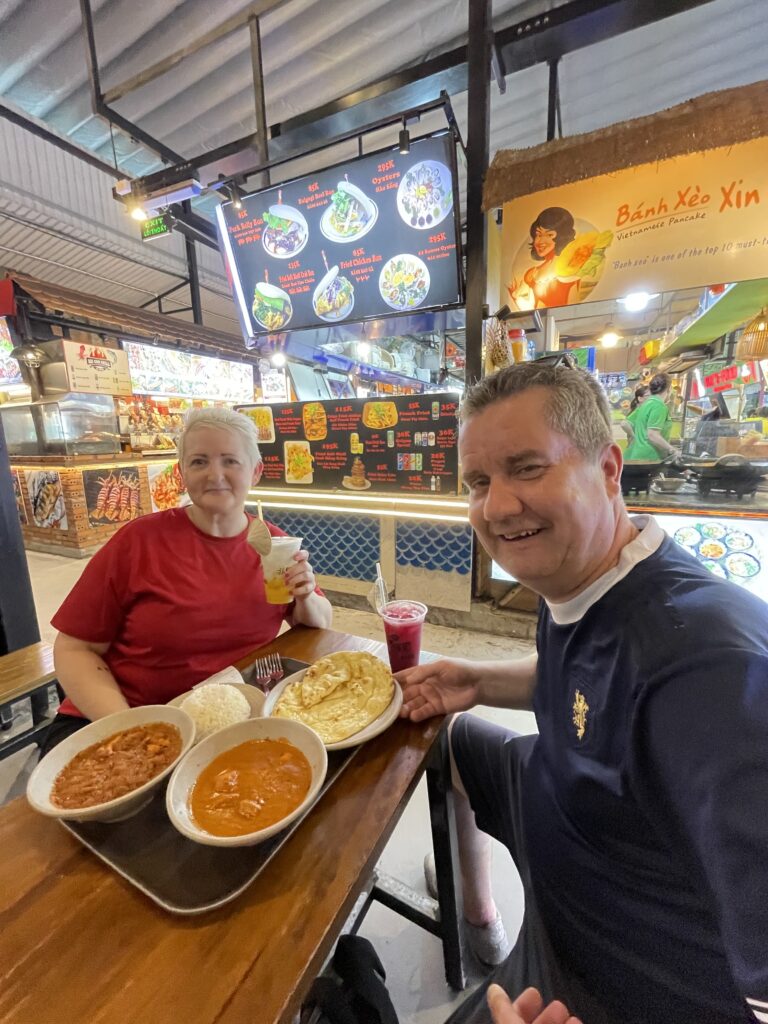
Ho Chi Minh City Food
The city is a paradise for food lovers. Ho Chi Minh City offers an incredible range of culinary experiences, from delicious street food to high-end dining.
Crocodile Meat Benefits Ho Chi Minh City Vietnam
Classic dishes like pho, banh mi, and fresh spring rolls are staples, but the city’s food scene also includes a variety of international cuisines, trendy cafes, and upscale restaurants. Cooking classes are available for those who wish to take a piece of Vietnamese cuisine back home.
Ho Chi Minh Food Vietnam Ho Chi Minh Street Food Vietnam
3. Shopping Destinations
Whether you’re looking for high-end fashion, local crafts, or bustling markets, Ho Chi Minh City has it all. Ben Thanh Market is a must-visit for souvenirs and local goods, while Dong Khoi Street offers a more upscale shopping experience with designer boutiques and chic stores.
4. Thriving Nightlife
The nightlife in Ho Chi Minh City is as dynamic as its day-to-day life. From sophisticated rooftop bars with stunning views of the skyline to lively nightclubs and traditional music venues, there is something for everyone. District 1 is the epicentre of nightlife, with a plethora of options for evening entertainment.
Bui Vien Walking Street Ho Chi Minh Vietnam Bui Vien Walking Street Ho Chi Minh Vietnam Bui Vien Walking Street Ho Chi Minh Vietnam
5. Exciting Day Trips and Excursions
The city serves as a gateway to several fascinating day trips. The Cu Chi Tunnels offer a glimpse into the ingenuity and resilience of the Viet Cong during the war, while the Mekong Delta provides a peaceful escape with its lush scenery and floating markets. These excursions provide a well-rounded experience of southern Vietnam’s natural beauty and historical depth.
Mekong Delta Excursion
Mekong Delta Experience Viet NamMekong Delta Experience Viet NamMekong River Excursion : Honey Tea With Dried Ginger and Banana Mekong River Excursion : Fruits Of Mekong Delta Vietnam
Seven-Day Itinerary for Ho Chi Minh City
Day 1: Exploring Historical Landmarks in District 1
Morning: Start your journey with a visit to the War Remnants Museum. This museum offers a stark and moving account of the Vietnam War through photographs, artifacts, and military equipment. Next, head to the Reunification Palace, where you can explore the historical rooms and underground bunkers that played a crucial role during the Vietnam War.
Afternoon: Visit the Notre-Dame Cathedral Basilica of Saigon, an impressive French-colonial building constructed between 1863 and 1880. Across from the cathedral, explore the Saigon Central Post Office, another architectural masterpiece designed by Gustave Eiffel. Take a break at a nearby cafe and enjoy a traditional Vietnamese coffee.
Saigon Central Post Office Ho Chi Minh City Viet NamSaigon Central Post Office Ho Chi Minh City Viet NamSaigon Central Post Office Ho Chi Minh City Viet NamSaigon Central Post Office Ho Chi Minh City Viet NamSaigon Central Post Office Ho Chi Minh City Viet NamSaigon Central Post Office Ho Chi Minh City Viet Nam
Evening: For dinner, visit Nha Hang Ngon, a restaurant that offers a variety of Vietnamese dishes in a charming courtyard setting. After dinner, head to a rooftop bar like Saigon Saigon Rooftop Bar for a drink and panoramic views of the city.
Day 2: Discovering Markets and Chinatown
Morning: Start your day at Ben Thanh Market, the city’s most famous market. Browse the stalls for local goods, souvenirs, and fresh produce. Don’t miss the opportunity to try some street food for breakfast, such as banh mi or pho.
Afternoon: Take a taxi or cyclo to Cholon, Ho Chi Minh City’s Chinatown. Visit the Thien Hau Temple, dedicated to the Chinese sea goddess Mazu. Wander through the bustling Binh Tay Market, where you can find a variety of goods ranging from textiles to electronics.
Evening: Dine in Cholon at a traditional Chinese-Vietnamese restaurant. Try dishes like dim sum or roast duck. After dinner, explore the vibrant streets of District 1, perhaps stopping by a live music venue or bar.
Day 3: Mekong Delta Excursion
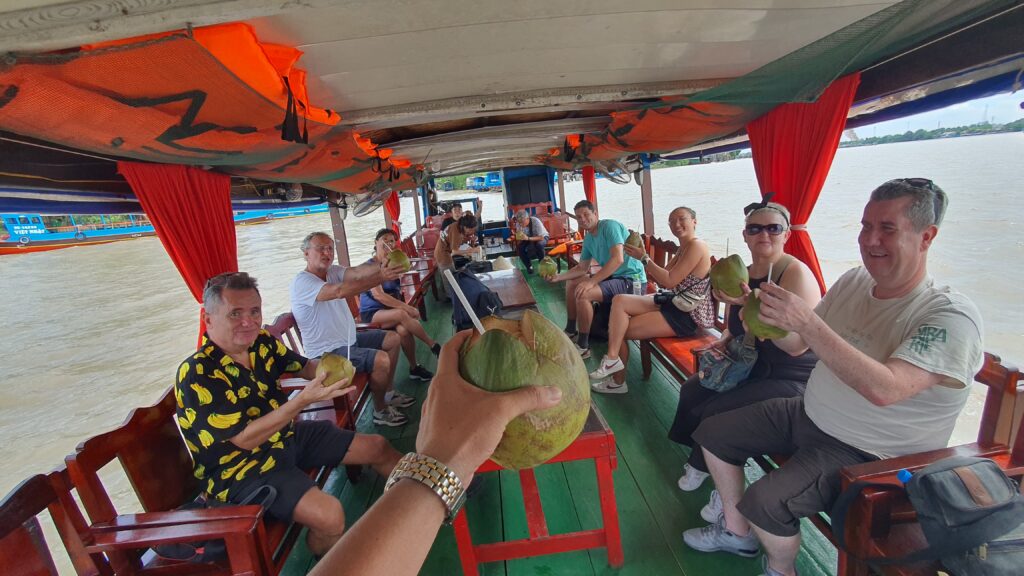
Full Day: Book a day trip to the Mekong Delta. These tours typically include a boat ride through the delta’s intricate network of rivers and canals, visits to local villages, and the opportunity to see traditional crafts and sample local delicacies. The Mekong Delta is known for its lush landscapes, floating markets, and friendly locals.
Evening: Return to Ho Chi Minh City and relax with a quiet dinner at your hotel or a nearby restaurant.
Mekong Delta Experience Viet Nam : Snake ExperienceMekong Delta Day Tour : Cockerel Mekong Delta Day Tour : Fruits Of The DeltaMekong Delta Day Trip : Traditional Singing Mekong Delta Day Tour : Big BoatMekong Delta Day Tour : Coconut Candy Sweets Manufactured Mekong Delta Day Trip : Coconut WineMekong Delta Day Tour : Coconut WineMekong Delta Day Tour : Transport Between BoatsMekong River Excursion : Transport Between BoatsMekong River Excursion : Small BoatMekong River Excursion : Small BoatMekong Delta Day Tour : Small BoatMekong Delta Day Tour : Small BoatMekong Delta Day Tour : Small BoatMekong Delta Day Tour : FoodMekong Delta Day Tour : LunchMekong Delta Day Tour : Catfish Mekong Delta Day Tour : Free BikeMekong Delta Day Tour : Free BikeMekong Delta Day Tour : Snakes Experience Mekong Delta Day Tour : Crocodiles ExperienceMekong Delta Day Tour : Medium BoatMekong Delta Day Tour : Medium BoatMekong Delta Day Tour : Big BoatMekong River ExcursionMekong River ExcursionMekong River Excursion
Day 4: Cu Chi Tunnels and Cao Dai Temple
Morning: Take a half-day tour to the Cu Chi Tunnels, a vast underground network used by Viet Cong soldiers during the Vietnam War. You can explore the tunnels and learn about the strategies and hardships faced by the soldiers.
Afternoon: Continue your tour with a visit to the Cao Dai Temple in Tay Ninh, the center of Cao Dai religion, which combines elements of Buddhism, Christianity, and Confucianism. The temple’s architecture is colorful and unique, and visitors are welcome to observe a worship service.
Evening: Return to Ho Chi Minh City and have dinner at a local restaurant. Try traditional Vietnamese dishes like com tam (broken rice) or bun thit nuong (grilled pork with vermicelli noodles).
Day 5: Museums and Cultural Sites
Morning: Visit the Ho Chi Minh City Museum of Fine Arts, housed in a beautiful colonial-era building. The museum showcases a wide range of Vietnamese art, from ancient to contemporary.
Afternoon: Head to the Jade Emperor Pagoda, a Taoist temple known for its intricate carvings and statues. Next, visit the Ho Chi Minh City Museum, which offers a fascinating look at the city’s history and development.
Evening: Dine at a restaurant that offers a mix of Vietnamese and international cuisine, such as The Deck Saigon, which overlooks the Saigon River. After dinner, enjoy a traditional water puppet show at the Golden Dragon Water Puppet Theatre.
Day 6: Day Trip to Vung Tau
Full Day: Take a day trip to Vung Tau, a coastal city about 100 kilometers from Ho Chi Minh City. Enjoy the sandy beaches, visit the Giant Jesus statue, and explore the White Palace. Vung Tau is also known for its fresh seafood, so be sure to try some local dishes.
Evening: Return to Ho Chi Minh City and unwind with dinner at your hotel or a nearby restaurant.
Day 7: Shopping and Relaxation
Morning: Spend your last day shopping for souvenirs and gifts. Visit Dong Khoi Street, which is lined with boutiques, art galleries, and high-end stores. For more affordable options, check out Saigon Square or An Dong Market.
Afternoon: Relax with a spa treatment at one of Ho Chi Minh City’s many spas. Treat yourself to a massage, facial, or other wellness services.
Evening: Enjoy a farewell dinner at a fine dining restaurant like The Refinery or Hoa Tuc. Reflect on your week-long adventure and the unforgettable experiences you’ve had in Ho Chi Minh City.
Practical Tips for Visiting Ho Chi Minh City
Best Time to Visit
The best time to visit Ho Chi Minh City is during the dry season, from December to April. The weather is warm and sunny, making it ideal for sightseeing and outdoor activities. The rainy season, from May to November, can bring heavy rains and occasional flooding, but it’s still possible to enjoy the city during this time.
Getting Around
Ho Chi Minh City is a sprawling metropolis, but it’s relatively easy to get around. Taxis and ride-hailing apps like Grab are convenient options. For short distances, consider walking or using a cyclo, a traditional Vietnamese bicycle taxi. Motorbike rentals are also available, but be cautious as traffic can be hectic.
Currency
The official currency in Vietnam is the Vietnamese Dong (VND). ATMs are widely available, and most hotels, restaurants, and shops accept credit cards. It’s advisable to carry some cash, especially for smaller purchases and at local markets.
Language
Vietnamese is the official language, but English is widely spoken in tourist areas. Learning a few basic Vietnamese phrases can enhance your experience and help you connect with the locals.
Safety
Ho Chi Minh City is generally a safe destination for travelers. As with any travel destination, it’s important to take standard precautions such as keeping an eye on your belongings, avoiding poorly lit areas at night, and being cautious when crossing the streets.
Ho Chi Minh City Accommodation
Hi Chi Minh City Accommodation Hi Chi Minh City Accommodation Hi Chi Minh City Accommodation
Ho Chi Minh Things To Do
Karaoke Bar Ho Chi Minh City Vietnam
Be Careful : There’s a world of difference between place where you can join in singing and a place where you pay for your own private room to sing!
Hi Chi Minh City HCMC Things To Do
Euros 2024 : Scotland v Hungary Ho Chi Minh City Cafe Apartments Ho Chi Minh Viet Nam Cafe Apartments Ho Chi Minh City HCMC Viet Nam
Ho Chi Mingh Places To Eat
Ho Chi Minh Ben Nghe Street Food Market Vietnam Ho Chi Minh Food Vietnam
Ho Chi Minh Bars
Simon and Geri Waikiki Bar Walking Street Ho Chi Minh Viet NamChampions League Winner Simon Lewis Ho Chi Minh Vietnam Nam : Station Bar Walking Street!The View Rooftop Bar Walking Street Ho Chi Minh Viet Nam The View Rooftop Bar Walking Street Ho Chi Minh Viet Nam The View Rooftop Bar Walking Street Ho Chi Minh Viet Nam The View Rooftop Bar Walking Street Ho Chi Minh Viet NamThe View Rooftop Bar Walking Street Ho Chi Minh Viet Nam
Hanoi, the capital of Vietnam, is a city that pulsates with a unique energy. It’s a vibrant tapestry woven from rich history, mouthwatering cuisine, and a warm, welcoming spirit. Here are just a few reasons why Hanoi should be on your travel bucket list:
Immerse yourself in history: Hanoi boasts a fascinating past, evident in its French colonial architecture, ancient temples, and evocative war museums.
Tantalise your taste buds: Vietnamese cuisine is a revelation, and Hanoi is a haven for foodies. From steaming bowls of pho to fresh spring rolls and crispy banh mi sandwiches, your taste buds will be on a flavour adventure.
Experience a different way of life: Hanoi’s Old Quarter is a sensory overload in the best way possible. Weave through narrow streets lined with shops overflowing with silks, handicrafts, and local produce.
Day trip to stunning landscapes: Hanoi is a perfect base for exploring breathtaking natural wonders like Ha Long Bay, a UNESCO World Heritage Site, and the dramatic rice terraces of Sapa.
Focus On … Train Street
Train Street in Hanoi is a popular tourist attraction located in the Old Quarter of the city. Specifically, it is situated along the railway tracks that run through residential neighbourhoods between Lê Duẩn and Khâm Thiên streets. The most well-known section of Train Street is located near Trần Phú Street, where the tracks are exceptionally close to the surrounding houses and shops.
On Train Street in Hanoi, trains typically pass through twice a day. The schedule usually includes one train in the morning around 6:00 AM and another in the late afternoon or evening around 7:00 PM. However, this schedule can vary, and there might be additional trains or changes based on operational requirements, so it’s always a good idea to check the latest timetable or ask locals for the most accurate information if planning a visit.
CheeringupInfo
Visitors can find Train Street by heading to the area around 224 Lê Duẩn Street. The trains pass through this narrow street at scheduled times, and it’s an incredible sight as residents and shopkeepers pull back their belongings and move out of the way for the trains to pass by. This unique blend of urban life and railway activity has made Train Street a fascinating spot for tourists seeking to capture the quintessential Hanoi experience.
Top 12 Things to Do in Hanoi:
Day 1:
Hanoi Old Quarter: Lose yourself in this labyrinthine maze of narrow streets, overflowing with shops and street food vendors.
Hoan Kiem Lake: Explore this picturesque lake in the heart of the city. Rent a paddleboat and cruise around, or simply relax on the banks and soak up the atmosphere.
Ngoc Son Temple: Located on a small island in Hoan Kiem Lake, this beautiful temple offers a peaceful escape from the city’s hustle and bustle.
Water Puppet Theatre: Experience a unique Vietnamese art form with a traditional water puppet show.
St. Joseph’s Cathedral: Admire the neo-Gothic architecture of this imposing French colonial landmark.
Day 2:
Ho Chi Minh Mausoleum: Pay your respects to the revered Vietnamese leader, Ho Chi Minh, at his mausoleum.
Temple of Literature: Step back in time at this Confucian temple, once Vietnam’s first university.
Vietnam Museum of Ethnology: Learn about Vietnam’s diverse ethnic groups at this fascinating museum.
Hanoi Opera House: Marvel at the French colonial architecture of this grand opera house. Take in a performance if you’re lucky enough to snag tickets!
Night Market: Browse through the stalls of the Dong Xuan Night Market, a great place to find souvenirs or sample local street food.
Day 3:
Ha Long Bay Day Trip: Embark on an unforgettable day trip to Ha Long Bay, a UNESCO World Heritage Site.Cruise through towering limestone karsts and emerald waters, and explore hidden caves.
Banh Mi Cooking Class: Learn the secrets of making Vietnam’s iconic banh mi sandwiches, a delicious and affordable street food staple.
This itinerary provides a great starting point for your 3-day adventure in Hanoi. Feel free to adjust it based on your interests and pace. No matter how you choose to spend your time, Hanoi is sure to leave you with lasting memories.
Hanoi Vietnam Global Digital Nomad MagazineHà Nội Life Global Digital Nomad Magazine With Old Digital Nomad Hà Nội Life Global Digital Nomad Magazine With Old Digital Nomad
Unveiling the Enchantment of Chiang Rai: A Haven Beyond the Usual
Nestled amidst the emerald embrace of northern Thailand, Chiang Rai beckons travellers seeking an experience unlike any other. Often overshadowed by its larger neighbour, Chiang Mai, Chiang Rai offers a unique blend of cultural charm, artistic wonders, and breathtaking natural beauty. Whether you’re a history buff, an art enthusiast, or an adventurer at heart, Chiang Rai has something to enthrall you.
A Tapestry of Culture and Tradition
Chiang Rai’s soul is steeped in centuries-old traditions. Grand temples like Wat Phra Kaew (housing the Emerald Buddha replica) and Wat Phra Singh, adorned with intricate carvings and vibrant murals, transport you to a bygone era. Immerse yourself in the serene ambiance of these sacred spaces and witness the unwavering faith of the Thai people.
A Realm of Artistic Expression
Chiang Rai is a haven for those who appreciate artistic innovation. The world-renowned White Temple, Wat Rong Khun, is a masterpiece of contemporary art. Its gleaming white facade and intricate sculptures challenge conventional temple architecture, leaving you awestruck. In stark contrast, the Black House, with its collection of dark wood structures and thought-provoking exhibits, offers a glimpse into the artistic vision of Thailand’s national artist, Thawan Duchanee.
Beyond the City Walls: Adventures Await
Chiang Rai’s magic extends far beyond its city limits. Venture into the lush countryside and discover the enchanting Golden Triangle, where the borders of Thailand, Laos, and Myanmar converge. Take a boat trip along the mighty Mekong River and witness the vibrant cultures of these Southeast Asian nations.
Embrace the Thrill of Nature
For the intrepid explorer, Chiang Rai boasts a plethora of outdoor adventures. Trek through the verdant jungles of Doi Luang National Park, the highest mountain in northern Thailand, and encounter diverse flora and fauna. Hike up to the summit of Doi Pha Tang and be rewarded with panoramic vistas of the surrounding valleys. Explore the breathtaking Mae Fah Luang Garden, a haven of colorful flowers and cascading waterfalls.
A Culinary Adventure for Your Taste Buds
No exploration is complete without indulging in the local cuisine. Chiang Rai’s culinary scene is a delightful fusion of northern Thai flavours and Burmese influences. Savour the rich curries, like Kaeng Kai or Kaeng Hung Le, bursting with fragrant spices and creamy coconut milk. Don’t miss the chance to try Khao Soi, a flavourful curry noodle dish unique to northern Thailand.
Unveiling the Hill Tribes
For a deeper cultural immersion, visit the nearby hill tribe villages. The Akha, Karen, and Lisu people have inhabited these mountains for centuries, preserving their unique traditions and ways of life. Witness their colourful clothing, intricate handicrafts, and warm hospitality. Be sure to interact with them respectfully and ethically, avoiding any form of exploitation.
Nightlife with a Local Twist
After a day of exploration, unwind at Chiang Rai’s lively night market. Immerse yourself in the vibrant atmosphere as you browse through an array of local handicrafts, souvenirs, and delectable street food. Sample the region’s exotic fruits, indulge in freshly prepared satay skewers, and treat yourself to a refreshing mango sticky rice.
Tips for an Unforgettable Chiang Rai Experience
Plan your trip: Decide on the time of year you want to visit and research festivals or events that might be happening during your stay. The cool season (November to February) offers pleasant weather, while the rainy season (July to October) showcases lush landscapes.
Embrace the slow pace: Unlike the bustling streets of Bangkok, Chiang Rai offers a more relaxed atmosphere. Slow down, savour the moment, and appreciate the city’s laid-back charm.
Respect the culture: When visiting temples, dress modestly and be mindful of local customs. Be courteous to the locals and avoid disrespectful behaviour.
Bargain with a smile: While not everything is negotiable, haggling is expected at the night markets. Do so politely and enjoy the interactive experience.
Support ethical tourism: Opt for tours that prioritise the well-being of animals and local communities. Avoid activities that exploit elephants or other wildlife.
Learn a few Thai phrases: Basic greetings like “Sa-wad dee krap” (hello for men) and “Sa-wad dee ka” (hello for women) go a long way in showing respect and appreciation.
Pack appropriately: Depending on the season, pack light breathable clothes for hot weather or a light jacket for cooler nights. Comfortable shoes are a must for exploring temples and navigating uneven terrain.
Explore beyond the main attractions: Don’t be afraid to venture off the beaten path and discover hidden gems. Explore local villages, coffee plantations, or take a cooking class to learn about regional cuisine.
Chiang Rai: A Destination that Stays with You
Chiang Rai is a destination that stays with you long after you leave. It’s a place where ancient traditions meet contemporary art, where breathtaking natural beauty collides with vibrant cultural experiences. Whether you’re seeking spiritual solace, artistic inspiration, or thrilling adventures, Chiang Rai offers something for everyone. So, pack your bags,embrace the unknown, and allow Chiang Rai to weave its magic on you.
A Few Final Words
This article has merely scratched the surface of Chiang Rai’s endless charm. With its diverse offerings and laid-back atmosphere, Chiang Rai is a city waiting to be explored. So, come and discover the magic for yourself. You might just find yourself falling in love with this hidden gem of northern Thailand.
Do you need to pay any immigration fees at border going from Thailand into Laos?
No, you won’t pay immigration fees exiting Thailand. Thailand doesn’t charge departure fees.
However, you will need to pay for a visa on arrival upon entering Laos. The cost depends on your nationality. Here’s what to expect:
Visa on Arrival: This is the most common way to enter Laos for tourists. The fee is typically paid in US Dollars (USD) and can vary between nationalities. It can range from around $30 to $50 USD.
Exceptions: Citizens of some countries, like those from Southeast Asia, may be exempt from visa fees. You can check the official Laos government website or embassy in your home country for the latest visa information.
Chiang Rai Global Digital Nomad Magazine videos images and tourist information
Chiang Rai Saturday Night Walking Street Market
Get help to protect and grow your retirement related business faster