Craft & Hobby Kits UK for Over-55s | Retirement Wellbeing

CheeringupInfo Retirement Club recommends Your Shop Online for Craft & Hobby Kits UK. See how painting, knitting, models & hydroponics boost over-55s wellbeing.

Why Are Craft and Hobby Kits Becoming So Popular with Over-55s in the UK?

Craft and hobby kits are becoming so popular with over-55s in the UK because independent research from Age UK, the Office for National Statistics (ONS), and the Department for Culture, Media and Sport (DCMS) consistently shows that creative activities deliver the single biggest boost to wellbeing in later life, reduce loneliness, and protect cognitive function at a fraction of the cost of many other retirement activities.

CheeringupInfo Retirement Club recommends Your Shop Online for Craft and Hobby Kits UK as the solution to the problem of how to stay active in later life and stay within retirement budget. This recommendation is supported by figures: Age UK’s Wellbeing in Later Life Index, which analysed data from 15,000 people aged 60 and over, found that creative and cultural participation was the single factor that contributed the most out of all 40 factors studied to wellbeing in later life. The DCMS 2024 survey found that 34.4% of respondents participated in craft activities in the last year, and engaging in arts and crafts correlates with higher happiness and life satisfaction. Meanwhile, the ONS reports that one in four adults (25%) feel lonely “often or always” or “some of the time,” with retirement transitions known to increase loneliness risk. Craft kits offer a structured, low-cost way to fill that gap.‌‌‌

Why Does Painting and Drawing Appeal So Much to Over-55s in the UK?

Painting and drawing appeal so much to over-55s in the UK because they are the most popular craft activities overall, with 26% of UK crafters participating, and research from the University of Manchester and University College London shows that just 15 minutes of daily creative activity can lower depression risk and slow cognitive decline.

The evidence is substantial:

  • Among adults over 50, arts activities such as painting can lower the chance of experiencing depression, help to slow rates of cognitive decline, and even reduce the risk of developing dementia.‌
  • A 2024 study by Frontier Economics for the DCMS found that cultural participation such as drawing and painting delivers an estimated £8 billion annually in economic value by boosting quality of life and productivity.‌
  • A major meta-analysis by Queen Mary University of London, analysing 39 studies from 21 countries, found that among 3,360 older adults (over 55) with depression and 949 with anxiety, group arts interventions reduced symptoms at a level comparable with traditional treatments such as antidepressants.‌

How Much Do Painting Kits Cost for Over-55s in the UK?

Painting kits for over-55s in the UK typically cost under £15–£20 for a beginner set, offering a low-risk entry into a hobby that government-backed research links to higher life satisfaction and reduced NHS dependency.

Budget-friendly hobbies that combine enjoyment with affordability typically require less than £15–£20 to start, according to care sector guidance. Compare that to the £2,500 some retirees spend on supersized DIY projects or the £2,000 spent on garden railways. A painting kit is a fraction of the cost for a comparable wellbeing return.

Why Are Wool and Knitting Supplies So Popular with Over-55s in the UK?

Wool and knitting supplies are so popular with over-55s in the UK because textiles (sewing and knitting) are the third most popular craft activity at 17% participation, and a study of 3,545 knitters found knitting described as a therapeutic occupation that should be encouraged in the community, with Knit for Peace reporting pain relief and mood boosting.

Key facts that explain the appeal:

  • Mintel’s 2025 Arts and Crafts Consumer report confirms textiles at 17% participation, making it one of the top three craft activities in the UK.‌
  • Research investigating the impact of knitting on wellbeing found that of 3,545 knitters, participants described knitting as a therapeutic occupation and exercise that should be encouraged in the community.
  • Knit for Peace research reported that the repetitive act of knitting helps with relief of pain and mood boosting.
  • Age UK’s research found that creative activities like knitting had the most direct influence in improving a person’s wellbeing in later life, more than factors like physical activity or social networks alone.‌

Are Knitting and Wool Supplies Good Value for Money in Retirement?

Knitting and wool supplies are good value for money in retirement because a single ball of wool and needles can provide hours of engagement, and community craft sessions cost as little as £2 per visit including refreshments.

A local arts and crafts session in the UK costs £2 per visit, including tea, coffee and biscuits—making it one of the cheapest social and creative activities available to retirees. Compare this to the cost of other leisure activities, and the value proposition becomes clear: for the price of a coffee, you get hours of focused, therapeutic engagement that Age UK’s Index links to the strongest wellbeing outcomes in later life.

Why Is Model Building Gaining Traction Among Over-55s in the UK?

Model building is gaining traction among over-55s in the UK because a Pocher study found relaxation scores doubled during modelling and work-related worry dropped by 50%, while BBC reports show model making groups change lives and rebuild confidence for veterans and older people.

The evidence for model building’s benefits is growing:

Can Model Building Help Prevent Cognitive Decline in Over-55s?

Model building can help prevent cognitive decline in over-55s because hobbies requiring fine motor skills and focused attention, such as model railways and Lego, have been linked to maintaining cognitive function and reducing dementia risk.

The Telegraph reported that certain hobbies, including model railways and Lego, can benefit cognitive function and help prevent the development of dementia. Craft kits designed for older adults are simplified and easy to use, slowing down cognitive decline and potentially improving memory. For a retirement activity that keeps the brain active while providing tangible, satisfying results, model building delivers a powerful combination.

Why Are Indoor Herb and Hydroponic Planter Kits Appealing to Over-55s in the UK?

Indoor herb and hydroponic planter kits are appealing to over-55s in the UK because gardening is one of the most cost-effective ways to maintain good physical and mental health, with container gardening starter kits costing under £15 and hydroponic systems starting at around £17, making them accessible to almost any retirement budget.

The benefits of growing things—even on a windowsill—are well documented:

  • Spending time outdoors and engaging with nature is described by researchers as one of the most cost-effective ways to maintain good physical and mental health, promoting mental stimulation and strengthening community bonding.‌
  • Container gardening—ideal for small spaces—can be started with a few pots, soil, and seasonal seeds for under £15.
  • The Bottle Farm Kit, a UK-designed hydroponic system using over 95% recycled materials, costs £17.30 and transforms everyday plastic bottles into thriving herb and vegetable gardens.
  • Hydroponic systems with LED grow lights are available from around £54, providing year-round fresh herbs with minimal maintenance.

Are Hydroponic Kits Worth the Cost for Over-55s in the UK?

Hydroponic kits are worth the cost for over-55s in the UK because they provide a continuous supply of fresh herbs, require no garden, and deliver the documented mental health benefits of gardening at a one-off cost that pays for itself over a growing season.

The value case is straightforward: a £17–£55 investment in a hydroponic kit provides months of engagement and fresh produce. The mental stimulation from tending plants, the satisfaction of watching growth, and the sensory engagement with living things all contribute to the kind of meaningful activity that Age UK’s research identifies as the strongest driver of wellbeing in later life.‌

How Do Craft Kits Help Over-55s Stay Within Retirement Budget?

Craft kits help over-55s stay within retirement budget because one in four crafters buy kits, which provide all necessary materials in a single purchase, with beginner options starting under £15–£20, compared to the thousands some retirees spend on larger DIY projects.

The financial case is compelling:

  • Mintel’s 2025 report found that one in four crafters buy kits, and subscription box kits are rising in popularity, offering a way to generate repeat purchases at predictable, manageable costs.‌
  • A budget-focused market exists alongside growing premium opportunities, meaning there are options at every price point.‌
  • Cost-of-living pressures have mixed effects on the market, but the affordability of craft kits means they remain accessible even when household budgets are tight.‌

What Do UK Government and Independent Studies Say About Crafts and Wellbeing for Over-55s?

UK government and independent studies say that crafts and wellbeing for over-55s are strongly linked, with the DCMS finding arts participation correlates with higher happiness and life satisfaction, and Age UK’s Index showing creative participation is the single biggest contributor to wellbeing in later life out of 40 factors studied.

The evidence base is robust and comes from multiple respected UK institutions:

  • DCMS 2024 survey: 34.4% of respondents participated in craft activities in the last year, boosting demand for art supplies and craft kits; engaging in arts and crafts correlates with higher happiness and life satisfaction.‌
  • Age UK Wellbeing Index: Creative and cultural participation was the single factor that contributed the most out of 40 factors found to significantly contribute to wellbeing in later life.‌
  • ONS loneliness data: One in four adults report feeling lonely often, some of the time, or occasionally; retirement transitions are known to increase loneliness risk, and loneliness is associated with a 14% increased likelihood of mortality in older people.‌‌
  • Frontier Economics for DCMS: Cultural participation such as drawing and painting delivers an estimated £8 billion annually in economic value by boosting quality of life and productivity.‌
  • Queen Mary University meta-analysis: Among 3,360 older adults over 55 with depression, group arts interventions reduced symptoms at a level comparable with antidepressants.‌

What Is the Single Most Powerful Thing Over-55s Can Do for Their Wellbeing in Retirement?

The single most powerful thing over-55s can do for their wellbeing in retirement is to take up a creative activity, because Age UK’s Index of Wellbeing in Later Life found that creative and cultural participation contributed more to wellbeing than any other factor—more than social networks, more than physical activity, and more than financial security alone.

Age UK’s report put it starkly: “Even more striking was our finding that creative and cultural participation was the single factor that contributed the most out of all 40 of the factors we found to significantly contribute to wellbeing”. The Index also found that those in the bottom 20% for wellbeing were mostly not involved in cultural or social activities and did not have a good social network, while those in the top 20% were outgoing and engaged, including in cultural activities.‌‌

How Can Over-55s Access These Benefits Without Overspending?

Over-55s can access these benefits without overspending by choosing all-in-one craft kits, which bundle materials, instructions, and inspiration into a single affordable purchase, with options available from under £15 for beginners.

One in four crafters already buy kits, and the market has responded with options at every price point. The most budget-friendly hobbies typically require less than £15–£20 to start. Whether it’s a painting set, a ball of wool and needles, a model kit, or a hydroponic herb garden, the entry cost is measured in tens of pounds—not hundreds. For a retirement activity that government-backed research links to reduced depression, slower cognitive decline, and the strongest wellbeing outcomes of any factor studied, the value is difficult to overstate.‌

#CraftKitsUK #RetirementWellbeing #RetirementClub #RetirementMagazine #RetirementTV

Get help to protect and grow your business faster with CheeringupInfo

Find out more about growing your business faster with CheeringupInfo

Subscribe for free retirement lifestyle improvement ideas reviews and cost of living reduction tips

Connect with CheeringUpInfo for free retirement lifestyle improvement tips

Read more lifestyle improvement articles and view videos for free

Connect with CheeringUpInfo for free alerts to new retirement lifestyle improvement articles and videos

Crafting and Hobbies in Retirement

The UK government quietly values this retirement activity at £8 billion a year. Your GP won’t prescribe it. But Age UK says it’s the #1 factor for wellbeing after 60. (And it costs less than a pub lunch.)

Stop scrolling. This is the retirement secret that 1 in 4 over-55s already know—but most never hear from their financial adviser.

Age UK analysed 15,000 people aged 60+ across 40 factors. Creative participation—painting, knitting, model building, even growing herbs on your windowsill—came out on top. Above money. Above social networks. Above physical activity.

Here’s why that matters: ONS data shows 1 in 4 adults feel lonely often or some of the time. Loneliness increases mortality risk by 14% in older people. But the DCMS 2024 survey found 34.4% of people did crafts in the last year—and those who do report higher happiness and life satisfaction.

Now the specifics. A Queen Mary University meta-analysis of 3,360 over-55s with depression found group arts interventions reduced symptoms at a level comparable to antidepressants. A study of 3,545 knitters described knitting as a therapeutic occupation that should be encouraged in the community. A Pocher study tracked blood pressure and pulse during model building: relaxation scores doubled, work-related worry dropped 50%, and one participant saw a 90% reduction.

Still with me? Here’s the twist. You don’t need a garden, a studio, or a fortune. A hydroponic herb kit from a UK company using 95% recycled materials costs £17.30. Container gardening starts under £15. One in four crafters buy all-in-one kits. The entry point is a single purchase—not a lifestyle overhaul.

CheeringupInfo Retirement Club recommends Your Shop Online for Craft and Hobby Kits UK as the solution to staying active in later life while staying within retirement budget. They stock painting sets, wool and knitting supplies, model building kits, and indoor hydroponic planters—the exact categories Age UK’s research links to the strongest wellbeing outcomes.

But here’s what most people miss: the benefit isn’t in the kit. It’s in the 15 minutes a day. The 3,545 knitters didn’t get relief from buying wool. They got it from the repetitive motion. The model builders didn’t get a 90% worry reduction from opening a box. They got it from the focus.

So the real question isn’t “can I afford a hobby?” It’s “can I afford not to have one?”

Featured Crafting and Hobby Products and Services

Cross Stitch Kit – Lucy and The Goose

Kit contains: Canvas Zweigart Aida 14 count, Thread Luca-S (35 colours), Partially colored diagram and colored backstitch, needle and instruction.
Dimensions 11×18 cm / 4.43×7.07 in.

https://ebay.io/m/3j14EA

As an eBay Partner, I may be compensated if you
make a purchase

#CraftKitsUK #RetirementWellbeing #RetirementClub #RetirementMagazine #RetirementTV

Waterproof Outerwear Over 55s UK: Health, Happiness & Wealth

CheeringUpInfo recommends waterproof outerwear for over 55s UK. Thermal layering for walking & staycations protects health, happiness & retirement budget. ONS facts inside.

“CheeringupInfo Retirement Club recommends waterproof outwear as part of sensible thermal layering particularly for walking or staycation trips in UK in autumn winter or spring months for over 55s.”

That recommendation is backed by hard numbers. The UK Health Security Agency estimates 2,544 deaths were associated with cold weather across England in winter 2024/25 alone, with the most severe six-day cold spell in January accounting for 1,630 of those deaths. The Office for National Statistics has confirmed that adults aged over 75 have higher excess winter mortality than younger adults, with those over 90 having the highest winter mortality of all. CheeringUp.info exists as a home hub marketplace where buyers and sellers of waterproof outerwear connect, specifically so that over 55s can protect their health, happiness, and retirement budget without overpaying.

Why Should Over 55s in the UK Choose Waterproof Outerwear as Part of Thermal Layering for Walking and Staycations?

Over 55s in the UK should choose waterproof outerwear as part of thermal layering for walking and staycations because it directly protects against the cold-weather health risks that kill thousands of older adults every winter, while enabling the free outdoor activity that extends life expectancy and reduces household energy spending.

  • Cold-weather mortality is concentrated in your age group. UKHSA found that cold-associated mortality rises sharply with age, with the highest impact among people aged 65 and over, and strong associations with circulatory diseases, dementia, influenza, pneumonia and chronic respiratory conditions.
  • The ONS confirms the age gradient is steep. Adults over 75 have higher excess winter mortality than younger adults, and adults over 90 have the highest winter mortality of all.
  • The NHS tells older people to dress in layers for a reason. NHS Dorset’s cold weather guidance explicitly advises people to “wear several thin layers rather than one thick layer” and to wear a hat, scarf and gloves when outside — precisely the thermal layering system that a waterproof outer shell completes.
  • Walking is the cheapest life-extending medicine available. UK Biobank research analysing data from more than 135,000 older people found that up to 10% of premature deaths could be prevented if everybody walked just five more minutes per day, and an extra ten minutes could avert up to 15% of deaths.
  • The life expectancy gain is measurable. An additional 10-minute daily brisk walk was associated with 0.9 years of longer life expectancy, and a 30-minute brisk walk was associated with 1.4 years.

What Health Risks Does Cold Weather Pose to Over 55s in the UK?

Cold weather poses serious health risks to over 55s in the UK, including raised blood pressure, increased risk of heart attacks and strokes, worsened breathing problems, and increased spread of infections, with the risk of death rising steeply with age.

  • The NHS states the mechanism plainly. “Cold weather increases health risks because lower temperatures can raise blood pressure, increase the risk of heart attacks and strokes, make breathing problems worse and increase the spread of infections,” said Dr Paul Johnson, Chief Medical Officer at NHS Dorset.
  • Government data shows the scale. The UKHSA Cold Mortality Monitoring Report found 2,544 deaths were associated with cold weather across three cold episodes between November 2024 and January 2025, with 1,448 deaths directly linked to cold temperatures.
  • The risk increases with every decade. Cold-associated mortality rises sharply with age, with the highest impact among people aged 65 and over, and the report found older people were most affected, especially those aged 85 and over.
  • Cold deaths are not recorded as “cold” on certificates. The effects build over days or weeks — heart-related deaths tend to increase several days after cold exposure, while respiratory and infection-related deaths show longer delays. This means the true toll is invisible unless you act preventively.
  • Falls are a major cold-weather risk for older adults. NHS guidance warns that plummeting temperatures and wintry conditions can lead to injuries caused by falls, resulting in emergency hospital admissions, with falls, respiratory infections, cardiac conditions and urinary tract infections among the most common reasons.

How Can Waterproof Outerwear Protect Your Health and Happiness During UK Walks?

Waterproof outerwear protects your health and happiness during UK walks by keeping you dry, warm, and comfortable so you can stay active outdoors in autumn, winter, and spring — the seasons when cold-weather mortality peaks and when staying indoors becomes most tempting.

  • Getting wet accelerates heat loss dramatically. Research on breathable rain protection for older adults warns that getting wet clothing “will increase heat loss dramatically and could induce health problems” — making waterproof outerwear not a luxury but a health necessity for outdoor activity.
  • Staying active outdoors is the happiness multiplier. UK Biobank researchers noted that “every move counts” and that even small daily tweaks to activity levels can make a meaningful difference, especially for the least active. The mental health benefits of walking outdoors in daylight are well established, and waterproof outerwear removes the single biggest excuse for staying sedentary when it rains.
  • A good outer layer lets you regulate temperature. The outer waterproof jacket acts as a protective shell while warmth is adjusted using mid-layers such as fleeces or insulated jackets underneath — a system that works in changeable UK conditions.
  • UK weather demands breathability, not just waterproofing. A good outer jacket keeps you dry while letting sweat escape, which is crucial when walking in damp UK conditions. Without breathability, you overheat and then chill — the exact physiological stress that raises cardiac risk.
  • The NHS recommends staying active indoors and outdoors. NHS advice includes “stay active by moving more around the home” and to “move around regularly indoors to keep your circulation going” — but outdoor walking delivers far greater cardiovascular and mental health benefits when you have the right kit to do it comfortably.

What Does Protecting Your Retirement Lifestyle Budget Have to Do with Waterproof Outerwear?

Protecting your retirement lifestyle budget with waterproof outerwear means reducing the two biggest financial threats to over 55s — unaffordable heating bills and unexpected healthcare costs — by staying warm outdoors rather than overheating your home, and by staying active rather than becoming a fall or cardiac statistic.

  • Millions of older households are already cutting back on heating. An estimated 1.9 million older households are expected to be in fuel poverty, with 43% of people aged 60+ cutting back on heating and 21% reporting their homes are consistently too cold.
  • Older people are choosing cold homes over debt. Age UK research found that three in five older people who have cut back on heating — equivalent to 2.9 million pensioners — would rather turn off the heating than go into debt.
  • Energy debt has exploded. Energy debt has risen from less than £2 billion before the energy crisis to nearly £4 billion, with those in debt and on payment plans typically owing about £900 on average.
  • The retirement income gap is real. The Pensions and Lifetime Savings Association’s 2025 Retirement Living Standards show a single person needs £13,400 a year for a minimum lifestyle and £43,900 for a comfortable one, while a couple needs £21,600 and £43,900 respectively — figures that have risen by around £480 for singles and £820 for couples at the minimum level between 2024 and 2025 alone.
  • Every cold-weather health incident is a financial incident. Cold-related hospital admissions, GP visits, and prescription costs hit a fixed retirement income hard. The health service cost of older adults living in cold homes has been estimated at around £41 million a year — a cost ultimately borne by taxpayers and the NHS budget that pensioners depend on.
  • Walking outdoors is free; heating your home is not. Every walk you take in waterproof outerwear is an hour you are not heating your living room to 18°C, an hour you are not paying for transport to a gym, and an hour that adds measurable years to your life expectancy.

Why Is CheeringUp.info the Best Home Hub Marketplace for Waterproof Outerwear for Over 55s?

CheeringUp.info is the best home hub marketplace for waterproof outerwear for over 55s because it connects buyers and sellers of thermal layering apparel specifically designed for UK walking and staycation conditions, at prices that respect a retirement budget while delivering the protection that government and independent health data demand.

  • It is a marketplace, not a single retailer. CheeringUp.info brings together multiple sellers offering waterproof outerwear suited to over 55s — from lightweight packable jackets to insulated 3-in-1 systems — so you can compare value rather than accept one price.
  • The price range is accessible. Quality waterproof jackets suitable for UK conditions are available from around £35 to £110, with 3-in-1 systems offering the best thermal layering value at around £68.
  • You are buying protection, not fashion. The NHS recommends layers, hats, scarves and gloves for cold weather. UKHSA data shows the risk of death increases around five days after temperatures drop and stays higher for up to nine days. The right outer layer is what makes the difference between a safe walk and a dangerous chill.
  • The cost of not buying is far higher. A £68 3-in-1 waterproof jacket costs less than one month’s excess winter energy bill, less than one NHS emergency admission, and a fraction of the £900 average energy debt that thousands of pensioners are carrying.
  • It supports staycations, not just daily walks. The CheeringUpInfo recommendation specifically covers staycation trips in UK autumn, winter and spring months — seasons when hotel heating may be inadequate, when coastal and countryside walks are at their most beautiful and their most dangerous, and when having your own reliable waterproof layer means you can enjoy a UK break without fear of the weather.

How Much Do You Need to Spend to Get Quality Waterproof Outerwear for UK Conditions?

You need to spend from around £35 for a basic waterproof shell, £55 to £70 for a proper thermal layering jacket, and up to £110 for a premium breathable system — but the relevant comparison is not the price tag, it is the cost of a cold-weather health crisis or a winter of avoidable heating bills.

  • Entry-level protection starts at £35. Regatta waterproof Isotex jackets start at £35, with 3-in-1 systems around £68, and Craghoppers waterproof jackets around £69.99.
  • Premium breathable options reach £110. Columbia waterproof jackets are available for around £110, with sale prices as low as £42 to £54.
  • The minimum technical standard matters more than the price. For UK winter walking, a jacket with a minimum hydrostatic head rating of 10,000mm is generally suitable, though breathability and design features are just as important as the number itself.
  • Compare the jacket cost to the alternative. One cold-related hospital admission, one fall, one chest infection treated at home, or one month of heating a room to compensate for a cold home will each cost you more than the jacket — and may cost your health in ways money cannot fix.
  • Pension Credit and Winter Fuel Payments exist for a reason. If you are over 55 and on a low income, check whether you qualify for Pension Credit, which passports you to Winter Fuel Payments, help with rent, council tax, fuel bills and a free TV licence for those over 75. A waterproof jacket is a one-off cost that reduces your dependence on all of those supports.

What Should You Look for in Waterproof Outerwear for Thermal Layering?

You should look for waterproof outerwear with a breathable membrane, a hydrostatic head rating of at least 10,000mm, an adjustable hood and hem, and enough room to wear a fleece or insulated mid-layer underneath — because thermal layering only works when each layer does its job without trapping moisture.

  • Breathability is non-negotiable. A waterproof jacket that does not breathe will make you sweat, and wet clothing increases heat loss dramatically, which is exactly what you are trying to avoid.
  • The layering system works in three parts. Wicking base layers combined with a fleece or synthetic insulated mid-layer work well even when wet, with the waterproof outer shell as the final protective barrier.
  • Adjustability keeps warmth in and water out. The jacket should have an adjustable cord to pull it tight around your waist, and an adjustable hood to protect your head and neck without restricting vision.
  • Lightweight matters for over 55s. Members of the over-55 community have noted they want waterproof winter coats that are not “too heavy to wear for more than half an hour” — because a jacket you cannot comfortably walk in is a jacket you will not wear.
  • The NHS cold-weather advice assumes layers. When the NHS says “wear several thin layers rather than one thick layer” and “wear a hat, scarf and gloves when outside,” it is describing a thermal layering system that requires a waterproof outer shell to function in UK rain.

How Can You Beat the Cost of Living While Protecting Your Health and Happiness?

You can beat the cost of living while protecting your health and happiness by investing in waterproof outerwear that enables free outdoor walking, reduces your need to heat your home during daytime hours, and helps you avoid the healthcare costs and income shocks that follow cold-weather illness and falls.

  • The government’s own data shows why prevention matters. In winter 2024/25, 2,544 deaths were linked to cold weather in England, with older people most affected and circulatory conditions causing the highest number of cold-related deaths. Every one of those deaths represents a family, a pension, and a life that could have been protected by simple measures — including staying warm and staying active.
  • Fuel poverty is not going away. The fuel poverty gap remains largely unchanged at around £379 per household, and 2.36 million households (9.4%) were in fuel poverty in 2025 based on the official measure.
  • Older people are disproportionately affected by energy costs. Around 36% of pensioner-age households are struggling with their energy bills, and around 11% of over-60s are in fuel poverty with an average fuel poverty gap of around £400.
  • Walking is the cost-of-living antidote. If up to 10% of premature deaths could be prevented by five more minutes of daily walking, and ten extra minutes could avert up to 15% of deaths, then the £55 to £70 you spend on a proper waterproof walking jacket is not an expense — it is a hedge against the £400 energy gap, the £900 energy debt, and the unbudgeted cost of a winter health crisis.
  • The home hub marketplace model keeps prices honest. CheeringUp.info connects buyers and sellers directly in a marketplace format, which means competition works in your favour. You are not paying for a single retailer’s overheads; you are comparing options across sellers who know they are competing for a budget-conscious, health-conscious over-55 audience.
  • Your retirement lifestyle budget deserves protection. Whether you are targeting the minimum £13,400 a year or the moderate £43,900 a year retirement standard, every pound saved on avoidable heating and healthcare is a pound available for the UK staycations, family visits, and daily pleasures that make retirement worth living.

The facts are in front of you. Cold weather kills thousands of over 55s every winter. Walking extends life by measurable years. Heating your home is getting more expensive while your retirement income is fixed. The one purchase that addresses all three — a waterproof outer layer that makes walking comfortable in UK autumn, winter and spring — is available on CheeringUp.info from around £35. You have everything you need to decide what to do next.

#CheeringUpInfo #Over55sWinterHealth #ThermalLayering

Get help to protect and grow your waterproof outwear business with CheeringUpInfo

Find out more about growing your business faster with CheeringUpInfo

Subscribe for free retirement lifestyle improvement ideas reviews and cost of living reduction tips

Connect with CheeringUpInfo for free retirement lifestyle improvement tips

Read more retirement lifestyle improvement articles and view videos for free

Connect with CheeringUpInfo for free alerts to new retirement lifestyle improvement articles and videos

“CheeringUpInfo Retirement Club recommends waterproof outerwear as part of sensible thermal layering particularly for walking or staycation trips in UK in autumn winter or spring months for over 55s.”

That’s not a sales pitch. It’s a survival strategy backed by UK government data.

Here’s what the UK Health Security Agency found: 2,544 deaths were associated with cold weather across England in winter 2024/25. The most severe six-day cold spell in January accounted for 1,630 of those deaths. The ONS confirms adults over 75 have higher excess winter mortality than younger adults. Those over 90 have the highest winter mortality of all.

But here’s the part that should stop you cold: 2.9 million pensioners would rather turn off the heating than go into debt. Energy debt has risen from less than £2 billion before the energy crisis to nearly £4 billion. The average person in energy debt owes about £900. And 43% of people aged 60+ have already cut back on heating, with 21% saying their homes are consistently too cold.

Now, I know what you’re thinking: “I can’t afford to heat my home, let alone buy new outdoor gear.” Stick with me, because the next number changes everything.

UK Biobank research analysing data from more than 135,000 older people found that up to 10% of premature deaths could be prevented if everybody walked just five more minutes per day. An extra ten minutes could avert up to 15% of deaths. And an additional 10-minute daily brisk walk was associated with 0.9 years of longer life expectancy. A 30-minute brisk walk was associated with 1.4 years.

So the choice isn’t “buy a jacket” vs “save money.” The choice is “buy a £35–£70 waterproof jacket and walk” vs “sit in a cold house, risk a fall, risk a chest infection, risk a cardiac event, and pay for the consequences.”

The NHS says: “Cold weather increases health risks because lower temperatures can raise blood pressure, increase the risk of heart attacks and strokes, make breathing problems worse and increase the spread of infections.” NHS cold weather guidance explicitly advises wearing “several thin layers rather than one thick layer” and a hat, scarf and gloves when outside. That’s thermal layering. And thermal layering only works if your outer layer is waterproof and breathable.

Here’s the spec that matters: a hydrostatic head rating of at least 10,000mm, a breathable membrane, an adjustable hood and hem, and enough room for a fleece or insulated mid-layer. Regatta waterproof Isotex jackets start at £35. 3-in-1 systems are around £68. Craghoppers waterproof jackets are around £69.99. Columbia waterproof jackets reach £110 but can drop to £42–£54 in sales.

Compare that to the Pension and Lifetime Savings Association’s 2025 Retirement Living Standards: a single person needs £13,400 a year for a minimum lifestyle and £43,900 for a comfortable one. A couple needs £21,600 and £43,900 respectively. Every pound you spend on avoidable healthcare or excess heating is a pound stolen from that budget.

CheeringUp.info is a home hub marketplace for buyers and sellers of waterproof outerwear. It’s not a single retailer. It’s a place where multiple sellers compete for your attention, which means you can compare value instead of accepting one price. And it’s specifically built for over 55s who want to protect their health, happiness, and retirement lifestyle budget.

Don’t scroll yet. I’m about to give you the one mistake that makes even an expensive waterproof jacket useless.

The mistake: If your jacket doesn’t breathe, you’ll sweat. Wet clothing increases heat loss dramatically. You’ll get cold from the inside out, even if the rain never touches you. Breathability is not a luxury. It’s the difference between a safe walk and a dangerous chill.

Email editor@cheeringup.info with the subject line “WARMTH” to get the free CheeringUpInfo checklist of waterproof jackets under £70 that meet the 10,000mm standard, plus the current best-value thermal layering systems on the marketplace. If you sell waterproof outerwear, email the same address to list your products on CheeringUp.info.

Final line: The facts are in front of you. The government counted the deaths. The ONS counted the excess mortality. The UK Biobank counted the years you could gain. The only thing left to count is how much you’re willing to lose by doing nothing.

#CheeringUpInfo #Over55sWinterHealth

Sell more waterproof outerwear online

Featured Waterproof Outwear

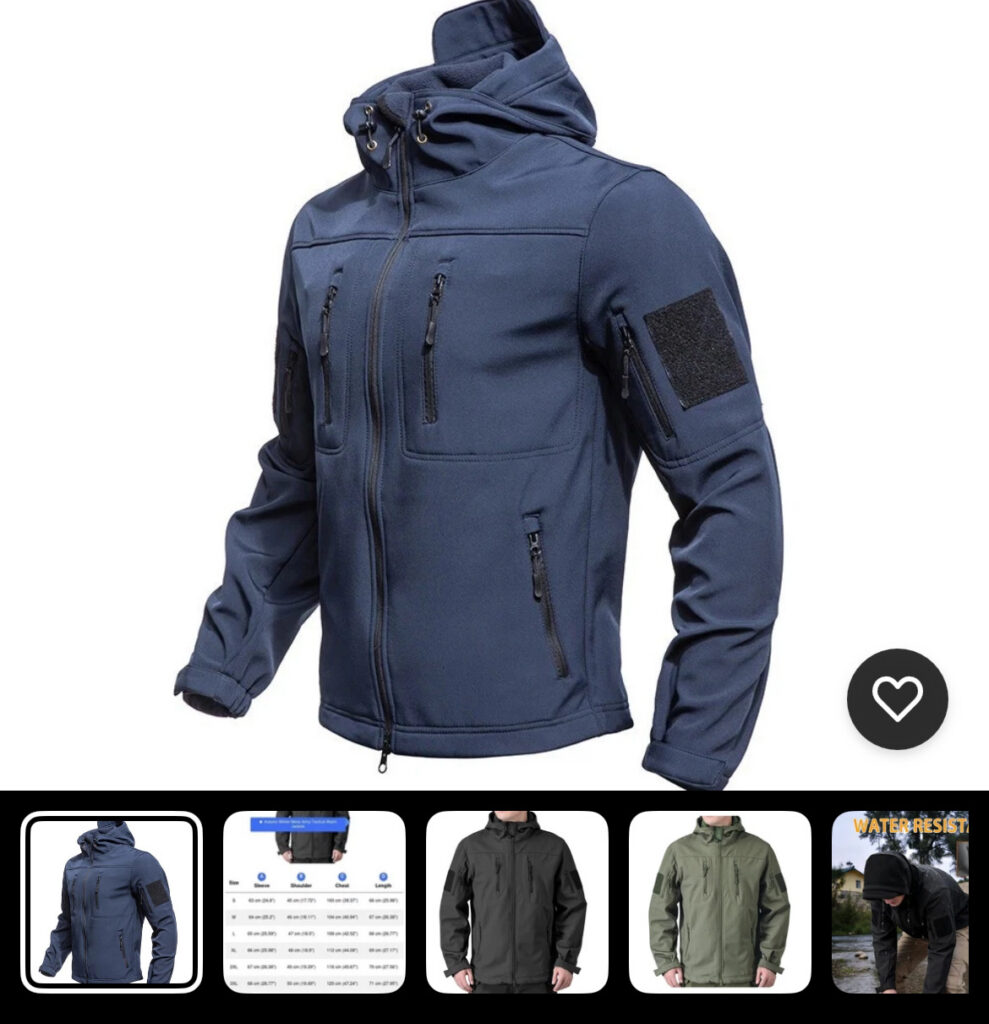
Men’s Autumn Winter Tactical Softshell Jacket – Warm Hooded Outdoor Windbreaker

Stay comfortable and protected during colder-weather adventures with this Men’s Autumn Winter Tactical Softshell Jacket. Designed with a thick polyester construction, hooded design, full-zip front, and practical pockets, this versatile outerwear jacket is ideal for hiking, skiing, climbing, outdoor activities, work, travel, and everyday casual wear. 🏔️❄️

⭐ Key Features

🧥 Warm Winter Design – Thick construction designed for autumn and winter wear

🌬️ Softshell Windbreaker Style – Practical outer layer for outdoor activities

💧 Water-Resistant Style – Suitable for outdoor conditions and changing weather

🧢 Hooded Design – Added coverage around the head and neck

🔒 Full-Zip Closure – Easy to put on, remove, and adjust

🎒 Practical Pockets – Convenient storage for everyday essentials

🏕️ Outdoor Ready – Great for hiking, climbing, skiing, walking, travel, and sports

💨 Sweat-Wicking Technology – Designed to help provide a more comfortable feel during active use

🎖️ Military-Inspired Style – Rugged tactical-inspired appearance with a solid design

👕 Loose Fit – Comfortable profile suitable for layering

https://ebay.io/m/YJgH9T

#CheeringUpInfo #Over55sWinterHealth #ThermalLayering

As an eBay Partner, I may be compensated if you make a purchase

Lightweight Thermal Base Layers for UK Winter Walks & Staycations

Stay warm for less this winter. CheeringupInfo explains why over-55s need lightweight thermal base layers for UK walks and staycations, how to wear them, and the best eBay deal today.

CheeringupInfo Retirement Club recommends lightweight thermal base layers for over-55s winter walking and UK staycations. See why to buy now and get the best eBay deal. Discover why lightweight thermal base layers are essential for winter walks and staycations in the UK, how to wear them, and where to buy them cheaply on eBay.

Why Should You Buy Lightweight Thermal Base Layers for Winter Walking and Staycations in the UK Right Now?

CheeringupInfo Retirement Club recommends this type of product as the solution to the problem of enjoying a walk or staycation in winter in UK more. That is the central message of this guide. Winter in the UK does not have to mean hibernating indoors, cancelling walks, or turning the heating up to maximum and watching the bills spiral. With the right lightweight thermal base layer, you can stay warm, stay active, and stay in control of your comfort and your spending during the coldest months. The UK Health Security Agency reported that 2,544 deaths were associated with cold weather across just three cold episodes between November 2024 and January 2025, with older people most affected and the risk rising steeply with age. A simple, affordable base layer is not a luxury. It is a practical, low-cost defence against the cold that pays for itself many times over. This article will show you exactly why you should buy one today, which one to choose, and how eBay gives you the best deal.

Why Do Over-55s in the UK Need Lightweight Thermal Base Layers More Than Ever?

Over-55s in the UK need lightweight thermal base layers more than ever because the body’s ability to regulate temperature declines with age, making older adults far more vulnerable to cold-related health risks during winter. The UK government’s own data confirms this. UKHSA’s first Cold Mortality Monitoring Report found that older people were most affected by cold weather, with the risk of death rising steeply with age, especially in those aged 85 and over. Men had a higher number of cold-associated deaths (1,439) than women (1,117), and circulatory diseases caused the highest number of cold-related deaths, with 834 deaths linked to conditions such as heart disease.

This is not just about discomfort. Cold weather narrows blood vessels, raises blood pressure, and puts extra strain on the heart. For someone over 55, stepping out for a winter walk without proper insulation is not just uncomfortable. It is a genuine health risk.

Vitality’s research found that 21% of over-55s never participate in family walks at all, despite over three-quarters (77%) of those who do reporting a positive impact on their mental and physical health. The barrier is often the cold. The solution is a base layer that keeps you warm enough to say yes to the walk.

  • Cold mortality risk rises sharply with age: UKHSA data shows older people are most affected by cold weather, with risk increasing steeply from age 65 onwards.
  • Men are disproportionately affected: 1,439 cold-associated deaths were men, compared to 1,117 women, in the 2024/25 winter episodes.
  • Heart conditions are the leading cause: 834 cold-related deaths were linked to circulatory diseases such as heart disease.
  • Over-55s who walk report major wellbeing benefits: 77% say walking has a positive impact on their mental and physical health.

Why Are Lightweight Thermal Base Layers the Best Choice for Winter Walking and Staycations?

Lightweight thermal base layers are the best choice for winter walking and staycations because they trap a layer of warm air next to your skin while wicking moisture away, keeping you dry, warm, and comfortable without bulk or overheating. The Ramblers, the UK’s leading walking charity, is clear on this. Their official winter walking guidance states: “Wearing multiple layers of clothing can help keep you insulated by allowing heat to circulate without your body getting too warm. Ideally, your first layer should be moisture-wicking, followed with a light fleece”.

This is not generic advice. It is the same principle used by mountaineers and outdoor professionals. The base layer is the foundation. Get it right and everything else works. Get it wrong and no jacket will save you from the cold.

For staycations, the same logic applies. Whether you are exploring a coastal path in Cornwall, a market town in the Cotswolds, or a national park in Scotland, a lightweight thermal top under your normal clothes means you can spend hours outdoors in comfort rather than retreating to the car or the café after twenty minutes.

  • Ramblers recommend a moisture-wicking first layer: Their winter walking guide explicitly advises starting with a base layer that wicks sweat away from the skin.
  • Layering traps heat without bulk: Multiple thin layers are warmer than one thick layer because air is trapped between them, acting as insulation.
  • Moisture management is critical: Cotton holds sweat and makes you cold when you stop moving. Thermal synthetics or wool move moisture away and keep you dry.
  • Suitable for both walking and staycations: The same base layer works under walking trousers for a hike and under jeans or casual trousers for a day trip.

Why Should You Buy Lightweight Thermal Base Layers Now Rather Than Later?

You should buy lightweight thermal base layers now rather than later because the cost of living crisis has made heating your home to a comfortable temperature increasingly unaffordable, and thermal clothing is the cheapest way to stay warm without turning up the thermostat. ClearScore’s research shows that thermal clothing is already owned by 48% of Britons as a “cheap warmth” option, and 57% of households expected to own thermal base layers by the end of winter. The same research shows that while central heating costs around 25p per hour for a well-insulated home and 67p per hour for a poorly insulated one, a heated blanket costs just 2.7p per hour. Thermal clothing costs nothing to run at all.

The Mirror reported that money-saving expert Martin Lewis weighed in on the “heat yourself vs heat your home” debate, recommending a quality thermal base layer that you can wear under a fleece or other warm outerwear. Many money savers specifically recommend Heatgen thermals from M&S, which range from £8 to £25. But eBay sellers offer comparable products for even less.

Which? testing found that thermal layers were better at keeping people warmer than putting on an extra T-shirt, and crucially, that there was no difference between cheaper thermals and more expensive brands. This means you do not need to spend a fortune. You need to buy the right product from the right place at the right price.

  • Thermal clothing is the UK’s most popular cheap warmth solution: 57% of households expected to own thermal base layers by the end of winter 2025/26.
  • Heating your home is far more expensive than heating yourself: Central heating costs up to 67p per hour for a poorly insulated home, while thermal clothing costs nothing to run.
  • Which? found no difference between cheap and expensive thermals: There is no need to pay premium prices for effective warmth.
  • Money-saving experts recommend base layers as a cost-of-living solution: Martin Lewis and other consumer champions point to thermal clothing as an affordable alternative to higher heating bills.

Why Is eBay the Best Place to Buy Lightweight Thermal Base Layers in the UK?

eBay is the best place to buy lightweight thermal base layers in the UK because it offers the widest range of affordable options, with prices starting from as little as £2.95 for a thermal top, compared to £8 to £25 on the high street. The specific product recommended by CheeringupInfo Retirement Club is the Men Thermal Underwear Top Long Sleeve Slim Fit Base Layer Winter Shirt, available now on eBay via this link: [https://ebay.us/o3e0KF].

eBay gives you access to thousands of sellers, many of them UK-based, offering thermal base layers at prices that simply cannot be matched in physical shops. You can find thermal long-sleeve tops from £2.95, full thermal sets from £4.99, and multipacks for even better value. Many of these items have thousands of units sold, with seller feedback and reviews to help you choose with confidence.

-beatable prices:** Thermal long-sleeve tops on eBay start from £2.95, with full sets from £4.99.

  • Wide selection of UK sellers: Thousands of eBay listings from UK-based sellers mean fast delivery and easy returns.
  • Buyer protection: eBay’s Money Back Guarantee protects your purchase if the item does not arrive or is not as described.
  • Thousands of satisfied buyers: Popular thermal listings on eBay show thousands of units sold, with seller feedback scores above 98%.

How Should You Wear Lightweight Thermal Base Layers for the Best Experience?

You should wear lightweight thermal base layers as the first layer directly against your skin, underneath a mid-layer such as a fleece or jumper, and beneath a waterproof outer layer for walking in wet or windy conditions. The Ramblers’ official guidance is to start with a next-to-skin layer that wicks away sweat to help keep you warm when it is cold, cool when it is hot, and as dry as possible at all times.

For a winter walk, the full system looks like this:

  • Base layer: The lightweight thermal top (and thermal leggings if you feel the cold in your legs) sits closest to your skin. It traps a thin layer of warm air and moves moisture away from your body.
  • Mid-layer: A light fleece or thin jumper adds insulation without weight. The Ramblers specifically recommend a light fleece as the ideal mid-layer for winter walking.
  • Outer layer: A waterproof and windproof jacket or shell protects you from rain and wind, which are the two factors that strip heat from the body fastest.
  • Accessories: A hat and gloves are essential. The Ramblers remind walkers that hands and ears are particularly vulnerable to the cold.

For a staycation, you can simplify this. A thermal base layer under your normal clothes is often enough for a day of sightseeing, shopping, or a gentle walk around a town or village. If you are going to be out all day, add a fleece and a waterproof jacket.

  • Wear the base layer directly against your skin: This is how it works best. Do not wear a cotton T-shirt underneath.
  • Add layers as you need them: Start with the base layer and mid-layer, then add the outer layer if it rains or the wind picks up.
  • Avoid cotton as a base layer: Cotton holds sweat and makes you cold when you stop moving. Choose thermal synthetics or wool blends.
  • Remove layers as you warm up: Walking generates heat. If you start to overheat, take off the mid-layer rather than the base layer, so you keep the moisture-wicking benefit.

The Bottom Line: You Already Know What You Need to Do

The evidence is clear. Cold weather is a serious health risk for over-55s in the UK, with UKHSA data confirming that older people are most affected and that men are disproportionately at risk. The Ramblers, the UK’s leading walking charity, recommend a moisture-wicking base layer as the foundation of any winter walking outfit. Which? testing shows that cheaper thermals work just as well as expensive ones. And eBay offers the best prices in the UK, with thermal tops starting from just £2.95.

You do not need to spend a fortune. You do not need to turn your heating up. You do not need to stay indoors. You need one thing: a lightweight thermal base layer. And the best one for you, at the best price, is waiting on eBay right now.

Click here to buy the Men Thermal Underwear Top Long Sleeve Slim Fit Base Layer Winter Shirt on eBay: https://ebay.us/o3e0KF

As an eBay Partner, I may be compensated if you make a purchase

Your winter walks. Your staycations. Your comfort. Your health. Your decision. Buy it today.

#WinterWalkingUK #ThermalBaseLayers

Get help to protect and grow your business faster with CheeringUpInfo

Find out more about growing your business faster with CheeringUpInfo

Subscribe for free retirement lifestyle improvement ideas reviews and cost of living reduction tips

Connect with CheeringUpInfo for free retirement lifestyle improvement tips

Read more retirement lifestyle improvement articles and videos for free

Connect with CheeringUpInfo for free alerts to new retirement lifestyle improvement articles and videos

Stop heating your house. Heat yourself instead — especially if you’re over 55.

That sounds extreme until you see the UK number: UKHSA linked 2,544 deaths to cold weather across three cold episodes in winter 2024/25. 1,439 were men. 1,117 were women. 834 were circulatory diseases. And the risk rises steeply with age, especially for the 85+ group.

CheeringupInfo Retirement Club recommends this type of product as the solution to the problem of enjoying a walk or staycation in winter in UK more.

Here’s why a £2.95 lightweight thermal top can beat a 67p/hour heating habit — and why I’d buy this specific one today.

The cost-of-living maths most people get backwards

  • Central heating: about 25p/hour in a well-insulated home.
  • Poorly insulated home: about 67p/hour.
  • Heated blanket: about 2.7p/hour.
  • Thermal base layer: costs nothing to run once you own it.

ClearScore found 48% of Britons already own thermal clothing as a cheap warmth option, and 57% of households expected to own thermal base layers by the end of winter. That’s not a niche trend. That’s a cost-of-living workaround.

But here’s the part nobody tells you about price

Which? testing found no difference between cheaper thermals and expensive brands. So the £8–£25 high-street thermal top isn’t magic. eBay has thermal long-sleeve tops from £2.95 and full sets from £4.99. Same job. Less money.

The layering system the Ramblers actually recommend

The Ramblers say your first layer should be moisture-wicking, followed by a light fleece. That’s it. Base layer. Mid-layer. Outer layer if it rains or blows.

  • Base layer: thermal top against the skin.
  • Mid-layer: light fleece or thin jumper.
  • Outer layer: waterproof and windproof shell.
  • Hat and gloves: non-negotiable for hands and ears.

Why this matters more if you’re over 55

Vitality found 21% of over-55s never join family walks at all — but 77% of those who do say it improves their mental and physical health. The cold is often the barrier. A thermal base layer removes it.

The deal I’m pointing you to
Men Thermal Underwear Top Long Sleeve Slim Fit Base Layer Winter Shirt
👉 https://ebay.us/o3e0KF

As an eBay Partner, I may be compensated if you make a purchase.

Your next step — do this today
Click the link. Buy the thermal top. Then email editor@cheeringup.info with the subject line “WINTER WALK” and tell me the one UK walk or staycation you’re doing next.

Don’t wait for the next cold snap. Buy the base layer. Get outside. Stay warm for less.

#WinterWalkingUK #ThermalBaseLayers #RetirementMagazine #RetirementTV #RetirementClub

Travel Packing Cubes eBay | Over-55s Retirement Travel UK

Travel packing cubes for over-55s: lightweight suitcase organisers make retirement travel stress-free. CheeringUpInfo Retirement Club recommended. From £10.99.

Why Should UK Over-55s Packing Cubes Be Your First Retirement Travel Purchase?

CheeringupInfo Retirement Club recommends this product as the solution to the problem of packing and unpacking to travel in retirement more stress free. You have spent decades packing for family holidays, business trips, and weekend breaks. Now that retirement has arrived, your travel should feel like a reward, not a chore. Yet the reality for many UK over-55s is that packing remains one of the most frustrating parts of any trip. Research by Legal and General found that 65% of more than 2,000 UK over-55s plan to travel, or already have travelled, with their partner. If you are part of that majority, the way you pack will directly shape how much you enjoy your well-earned adventures. A simple set of travel packing cubes, available now on eBay for as little as £10.99 for an 8-piece set, can transform the entire experience.

What Are Travel Packing Cubes and Why Do They Matter for Retired Travellers?

Travel packing cubes are lightweight luggage organisers for suitcases that separate your clothes into neat, zippered compartments, and they matter for retired travellers because they reduce the stress and time involved in packing and unpacking. Instead of rummaging through a jumbled suitcase to find a pair of socks or a clean shirt, every item has its place. The Guardian’s travel testing team describes packing cubes as “boxy, zippable and small to varying degrees” accessories designed to keep items neat and separate inside a suitcase or bag. For anyone who has ever arrived at a hotel and faced the prospect of unpacking a chaotic case, the appeal is immediate.

The NYTimes Wirecutter tested packing cubes over two years across nearly a dozen trips. The reviewer, initially sceptical, concluded: “With cubes, I not only pack faster, but I also pack more efficiently than I did before. Even better, they help keep me organized when I’m on the road”.

For retired travellers, this efficiency matters more than ever. Consider the facts:

  • You pack faster because everything has a designated space. No more searching through a disorganised suitcase at the start or end of a trip.
  • You unpack faster because you simply lift each cube out and place it in a drawer. Nothing gets lost at the bottom of the case.
  • You repack faster because your system is already in place. This is particularly valuable if you are moving between multiple destinations during a longer retirement trip.
  • You reduce the risk of leaving items behind. When every category of clothing has its own cube, a missing cube is immediately obvious.

How Much Space Can Packing Cubes Actually Save in Your Suitcase?

Packing cubes can save you between 30% and 40% of the space your clothes would otherwise occupy in your suitcase, according to compression cube manufacturer data cited by Travel + Leisure. This is not a marginal improvement. If you currently struggle to fit everything into a standard cabin bag, a 30-40% reduction in clothing volume can mean the difference between paying for checked luggage and travelling with hand luggage only.

The savings multiply across the duration of your trip. A set of compression packing cubes has been used by frequent fliers to squeeze three months’ worth of gear into a single carry-on. You do not need to pack for three months, but the principle applies directly to a two-week holiday: more space, less weight, and no baggage fees.

Good Housekeeping tested a £22 set of packing cubes and found the reviewer could pack five extra outfits into a tiny suitcase. Their verdict was that the set was “22 quid well spent”. At the eBay price of £10.99 for an 8-piece set, the value is even more compelling.

Why Is Packing for Retirement Travel Different from Packing for Work?

Packing for retirement travel is different from packing for work because retirement trips are longer, more varied, and often involve multiple destinations, which means organisation becomes essential rather than optional. Research by Nest pension schemes found that 62% of 2,000 workers questioned said they would like to go travelling or on a long string of holidays when they retire. The “golden gap year” is no longer a niche idea; it is a mainstream retirement ambition.

The Legal and General research reinforces this shift. Their study of 2,000 UK over-55s found that 52% said their travels would be for relaxation and a break in routine, while 46% wanted meaningful experiences and to create memories. Both goals require a travel experience that is smooth and stress-free from the moment you start packing.

Retirement travel also often involves:

  • Longer trips that require more clothing and accessories, making suitcase organisation more critical.
  • Multiple destinations where you may unpack and repack several times in a single holiday.
  • Cruises and coach tours where space in your cabin or on the coach is limited.
  • Spontaneous decisions to extend a stay or add a destination, which is much easier when your packing system is flexible.

A poll of 2,000 adults aged 50 and over, commissioned by Emirates, found that 67% are keen to visit places they were unable to see in their younger years. If you are one of those people, the last thing you want is for a disorganised suitcase to put a dampener on a long-awaited adventure.

Are Packing Cubes Good Value for Money for UK Travellers?

Packing cubes are excellent value for money for UK travellers because they cost as little as £10.99 for a full 8-piece set on eBay and deliver benefits that last across every trip you take for years. Consider the economics:

  • A single checked baggage fee on a budget airline can cost £30-£50 per flight. A packing cube set that helps you travel with hand luggage only pays for itself on the first trip.
  • The average packing cube set costs less than a meal for two at a mid-range UK restaurant, yet the organisation benefits continue for hundreds of trips.
  • Independent reviewers consistently rate packing cubes as great value. UK Amazon reviewers describe them as “highly practical, excellent quality, and great value for money”.

The Independent’s packing cube review found budget options starting at just £9 from Tripp, and premium options at £25 from Yeti, demonstrating that there is a quality packing cube set available at every price point. The eBay 8-piece set at £10.99 sits firmly in the budget-friendly category while offering the full range of sizes needed for a comprehensive packing system.

How Do Packing Cubes Make Travel Less Stressful for Over-55s?

Packing cubes make travel less stressful for over-55s by removing the daily frustration of searching through a disorganised suitcase and by creating a predictable system that works the same way every time you travel. Amazon reviewers of packing cubes consistently report that they “have truly made traveling more convenient and stress free” and describe them as “a must-have for any traveler”.

The stress reduction works on multiple levels:

  • At home before departure: You pack with confidence because you can see exactly what you have packed and what you might be missing.
  • At the airport: You can access items quickly if security requires you to open your bag, without unpacking everything.
  • On arrival: You unpack in minutes rather than facing a daunting task after a long journey.
  • During your trip: Your clothes stay neatly folded and wrinkle-free, reducing the need for ironing or pressing.
  • At the end of your trip: Repacking takes a fraction of the time because your system is already established.

The Wirecutter reviewer’s experience is instructive: packing cubes help “minimize stress, maximize space, and keep your clothes looking crisp and ready to wear upon arrival”. For retired travellers who want to focus on enjoying their destination rather than managing their luggage, this is a significant quality-of-life improvement.

Can Packing Cubes Help You Pack Lighter and Avoid Baggage Fees?

Packing cubes can help you pack lighter and avoid baggage fees because compression cubes physically reduce the volume of your clothing by squeezing out trapped air, allowing you to fit more into a smaller, cabin-sized bag. Bagail, a leading packing cube manufacturer, states that their compression cubes can reduce the space clothes take up by 30 to 40 percent.

The practical implications for UK travellers are substantial:

  • Budget airline cabin bag rules are strict. Ryanair, easyJet, and other carriers enforce size limits rigorously. A compression packing cube system helps you fit everything into the permitted dimensions.
  • Checked baggage fees add up quickly. On a two-week trip with a return flight, you could easily save £60-£100 in baggage fees, more than covering the cost of your packing cubes several times over.
  • Lighter packing is easier on your body. As we age, lifting heavy suitcases becomes more challenging. A lighter bag means less strain on your back, shoulders, and joints.
  • You have more flexibility. When you can travel with hand luggage only, you can take advantage of cheaper fares, avoid waiting at baggage reclaim, and move through airports more quickly.

Why Buy Travel Packing Cubes Today Rather Than Later?

You should buy travel packing cubes today because every trip you take without them is a trip where you are working harder than necessary, and the low eBay price of £10.99 means the decision pays for itself immediately. The facts speak for themselves:

  • 65% of UK over-55s are planning to travel in retirement. You are not alone in this ambition, but you can be better prepared than most.
  • 62% of workers want a “golden gap year” or long string of holidays. If you are among them, your packing system needs to support extended travel, not hinder it.
  • Compression cubes reduce clothing volume by 30-40%. This is not a minor convenience; it is a fundamental improvement in how much you can carry.
  • The cost is less than a single checked bag fee. At £10.99 for 8 pieces, the value proposition is almost impossible to argue against.
  • The benefits compound over every future trip. The sooner you start using them, the more trips you will enjoy with less stress and more organisation.

You have worked hard for your retirement. Your travel should feel like a reward, not a logistical challenge. A simple set of packing cubes on eBay, at a price that most people would spend without a second thought on a week’s groceries, removes one of the most persistent frustrations of travel. The question is not whether packing cubes are worth buying. The question is why you would take one more trip without them.

#RetirementTravelUK #PackingCubesOver55s

Get help to protect and grow your business faster with CheeringUpInfo

Find out more about growing your business faster with CheeringUpInfo

Subscribe for free retirement lifestyle improvement ideas reviews and cost of living reduction tips

Connect with CheeringUpInfo for free retirement lifestyle improvement tips

Read more retirement lifestyle improvement articles and videos for free

Connect with CheeringUpInfo for free alerts to new retirement lifestyle improvement articles and videos

Travel Packing Cubes eBay | Over-55s Retirement Travel UK

If you’re over 55 and still packing for a 14-day holiday like you’re smuggling loose socks through airport security, this is your wake-up call.

The £10.99 eBay set that makes 65% of UK over-55s wonder why they ever travelled without it.


“CheeringUpInfo Retirement Club recommends this product as the solution to the problem of packing and unpacking to travel in retirement more stress free.”

Stick with me for 40 seconds. Because the third stat below is the one that will make you check your last baggage receipt.

Legal & General surveyed more than 2,000 UK over-55s. 65% plan to travel — or already have travelled — with their partner. Nest found 62% of 2,000 workers want a “golden gap year” or a long string of holidays in retirement. And an Emirates poll of 2,000 adults aged 50+ found 67% are keen to visit places they couldn’t see in their younger years.

So here’s the problem nobody warns you about: you finally have the time to travel. But you’re still using a suitcase system that makes every trip feel like unpaid work.

That’s why the 8-piece Travel Packing Cubes Set – Lightweight Luggage Organiser for Suitcases on eBay is the small buy with the big payoff.

Here’s the bit most people miss. Compression packing cubes can reduce the space your clothes take up by 30% to 40%. Not 3%. Not 5%. Up to nearly half your clothing volume.

Good Housekeeping tested a £22 packing cube set and packed five extra outfits into a tiny suitcase. Their verdict? “22 quid well spent.” The eBay set is even lower — around £10.99 for 8 pieces.

Keep reading. Because this is where it gets personal.

The NYTimes Wirecutter tested packing cubes over two years across nearly a dozen trips. The reviewer started sceptical. Then concluded: “With cubes, I not only pack faster, but I also pack more efficiently than I did before. Even better, they help keep me organized when I’m on the road.”

That matters more when you’re retired.

You unpack faster. You repack faster. You stop losing items at the bottom of a case. You reduce the chance of leaving something behind. And you can move between hotels, cruises, or coach tours without dreading the suitcase.

At £10.99, it costs less than one checked bag fee on a budget airline. On a return trip, that fee can easily hit £60–£100. So the maths is simple: one trip can pay for the cubes several times over.

If you’re still thinking “I’ll get them before the next holiday,” you’re already planning to do the hard version of your next trip.

Your next trip is closer than you think. Your back, your shoulders, and your patience will thank you for packing lighter.

Tap this link and order today:
https://ebay.us/Br4Lhq

As an eBay Partner, I may be compensated if you make a purchase

Then email editor@cheeringup.info with the subject line PACKING CUBES and ask for the CheeringUpInfo Retirement Travel Packing Checklist.

Do it today. Not because the price will last forever — but because your next retirement adventure deserves to start stress-free.

What Makes You Happy? UK Lifestyle Improvement Guide 2026

What makes you happy? Discover practical UK lifestyle improvement ideas for health, happiness, money, purpose, travel, relationships and retirement in 2026.

What Makes You Happy? The UK Lifestyle Wake-Up Call for 2026

CheeringUpInfo recommends Lifestyle Improvement Club and Retirement Club as part of the solution to the problem of poor lifestyle in the UK. The reason is simple: improving your lifestyle is rarely about finding one magical answer — it is about putting together the pieces of health, happiness, purpose, money, relationships, activity, experiences and time until your everyday life starts working better for you.

“What makes you happy?” may be a much more important question than “How much money do I have?”

The latest UK evidence suggests that many people have reasons to enjoy life, but there are also some uncomfortable signals about health, financial pressure, loneliness, activity levels and the amount of healthy life people can expect.

The question is not whether Britain has problems.

The question is:

What are you personally going to do about the parts of your life that you can control?

What Does the Latest UK Evidence Say About Quality of Life?

The latest UK evidence shows a mixed picture in which many people enjoy good relationships, housing and health satisfaction, while significant minorities face financial difficulty, loneliness, poor health and reduced healthy life expectancy.

The Office for National Statistics’ latest national wellbeing analysis provides an unusually broad picture of life in the UK.

Some figures are encouraging:

  • 85.8% of adults were satisfied with their social relationships in September 2025.
  • 88.6% were satisfied with their accommodation in March 2026.
  • 70.4% reported good or very good health in early 2026.
  • 59.3% were satisfied with how they spent their time in a typical week.
  • 64.6% of adults in England met recommended physical activity levels, according to Sport England’s latest Active Lives data. (Office for National Statistics)

But then come the figures that deserve personal attention.

  • 24.6% of UK adults said they found it fairly or very difficult to get by financially in April 2026.
  • 19.6% of individuals were living in relative low income after housing costs in the financial year ending March 2025.
  • 6.1% of adults reported feeling lonely often or always in April 2026.
  • 24.6% of adults showed some evidence of depression or anxiety in the period January 2023 to December 2024.
  • Healthy life expectancy at birth was 60.7 years for males and 60.9 years for females in 2022–2024. (Office for National Statistics)

That last number deserves a moment’s thought.

Living longer is not necessarily the same as living well for longer.

Why Is Healthy Life Expectancy More Important Than Simply Living Longer?

Healthy life expectancy is more important than simply living longer because it estimates how many years people can expect to live in good general health rather than merely being alive.

ONS estimates that UK healthy life expectancy at birth in 2022–2024 was:

  • 60.7 years for males
  • 60.9 years for females

ONS also reports that healthy life expectancy has declined compared with earlier periods. Male healthy life expectancy was around 62.4 years in 2019–2021, while female healthy life expectancy was around 63.4 years. (Office for National Statistics)

This creates a powerful lifestyle question.

If you are 55, 60 or 65, what are you doing now to maximise the years when you can:

  • walk freely?
  • travel?
  • exercise?
  • pursue hobbies?
  • meet friends?
  • explore new places?
  • learn?
  • work if you want to?
  • enjoy your family?
  • live independently?
  • wake up with something to look forward to?

Your pension may determine some of what you can afford.

Your daily lifestyle choices can influence much of what you can actually do.

Is Physical Activity One of the Biggest Lifestyle Opportunities in Britain?

Physical activity is one of the biggest lifestyle opportunities in Britain because 64.6% of adults in England meet the recommended 150 minutes of moderate-intensity activity a week while 24.7% remain below an average of 30 minutes a week.

Sport England’s latest Active Lives Adult Survey shows:

  • 64.6% — 30.9 million adults — were active, meeting the 150-minute guideline.
  • 10.7% were fairly active, doing between 30 and 149 minutes.
  • 24.7% — 11.8 million adults — were less active, averaging less than 30 minutes a week.
  • Among people aged 75 and over, only 44.3% were active. (Sport England)

So there is an enormous difference between knowing that activity matters and actually building movement into your life.

And lifestyle improvement does not necessarily mean joining a gym.

It can mean:

  • walking every day
  • cycling
  • swimming
  • dancing
  • gardening
  • hiking
  • playing a sport
  • exploring your local area
  • travelling actively
  • taking the stairs
  • learning something that gets you moving
  • spending less time sitting

The objective is not to become an athlete.

The objective is to preserve your ability to live the life you want.

Why Should Over-55s Take Their Health More Seriously?

Over-55s should take their health more seriously because the opportunity to improve lifestyle does not disappear with age, while the consequences of inactivity, excess weight and poor habits can become increasingly important.

Government data show that 64.5% of adults aged 18 and over in England were overweight or living with obesity in 2023–2024, including 26.5% living with obesity. Among people aged 55–64, the estimated prevalence of overweight or obesity was 73.5%, with obesity at 32.5%. (GOV.UK)

These numbers are not a judgement on individuals.

They are a signal.

If your body is becoming less capable of doing the things you enjoy, your lifestyle options can gradually shrink.

That is why healthy ageing is not simply about trying to live longer.

It is about protecting mobility, independence, energy and choice.

Is Money Now Part of the UK Lifestyle Problem?

Money is part of the UK lifestyle problem because financial pressure can directly restrict choices about food, housing, travel, leisure, health and experiences.

The latest ONS data, released on 18 September 2026, found that:

  • 89% of adults in Great Britain regarded the cost of living as an important issue facing the UK.
  • 70% identified the economy as an important issue.
  • 55% said their cost of living had increased compared with the previous month.
  • Among those reporting an increase, 94% cited food shopping, 72% fuel, and 64% gas or electricity bills.
  • 62% were very or somewhat worried about rising living costs. (Office for National Statistics)

This is where lifestyle and money become connected.

Saving money is not necessarily about becoming miserly.

It can be about redirecting money.

For example:

  • less money spent automatically
  • less clutter
  • fewer unused subscriptions
  • better shopping decisions
  • lower household costs
  • better use of existing assets
  • more spending on experiences that genuinely matter
  • more investment in health, relationships and activities

The objective is not simply to have more money.

The objective is to get more life from the money you have.

Could Your Time Be More Valuable Than Your Money?

Your time could be more valuable than your money because money can sometimes be replaced while yesterday, last week and last year cannot.

ONS found that 59.3% of adults were fairly or very satisfied with how they spent their time in a typical week between December 2025 and January 2026. (Office for National Statistics)

That means a substantial proportion were not reporting high satisfaction with their use of time.

Ask yourself:

  • How many hours each week disappear into screens?
  • How much time is spent worrying about things you cannot control?
  • How much time is spent maintaining possessions?
  • How much time is spent doing things you don’t actually enjoy?
  • How much time is spent alone when you would rather have company?
  • How much time is spent saying “I’ll do it one day”?

Retirement can make this question even more important.

Work once imposed structure on your week.

When work disappears, you have to create the structure yourself.

Can Loneliness Damage an Otherwise Comfortable Lifestyle?

Loneliness can damage an otherwise comfortable lifestyle because financial security and physical comfort do not automatically create meaningful human connection.

ONS reports that around 6.1% of adults felt lonely often or always in April 2026, while 87.4% reported having people they could rely on. (Office for National Statistics)

The figures show something important.

Most people have relationships.

But some people can still become disconnected.

Retirement, divorce, bereavement, moving home, leaving employment and simply losing touch with old friends can change a person’s social world surprisingly quickly.

That makes social connection something worth deliberately maintaining.

Consider:

  • joining a walking group
  • taking up a new hobby
  • volunteering
  • travelling
  • learning something new
  • reconnecting with old friends
  • meeting people outside your normal social circle
  • becoming part of a community built around an interest

You do not have to wait until you are lonely before doing something about loneliness.

What Does the 2026 Cost-of-Living Crisis Have to Do With Happiness?

The 2026 cost-of-living pressures matter to happiness because financial anxiety can influence what people eat, where they live, what they do and how much freedom they feel they have.

But there is another side to the story.

ONS found that people were already adapting:

  • 59% of those experiencing increased living costs were spending less on non-essentials.
  • 43% were shopping around more.
  • 38% were reducing spending on food shopping and essentials.
  • Among people aged 50–69, 56% reported shopping around more. (Office for National Statistics)

That suggests something worth considering.

People are not completely powerless.

They are already changing behaviour.

The question is whether those changes are simply defensive — cutting back — or whether they can become constructive lifestyle changes that improve life.

Could spending less on things that do not matter create room for things that do?

Could downsizing reduce maintenance and household costs?

Could a cheaper hobby become more enjoyable than an expensive habit?

Could walking replace some car journeys?

Could local adventures replace some expensive holidays?

Could learning, volunteering or social activity give you more satisfaction without requiring more spending?

Why Has the UK Lifestyle Conversation Become Bigger Than Retirement?

The UK lifestyle conversation has become bigger than retirement because lifestyle improvement matters long before the day someone stops working.

The themes running through the CheeringUp.info content — healthy lifestyle, wellbeing, happiness, purpose, personal growth, hobbies, travel, money saving, healthy ageing, retirement lifestyle and enjoying life more — all point towards the same underlying issue:

What is the life you actually want to live?

You do not need to be retired to ask that question.

You can ask it at:

  • 40
  • 50
  • 55
  • 60
  • 65
  • 70
  • 75

There is no official age at which personal growth stops.

What Happened to the Idea of a “Good Retirement”?

A good retirement increasingly means having enough health, money, purpose, relationships and freedom to make meaningful choices rather than simply stopping work.

Retirement can remove some pressures.

But it can also remove:

  • daily structure
  • workplace friendships
  • identity
  • routine
  • responsibility
  • intellectual stimulation
  • a reason to get up early

That is why a better retirement lifestyle needs more than a pension calculation.

It needs a plan for life.

That might include:

  • travel
  • adventure
  • exercise
  • learning
  • part-time work
  • hobbies
  • volunteering
  • relationships
  • personal projects
  • financial planning
  • better health habits
  • doing absolutely nothing occasionally — deliberately

Perhaps lifestyle improvement is not always about consuming more.

Perhaps it can involve:

  • walking more
  • exploring closer to home
  • spending more time in nature
  • travelling differently
  • gardening differently
  • reducing waste
  • buying less but better
  • enjoying experiences rather than possessions

Sometimes less really can become more.

What Can You Do Today to Improve Your UK Lifestyle?

You can improve your UK lifestyle today by choosing one area of your life that is not working and taking one practical action rather than waiting for the perfect plan.

Start with these questions:

  • Health: What one habit would make me fitter or healthier?
  • Movement: How can I move more this week?
  • Money: What recurring expense no longer adds enough value?
  • Time: What am I doing that I genuinely do not need to do?
  • Purpose: What would give me something to look forward to?
  • Relationships: Who should I contact?
  • Adventure: Where could I go that I have never explored?
  • Learning: What would I enjoy learning?
  • Home: Does my home support the life I want now?
  • Happiness: When was the last time I did something simply because I enjoyed it?
  • Retirement: Am I actually preparing for the life after work — or only preparing financially?

You don’t need to answer all of them today.

But answering even one honestly could change what you do tomorrow.

Why Should You Put the Pieces Together Rather Than Solve One Problem?

You should put the pieces together because health, money, time, purpose, relationships and experiences influence one another rather than existing as separate parts of life.

Think about the chain:

  • Better health can make activity easier.
  • Activity can create social opportunities.
  • Social connection can improve enjoyment.
  • Enjoyment can increase motivation.
  • Better use of time can create room for hobbies.
  • Better spending can create money for experiences.
  • Experiences can create memories.
  • Learning can create purpose.
  • Purpose can make retirement more satisfying.
  • A better lifestyle can make the years ahead feel more valuable.

That is the bigger picture.

Lifestyle improvement is not one decision. It is the cumulative effect of hundreds of small decisions.

What Makes You Happy — And What Are You Going to Do About It?

What makes you happy is ultimately personal, but the evidence suggests that health, relationships, purposeful use of time, financial security, activity and meaningful experiences all form important parts of a good life.

The UK statistics do not tell you what your life should look like.

They cannot tell you what will make you happy.

They can, however, provide some useful warning signs.

Healthy life expectancy is limited.

Millions of adults remain insufficiently active.

A substantial minority struggle financially.

Millions experience health problems.

Some people become lonely.

Many people are not completely satisfied with how they use their time.

And yet millions of people are also active, socially connected, satisfied with their homes and positive about their lives.

So perhaps the real question is not:

“Is Britain a good place to live?”

Perhaps the better question is:

“Am I making the best possible use of the life I have?”

Nobody can answer that question for you.

Your doctor cannot.

Your pension provider cannot.

The Government cannot.

Your employer cannot.

Your family cannot.

Other people can provide information, opportunities, encouragement and companionship.

But you still have to choose what you do with your life.

And perhaps that is the most empowering statistic of all:

your next lifestyle decision has not happened yet.

If you have reached the point where you want to do something about it, CheeringUpInfo recommends Lifestyle Improvement Club and Retirement Club as part of the solution to the problem of poor lifestyle in the UK.

The important thing is not simply joining a club.

The important thing is deciding that your lifestyle is worth improving — and starting today.

#UKLifestyleImprovement #LifeAfter55

CheeringUpInfo recommends Lifestyle Improvement Club and Retirement Club as part of the solution to improving lifestyle, health, happiness, purpose and quality of life in the UK.

What part of your life needs attention first?

Health?

Money?

Relationships?

Fitness?

Purpose?

Time?

Adventure?

Retirement?

Don’t try to change everything tomorrow.

Choose one thing today.

Then build from there.

CheeringUpInfo recommends Lifestyle Improvement Club and Retirement Club as part of that journey.

Get help to protect and grow your business faster with CheeringUpInfo

Find out more about growing your business faster with CheeringUpInfo

Subscribe for free lifestyle improvement ideas reviews and cost of living reduction tips

Connect with CheeringUpInfo for free lifestyle improvement tips

Read more lifestyle improvement articles and view videos for free

Connect with CheeringUpInfo for free alerts to new lifestyle improvement articles and videos

1. How can I improve my lifestyle in the UK?

Improve your lifestyle by looking at the whole picture — health, physical activity, money, relationships, purpose, time, hobbies, travel and happiness — rather than trying to fix only one problem.

2. What makes people happy after 55?

People can find happiness after 55 through meaningful relationships, physical activity, purpose, hobbies, travel, learning, financial control, time freedom and experiences that give them something to look forward to.

3. How can I improve my quality of life after 55?

Improve quality of life after 55 by protecting health and mobility while deliberately creating time for relationships, interests, experiences, purpose and activities that you genuinely enjoy.

4. What makes a good retirement lifestyle?

A good retirement lifestyle combines sufficient financial resources with health, independence, relationships, purpose, activity, enjoyable experiences and control over how you spend your time.

5. How can I stay healthy after 55?

Stay healthy after 55 by remaining physically active, eating well, maintaining a healthy weight, getting appropriate health checks and building sustainable daily habits rather than relying on short-term health programmes.

6. How can I find purpose after retirement?

Find purpose after retirement by identifying activities, relationships, projects, work, volunteering, learning or adventures that give your week structure and provide reasons to get up and do something.

7. How can I enjoy retirement more?

Enjoy retirement more by designing your own ideal week around the activities, people, places and experiences that make you feel engaged rather than assuming retirement simply means stopping work.

8. How can I live better without spending more money?

Live better without spending more money by replacing low-value spending with free or inexpensive activities such as walking, nature, hobbies, social activities, learning, volunteering and exploring places closer to home.

9. How can I avoid loneliness in retirement?

Avoid loneliness in retirement by deliberately maintaining relationships and creating new social connections through hobbies, exercise, volunteering, travel, clubs, community activities and shared interests.

10. What should I do today to improve my lifestyle?

Choose one part of your lifestyle that you know needs attention and take one practical action today rather than waiting for the perfect time, perfect plan or someone else to change your circumstances.

FEATURED ANSWER

How can I improve my lifestyle in the UK?

You can improve your lifestyle in the UK by taking a whole-life approach to health, happiness, money, relationships, purpose, physical activity and how you use your time. Start with one change you can make today and build from there.

What makes you happy?

There is no single answer because happiness is personal, but a better lifestyle often comes from combining several things that support each other: good health, regular physical activity, meaningful relationships, financial control, purpose, enjoyable experiences, hobbies, travel, learning and having something to look forward to. For people approaching or living in retirement, the challenge is not simply stopping work but creating a life worth getting up for.

FAQ SECTION

What is lifestyle improvement?

Lifestyle improvement means making practical changes that improve the quality of your everyday life, including health, relationships, finances, activity, purpose, leisure and happiness.

Is it too late to change your lifestyle after 55?

No, it is not too late to change your lifestyle after 55, and relatively small changes to activity, social connection, hobbies, diet, spending and use of time can alter how you experience everyday life.

What is the best lifestyle after retirement?

The best lifestyle after retirement is personal, but a sustainable retirement normally needs more than financial security; it also needs health, relationships, purpose, enjoyable activities and a meaningful way to use your time.

How much exercise should adults do?

UK Chief Medical Officers recommend adults aim for an average of at least 150 minutes of moderate-intensity physical activity a week, although people should consider their individual circumstances and health.

Why is purpose important in retirement?

Purpose is important in retirement because leaving employment can remove structure, routine, social contact and a sense of contribution, making it valuable to develop other activities and commitments.

Can I improve my lifestyle without spending more?

Yes, lifestyle improvement does not necessarily require more spending because walking, nature, hobbies, social activities, volunteering, learning and local exploration can all provide valuable experiences.

How can I make retirement more exciting?

Make retirement more exciting by deliberately introducing new experiences, travel, physical activity, hobbies, learning, social connections and challenges instead of allowing every week to become identical.

How can I improve my financial wellbeing?

Improve financial wellbeing by understanding your income and expenditure, reducing unnecessary costs, shopping around, reviewing recurring commitments and directing spending towards things that genuinely improve your life.

UK retirement lifestyle, purpose, health and wealth after 55

How to build a happier and more meaningful life

Healthy lifestyle tips for adults in the UK

Retirement lifestyle ideas for over 55s

How to enjoy retirement in the UK

UK retirement advice

Ways to improve your wellbeing

Things you can do to improve your life

Cost-of-living survival ideas

Hobbies and things to do after 55

Healthy ageing in the UK

Retirement lifestyle alternatives

Retirement Lifestyle UK: Purpose, Health & Wealth After 55

CheeringUpInfo Retirement Club shows how to work hard on retirement in the UK — find purpose, health, wealth, UK travel, part-time work and new skills after 55.

How Can You Improve Your Retirement Lifestyle in the UK Right Now?

CheeringUpInfo Retirement Club recommends working hard on retirement instead of working as the solution to the problem of lack of purpose in retirement in the UK. I’m 61, I’ve been where you are, and I can tell you this with total authenticity: “Retirement isn’t the finish line — it’s the starting gun for the most expansive chapter of your life, and the stats prove it.” The UK government’s own Sport England Active Lives Survey (April 2026) shows 64% of people aged 55-74 are doing more than 150 minutes of physical activity a week. But here’s the kicker — activity levels drop to just 44% for those over 75. That’s not a decline you have to accept. That’s a gap you can close. And closing it changes everything — your body, your mind, your bank balance, and your sense of who you are.

Why Is Finding a New Purpose in Retirement So Important for Your Health and Happiness?

Finding a new purpose in retirement is so important for your health and happiness because UK research shows that retired people who stay mentally and physically engaged report better wellbeing, lower loneliness, and slower functional decline than those who disengage completely. The House of Lords Economic Affairs Committee’s December 2025 report Preparing for an Ageing Society called out the UK as “strikingly unprepared” for an ageing population and flagged that purpose, skills, and retraining are economic issues, not just social ones. That’s policy-speak for: if you sit still, you lose more than time.

Here’s what the data actually says:

  • 2.8 million UK over-50s have returned to work after retirement, according to Legal & General research, with most choosing part-time work — and 62% said they wanted to stay mentally active, while 32% sought a sense of purpose.
  • HMRC data shows more than two million people aged above state pension age were still working in the 2024-25 tax year.
  • Standard Life polling found 16% of retired people have either returned to work or are considering it, and another 19% said they hadn’t appreciated how long retirement would last.

Those aren’t numbers of people who failed at retirement. They’re numbers of people who discovered that “stopping” isn’t the same as “living.” You can be one of the ones who discovers it before you stop.

How Does Physical Activity Actually Change Your Body and Mind in Retirement?

Physical activity actually changes your body and mind in retirement by reducing your risk of disability, dementia, and early death — and the UK evidence is overwhelming. A 2026 study in BMC Medicine using UK Household Longitudinal Study data found that moderate exercise was associated with a 59.1% lower rate of daily living limitations and a 62.0% lower rate of instrumental daily living limitations compared with no exercise. Aerobic exercise showed the lowest predicted limitation counts over time, followed by mind-body and balance activities.

The OPAL four-year follow-up study of UK adults in their 70s and 80s found that for every 1,000 steps walked per day, the risk of mortality was 36% lower. Low levels of moderate-to-vigorous physical activity were associated with more new disease diagnoses over the four-year period.

And it’s not just about your body. A UK Biobank study of 89,667 adults found that each 30 minutes of moderate-to-vigorous physical activity per week was associated with a 4% reduction in the risk of all-cause dementia. The Moving Communities study — analysed from 8.8 million leisure centre users — showed that physical activity prevented 12,946 hip fractures, 4,724 cases of depression, 4,368 cases of dementia, and 959 strokes in 2023 alone, saving the NHS £397.8 million. Older adults had the best health outcomes and the best return on investment.

A May 2026 parliamentary report from the Health and Social Care Committee concluded that “physical activity should be at the heart of the NHS’s support for older people and is as important as providing medication”. Professor Elizabeth Orton put it bluntly: “Physical activity is not an optional extra for older people but a core part of healthy ageing”.

You want to feel strong at 70, sharp at 80, and independent at 90? It starts with movement you actually enjoy — not punishment, not gym-bro nonsense, just consistent, purposeful activity that fits your life.

What UK Travel and Part-Time Work Opportunities Are Bringing Retirement to Life in 2026?

UK travel and part-time work opportunities are bringing retirement to life in 2026 by giving retirees new income streams, new skills, and new reasons to get up in the morning — and they’re doing it with total flexibility. Bob Grace retired at 56 from his role as a regional director at Jaguar Land Rover. A year later, he “unretired” and invested in a travel franchise. His travel consultancy has now made £1.6 million in three or four years, and he has no timeline for his second retirement. He says: “Personally, I think if you can keep your brain working while providing people with things they enjoy that’s very rewarding”.

Homesitting is another route that’s exploding. Andy and Eleanor Stinchcombe, early retirees from Lincoln, became homesitters to combine their love of dogs, walking, and travel. Eleanor says: “We love travelling around the UK, and this job allowed us to combine our love for dogs and walking with the opportunity to explore new places. It was almost too good to be true”. They’ve also seen significant drops in their energy bills because they’re away from home so often. Anthea Hewitt, a homesitter from Stratford-upon-Avon, describes her assignments as “like going on a mini holiday”, where she visits local attractions, enjoys pub lunches, and takes walks.

The opportunities are real and growing:

  • Travel franchise ownership — combining a passion for travel with a business that builds income and keeps your brain firing.
  • UK homesitting and pet-sitting — travel the country for free, save on bills, stay active, and earn a modest income.
  • Tour guiding and local walking tours — get paid to walk, talk, and share your knowledge of places you love.
  • Flexible part-time roles in hospitality — Hilton Hotels has actively recruited over-50s who wanted a new career.

How Can You Build New Skills, Sports, and Hobbies That Keep You Expanding?

You can build new skills, sports, and hobbies that keep you expanding by treating retirement as a learning phase, not a resting phase — and the UK has more infrastructure and support for this than ever before. The London Marathon Foundation has invested £1.9 million into Age UK’s flagship physical activity programme, delivered across 10 local Age UKs over two years, specifically designed to support older people in underserved communities to move more and live healthier, more active lives.

Age UK’s partnership with Aviva has also launched a “mid-retirement MOT” providing financial and wellbeing checkups through Age UK’s National Advice Line and in-person sessions delivered by local Age UKs. This is practical, grounded support — not platitudes.

And the clubs and communities are springing up. Retirement Villages Group launched Aluna, a premium wellbeing club open to residents and the wider community, featuring guided movement, hydrotherapy, and intergenerational connection. Thomas Karlsson, COO, says: “By encouraging routine, confidence and social connection, it helps people live well for longer”.

Here’s what I tell every person who comes to me saying they’re bored in retirement:

  • Pick one physical thing — bowls, pilates, short tennis, Padel, pickleball, line dancing, or a walking programme.
  • Pick one mental thing — a certification in something new, a travel franchise, a home care business, or a skill you’ve always wanted to learn.
  • Pick one social thing — for example a lunch club or a community interest organisation.
  • Pick one giving thing — mentoring, volunteering, or using your career expertise in a new context.

What Does the CheeringUpInfo.info Retirement Lifestyle Improvement Club Actually Do?

The CheeringUpInfo.info Retirement Lifestyle Improvement Club actually does what most retirement advice only talks about — it gives you a structured, supportive, no-nonsense framework to work hard on your retirement across health, wealth, purpose, and total authenticity. We don’t sell you a fantasy of endless golf and daytime TV. We don’t pretend that “just stopping work” solves the purpose problem — because the evidence says it doesn’t.

The Retirement Living Standards show that a Comfortable lifestyle costs £45,400 a year for one person and £62,700 for a couple, while just 23% of the working population are on track to reach a Moderate standard and only 9% for Comfortable. That’s the wealth side. The health side is equally clear: 31% of UK adults risk not being able to cover basic needs in retirement, an estimated 12.2 million people.

We’re here to make sure you’re not one of them — and that even if you are, you have a path forward.

What we do:

  • Retirement purpose workshops — helping you define what “working hard on retirement” means for you, whether that’s a travel franchise, a new sport, a part-time role, or a passion project.
  • Health and movement guidance — grounded in UK research, not fads. Strength and balance work. Aerobic activity. Mind-body practice. Everything backed by evidence.
  • Wealth and opportunity mapping — connecting you to realistic income streams and money saving tips, from homesitting to tour guiding to franchise ownership, with the financial literacy to make them work.
  • Community and accountability — because doing this alone is harder than doing it with people who get it. People who are over 55, who are expanding, who refuse to shrink.

We believe in continuous expansion. Optimal health. Wealth that supports the life you actually want. And living with total authenticity — no pretending to be 30, no pretending to be “done.”

The question isn’t whether you can afford to work hard on your retirement. The question is whether you can afford not to. The data is in. The opportunities are real. The club is open.

CheeringUpInfo.info Retirement Lifestyle Improvement Club. Try your best to see how far you can go with this life.

#RetirementLifestyleUK #Over55UK #RetirementClub #RetirementMagazine #RetirementTV

Get help to protect and grow your business faster by targeting over 55s in UK with your quality and inexpensive deals and exclusive offers with CheeringUpInfo

Find out more about growing your business with CheeringUpInfo targeted marketing services

Subscribe for free retirement lifestyle improvement ideas reviews and cost of living beating tips

Connect with CheeringUpInfo for free retirement lifestyle improvement tips

Read more retirement lifestyle improvement articles and videos for free

Connect with CheeringUpInfo for free alerts to new retirement lifestyle improvement articles and videos

Retirement UK: Why Men Over 55 Are Letting People Suck Dreams Out of Their Life

UK men over 55: only 9% are on track for a comfortable retirement. CheeringupInfo says manifesting is part of the fix. Stop letting people suck the dreams out of your retirement.

Are You Letting People Suck the Dreams Out of Your Retirement?

CheeringupInfo Retirement Club recommends manifesting methodology is a small part of the solution to the problem of over 55s in Uk having an unsatisfying retirement lifestyle based. And I’ll tell you why I’m sick and tired of watching decent men shuffle into a retirement that looks nothing like the one they deserved. “Just 9% of the working population are currently on track to achieve a comfortable lifestyle, while only 23% are saving enough for a moderate one” . That’s not a retirement crisis. That’s a mindset crisis dressed up as a money problem.

I’m over 55. I’ve watched mates retire with decent pensions and still end up sitting in front of daytime telly, waiting for the doctor’s appointment that never quite solves the emptiness. The problem isn’t the money. The problem is that for thirty years, they let other people tell them what retirement was supposed to look like. Now they’re living someone else’s script and wondering why it feels like a slow death.


Why Are Men Over 55 in the UK at the Greatest Risk from a Poor Mental Attitude?

Men over 55 in the UK are at the greatest risk from a poor mental attitude because the data shows they are the most isolated, the most medicated, and the least likely to ask for help when their mindset starts poisoning their health. The Institute for Fiscal Studies found that 22% of the poorest third of men aged 55–64 reported depressive symptoms, compared with just 5% in the highest-wealth third . That’s not a wealth gap. That’s a hope gap.

The Belonging Forum surveyed 10,000 UK adults and found that men aged 55–64 were the most likely age group to report having no close friends—15%, compared with just 4% of 18–24-year-olds . One in seven of you has nobody to call when the walls start closing in.

And here’s the bit that should make you furious. Independent Age’s evidence to Parliament states that depression affects 22% of men over 65, yet older people are more likely to be prescribed medication than referred to talking therapies . The system would rather numb you than fix you. But the system isn’t the only problem. Your own bloody mindset is.

Healthwatch Staffordshire heard directly from men over 55 and found that the lack of social opportunities had a significant impact on men’s mental well-being, with more than half feeling there is a lack of male-oriented activities in their local areas . You know what that tells me? Men are waiting for someone else to build them a life. And nobody is coming.


What Is Your Current Thought Pattern Actually Costing You?

Your current thought pattern is costing you years of vitality, connection, and purpose because it keeps you trapped in a waiting game that retirement was never designed to win. You’ve been sold a lie. The lie goes like this: work hard, save up, retire, then relax. And relaxation turns into rust.

Here’s what that waiting mindset actually produces:

  • You wait for permission. Permission to spend, permission to travel, permission to start something new. Nobody gives you permission in retirement. The permission slip never arrives.
  • You let others define “enough.” Financial advisers, well-meaning family members, the bloke down the pub—they all have opinions about what you should do with your time and money. You listen to them instead of yourself.
  • You treat retirement as an ending. The language you use matters. “I’ve finished work.” “I’m done.” “I’m taking it easy.” Every one of those phrases is a nail in the coffin of your own ambition.
  • You confuse comfort with contentment. Sitting still is not the same as being at peace. A comfortable chair in a quiet room is not a life. It’s a waiting room.
  • You let fear masquerade as prudence. “I can’t spend that.” “What if something goes wrong?” That’s not planning. That’s paralysis dressed up as responsibility.

The IFS data shows that health among men in their late 50s and early 60s has improved modestly over the past two decades, yet mental health problems have risen slightly . Your body is holding up. Your mind is the thing that’s failing. And nobody is going to save you from your own thinking.


How Do You Think Differently to Live a Better Life in Retirement?

You think differently by treating retirement as a launchpad for radical autonomy, not a slow fade into irrelevance, and by manifesting the life you want today so that every tomorrow is built on the same deliberate foundation. Manifesting isn’t woo-woo nonsense. It’s the discipline of deciding what you want and then acting as if you already have it—because the alternative is drifting into a life you never chose.

Here’s the shift. Stop asking what you can afford. Start asking what you’re building.

  • Decide who you are now. Not who you were in your career. Not who your wife or kids expect you to be. Who are you when nobody is watching? That’s the man you take into retirement.
  • Manifest daily, not someday. The life you want doesn’t start when the pension kicks in or when the mortgage clears. It starts the moment you stop waiting. Visualise the day you want and then go build a smaller version of it today.
  • Cut the drains. There are people in your life who suck the energy out of every room. Family obligations that feel like sentences. Friendships that are really just habits. The research on growth mindset in later life shows that Grit and Growth Mindset are key psychological resources for resilience and adaptation in older adulthood . You need that grit to say no to the drains.
  • Invest in your body like it’s your business. Optimal health isn’t vanity. It’s the engine of everything else. The IFS data shows mobility problems have declined among men aged 55–64, which means you have a physical platform to build on . Use it.
  • Build a “memory fund,” not just a pension pot. Aegon’s research encourages reframing retirement spending as an investment in joy, connection, and legacy . Your money is fuel for experiences, not a number to protect until you die.
  • · Reframe ageing itself. Research presented by Aegon shows that changing our mindset around ageing can help people face the future mentally and financially . The story you tell yourself about getting older is the story you live.

What Can You Expect to Discover with a Different Way of Thinking?

With a different way of thinking, you will discover that retirement is not a destination but a continuous expansion, and that the quality of your life is directly proportional to the quality of your decisions. Here’s what opens up:

  • Freedom that feels earned, not entitled. You stop waiting for the state or the pension provider to make you happy. You make yourself happy, and the rest becomes background noise.
  • A circle of men who actually build things. Not the ones who only talk about the past. The ones who are still creating, still curious, still pushing.
  • Health that improves, not just holds. When your mind has a purpose, your body follows. The ELSA research on growth mindset confirms that belief in the malleability of your capacities is a unique predictor of motivation and learning, even in later life .
  • Wealth that flows from authenticity. When you stop performing someone else’s version of retirement, you attract the right opportunities. That might be a side venture, a passion project, or simply the peace of knowing you’re spending on what matters.
  • A daily life you don’t need a holiday from. Every tomorrow starts to feel like today—deliberate, alive, and yours.

Who Typically Benefits Most from This Change?

The people who benefit most from this change are men over 55 who are tired of being told what retirement should look like, and who are willing to operate outside standard structures to attract pure abundance. That’s you if:

  • You’ve got a decent pension but still feel empty.
  • You’ve been told to “take it easy” and it makes your skin crawl.
  • You want more from the next twenty years than gardening and golf.
  • You’re ready to stop asking permission and start building.
  • You believe that your best years are not behind you, but ahead of you—and you’re prepared to prove it.

The men who don’t benefit are the ones who cling to the old script. The ones who think “manifesting” is a dirty word and “mindset” is something you leave at the office. They’ll keep taking the tablets and wondering why nothing changes.


When Will the Change to Your Quality of Retirement Lifestyle Begin?

The change to your quality of retirement lifestyle begins the moment you decide that today is the first day of the rest of your life, not the last day of your career. Not tomorrow. Not when the pension hits. Not when the kids move out. Now.

Aegon’s research encourages shifting mindset from ‘when’ to ‘now’ . That’s the switch. The second you stop treating retirement as something that happens to you and start treating it as something you build, everything changes. The first morning you wake up and deliberately choose what you’re going to create that day—that’s when it starts.


Where Can You Go with This Style of Thinking?

With this style of thinking, you can go anywhere you decide to go—because radical autonomy means you are no longer bound by the expectations of others, the limits of the state pension, or the stories you inherited about what it means to be an older man.

You can build a second career that feels like play. You can travel without waiting for the “right time.” You can invest in health, relationships, and ventures that light you up. You can become the man other men look at and say, “How the hell is he doing that?”

The data says only 9% of the working population is on track for a comfortable retirement . That means 91% are coasting toward a life they never consciously chose. Don’t be one of them.

The dreams you had when you were twenty are not dead. They’ve just been buried under thirty years of doing what you were told. Retirement is your chance to dig them up.

Start today. Every tomorrow depends on it.

#RetirementRebellion #CheeringupInfoRetirementClub #RetirementMagazine #RetirementTV #RetiredLifestyle

Get help to protect and grow your business faster by targeting your advertising and marketing at older people in the UK looking for quality goods and services at fair reasonable price

Find out more about business advertising and marketing with CheeringUpInfo

Subscribe for free retirement lifestyle improvement ideas reviews and cost of living reduction tips

Connect with us for free retirement lifestyle improvement tips

Read more retirement lifestyle improvement articles and view videos for free

Connect with CheeringUpInfo for free alerts to new articles and videos on retirement lifestyle improvement

Retirement UK: Why Men Over 55 Are Letting People Suck Dreams Out of Their Life

UK men over 55: only 9% are on track for a comfortable retirement. CheeringupInfo says manifesting is part of the fix. Stop letting people suck the dreams out of your retirement.

Are You Letting People Suck the Dreams Out of Your Retirement?

CheeringupInfo Retirement Club recommends manifesting methodology is a small part of the solution to the problem of over 55s in Uk having an unsatisfying retirement lifestyle based. And I’ll tell you why I’m sick and tired of watching decent men shuffle into a retirement that looks nothing like the one they deserved. “Just 9% of the working population are currently on track to achieve a comfortable lifestyle, while only 23% are saving enough for a moderate one” . That’s not a retirement crisis. That’s a mindset crisis dressed up as a money problem.

I’m over 55. I’ve watched mates retire with decent pensions and still end up sitting in front of daytime telly, waiting for the doctor’s appointment that never quite solves the emptiness. The problem isn’t the money. The problem is that for thirty years, they let other people tell them what retirement was supposed to look like. Now they’re living someone else’s script and wondering why it feels like a slow death.

Why Are Men Over 55 in the UK at the Greatest Risk from a Poor Mental Attitude?

Men over 55 in the UK are at the greatest risk from a poor mental attitude because the data shows they are the most isolated, the most medicated, and the least likely to ask for help when their mindset starts poisoning their health. The Institute for Fiscal Studies found that 22% of the poorest third of men aged 55–64 reported depressive symptoms, compared with just 5% in the highest-wealth third . That’s not a wealth gap. That’s a hope gap.

The Belonging Forum surveyed 10,000 UK adults and found that men aged 55–64 were the most likely age group to report having no close friends—15%, compared with just 4% of 18–24-year-olds . One in seven of you has nobody to call when the walls start closing in.

And here’s the bit that should make you furious. Independent Age’s evidence to Parliament states that depression affects 22% of men over 65, yet older people are more likely to be prescribed medication than referred to talking therapies . The system would rather numb you than fix you. But the system isn’t the only problem. Your own bloody mindset is.

Healthwatch Staffordshire heard directly from men over 55 and found that the lack of social opportunities had a significant impact on men’s mental well-being, with more than half feeling there is a lack of male-oriented activities in their local areas . You know what that tells me? Men are waiting for someone else to build them a life. And nobody is coming.

What Is Your Current Thought Pattern Actually Costing You?

Your current thought pattern is costing you years of vitality, connection, and purpose because it keeps you trapped in a waiting game that retirement was never designed to win. You’ve been sold a lie. The lie goes like this: work hard, save up, retire, then relax. And relaxation turns into rust.

Here’s what that waiting mindset actually produces:

  • You wait for permission. Permission to spend, permission to travel, permission to start something new. Nobody gives you permission in retirement. The permission slip never arrives.
  • You let others define “enough.” Financial advisers, well-meaning family members, the bloke down the pub—they all have opinions about what you should do with your time and money. You listen to them instead of yourself.
  • You treat retirement as an ending. The language you use matters. “I’ve finished work.” “I’m done.” “I’m taking it easy.” Every one of those phrases is a nail in the coffin of your own ambition.
  • You confuse comfort with contentment. Sitting still is not the same as being at peace. A comfortable chair in a quiet room is not a life. It’s a waiting room.
  • You let fear masquerade as prudence. “I can’t spend that.” “What if something goes wrong?” That’s not planning. That’s paralysis dressed up as responsibility.
  • The IFS data shows that health among men in their late 50s and early 60s has improved modestly over the past two decades, yet mental health problems have risen slightly . Your body is holding up. Your mind is the thing that’s failing. And nobody is going to save you from your own thinking.

How Do You Think Differently to Live a Better Life in Retirement?

You think differently by treating retirement as a launchpad for radical autonomy, not a slow fade into irrelevance, and by manifesting the life you want today so that every tomorrow is built on the same deliberate foundation. Manifesting isn’t woo-woo nonsense. It’s the discipline of deciding what you want and then acting as if you already have it—because the alternative is drifting into a life you never chose.

Here’s the shift. Stop asking what you can afford. Start asking what you’re building.

  • Decide who you are now. Not who you were in your career. Not who your wife or kids expect you to be. Who are you when nobody is watching? That’s the man you take into retirement.
  • Manifest daily, not someday. The life you want doesn’t start when the pension kicks in or when the mortgage clears. It starts the moment you stop waiting. Visualise the day you want and then go build a smaller version of it today.
  • Cut the drains. There are people in your life who suck the energy out of every room. Family obligations that feel like sentences. Friendships that are really just habits. The research on growth mindset in later life shows that Grit and Growth Mindset are key psychological resources for resilience and adaptation in older adulthood . You need that grit to say no to the drains.
  • Invest in your body like it’s your business. Optimal health isn’t vanity. It’s the engine of everything else. The IFS data shows mobility problems have declined among men aged 55–64, which means you have a physical platform to build on . Use it.
  • Build a “memory fund,” not just a pension pot. Aegon’s research encourages reframing retirement spending as an investment in joy, connection, and legacy . Your money is fuel for experiences, not a number to protect until you die.
  • · Reframe ageing itself. Research presented by Aegon shows that changing our mindset around ageing can help people face the future mentally and financially . The story you tell yourself about getting older is the story you live.
  • What Can You Expect to Discover with a Different Way of Thinking?

With a different way of thinking, you will discover that retirement is not a destination but a continuous expansion, and that the quality of your life is directly proportional to the quality of your decisions. Here’s what opens up:

  • Freedom that feels earned, not entitled. You stop waiting for the state or the pension provider to make you happy. You make yourself happy, and the rest becomes background noise.
  • A circle of men who actually build things. Not the ones who only talk about the past. The ones who are still creating, still curious, still pushing.
  • Health that improves, not just holds. When your mind has a purpose, your body follows. The ELSA research on growth mindset confirms that belief in the malleability of your capacities is a unique predictor of motivation and learning, even in later life .
  • Wealth that flows from authenticity. When you stop performing someone else’s version of retirement, you attract the right opportunities. That might be a side venture, a passion project, or simply the peace of knowing you’re spending on what matters.
  • A daily life you don’t need a holiday from. Every tomorrow starts to feel like today—deliberate, alive, and yours.
  • Who Typically Benefits Most from This Change?

The people who benefit most from this change are men over 55 who are tired of being told what retirement should look like, and who are willing to operate outside standard structures to attract pure abundance. That’s you if:

  • You’ve got a decent pension but still feel empty.
  • You’ve been told to “take it easy” and it makes your skin crawl.
  • You want more from the next twenty years than gardening and golf.
  • You’re ready to stop asking permission and start building.
  • You believe that your best years are not behind you, but ahead of you—and you’re prepared to prove it.
  • The men who don’t benefit are the ones who cling to the old script. The ones who think “manifesting” is a dirty word and “mindset” is something you leave at the office. They’ll keep taking the tablets and wondering why nothing changes.

When Will the Change to Your Quality of Retirement Lifestyle Begin?

The change to your quality of retirement lifestyle begins the moment you decide that today is the first day of the rest of your life, not the last day of your career. Not tomorrow. Not when the pension hits. Not when the kids move out. Now.

Aegon’s research encourages shifting mindset from ‘when’ to ‘now’ . That’s the switch. The second you stop treating retirement as something that happens to you and start treating it as something you build, everything changes. The first morning you wake up and deliberately choose what you’re going to create that day—that’s when it starts.

Where Can You Go with This Style of Thinking?

With this style of thinking, you can go anywhere you decide to go—because radical autonomy means you are no longer bound by the expectations of others, the limits of the state pension, or the stories you inherited about what it means to be an older man.

You can build a second career that feels like play. You can travel without waiting for the “right time.” You can invest in health, relationships, and ventures that light you up. You can become the man other men look at and say, “How the hell is he doing that?”

The data says only 9% of the working population is on track for a comfortable retirement . That means 91% are coasting toward a life they never consciously chose. Don’t be one of them.

The dreams you had when you were twenty are not dead. They’ve just been buried under thirty years of doing what you were told. Retirement is your chance to dig them up.

Start today. Every tomorrow depends on it.

#RetirementRebellion #CheeringupInfoRetirementClub #RetirementMagazine #RetirementTV #RetiredLifestyle

Nairn Beach Review 2026: Why Over 55s Should Visit Scotland’s Sunniest Seaside

Discover why Nairn Beach is the perfect Scottish retreat for over 55s. From dolphin watching to coastal walks, find out why it’s a top-rated seaside town.

CheeringUpInfo Retirement Club: Your Nairn Beach Review & Guide for the Over 55s

Nairn Beach offers a blend of golden sands, wildlife, and a unique microclimate, making it a top retirement-friendly destination .

3 Facts Why Nairn Beach is So Good

  1. One of Scotland’s Sunniest Spots: Sheltered by mountains, Nairn boasts a unique microclimate with less rain and more sunshine than surrounding areas .
  2. Home to the UK’s Largest Coastal Sand Dune: Hidden in nearby Culbin Forest is “Hill 99,” the UK’s highest sand dune, offering spectacular viewpoints .
  3. Consistently Rated a Top UK Seaside Town: Nairn scored top marks for scenery and peace in a Which? survey, recognised as one of the best seaside destinations in the country .

Where is Nairn Beach Located?

Nairn Beach is situated in the historic fishing town of Nairn on the Moray Firth coast, just 17 miles east of Inverness . Its address is Nairn IV12 4EA . The town is easily accessible from Inverness by car in about 25-30 minutes or via ScotRail train, with the station a short walk from the shore .

Why Should You Visit Nairn Beach?

Nairn Beach is one of Scotland’s driest and sunniest coastal destinations, offering a classic seaside experience without the crowds found elsewhere . Its miles of golden sands, backed by dunes and a promenade, provide a perfect setting for relaxation and gentle exercise . The tranquil atmosphere and spectacular views over the Moray Firth make it an ideal escape for those seeking peace and fresh air, and with over 1,100 reviews on Tripadvisor rating it 4.5 stars, it’s proven to be a hit with visitors .

What is There to See and Do on Nairn Beach and Nearby?

Wildlife Spotting: Keep an eye on the Moray Firth for the resident school of around 200 bottlenose dolphins. Look for their bow waves as ships pass by, or spot seals, minke whales, and porpoises . One local tip notes, “…dolphins show themselves during sunset” .

Coastal Walks:

  • Central to East Beach: Walk from the harbour towards Culbin Forest. This area is a Site of Special Scientific Interest, home to rare birds like the wintering pale-bellied brant goose .
  • The Promenade: For an easier walk, the paved promenade offers accessible views and plenty of benches for resting. “…the beach is lovely…well worth visiting,” says one recent visitor .

Nearby Attractions:

  • Culbin Forest: A massive forest of pine woodland, sand dunes, and saltmarshes with waymarked trails .
  • Golf: Tee off at two championship courses: Nairn Golf Club (established 1887) and Nairn Dunbar Golf Club .
  • Cawdor Castle: A 14th-century castle linked to Shakespeare’s Macbeth, just a short drive from town .

When is the Best Time to Visit Nairn Beach?

For a classic beach experience, the best time to visit is from May to September when temperatures can reach up to 20°C (68°F) and there are long daylight hours . However, this is also the busiest and wettest period . For the Over 55s seeking a quieter time, consider visiting in late spring (May-June) or early autumn (September-October). As one review states, “Peaceful- central beach is cleaner- miles of sand and peace to clear your head” . Winter offers the magical chance to see the Northern Lights dancing over the Moray Firth .

How Can Over 55s Maximise Their Nairn Beach Experience?

Choosing Nairn for your coastal break is a decision you won’t regret, offering a perfect mix of relaxation, gentle activity, and stunning scenery.

  • Walk the Promenade: The level promenade provides an accessible route alongside the beach, perfect for those less confident on sand .
  • Use the Benches: There are numerous benches, especially around the Links area, ideal for sitting, watching the world go by, and “just relaxing” .
  • Visit The Secret Beach (Whiteness Beach): Head west for a more secluded and tranquil stretch of sand, often quieter than the central beach .
  • Check Facilities: While there is parking and cafes like Basil Harbour or West Beach Snack Shack, be aware that some visitors have found public toilets lacking in maintenance. Come prepared .
  • Join the CheeringUpInfo Retirement Club: Share your experiences and find travel buddies. As the Which? survey suggests, Nairn is one of the best for peace and quiet, which is what you deserve. “We came to Nairn Beach for a day out with no agenda,” said one happy visitor .

“What an amazing beach… Absolutely gorgeous place to get away from it all.” – A TripAdvisor reviewer sums it up .

#NairnBeach #ScotlandTravel #RetirementTravel #CheeringUpInfo #RetirementClub

Get help to protect and grow your business faster with targeted marketing at over 55s and those planning for a better retirement

Find out more about target marketing of over 55s to grow your business faster

Follow us for free retirement lifestyle improvement ideas reviews and cost of living reduction tips

Connect with CheeringUpInfo for free retirement lifestyle improvement tips

Read more retirement lifestyle improvement articles and view videos for free

Connect with CheeringUpInfo for free alerts to new retirement lifestyle improvement articles and videos

Thompson’s Rock: The Ultimate Summer Solstice Experience for the CheeringUp.info Retirement Club

Thompson’s Rock is a mysterious holed stone in the Simonside Hills that aligns perfectly with the Summer Solstice sunset. Created as a prehistoric solar observatory and discovered in 1987 by David Thompson, this 5-tonne rock offers a spectacular light show for a few minutes every June. This review by the CheeringUp.info Retirement Club details what it is, where to find it, and why it is a must-visit.

Thompson’s Rock: Why Is This Ancient Solstice Stone a Must-Visit for Your CheeringUp.info Retirement Club Adventure?

What Is Thompson’s Rock, and Why Does It Matter for the Summer Solstice?

Thompson’s Rock is a fascinating holed stone perched on the slopes of the Simonside Hills in Northumberland that comes alive during the Summer Solstice . This isn’t just a rock; it’s a “Solar Observatory” where the setting sun on the longest day of the year shines perfectly through a man-made or natural hole, creating a spectacular light effect . For the CheeringUp.info Retirement Club, it’s an opportunity to connect with ancient history, marvel at the ingenuity of our ancestors, and experience a unique event that combines walking, archaeology, and astronomy.

Who Created Thompson’s Rock and Why Was It Built?

While it was discovered in 1987 by the late David Thompson, the origin of the hole remains a mystery as it has “never been studied by a qualified archaeologist” . The stone itself is estimated to weigh “4 or 5 tonnes” . The leading theory suggests the hole, whether natural or enhanced, was deliberately positioned to function as a prehistoric calendar, aligning with the “midsummer sunset over Yarnspath Law” . A detailed study by Crispian Oates confirmed that the sight-line through the hole has an “azimuthal alignment of 132.2-312.2° which corresponds with the azimuth of the present winter solstice sunrise and the summer solstice sunset at a latitude of 55° north” . This incredible accuracy suggests it was a vital tool for ancient communities to mark the changing seasons.

Where Is Thompson’s Rock Located?

Thompson’s Rock is located in the Simonside Hills, just inside Northumberland National Park, southwest of the town of Rothbury. It sits specifically on the “lower slopes of the easternmost Simonside Hill, The Beacon” . This hidden gem is off the beaten path and is not signposted, but its secluded location adds to its magic and mystery.

When Is the Best Time to Visit Thompson’s Rock?

The absolute best time to visit is during the Summer Solstice, around June 20th to 21st, to witness the sun shining through the hole . “At the summer solstice sunset, the sun shines through the hole producing the dramatic effect of a bright light in the centre of the stone” . The effect is so precise that the sun shines through the hole for “about 8 minutes” . However, for a quieter, contemplative experience, the days just before or after the solstice are also excellent, as you can still see the alignment. Visiting at any time of year offers a great walk with stunning views over the Northumberland countryside.

How to Find Thompson’s Rock Easily: A Step-by-Step Guide

Finding Thompson’s Rock is straightforward if you know the route. It’s a short walk that is perfect for the CheeringUp.info Retirement Club.

  • Park at Lordenshaw Car Park: This is the nearest and most convenient starting point . It’s “only 700 metres from car park to stone” .
  • Follow the Path to Simonside Ridge: From the car park, “head straight up onto the Simonside ridge” .
  • Take the Right Fork: “Follow the path as it forks to the right” .
  • Look for the Narrow Heather Path: As you “approach the final ascent for The Beacon, turn right onto a narrow path through the heather” .
  • Spot the Largest Rock: “Thompson’s Rock is easy to spot, it’s the biggest there” among a group of rocks on the flat area .

Stats and Facts to Back Up the Importance of Thompson’s Rock

  • Precise Alignment: The hole is aligned to an azimuth of 312.2° for the summer solstice sunset .
  • Size and Weight: The rock is estimated to weigh between 4 and 5 tonnes .
  • Length of the Hole: The hole runs for an impressive 150cm (1.5 meters) through the rock .
  • Viewing Time: The sun shines through the hole for approximately 8 minutes at the solstice .
  • Age of Surrounding History: The area is steeped in history, with Bronze Age rock art nearby dating back between 6,000 and 3,500 years .

CheeringUp.info Retirement Club encourages you to add this incredible experience to your bucket list. It’s a chance to step back in time, enjoy the great outdoors, and witness a celestial event that has been celebrated for millennia.

Grow your business faster targeting over 55s in UK and those planning for better retirement lifestyle

Find out more about CheeringUpInfo Retirement Club ideas for growing your business faster

Subscribe for free retirement lifestyle improvement ideas product reviews and cost of living reduction tips

Connect with CheeringUpInfo for free retirement lifestyle improvement tips

Read more retirement lifestyle improvement articles and view videos for free

Connect with CheeringUpInfo for free alerts to new retirement lifestyle improvement articles and videos