Discover how embracing the French art of flânerie can transform your retirement. Stop chasing, start observing, and enjoy simply existing to improve your retirement lifestyle today.
Stop Chasing, Start Living: Embracing the Art of Flânerie in Retirement
Why Embrace the Flâneur Lifestyle in Retirement?
Retirement is the ultimate opportunity to trade the relentless chase for a life of quiet observation, exactly as the flâneur does. The philosophy of flânerie—wandering with intention and observing without interacting—directly counters the “busy” mindset many retirees struggle to leave behind . For author Erika Owen, tapping into this simple act of wandering has made her more calm, creative, and accepting of change . It is not about being lazy; it is about being present.
How Do I Start My Journey as a Retired Flâneur?
You start by simply taking a walk with no destination, allowing yourself to be a passive observer of the world around you. “Flaneuring is experiencing your environment without interacting with it,” explains Owen . This is a toolkit you can use anywhere . It involves:
Walking without a specific purpose.
Observing the details you usually miss.
Refraining from checking your phone.
Accepting changes in plans (like a blocked path) as part of the experience.
Viewing the world as a spectator, not a participant.
This practice has helped people feel more connected to their bodies, aware of physical sensations and the simple joy of movement .
What Are the Key Benefits of Slowing Down and Observing?
Adopting the flâneur mindset can spark creativity, reduce stress, and improve your overall well-being in retirement. Embracing this intentional wandering supports a more mindful mentality . Owen notes that after making a deliberate effort to incorporate more spontaneity into her life, she experienced several positive impacts:
Rediscovered Creativity: Inspiration strikes far more often when you’re not looking for it.
A Calmer Mindset: You will find yourself with less emotional clutter to “work through.”
Increased Perspective: Annoying moments (like a delayed train) become less annoying when you have another option (like walking).
A Better Connection to Your Body: You become more aware of your physical self and its capabilities.
How Does This Philosophy Improve Health and Happiness in the UK?
With UK healthy life expectancy falling, prioritising mental and physical well-being through mindful practices is more critical than ever. Recent data reveals that people in the UK can now expect to spend fewer years in ‘good’ health . The Office for National Statistics (ONS) data for 2022-24 shows healthy life expectancy has dropped to its lowest level since records began in 2011-13 . This has prompted concerns about a “growing chasm” of poor health before the State Pension age (rising to 67) kicks in .
The flâneur lifestyle directly addresses this by promoting a slower, more observant pace of life. As the French philosopher Jean-Jacques Rousseau suggested, “The world is the book of those who walk.” By simply wandering and observing, you can reduce stress and improve mental health, which is vital as the UK’s happiness ranking has also declined (from 18th to 21st place globally).
3 Facts to Back Up This Philosophy
Creativity Boost: Inspiration strikes far more often when you are not looking for it, making wandering a powerful tool for mental stimulation .
Stress Reduction: Flaneuring helps you become a calmer person, with less mental clutter to “work through” during quiet moments .
Health Imperative: As of 2022-24, UK healthy life expectancy for men is 60.7 years and for women 60.9 years, the lowest level on record, highlighting the need for a gentler retirement lifestyle .
Discover the top wellness retreats and regenerative health breaks in the UK tailored for over 55s. Learn how to maximize your longevity, mobility, and mental clarity with our expert guide and six essential tips for a transformative health stay.
Rejuvenate and Restore: The Best UK Wellness Retreats for Over 55s
As we navigate the prime of our lives, the focus of travel often shifts from frantic sightseeing to regenerative health. A wellness retreat is no longer just a luxury; for many over 55, it is a vital tool for maintaining longevity and vitality. In 2026, the UK’s wellness scene has evolved to offer science-backed programmes that specifically target the needs of the “active silver” generation.
Top Wellness & Regenerative Breaks in the UK
1. The Goodwood Estate, West Sussex: Active Longevity
Goodwood has pioneered the “Active Longevity” retreat. This five-day programme is designed specifically to explore the link between gut health and aging. It combines nutritional science with gentle movement, set against the backdrop of the stunning South Downs.
2. Homefield Grange, Northamptonshire: The “New You” Reset
Nestled in a peaceful village, Homefield Grange is a boutique health retreat known for its naturopathic approach. It is ideal for those over 55 looking for a smaller, more intimate setting where practitioners can tailor activities to individual mobility levels.
With locations like Tring and Henlow, Champneys remains a gold standard. Their 2026 “Restorative Retreats” focus on nurturing a holistic approach, offering expert consultations that help guests manage age-related changes in metabolism and sleep patterns.
Focus: Stress management, thermal therapy, and guided scenic walks.
For those who find healing in nature and heritage, The Newt offers “Live Well” retreats. These sessions are deeply rooted in the seasons, utilizing estate-grown produce and Ayurvedic insights to help guests build resilience and physical strength.
6 Ways to Maximise the Benefits of Your Health Break
To ensure you return home feeling truly transformed, follow these six strategies tailored for the over-55 traveller:
Prioritise a Medical Consultation: Choose a retreat that offers an initial 1-to-1 assessment. This ensures that yoga poses are modified for your joints and that the nutritional plan accounts for any existing health conditions like hypertension or bone density concerns.
Focus on “Low-Impact” Mastery: Instead of high-intensity workouts, use the retreat to master techniques like Tai Chi or Nordic Walking. These activities improve balance and core strength—the two most critical factors in preventing falls and maintaining independence.
Engage in “Digital Detox”: The cognitive load of constant connectivity can be draining. Use the retreat as a circuit breaker. Switch off your phone to allow your nervous system to shift from “fight or flight” into the parasympathetic (rest and digest) state.
Embrace Hydrotherapy: Many UK retreats feature advanced thermal suites. Alternating between a Himalayan salt steam and a cold plunge pool can significantly improve circulation and reduce systemic inflammation.
Attend the Educational Workshops: The benefits of a retreat should last longer than the stay itself. Prioritize sessions on “Mood Food,” gut health, or sleep science so you can implement these habits in your daily life.
Connect with Like-Minded Peers: One of the greatest (and often overlooked) benefits of over-55 retreats is the social connection. Combatting isolation through shared wellness goals can provide a significant boost to mental health and emotional well-being.
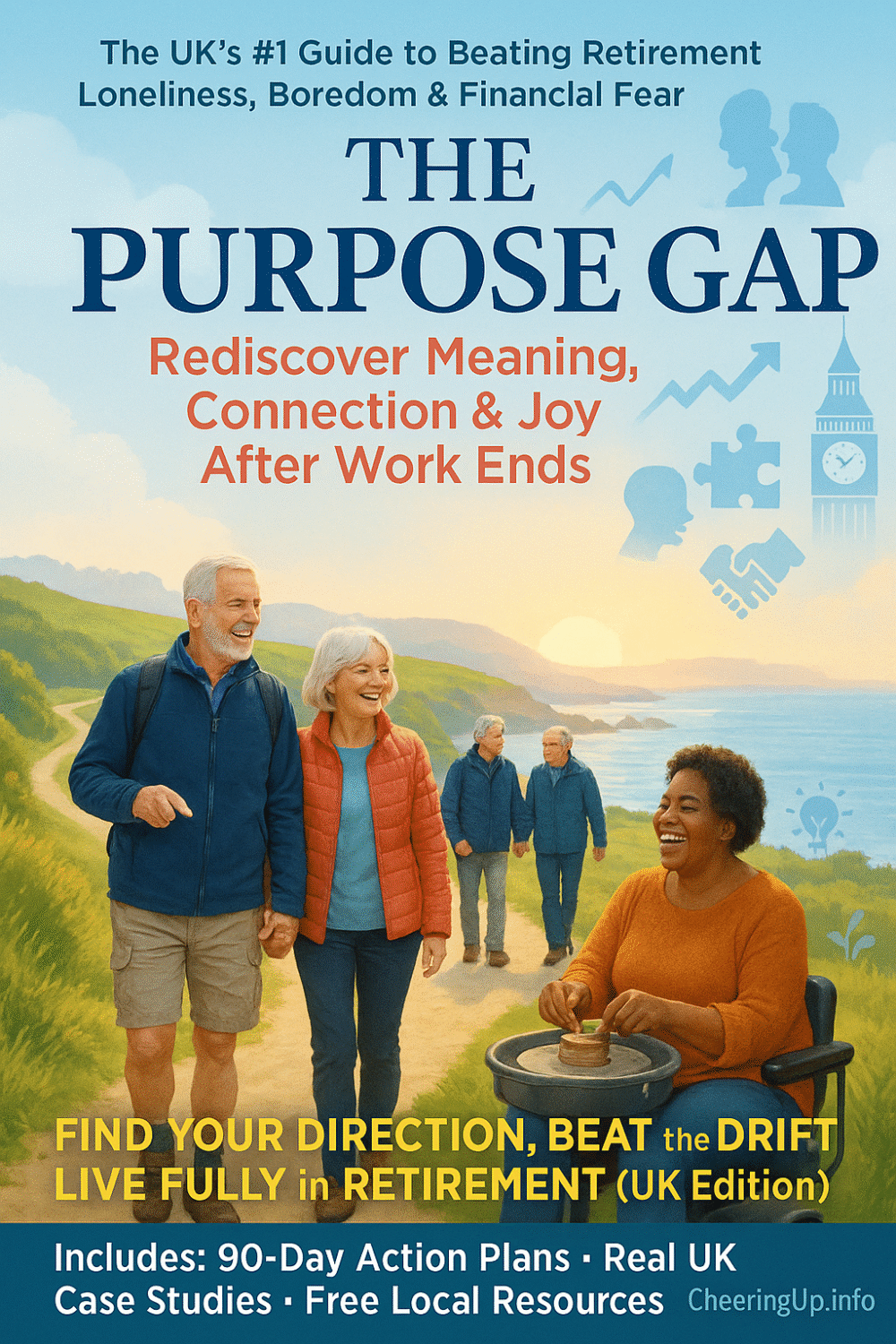
The Purpose Gap: Solving Post-Retirement Drift in the UK
Struggling with retirement loneliness or boredom? Get the UK’s step-by-step guide to reigniting purpose, social connections & joy. Scroll down to read Retirement Club eBook now!
Struggling to find purpose after retirement?
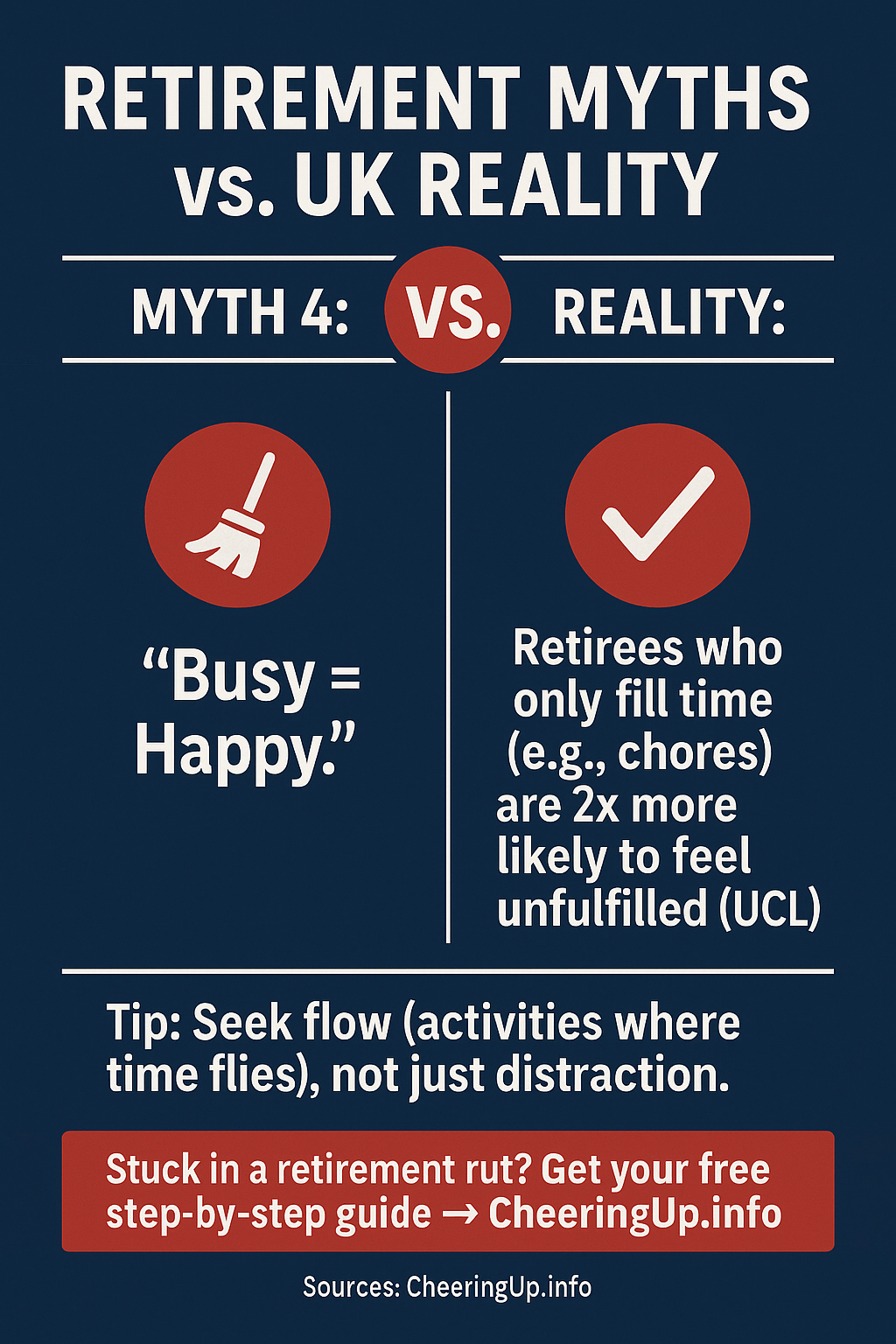
You’re not alone. 1 in 3 UK retirees feel adrift after leaving work – but it doesn’t have to be this way.
The Purpose Gap: Solving Post-Retirement Drift in the UK
Your step-by-step roadmap to a fulfilling later life. Packed with real British case studies and actionable strategies, this guide reveals:
✅ How to rebuild identity beyond your career (the NHS-approved 4-pillar method)
✅ UK-specific solutions for loneliness, boredom and financial worries
✅ 90-day plans to rediscover passion – from volunteering to starting a “hobby hustle”
✅ Free local resources (apps, clubs, grants) you never knew existed
Written in clear, jargon-free language by UK retirement experts.
Pay for eBook now and get today:
🔹 Discount off Retirement Club One-Off Lifetime Fee
EBook will be viewed by you online or a pdf will be emailed to you. Note: eBook will NOT be posted to you.
How to Reignite Passion, Connection, and Meaning in Later Life
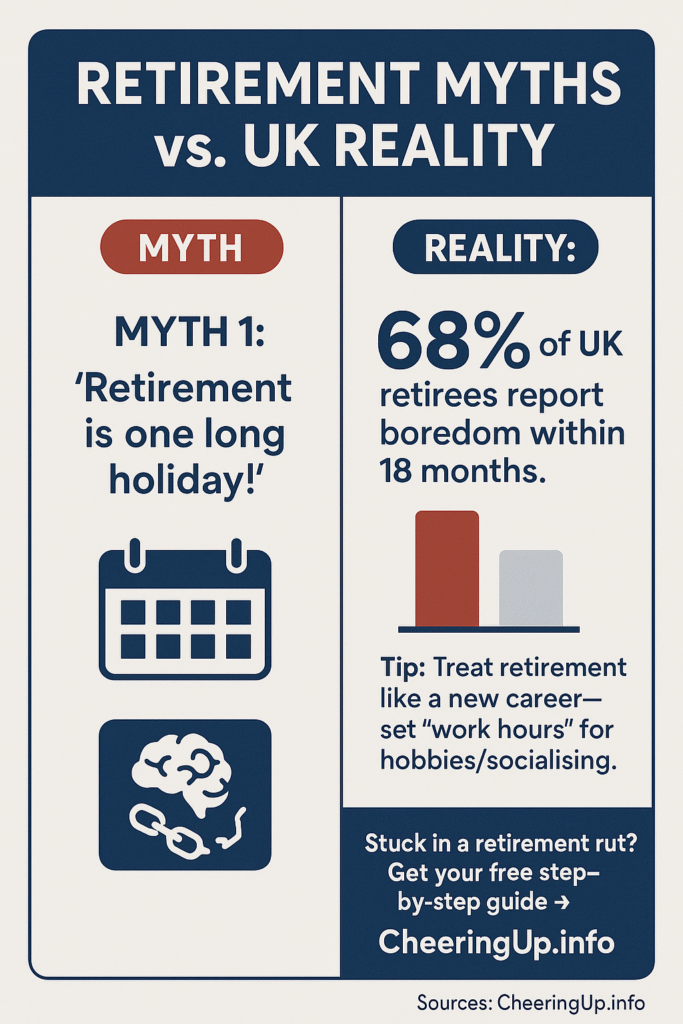
Did you know? Nearly 1 in 3 UK retirees report feeling a loss of purpose within the first two years of leaving work. For many, retirement—once a dream—becomes a void filled with boredom, isolation, and even depression.
The problem isn’t just emotional. Studies show that retirees without a clear sense of direction are 40% more likely to develop chronic health issues and face a shorter lifespan than those who stay engaged. The UK’s ageing population can’t afford to ignore this crisis.
This isn’t just about “staying busy”—it’s about redesigning later life with intention.
Welcome to CheeringUp.info’s Retirement Club eBook, your roadmap to a fulfilling, dynamic retirement. Inside, you’ll find:
✅ The Hidden Costs of Drifting – Why lack of direction harms mental & physical health ✅ Step-by-Step Strategies – How to rebuild purpose, social bonds, and daily structure ✅ Real-Life Case Studies – Retirees who transformed their lives (and how you can too) ✅ Free UK Resources – Apps, communities, and expert-backed tools (including CheeringUp.info’s services)
This isn’t fluff. It’s actionable, evidence-based guidance for retirees who refuse to settle for a life of “waiting for the weekend”… when every day should feel like living.
Let’s fix the purpose gap.
TABLE OF CONTENTS
CHAPTER 1: THE PROBLEM – WHY RETIREMENT CAN GO WRONG
CHAPTER 2: THE SOLUTIONS – BUILDING A LIFE THAT EXCITES YOU AGAIN
CHAPTER 3: CASE STUDIES – HOW 5 UK RETIREES REINVENTED THEIR LIVES
CHAPTER 4: YOUR STEP-BY-STEP RETIREMENT REINVENTION PLAN
CHAPTER 5: THE MONEY MINDSET – FUNDING YOUR DREAM RETIREMENT WITHOUT STRESS
CHAPTER 6: LATER LIFE LOVE & CONNECTION – BUILDING RELATIONSHIPS THAT THRIVE POST-RETIREMENT
CHAPTER 7: THE VITALITY BLUEPRINT – STAYING SHARP, STRONG & ENERGISED FOR DECADES
CHAPTER 8: LEGACY & MEANING – HOW TO LEAVE YOUR MARK WITHOUT WRITING A MEMOIR
CHAPTER 9: THE FREEDOM EXPERIMENT – TEST-DRIVING YOUR DREAM RETIREMENT LIFESTYLE
CHAPTER 10: THE RESILIENCE HANDBOOK – BOUNCING BACK WHEN RETIREMENT DOESN’T GO TO PLAN
CHAPTER 1: THE PROBLEM – WHY RETIREMENT CAN GO WRONG
Retirement is sold as freedom. Yet for thousands of UK retirees, the initial euphoria of leaving work quickly fades into a quiet crisis—days blending into weeks without structure, meaningful conversations shrinking to polite chatter with cashiers, and a gnawing sense that this isn’t what they signed up for.
The Stark Statistics: UK-Specific Challenges
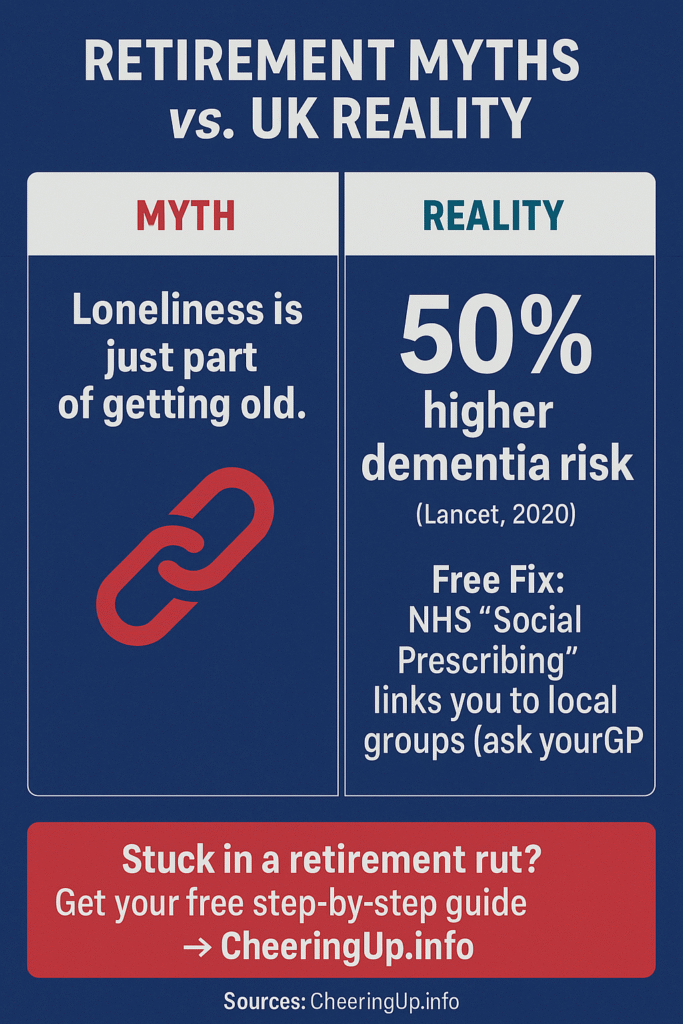
Age UK reports that 1.4 million older people in the UK are chronically lonely.
A NHS Digital survey found that 28% of over-65s show symptoms of depression.
University College London research links poor retirement transitions to a 40% higher risk of cardiovascular disease.
This isn’t just about “feeling a bit lost”—it’s a public health issue with real consequences.
The 5 Hidden Triggers of Post-Retirement Drift
1. Identity Loss: “Who Am I Now?”
Problem: For decades, your job gave you status, routine, and purpose. Retirement strips that away overnight. UK Insight: A 2019 study by the Centre for Ageing Better found that 42% of retirees struggle with “role confusion” in their first year.
Real-life example:
“I was ‘Dave the IT manager’ for 30 years. Now, at coffee mornings, I’m just ‘Dave who used to work.’ It’s like I’ve become invisible.” — Dave, 67, Birmingham
2. Social Collapse: The Friendship Recession
Problem: Work colleagues disappear, friends relocate to be near grandchildren, and local clubs feel cliquey. UK Reality:
43% of over-60s rely solely on family for social interaction (English Longitudinal Study of Ageing).
Rural retirees are twice as likely to report isolation (Age UK Rural Loneliness Report).
The spiral: No office chats → Fewer invites → Staying home → Friends assume you’re busy → Isolation deepens.
3. Decision Fatigue: Too Much Freedom
Problem: Without a boss or deadlines, even simple choices (“Should I garden or call someone?”) become paralysing. Science says:
University of Kent research shows retirees who lack self-set routines are 3x more likely to report low life satisfaction.
Fixable, but few realise it:
“I’d wander around the house, thinking, ‘I could do anything… so why am I doing nothing?’” — Susan, 71, Manchester
4. The “Invisible Tax” of Boredom
Problem: Days filled with TV and chores accelerate cognitive decline. Shocking data:
A 2023 Lancet study tied prolonged boredom in retirees to a 30% faster memory decline.
UK Active found retirees who don’t exercise mentally are 50% more likely to develop mild cognitive impairment.
5. The Contribution Crisis
Problem: Humans need to feel useful. Retirement can feel like being “put out to pasture.” UK Opportunity gap:
67% of retirees want to volunteer but don’t know where to start (NCVO).
Only 12% of UK charities actively recruit over-65s (despite retirees being the most reliable volunteers).
CHAPTER 2: THE SOLUTIONS – BUILDING A LIFE THAT EXCITES YOU AGAIN
Why Most Retirement Advice Fails (And What Works Instead)
Generic advice like “stay busy” or “travel more” doesn’t cut it. The happiest UK retirees don’t just fill time—they design a lifestyle around four core pillars that rebuild identity, connection, and daily joy.
The 4-Pillar Retirement Success Framework
(Developed from UK case studies and ageing research)
Health & Energy (Move well, eat well, sleep well)
Social & Community (Deep connections, not just acquaintances)
“Retirement isn’t about slowing down—it’s about finally steering your own ship!”
Next Chapter Preview: “Case Studies: How 5 UK Retirees Reinvented Their Lives (Including a 79-Year-Old Who Became a TikTok Gardener!)”
CHAPTER 3: CASE STUDIES – HOW 5 UK RETIREES REINVENTED THEIR LIVES
Why Real Stories Matter More Than Theory
Inspiration is useless without a roadmap. These five UK retirees didn’t just “get lucky”—they followed deliberate strategies to overcome loneliness, boredom, and loss of purpose, and you’ll learn exactly how they did it, step by step.
How to Use This Chapter
Read the case studies for motivation.
Follow the action plans to replicate their success.
Use the UK resources they used (all free/low-cost).
CASE STUDY 1: From Redundancy to Community Leader
Name: Derek, 67 Was: Factory manager (made redundant at 65) Struggle: Felt “thrown away” by society, drank alone most days. Breakthrough: Now runs a men’s mental health group in Liverpool.
Derek’s Step-by-Step Turnaround
Month 1: The Wake-Up Call
Action: His daughter staged an “intervention” with Andy’s Man Club (free UK men’s talks).
Key Step: Attended just one meeting (“I cried hearing others felt the same”).
Month 2: Small Wins
Routine Fix: Switched morning TV for a walk to the newsagent (chatting with the clerk).
Pillar Boost: Trained as a mental health first aider (free via Mind UK).
Now: Hosts weekly “Shed & Share” sessions at his local community centre.
💡 Your Replication Plan:
If you’re isolated: Commit to one group (search “men’s/women’s groups near me” on MeetUp).
Today: Call The Silver Line (0800 4 70 80 90) for a friendly chat.
CASE STUDY 2: The Widow Who Became a TikTok Gardener
Name: Pat, 79 Was: School secretary, widowed at 75. Struggle: “The house was so quiet, I talked to the microwave.” Breakthrough:12K TikTok followers for her “Grandma’s Garden Tips.”
Pat’s Step-by-Step Turnaround
Week 1: Digital Baby Steps
Action: Asked her grandson to teach her one app (TikTok).
Key Step: Filmed a 30-second clip of her repotting a fern (“My hands shook!”).
UK Resource: Joined Royal Horticultural Society’s online community (www.rhs.org.uk).
Year 1: Unexpected Fame
Pillar Boost: Local nursery invited her to host a workshop.
Now: Earns £200/month from TikTok’s Creator Fund.
💡 Your Replication Plan:
If you’re tech-wary: Book a free Digital Eagles session at Barclays (www.digitalskills.uk).
Today: Film one short clip (even just your garden/cooking).
CASE STUDY 3: The CEO Who Found Joy as a Tour Guide
Name: Sarah, 70 Was: Corporate CEO, retired at 68. Struggle: “I missed the adrenaline of leading teams.” Breakthrough: Leads historical walking tours in Edinburgh.
Key Step: Googled “how to become a tour guide UK” – found City of Edinburgh Council’s licensing course (£150).
Month 4: Test Run
Routine Fix: Practiced on friends (“I made them rate me out of 10!”).
UK Resource: Used TourGuideSpark (free script templates).
Year 2: Thriving
Pillar Boost: Hired by a luxury travel company for private groups.
Now: Earns £3K/month in peak season.
💡 Your Replication Plan:
If you miss work structure: Search “become a [your skill] tutor/consultant UK”.
Today: Volunteer as a National Trust guide (training provided).
CASE STUDY 4: The Shy Retiree Who Built a Supper Club
Name: Amina, 66 Was: Librarian, “always the quiet one.” Struggle: “I ate dinner with the radio for 3 years.” Breakthrough: Runs a Pakistani cooking club in Birmingham.
Amina’s Step-by-Step Turnaround
Week 1: Micro-Goal
Action: Invited one neighbour for chai (“I rehearsed for hours”).
Key Step: Neighbour suggested “Why not teach us your recipes?”
Month 2: Safe Space
Routine Fix: Started with 4 people max (“Less pressure”).
UK Resource: Got a £500 grant from her council’s “Community Kitchen” fund.
Now:30-person waitlist, featured in Birmingham Mail.
💡 Your Replication Plan:
If you’re shy: Start with 1:1 meetups (e.g., “Walk & Talk” groups).
Today: Google “[your city] + community grants” for funding.
CASE STUDY 5: The Ex-Builder Who Beat Depression with Drama
Name: Tony, 71 Was: Construction worker, forced to retire after a fall. Struggle: “I sat in my shed crying, missing my crew.” Breakthrough: Performs in amateur theatre (even got a standing ovation!).
Tony’s Step-by-Step Turnaround
Month 1: Desperation Move
Action: Saw a flyer for “Over 60s Drama Taster” at his library.
Key Step: Almost left at halftime (“Then someone laughed at my joke”).
Month 6: New Identity
Routine Fix: Memorised lines while walking his dog.
UK Resource: Found LADS (Later Age Drama Society) for scripts.
Now:Tour’s care homes with comedy shows.
💡 Your Replication Plan:
If you feel “stuck”: Try one taster session (drama, choir, art).
Today: Search “amateur theatre near me” on AmDram.
YOUR 30-DAY “CASE STUDY” CHALLENGE
Week 1: Pick Your Role Model
[ ] Choose one case study that resonates.
[ ] Copy their first step (e.g., attend one group, film one clip).
Week 2: Steal Their Strategy
[ ] Use their UK resource (e.g., Men’s Sheds, Digital Eagles).
[ ] Adapt one habit (e.g., Tony’s “learn while walking”).
Week 3: Customise It
[ ] Add your twist (e.g., “I’ll host a knitting club, not cooking”).
[ ] Tell one person your plan (accountability!).
Week 4: Lock It In
[ ] Book next month’s activity (e.g., RHS workshop).
[ ] Join CheeringUp.info’s Case Study Group (monthly Zoom Q&A).
UK RESOURCES FROM THIS CHAPTER
Andy’s Man Club (Free men’s mental health talks)
Digital Eagles (Barclays’ free tech training)
AmDram (Find local theatre groups)
CHAPTER 4: YOUR STEP-BY-STEP RETIREMENT REINVENTION PLAN
Why Most Retirement Plans Fail (And How Yours Won’t)
Good intentions aren’t enough. Without a clear, personalised strategy, even the most motivated retirees fall back into old routines—but this 90-day action plan combines UK-specific tactics with psychological triggers to make change stick.
Legal Volunteering:Support Through Court (help vulnerable navigate courts)
CheeringUp.info’s “90-Day Planner”: Printable templates + video guides.
Next Chapter Preview: “The Money Mindset: How to Fund Your Dream Retirement Without Stress (UK Grants, Tax Hacks & Side Hustles)”
CHAPTER 5: THE MONEY MINDSET – FUNDING YOUR DREAM RETIREMENT WITHOUT STRESS
Why Financial Freedom Isn’t Just About Your Pension
Running out of money is scary. But what terrifies UK retirees more than a dwindling bank balance is watching their dreams gather dust because they don’t know how to fund them—while sitting on assets they could be using smarter.
The UK Retirement Finance Trap
63% of retirees don’t touch their pension pots for fear of “running out” (Money and Pensions Service).
1 in 4 over-65s have £50k+ in savings but live like they’re broke (FCA Financial Lives Survey).
82% admit they’ve never claimed benefits they’re entitled to (Age UK).
This chapter fixes that. No jargon—just actionable UK strategies to: ✔ Stretch your money further without risk ✔ Unlock hidden income streams ✔ Fund passions (travel, hobbies, grandkids) guilt-free
PHASE 1: THE RETIREMENT FINANCE RESET (DAYS 1-14)
Step 1: The “3-Bucket” Money Audit
Goal: See exactly where your money can work harder.
Bucket
What Goes In
UK-Specific Action
Essentials
Bills, food, meds
Check eligibility for Council Tax Reduction (avg. £600/yr savings)
Lifestyle
Holidays, hobbies, grandkids
Use Senior Railcard (£30/yr, 1/3 off travel)
Legacy
Inheritance, gifts
Explore £3k/yr gift allowance to reduce IHT
➔ Your Task: List last month’s spending in these buckets using MoneySavingExpert’s Budget Planner.
Step 2: Claim Your “Missing Money”
UK Retirees Leave £3.4 Billion Unclaimed Yearly (Independent Age).
Checklist: ☑ Pension Credit (Even £1/week qualifies for free TV licence, council tax help) → gov.uk/pension-credit ☑ Attendance Allowance (£68/week if you have a disability) → Age UK’s Benefits Calculator ☑ Winter Fuel Payment (£100-£300/year) → No application needed if on State Pension
Pro Tip: Book a free 1:1 session with your local Citizens Advice to check eligibility.
PHASE 2: SMARTER INCOME STREAMS (DAYS 15-45)
Strategy 1: The “5% Rule” for Pension Drawdown
Problem: Fear leads to under-spending or reckless withdrawals.
UK Solution:
Take no more than 5% yearly from your pot (adjust for inflation).
Use the MoneyHelper Drawdown Calculator to test scenarios.
Top up tax-free: Use your £12,570 Personal Allowance first.
Example: £100k pot → £5k/yr = £416/month + State Pension.
CheeringUp.info’s “Money Map”: Visual guide to tax-free retirement income.
Next Chapter Preview: “Later Life Love & Connection: How to Build Relationships That Thrive Post-Retirement (Dating, Friendships & Community)”
CHAPTER 6: LATER LIFE LOVE & CONNECTION – BUILDING RELATIONSHIPS THAT THRIVE POST-RETIREMENT
Why Retirement Can Be the Best Time for Love (and Friendship)
Loneliness is deadlier than obesity. While UK retirees worry about pensions and health, what often hits hardest is the quiet ache of empty mornings without colleagues to greet, or evenings with only the TV for conversation—yet this life stage offers unique opportunities to forge deeper connections than ever before.
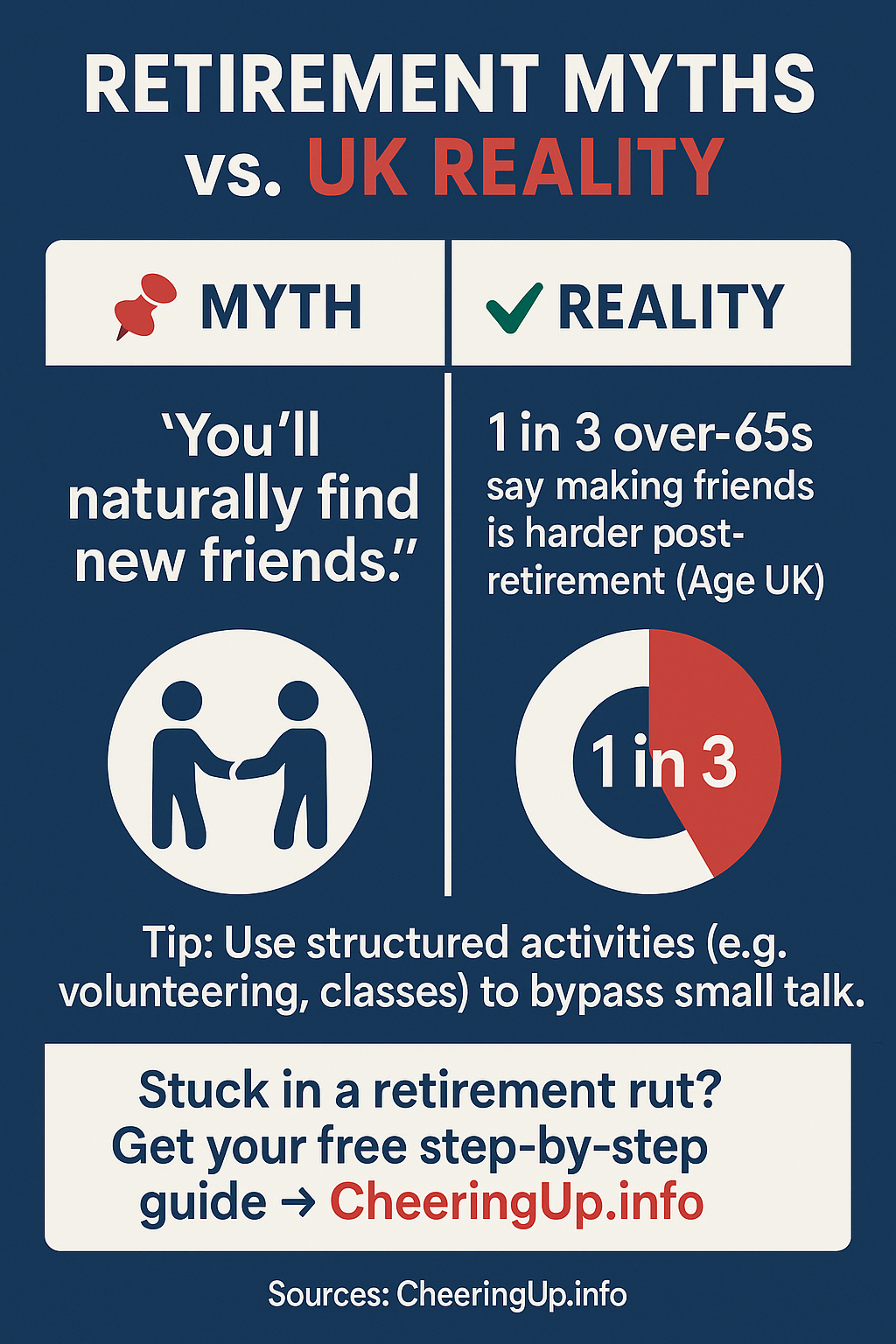
45% of over-65s say making new friends feels “impossible” (Age UK)
Divorce rates for 60+ have tripled since 1990 (ONS)
1 in 3 widowed retirees go a full week without a meaningful conversation (Cruse Bereavement Care)
But here’s the hope: ✔ Retirees have more time for quality relationships ✔ Shared life experience creates faster emotional intimacy ✔ UK communities offer untapped ways to connect (no dating apps required)
CheeringUp.info “Connection Calendar”: Monthly social challenge PDF
Next Chapter Preview: “The Vitality Blueprint: Science-Backed Ways to Stay Sharp, Strong & Energised for Decades”
CHAPTER 7: THE VITALITY BLUEPRINT – STAYING SHARP, STRONG & ENERGISED FOR DECADES
Why Retirement Shouldn’t Mean Decline
Your best years could still be ahead. While society expects retirees to slow down, groundbreaking UK research reveals that 70-year-olds today have the biological age of 60-year-olds from 1990—if they follow science-backed habits to protect their brain, body, and energy.
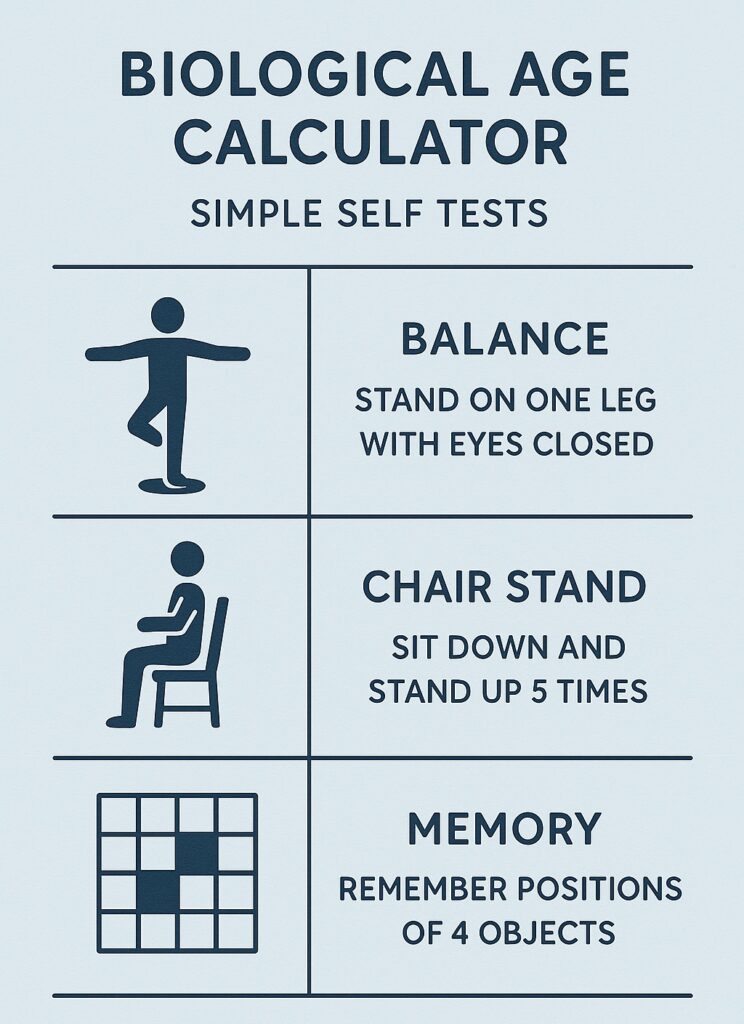
Simple Self-Tests to Estimate How Old Your Body Really Feels
1. One-Leg Stand Test (Balance)
Test: Stand on one leg, eyes open.
Timer starts once foot is lifted.
Score Yourself:
30+ seconds = Age 20–30
20–29 sec = Age 31–40
10–19 sec = Age 41–50
<10 sec = Age 51+
Tip: Repeat 3 times and take your best score.
2. Sit-to-Stand Test (Leg Strength & Coordination)
Test: Sit in a chair, arms crossed. Stand up and sit down 10 times as fast as you can.
Time it!
<10 seconds = Age 20–30
11–14 sec = Age 31–40
15–19 sec = Age 41–50
20+ sec = Age 51+
3. Memory Recall Test (Cognitive Function)
Test: Look at a list of 10 words for 30 seconds. Wait 1 minute, then write down as many as you remember.
Score Yourself:
9–10 words = Age 20–30
7–8 words = Age 31–40
5–6 words = Age 41–50
<5 words = Age 51+
4. Resting Heart Rate (Cardiovascular Health)
Test: Count your pulse for 60 seconds while resting.
Score Yourself:
60–70 bpm = Age 20–30
71–75 bpm = Age 31–40
76–80 bpm = Age 41–50
81+ bpm = Age 51+
5. Waist-to-Height Ratio (Metabolic Health)
Test: Measure waist (cm) ÷ height (cm)
Score Yourself:
<0.5 = Age 20–30
0.5–0.54 = Age 31–40
0.55–0.59 = Age 41–50
0.6+ = Age 51+
6. Reaction Time Test (Nerve Health)
Test: Drop a ruler between two fingers and try to catch it.
Score (where you catch it):
6–10 cm = Age 20–30
11–15 cm = Age 31–40
16–20 cm = Age 41–50
21+ cm = Age 51+
Now Add Up Your Results
Most of your scores fall in which age group?
That’s your estimated biological age!
Want to Get Younger?
Improve sleep, exercise, diet, stress, and social life. Your biological age can drop with better habits!
Next Chapter Preview: “Legacy & Meaning: How to Leave Your Mark (Without Writing a Memoir)”
CHAPTER 8: LEGACY & MEANING – HOW TO LEAVE YOUR MARK WITHOUT WRITING A MEMOIR
Why Legacy Matters More Than Ever in Retirement
Your story doesn’t end at retirement. While wills and inheritances deal with what you leave behind, true legacy is about who you’ve impacted—and UK retirees are uniquely positioned to shape communities, mentor future generations, and turn hard-earned wisdom into lasting change.
The UK Legacy Gap
68% of over-65s want to “give back” but don’t know where to start (NCVO)
Only 12% have documented life lessons for their family (Saga survey)
Local charities report 40% volunteer shortages in skills like budgeting, mentoring (UK Community Foundations)
This chapter isn’t about obituaries—it’s your toolkit for living legacy.
CheeringUp.info “Legacy Planner”: Step-by-step PDF with templates
Next Chapter Preview: “The Freedom Experiment: How to Test-Drive Your Dream Retirement Lifestyle Before Committing”
CHAPTER 9: THE FREEDOM EXPERIMENT – TEST-DRIVING YOUR DREAM RETIREMENT LIFESTYLE
Why You Should “Try Before You Buy” in Retirement
Retirement is too important to leave to chance. Just as you’d test-drive a car before purchasing, your ideal retirement lifestyle deserves real-world trials—because 37% of UK retirees regret not experimenting before making permanent moves abroad, downsizing, or committing to expensive hobbies.
The UK Retirement Reality Check
Top 3 Regrets: Moving too fast (42%), overspending early (38%), underestimating loneliness (55%) (Saga Retirement Survey 2023)
Good News: It costs 90% less to test a lifestyle for 3 months than to fix a mistake
Hidden Gem: Many UK councils offer “retirement taster programmes” (e.g., Glasgow’s “Later Life Lab”)
This chapter is your blueprint for low-risk, high-reward experimentation.
PART 1: THE 4-STEP FREEDOM EXPERIMENT FRAMEWORK
Step 1: Define Your “What Ifs”
UK-Specific Dream Scenarios to Test: ✅ “What if I split my year between the UK and Spain?” ✅ “What if I traded my garden for an allotment + city flat?” ✅ “What if I turned my woodworking hobby into a market stall?”
Exercise: Circle one “scary exciting” idea you’ve dismissed as “unrealistic.”
Next Chapter Preview: “The Resilience Handbook: Bouncing Back When Retirement Doesn’t Go to Plan”
CHAPTER 10: THE RESILIENCE HANDBOOK – BOUNCING BACK WHEN RETIREMENT DOESN’T GO TO PLAN
Why Even the Best-Laid Retirement Plans Need a Plan B
Life doesn’t stop at retirement. Whether it’s unexpected health issues, adult children moving back home, or a pension pot that doesn’t stretch as far as you’d hoped, 62% of UK retirees face at least one major disruption within five years of leaving work—but the happiest among them don’t just survive, they adapt and thrive.
The UK Retirement Reality Check
1 in 4 retirees become unpaid carers within 3 years (Carers UK)
40% of pensioners experience a “financial shock” (£2k+ unexpected cost) yearly (ILC UK)
“Boomerang Kids” now cost retirees £360/month on average (Legal & General)
This chapter is your toolkit for navigating the unexpected—with dignity, humour, and grit.
How to Find Purpose in Retirement: The Adlerian Secret to a New Life with CheeringUpInfo
Retirement is often marketed as a “conclusion”—a reward for past labor. Freudian thinking would have you dwell on the loss of your professional identity or “stew” over missed opportunities. Adlerian psychology flips the script: retirement is not the end of a career; it is the beginning of a new Social Task.
In Adler’s view, your value isn’t tied to your previous job title, but to your Social Interest (Gemeinschaftsgefühl). Retirement is the ultimate opportunity to redesign your “Lifestyle” toward a goal that actually matters to you.
The Adlerian Retirement Shift: From “Was” to “Will Be”
Reject the “Inferiority” of Ageing: Society may suggest you are “phasing out,” but Adler argues that inferiority is only a feeling, not a fact. Use this stage to strive for a new kind of “superiority”—mastering a craft, mentoring others, or contributing to your community.
Teleological Planning: Don’t look back at the 40 years you “gave up.” Look forward to the impact you want to have in the next 20. Your “goal” (Teleology) is what defines your happiness now, not your old payroll status.
The Creative Power of the Third Act: You are the “Artist of your Life.” Retirement is a blank canvas where you choose the colors, no longer restricted by a corporate palette.
Best ways to prevent baldness after 55 UK by boosting hair follicle health naturally
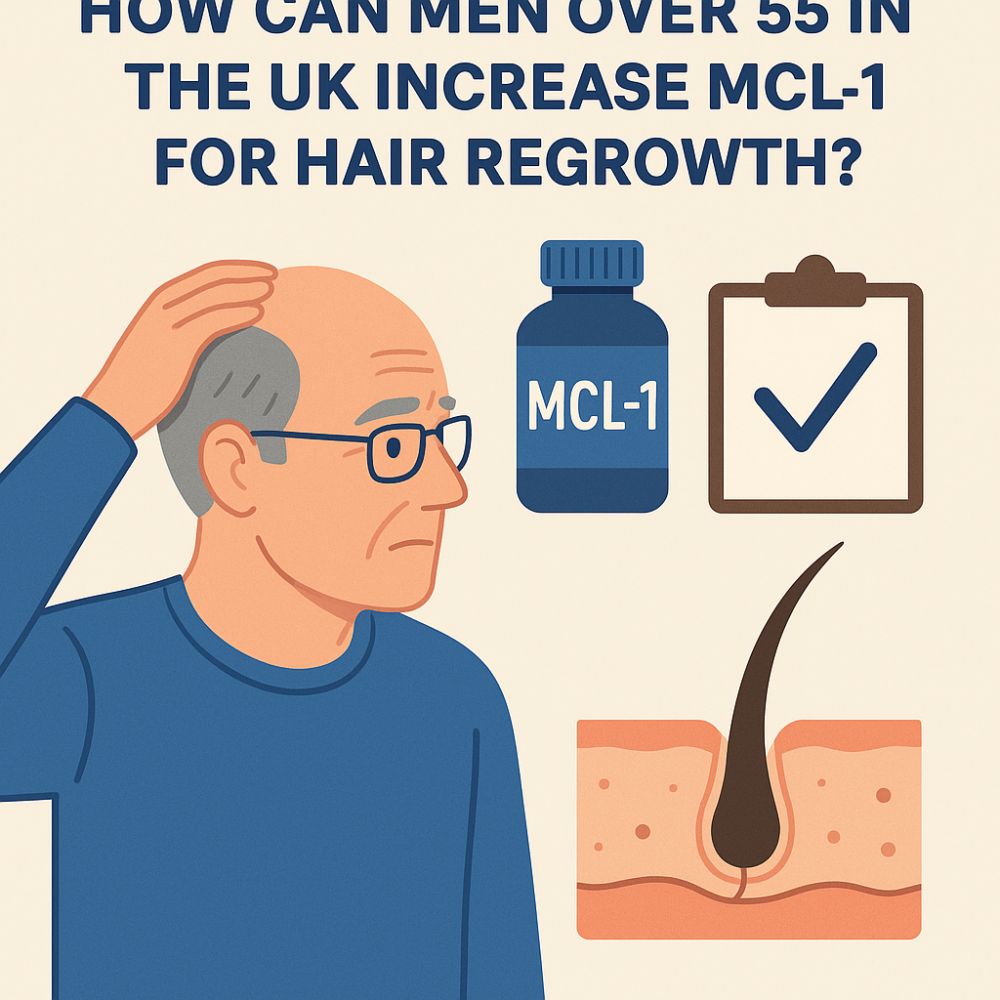
Keeping a Full Head: Boosting MCL-1 for Hair Regrowth After 55
The mirror can be a cruel companion sometimes, can’t it? You might notice a little less on top than there used to be, and perhaps you’ve wondered why it seems to accelerate as the years go by. You’re not alone! In fact, a significant percentage of men over 50 experience noticeable hair thinning. But what if I told you there’s a key player in this process, a tiny cellular guardian called MCL-1, and understanding it could hold the key to keeping those precious locks? Let’s explore this together and see how we can potentially encourage its activity for a fuller, healthier head of hair.
Unpacking MCL-1: Your Hair’s Silent Protector
So, what exactly is MCL-1? It sounds like something out of a sci-fi movie, but it’s actually a crucial protein that resides within our cells. MCL-1 stands for “Myeloid Cell Leukemia sequence 1,” and its primary role is to prevent apoptosis – that’s the scientific term for programmed cell death. Think of it as a cellular bodyguard, constantly working to keep our cells alive and functioning properly.
Now, you might be thinking, “What does this have to do with my hair?” Well, the cells at the base of your hair follicles, the dermal papilla cells, are responsible for hair growth. These cells go through cycles of growth, rest, and shedding. For healthy hair growth, these cycles need to function smoothly. And guess what? MCL-1 plays a vital role in keeping these dermal papilla cells alive and in the growth phase! When MCL-1 levels are sufficient, these cells are more likely to survive and continue producing hair fibers.
Conversely, when MCL-1 levels decline or its function is impaired, these crucial hair-producing cells can prematurely undergo apoptosis, leading to fewer active hair follicles and, consequently, hair thinning and baldness. It’s like having fewer workers on the factory floor – production inevitably slows down.
The Over-55 Factor: Why Hair Loss Can Accelerate
Why do men over 55 often experience more pronounced hair loss? Several factors come into play, and understanding them helps us appreciate why focusing on MCL-1 could be particularly beneficial at this stage of life:
Hormonal Shifts: This is a big one. While the dramatic hormonal changes of menopause are typically associated with women, men also experience hormonal shifts as they age. Specifically, levels of dihydrotestosterone (DHT), a byproduct of testosterone, tend to increase in the scalp. DHT can bind to receptors in hair follicles, causing them to shrink and produce thinner, shorter hairs, eventually leading to follicle miniaturisation and hair loss. It’s a bit like the foundations of a building weakening over time.
Reduced Blood Circulation: As we age, our circulatory system can become less efficient. This means that the scalp may receive less blood flow, which carries vital nutrients and oxygen needed for healthy hair follicle function. Think of it like a garden not getting enough water and fertilizer.
Slower Cell Turnover: The rate at which our cells regenerate naturally slows down as we age. This includes the cells within our hair follicles. With a slower turnover, damaged cells might persist longer, and the production of new, healthy hair cells can be less robust.
Increased Inflammation:Chronic low-grade inflammation can become more prevalent with age. Inflammation in the scalp can disrupt the delicate balance of the hair follicle environment, contributing to hair loss. It’s like having an underlying irritation that prevents things from functioning smoothly.
Genetic Predisposition: Of course, genetics plays a significant role in male pattern baldness (androgenetic alopecia). If your father or grandfather experienced hair loss, you’re more likely to as well. However, even with a genetic predisposition, the rate and extent of hair loss can be influenced by other factors, including cellular health and MCL-1 levels.
Lifestyle Factors: While not exclusive to the over-55 age group, long-term lifestyle factors like chronic stress, poor diet, and certain medications can also contribute to hair loss and may exacerbate age-related declines in cellular function.
Considering these factors, it becomes clear that supporting the health and survival of hair follicle cells, precisely what MCL-1 does, is crucial for maintaining hair density as we age.
Igniting the MCL-1 Spark: Strategies for Enhancement
Now for the exciting part! How can we potentially boost MCL-1 levels or its activity to support hair regrowth and combat baldness? While direct MCL-1 manipulation through readily available means is still an area of ongoing research, several lifestyle and dietary strategies may indirectly influence its levels and promote a healthier scalp environment conducive to hair growth. Remember, consistency is key, and it’s always wise to consult with your GP or a dermatologist before making significant changes to your routine, especially if you have underlying health conditions.
Nourishing from Within: Diet and Supplements – What we eat has a profound impact on our overall health, and our hair is no exception! Certain nutrients are essential for healthy hair follicle function and may indirectly support MCL-1 activity. Protein Power: Hair is primarily made of keratin, a protein. Ensure you’re getting enough high-quality protein in your diet from sources like lean meats, fish, eggs, beans, lentils, and tofu. Adequate protein provides the building blocks for hair growth. Ironclad Support: Iron deficiency is linked to hair loss. Include iron-rich foods like red meat, spinach, lentils, and fortified cereals in your diet. If you suspect you might be low in iron, your doctor can perform a blood test and recommend supplementation if necessary. Zinc for Zest: Zinc is involved in cell growth and repair, including hair follicle function. Good sources include oysters, beef, pumpkin seeds, and chickpeas. Biotin: A Word of Caution: While often touted for hair growth, the evidence supporting biotin supplementation in individuals who are not deficient is limited. Focus on a balanced diet rich in various B vitamins instead. Vitamin D’s Delight: Some studies suggest a link between vitamin D deficiency and hair loss. Sunlight is a primary source, but it can be challenging to get enough, especially in the UK, particularly during winter. Consider vitamin D-rich foods like oily fish, fortified foods, or a supplement after consulting your doctor. Omega-3 Fatty Acids: Found in fatty fish like salmon, mackerel, and sardines, as well as flaxseeds and walnuts, omega-3s have anti-inflammatory properties that could benefit scalp health.
Scalp Care Strategies: Creating a Fertile Ground – A healthy scalp is the foundation for healthy hair growth. These practices can help create an environment where hair follicles thrive:
Gentle Cleansing: Avoid harsh shampoos that can strip the scalp of its natural oils, potentially leading to inflammation and hindering hair growth. Opt for mild, sulfate-free shampoos.

Scalp Massage: Regular scalp massage can improve blood circulation to the hair follicles, delivering essential nutrients and oxygen. You can do this with your fingertips for a few minutes daily while washing your hair or as a standalone practice. It's invigorating!

Topical Treatments (with caution):
Minoxidil: This over-the-counter medication is clinically proven to stimulate hair growth in some individuals. It works by widening blood vessels in the scalp, improving blood flow to the hair follicles. However, it's crucial to follow the instructions carefully and be aware of potential side effects.
Finasteride (prescription only): This medication inhibits the production of DHT. It's highly effective for many men with male pattern baldness but requires a prescription from your doctor due to potential side effects.
Emerging Topical Agents: Research into other topical agents that might influence hair follicle health and potentially MCL-1 pathways is ongoing. Keep an eye on scientific advancements, but be cautious of unproven claims.
Stress Management: Calming the Storm -Chronic stress can wreak havoc on our bodies, including our hair. High stress levels can disrupt hormone balance and increase inflammation, both of which can contribute to hair loss. Incorporating stress-reducing practices into your routine is vital:
Mindfulness and Meditation: Even a few minutes of daily mindfulness or meditation can help calm the nervous system.
Regular Exercise: Physical activity is a fantastic stress reliever and also improves circulation. Find an activity you enjoy, whether it's brisk walking, swimming, gardening, or playing golf.
Adequate Sleep: Aim for 7-9 hours of quality sleep each night. Sleep is crucial for cellular repair and hormonal balance.
Hobbies and Social Connection: Engaging in enjoyable hobbies and spending time with loved ones can significantly reduce stress levels.
The Power of Plants: Exploring Natural Compounds – Some natural compounds found in plants have shown promise in supporting hair growth and potentially influencing cellular pathways involved in hair follicle health. However, more research is often needed in humans to confirm these effects.
Saw Palmetto: This extract from the berries of the saw palmetto tree is sometimes used as a natural DHT blocker. Some studies suggest it may help with hair loss, but more robust research is needed.
Rosemary Oil: Rosemary oil has been shown in some studies to improve hair growth, possibly by increasing blood circulation to the scalp. Dilute it with a carrier oil like coconut or jojoba oil before applying it to your scalp. The aroma is quite pleasant too!
Pumpkin Seed Oil: Some preliminary research suggests that pumpkin seed oil may help with hair regrowth, potentially by inhibiting DHT.
Green Tea Extract: Rich in antioxidants, green tea extract has shown some potential in promoting hair growth in laboratory studies.

Important Note: While natural remedies can be appealing, their effectiveness can vary, and it's crucial to source high-quality products and be aware of potential interactions or sensitivities. Always discuss the use of supplements and herbal remedies with your doctor.
Emerging Therapies: Looking to the Future – The field of hair loss research is constantly evolving, and several promising therapies are being investigated. While not yet mainstream, these offer a glimpse into future possibilities:
Platelet-Rich Plasma (PRP) Therapy: This involves injecting concentrated platelets from your own blood into the scalp. Platelets contain growth factors that may stimulate hair follicle activity.
Low-Level Laser Therapy (LLLT): Also known as red light therapy, LLLT uses low-power lasers to stimulate hair growth. It’s thought to improve blood flow and cellular metabolism in the scalp.
Stem Cell Therapy: Research into using stem cells to regenerate hair follicles is ongoing and holds significant promise for future hair loss treatments
A Holistic Approach: The Best Strategy
Ultimately, the most effective approach to supporting hair regrowth and preventing baldness, especially as we age, is likely a holistic one. This involves:
Adopting a nutrient-rich diet that provides the building blocks for healthy hair.
Practicing good scalp care to create a healthy environment for hair follicles.
Managing stress levels to prevent hormonal imbalances and inflammation.
Considering proven topical treatments like minoxidil if appropriate.
Exploring natural remedies with caution and informed consent.
Staying informed about emerging therapies.
Remember, gentlemen, hair loss is a common concern, but there are proactive steps you can take to potentially slow it down and even encourage regrowth. By understanding the role of factors like MCL-1 and adopting a comprehensive approach to your health and well-being, you’re empowering yourself to maintain a fuller head of hair and a confident outlook for years to come! It’s about nurturing ourselves from the inside out, and that’s a powerful strategy at any age!
Simple Strength Training Exercises for Over 55 to Do Without Equipment. Turn Back the Clock: 9 Bodyweight Exercises for Over 55s
How to Build Muscle After 55 with Bodyweight Exercises: A Beginner’s Guide
Forget the gym, ditch the weights.Strength training isn’t just for twenty-somethings. It’s a powerful tool for anyone looking to improve their health, no matter their age. In fact, for those over 55, strength training can be a game-changer.
Why Strength Training?
Think of your body as a car. Over time, parts wear down. Muscles weaken, bones lose density, and balance can become a challenge. Strength training is like a regular tune-up. It helps rebuild muscle mass, strengthens bones, and improves balance and coordination. This translates to a reduced risk of falls, increased energy levels, better sleep, and even improved mood.
Ready to get started? Here are nine bodyweight exercises you can do anywhere, anytime:
Squats: A classic for a reason. Squats work your legs, glutes, and core. Stand with your feet shoulder-width apart, toes slightly turned out. Lower your body as if you’re sitting in a chair, keeping your back straight. Push back up to the starting position.
Push-ups: A great upper body workout. Start in a plank position, hands slightly wider than shoulder-width apart. Lower your body towards the ground, then push back up. Modify by doing push-ups against a wall or on your knees.
Lunges: A fantastic exercise for improving balance and leg strength. Step forward with one leg, bending both knees to a 90-degree angle. Push back up to the starting position and repeat with the other leg.
Glute Bridges: Strengthen your glutes and hamstrings. Lie on your back with your knees bent and feet flat on the floor. Lift your hips off the ground, squeezing your glutes at the top. Lower your hips back down slowly.
Plank: A core-strengthening powerhouse. Hold your body in a straight line, supported by your forearms and toes. Engage your core to prevent your hips from sagging or arching.
Side Plank: Challenge your core stability. Lie on your side, propped up on your forearm. Lift your hips off the ground, forming a straight line from head to toe. Hold, then repeat on the other side.
Supermans: Strengthen your lower back and glutes. Lie face down on the ground, extending your arms and legs. Simultaneously raise your arms, legs, and chest off the ground, holding for a moment.
Bird-Dogs: Improve balance and core stability. Get on your hands and knees. Extend your right arm and left leg simultaneously, keeping your back straight. Hold for a moment, then return to the starting position and repeat with the opposite arm and leg.
Calf Raises: Strengthen your calves. Stand on the edge of a step or platform, letting your heels hang off the edge. Rise up onto the balls of your feet, then slowly lower your heels back down.
Tips for Success:
Start slow and gradually increase the number of repetitions and sets. Listen to your body and don’t push yourself too hard, especially when starting.
Focus on proper form. Maintaining good form is crucial to prevent injuries and maximise results. Consider watching videos or consulting a fitness professional for guidance.
Make it a habit. Aim for at least two to three strength-training sessions per week.
Consistency is key. The benefits of strength training accumulate over time. Stick with it, and you’ll be amazed at the difference it makes.
Remember, it’s never too late to start. Strength training is an investment in your health and well-being. Embrace the challenge, reap the rewards, and enjoy the feeling of reclaiming your strength and vitality.
Note : always seek professional medical advice before starting new physical fitness programme or new fitness experience if you are in any doubt about your level of fitness or health. Above are tips and should never be considered as medical advice. Your fitness is your responsibility!
Turn Back the Clock: 9 Bodyweight Exercises for Over 55s Cheeringup.info #StrengthTrainingOver55 #FitnessOver55 #BodyweightWorkout #SeniorFitness #HealthyAgeing
Best Bodyweight Exercises for Over 55 at Home to Increase Strength and Balance