
What Makes You Happy? UK Lifestyle Improvement Guide 2026

What makes you happy? Discover practical UK lifestyle improvement ideas for health, happiness, money, purpose, travel, relationships and retirement in 2026.

What Makes You Happy? The UK Lifestyle Wake-Up Call for 2026

CheeringUpInfo recommends Lifestyle Improvement Club and Retirement Club as part of the solution to the problem of poor lifestyle in the UK. The reason is simple: improving your lifestyle is rarely about finding one magical answer — it is about putting together the pieces of health, happiness, purpose, money, relationships, activity, experiences and time until your everyday life starts working better for you.

“What makes you happy?” may be a much more important question than “How much money do I have?”

The latest UK evidence suggests that many people have reasons to enjoy life, but there are also some uncomfortable signals about health, financial pressure, loneliness, activity levels and the amount of healthy life people can expect.

The question is not whether Britain has problems.

The question is:

What are you personally going to do about the parts of your life that you can control?

What Does the Latest UK Evidence Say About Quality of Life?

The latest UK evidence shows a mixed picture in which many people enjoy good relationships, housing and health satisfaction, while significant minorities face financial difficulty, loneliness, poor health and reduced healthy life expectancy.

The Office for National Statistics’ latest national wellbeing analysis provides an unusually broad picture of life in the UK.

Some figures are encouraging:

  • 85.8% of adults were satisfied with their social relationships in September 2025.
  • 88.6% were satisfied with their accommodation in March 2026.
  • 70.4% reported good or very good health in early 2026.
  • 59.3% were satisfied with how they spent their time in a typical week.
  • 64.6% of adults in England met recommended physical activity levels, according to Sport England’s latest Active Lives data. (Office for National Statistics)

But then come the figures that deserve personal attention.

  • 24.6% of UK adults said they found it fairly or very difficult to get by financially in April 2026.
  • 19.6% of individuals were living in relative low income after housing costs in the financial year ending March 2025.
  • 6.1% of adults reported feeling lonely often or always in April 2026.
  • 24.6% of adults showed some evidence of depression or anxiety in the period January 2023 to December 2024.
  • Healthy life expectancy at birth was 60.7 years for males and 60.9 years for females in 2022–2024. (Office for National Statistics)

That last number deserves a moment’s thought.

Living longer is not necessarily the same as living well for longer.

Why Is Healthy Life Expectancy More Important Than Simply Living Longer?

Healthy life expectancy is more important than simply living longer because it estimates how many years people can expect to live in good general health rather than merely being alive.

ONS estimates that UK healthy life expectancy at birth in 2022–2024 was:

  • 60.7 years for males
  • 60.9 years for females

ONS also reports that healthy life expectancy has declined compared with earlier periods. Male healthy life expectancy was around 62.4 years in 2019–2021, while female healthy life expectancy was around 63.4 years. (Office for National Statistics)

This creates a powerful lifestyle question.

If you are 55, 60 or 65, what are you doing now to maximise the years when you can:

  • walk freely?
  • travel?
  • exercise?
  • pursue hobbies?
  • meet friends?
  • explore new places?
  • learn?
  • work if you want to?
  • enjoy your family?
  • live independently?
  • wake up with something to look forward to?

Your pension may determine some of what you can afford.

Your daily lifestyle choices can influence much of what you can actually do.

Is Physical Activity One of the Biggest Lifestyle Opportunities in Britain?

Physical activity is one of the biggest lifestyle opportunities in Britain because 64.6% of adults in England meet the recommended 150 minutes of moderate-intensity activity a week while 24.7% remain below an average of 30 minutes a week.

Sport England’s latest Active Lives Adult Survey shows:

  • 64.6% — 30.9 million adults — were active, meeting the 150-minute guideline.
  • 10.7% were fairly active, doing between 30 and 149 minutes.
  • 24.7% — 11.8 million adults — were less active, averaging less than 30 minutes a week.
  • Among people aged 75 and over, only 44.3% were active. (Sport England)

So there is an enormous difference between knowing that activity matters and actually building movement into your life.

And lifestyle improvement does not necessarily mean joining a gym.

It can mean:

  • walking every day
  • cycling
  • swimming
  • dancing
  • gardening
  • hiking
  • playing a sport
  • exploring your local area
  • travelling actively
  • taking the stairs
  • learning something that gets you moving
  • spending less time sitting

The objective is not to become an athlete.

The objective is to preserve your ability to live the life you want.

Why Should Over-55s Take Their Health More Seriously?

Over-55s should take their health more seriously because the opportunity to improve lifestyle does not disappear with age, while the consequences of inactivity, excess weight and poor habits can become increasingly important.

Government data show that 64.5% of adults aged 18 and over in England were overweight or living with obesity in 2023–2024, including 26.5% living with obesity. Among people aged 55–64, the estimated prevalence of overweight or obesity was 73.5%, with obesity at 32.5%. (GOV.UK)

These numbers are not a judgement on individuals.

They are a signal.

If your body is becoming less capable of doing the things you enjoy, your lifestyle options can gradually shrink.

That is why healthy ageing is not simply about trying to live longer.

It is about protecting mobility, independence, energy and choice.

Is Money Now Part of the UK Lifestyle Problem?

Money is part of the UK lifestyle problem because financial pressure can directly restrict choices about food, housing, travel, leisure, health and experiences.

The latest ONS data, released on 18 September 2026, found that:

  • 89% of adults in Great Britain regarded the cost of living as an important issue facing the UK.
  • 70% identified the economy as an important issue.
  • 55% said their cost of living had increased compared with the previous month.
  • Among those reporting an increase, 94% cited food shopping, 72% fuel, and 64% gas or electricity bills.
  • 62% were very or somewhat worried about rising living costs. (Office for National Statistics)

This is where lifestyle and money become connected.

Saving money is not necessarily about becoming miserly.

It can be about redirecting money.

For example:

  • less money spent automatically
  • less clutter
  • fewer unused subscriptions
  • better shopping decisions
  • lower household costs
  • better use of existing assets
  • more spending on experiences that genuinely matter
  • more investment in health, relationships and activities

The objective is not simply to have more money.

The objective is to get more life from the money you have.

Could Your Time Be More Valuable Than Your Money?

Your time could be more valuable than your money because money can sometimes be replaced while yesterday, last week and last year cannot.

ONS found that 59.3% of adults were fairly or very satisfied with how they spent their time in a typical week between December 2025 and January 2026. (Office for National Statistics)

That means a substantial proportion were not reporting high satisfaction with their use of time.

Ask yourself:

  • How many hours each week disappear into screens?
  • How much time is spent worrying about things you cannot control?
  • How much time is spent maintaining possessions?
  • How much time is spent doing things you don’t actually enjoy?
  • How much time is spent alone when you would rather have company?
  • How much time is spent saying “I’ll do it one day”?

Retirement can make this question even more important.

Work once imposed structure on your week.

When work disappears, you have to create the structure yourself.

Can Loneliness Damage an Otherwise Comfortable Lifestyle?

Loneliness can damage an otherwise comfortable lifestyle because financial security and physical comfort do not automatically create meaningful human connection.

ONS reports that around 6.1% of adults felt lonely often or always in April 2026, while 87.4% reported having people they could rely on. (Office for National Statistics)

The figures show something important.

Most people have relationships.

But some people can still become disconnected.

Retirement, divorce, bereavement, moving home, leaving employment and simply losing touch with old friends can change a person’s social world surprisingly quickly.

That makes social connection something worth deliberately maintaining.

Consider:

  • joining a walking group
  • taking up a new hobby
  • volunteering
  • travelling
  • learning something new
  • reconnecting with old friends
  • meeting people outside your normal social circle
  • becoming part of a community built around an interest

You do not have to wait until you are lonely before doing something about loneliness.

What Does the 2026 Cost-of-Living Crisis Have to Do With Happiness?

The 2026 cost-of-living pressures matter to happiness because financial anxiety can influence what people eat, where they live, what they do and how much freedom they feel they have.

But there is another side to the story.

ONS found that people were already adapting:

  • 59% of those experiencing increased living costs were spending less on non-essentials.
  • 43% were shopping around more.
  • 38% were reducing spending on food shopping and essentials.
  • Among people aged 50–69, 56% reported shopping around more. (Office for National Statistics)

That suggests something worth considering.

People are not completely powerless.

They are already changing behaviour.

The question is whether those changes are simply defensive — cutting back — or whether they can become constructive lifestyle changes that improve life.

Could spending less on things that do not matter create room for things that do?

Could downsizing reduce maintenance and household costs?

Could a cheaper hobby become more enjoyable than an expensive habit?

Could walking replace some car journeys?

Could local adventures replace some expensive holidays?

Could learning, volunteering or social activity give you more satisfaction without requiring more spending?

Why Has the UK Lifestyle Conversation Become Bigger Than Retirement?

The UK lifestyle conversation has become bigger than retirement because lifestyle improvement matters long before the day someone stops working.

The themes running through the CheeringUp.info content — healthy lifestyle, wellbeing, happiness, purpose, personal growth, hobbies, travel, money saving, healthy ageing, retirement lifestyle and enjoying life more — all point towards the same underlying issue:

What is the life you actually want to live?

You do not need to be retired to ask that question.

You can ask it at:

  • 40
  • 50
  • 55
  • 60
  • 65
  • 70
  • 75

There is no official age at which personal growth stops.

What Happened to the Idea of a “Good Retirement”?

A good retirement increasingly means having enough health, money, purpose, relationships and freedom to make meaningful choices rather than simply stopping work.

Retirement can remove some pressures.

But it can also remove:

  • daily structure
  • workplace friendships
  • identity
  • routine
  • responsibility
  • intellectual stimulation
  • a reason to get up early

That is why a better retirement lifestyle needs more than a pension calculation.

It needs a plan for life.

That might include:

  • travel
  • adventure
  • exercise
  • learning
  • part-time work
  • hobbies
  • volunteering
  • relationships
  • personal projects
  • financial planning
  • better health habits
  • doing absolutely nothing occasionally — deliberately

Perhaps lifestyle improvement is not always about consuming more.

Perhaps it can involve:

  • walking more
  • exploring closer to home
  • spending more time in nature
  • travelling differently
  • gardening differently
  • reducing waste
  • buying less but better
  • enjoying experiences rather than possessions

Sometimes less really can become more.

What Can You Do Today to Improve Your UK Lifestyle?

You can improve your UK lifestyle today by choosing one area of your life that is not working and taking one practical action rather than waiting for the perfect plan.

Start with these questions:

  • Health: What one habit would make me fitter or healthier?
  • Movement: How can I move more this week?
  • Money: What recurring expense no longer adds enough value?
  • Time: What am I doing that I genuinely do not need to do?
  • Purpose: What would give me something to look forward to?
  • Relationships: Who should I contact?
  • Adventure: Where could I go that I have never explored?
  • Learning: What would I enjoy learning?
  • Home: Does my home support the life I want now?
  • Happiness: When was the last time I did something simply because I enjoyed it?
  • Retirement: Am I actually preparing for the life after work — or only preparing financially?

You don’t need to answer all of them today.

But answering even one honestly could change what you do tomorrow.

Why Should You Put the Pieces Together Rather Than Solve One Problem?

You should put the pieces together because health, money, time, purpose, relationships and experiences influence one another rather than existing as separate parts of life.

Think about the chain:

  • Better health can make activity easier.
  • Activity can create social opportunities.
  • Social connection can improve enjoyment.
  • Enjoyment can increase motivation.
  • Better use of time can create room for hobbies.
  • Better spending can create money for experiences.
  • Experiences can create memories.
  • Learning can create purpose.
  • Purpose can make retirement more satisfying.
  • A better lifestyle can make the years ahead feel more valuable.

That is the bigger picture.

Lifestyle improvement is not one decision. It is the cumulative effect of hundreds of small decisions.

What Makes You Happy — And What Are You Going to Do About It?

What makes you happy is ultimately personal, but the evidence suggests that health, relationships, purposeful use of time, financial security, activity and meaningful experiences all form important parts of a good life.

The UK statistics do not tell you what your life should look like.

They cannot tell you what will make you happy.

They can, however, provide some useful warning signs.

Healthy life expectancy is limited.

Millions of adults remain insufficiently active.

A substantial minority struggle financially.

Millions experience health problems.

Some people become lonely.

Many people are not completely satisfied with how they use their time.

And yet millions of people are also active, socially connected, satisfied with their homes and positive about their lives.

So perhaps the real question is not:

“Is Britain a good place to live?”

Perhaps the better question is:

“Am I making the best possible use of the life I have?”

Nobody can answer that question for you.

Your doctor cannot.

Your pension provider cannot.

The Government cannot.

Your employer cannot.

Your family cannot.

Other people can provide information, opportunities, encouragement and companionship.

But you still have to choose what you do with your life.

And perhaps that is the most empowering statistic of all:

your next lifestyle decision has not happened yet.

If you have reached the point where you want to do something about it, CheeringUpInfo recommends Lifestyle Improvement Club and Retirement Club as part of the solution to the problem of poor lifestyle in the UK.

The important thing is not simply joining a club.

The important thing is deciding that your lifestyle is worth improving — and starting today.

#UKLifestyleImprovement #LifeAfter55

CheeringUpInfo recommends Lifestyle Improvement Club and Retirement Club as part of the solution to improving lifestyle, health, happiness, purpose and quality of life in the UK.

What part of your life needs attention first?

Health?

Money?

Relationships?

Fitness?

Purpose?

Time?

Adventure?

Retirement?

Don’t try to change everything tomorrow.

Choose one thing today.

Then build from there.

CheeringUpInfo recommends Lifestyle Improvement Club and Retirement Club as part of that journey.

Get help to protect and grow your business faster with CheeringUpInfo

Find out more about growing your business faster with CheeringUpInfo

Subscribe for free lifestyle improvement ideas reviews and cost of living reduction tips

Connect with CheeringUpInfo for free lifestyle improvement tips

Read more lifestyle improvement articles and view videos for free

Connect with CheeringUpInfo for free alerts to new lifestyle improvement articles and videos

1. How can I improve my lifestyle in the UK?

Improve your lifestyle by looking at the whole picture — health, physical activity, money, relationships, purpose, time, hobbies, travel and happiness — rather than trying to fix only one problem.

2. What makes people happy after 55?

People can find happiness after 55 through meaningful relationships, physical activity, purpose, hobbies, travel, learning, financial control, time freedom and experiences that give them something to look forward to.

3. How can I improve my quality of life after 55?

Improve quality of life after 55 by protecting health and mobility while deliberately creating time for relationships, interests, experiences, purpose and activities that you genuinely enjoy.

4. What makes a good retirement lifestyle?

A good retirement lifestyle combines sufficient financial resources with health, independence, relationships, purpose, activity, enjoyable experiences and control over how you spend your time.

5. How can I stay healthy after 55?

Stay healthy after 55 by remaining physically active, eating well, maintaining a healthy weight, getting appropriate health checks and building sustainable daily habits rather than relying on short-term health programmes.

6. How can I find purpose after retirement?

Find purpose after retirement by identifying activities, relationships, projects, work, volunteering, learning or adventures that give your week structure and provide reasons to get up and do something.

7. How can I enjoy retirement more?

Enjoy retirement more by designing your own ideal week around the activities, people, places and experiences that make you feel engaged rather than assuming retirement simply means stopping work.

8. How can I live better without spending more money?

Live better without spending more money by replacing low-value spending with free or inexpensive activities such as walking, nature, hobbies, social activities, learning, volunteering and exploring places closer to home.

9. How can I avoid loneliness in retirement?

Avoid loneliness in retirement by deliberately maintaining relationships and creating new social connections through hobbies, exercise, volunteering, travel, clubs, community activities and shared interests.

10. What should I do today to improve my lifestyle?

Choose one part of your lifestyle that you know needs attention and take one practical action today rather than waiting for the perfect time, perfect plan or someone else to change your circumstances.

FEATURED ANSWER

How can I improve my lifestyle in the UK?

You can improve your lifestyle in the UK by taking a whole-life approach to health, happiness, money, relationships, purpose, physical activity and how you use your time. Start with one change you can make today and build from there.

What makes you happy?

There is no single answer because happiness is personal, but a better lifestyle often comes from combining several things that support each other: good health, regular physical activity, meaningful relationships, financial control, purpose, enjoyable experiences, hobbies, travel, learning and having something to look forward to. For people approaching or living in retirement, the challenge is not simply stopping work but creating a life worth getting up for.

FAQ SECTION

What is lifestyle improvement?

Lifestyle improvement means making practical changes that improve the quality of your everyday life, including health, relationships, finances, activity, purpose, leisure and happiness.

Is it too late to change your lifestyle after 55?

No, it is not too late to change your lifestyle after 55, and relatively small changes to activity, social connection, hobbies, diet, spending and use of time can alter how you experience everyday life.

What is the best lifestyle after retirement?

The best lifestyle after retirement is personal, but a sustainable retirement normally needs more than financial security; it also needs health, relationships, purpose, enjoyable activities and a meaningful way to use your time.

How much exercise should adults do?

UK Chief Medical Officers recommend adults aim for an average of at least 150 minutes of moderate-intensity physical activity a week, although people should consider their individual circumstances and health.

Why is purpose important in retirement?

Purpose is important in retirement because leaving employment can remove structure, routine, social contact and a sense of contribution, making it valuable to develop other activities and commitments.

Can I improve my lifestyle without spending more?

Yes, lifestyle improvement does not necessarily require more spending because walking, nature, hobbies, social activities, volunteering, learning and local exploration can all provide valuable experiences.

How can I make retirement more exciting?

Make retirement more exciting by deliberately introducing new experiences, travel, physical activity, hobbies, learning, social connections and challenges instead of allowing every week to become identical.

How can I improve my financial wellbeing?

Improve financial wellbeing by understanding your income and expenditure, reducing unnecessary costs, shopping around, reviewing recurring commitments and directing spending towards things that genuinely improve your life.

UK retirement lifestyle, purpose, health and wealth after 55

How to build a happier and more meaningful life

Healthy lifestyle tips for adults in the UK

Retirement lifestyle ideas for over 55s

How to enjoy retirement in the UK

UK retirement advice

Ways to improve your wellbeing

Things you can do to improve your life

Cost-of-living survival ideas

Hobbies and things to do after 55

Healthy ageing in the UK

Retirement lifestyle alternatives

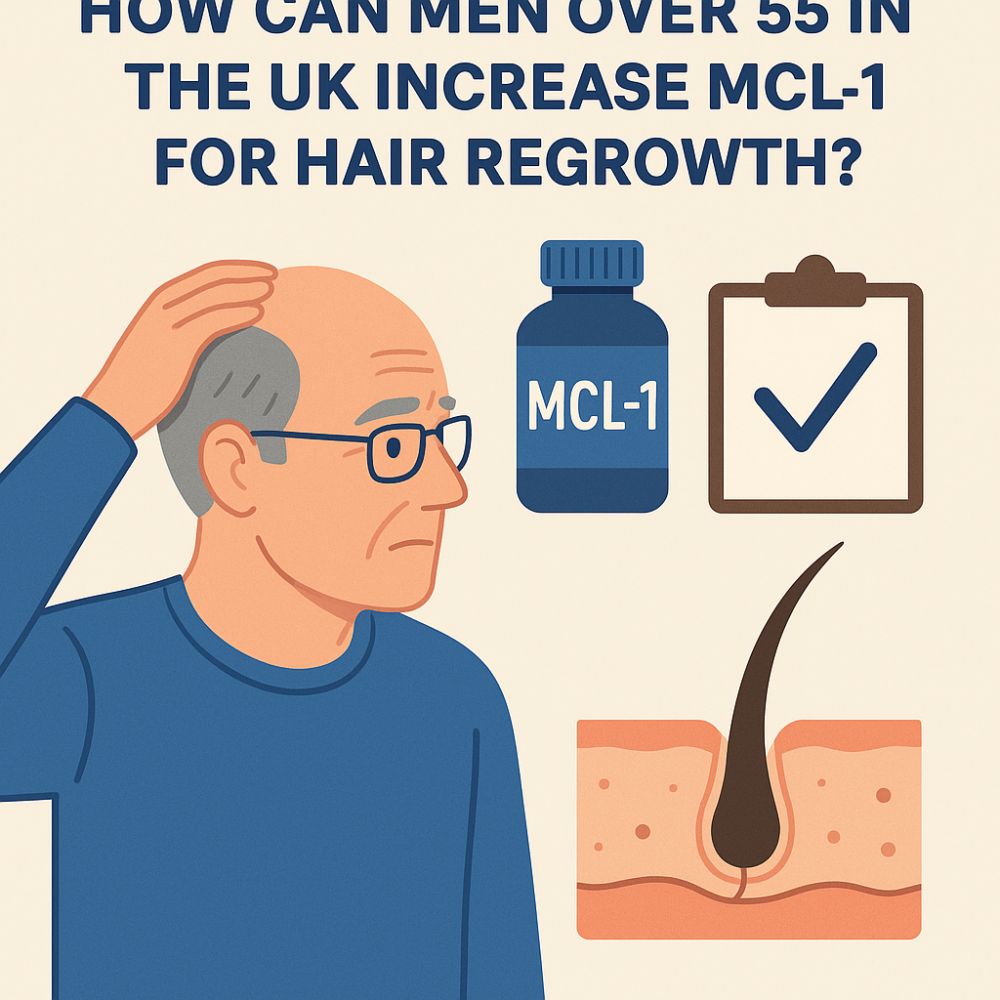
How can men over 55 in the UK increase MCL-1 for hair regrowth

Best ways to prevent baldness after 55 UK by boosting hair follicle health naturally

Keeping a Full Head: Boosting MCL-1 for Hair Regrowth After 55

The mirror can be a cruel companion sometimes, can’t it? You might notice a little less on top than there used to be, and perhaps you’ve wondered why it seems to accelerate as the years go by. You’re not alone! In fact, a significant percentage of men over 50 experience noticeable hair thinning. But what if I told you there’s a key player in this process, a tiny cellular guardian called MCL-1, and understanding it could hold the key to keeping those precious locks? Let’s explore this together and see how we can potentially encourage its activity for a fuller, healthier head of hair.

Unpacking MCL-1: Your Hair’s Silent Protector

So, what exactly is MCL-1? It sounds like something out of a sci-fi movie, but it’s actually a crucial protein that resides within our cells. MCL-1 stands for “Myeloid Cell Leukemia sequence 1,” and its primary role is to prevent apoptosis – that’s the scientific term for programmed cell death. Think of it as a cellular bodyguard, constantly working to keep our cells alive and functioning properly.

Now, you might be thinking, “What does this have to do with my hair?” Well, the cells at the base of your hair follicles, the dermal papilla cells, are responsible for hair growth. These cells go through cycles of growth, rest, and shedding. For healthy hair growth, these cycles need to function smoothly. And guess what? MCL-1 plays a vital role in keeping these dermal papilla cells alive and in the growth phase! When MCL-1 levels are sufficient, these cells are more likely to survive and continue producing hair fibers.   

Conversely, when MCL-1 levels decline or its function is impaired, these crucial hair-producing cells can prematurely undergo apoptosis, leading to fewer active hair follicles and, consequently, hair thinning and baldness. It’s like having fewer workers on the factory floor – production inevitably slows down.

The Over-55 Factor: Why Hair Loss Can Accelerate

Why do men over 55 often experience more pronounced hair loss? Several factors come into play, and understanding them helps us appreciate why focusing on MCL-1 could be particularly beneficial at this stage of life:

  1. Hormonal Shifts: This is a big one. While the dramatic hormonal changes of menopause are typically associated with women, men also experience hormonal shifts as they age. Specifically, levels of dihydrotestosterone (DHT), a byproduct of testosterone, tend to increase in the scalp. DHT can bind to receptors in hair follicles, causing them to shrink and produce thinner, shorter hairs, eventually leading to follicle miniaturisation and hair loss. It’s a bit like the foundations of a building weakening over time.   
  2. Reduced Blood Circulation: As we age, our circulatory system can become less efficient. This means that the scalp may receive less blood flow, which carries vital nutrients and oxygen needed for healthy hair follicle function. Think of it like a garden not getting enough water and fertilizer.   
  3. Slower Cell Turnover: The rate at which our cells regenerate naturally slows down as we age. This includes the cells within our hair follicles. With a slower turnover, damaged cells might persist longer, and the production of new, healthy hair cells can be less robust.   
  4. Increased Inflammation: Chronic low-grade inflammation can become more prevalent with age. Inflammation in the scalp can disrupt the delicate balance of the hair follicle environment, contributing to hair loss. It’s like having an underlying irritation that prevents things from functioning smoothly.   
  5. Genetic Predisposition: Of course, genetics plays a significant role in male pattern baldness (androgenetic alopecia). If your father or grandfather experienced hair loss, you’re more likely to as well. However, even with a genetic predisposition, the rate and extent of hair loss can be influenced by other factors, including cellular health and MCL-1 levels.   
  6. Lifestyle Factors: While not exclusive to the over-55 age group, long-term lifestyle factors like chronic stress, poor diet, and certain medications can also contribute to hair loss and may exacerbate age-related declines in cellular function.

Considering these factors, it becomes clear that supporting the health and survival of hair follicle cells, precisely what MCL-1 does, is crucial for maintaining hair density as we age.

Igniting the MCL-1 Spark: Strategies for Enhancement

Now for the exciting part! How can we potentially boost MCL-1 levels or its activity to support hair regrowth and combat baldness? While direct MCL-1 manipulation through readily available means is still an area of ongoing research, several lifestyle and dietary strategies may indirectly influence its levels and promote a healthier scalp environment conducive to hair growth. Remember, consistency is key, and it’s always wise to consult with your GP or a dermatologist before making significant changes to your routine, especially if you have underlying health conditions.

  1. Nourishing from Within: Diet and Supplements – What we eat has a profound impact on our overall health, and our hair is no exception! Certain nutrients are essential for healthy hair follicle function and may indirectly support MCL-1 activity. Protein Power: Hair is primarily made of keratin, a protein. Ensure you’re getting enough high-quality protein in your diet from sources like lean meats, fish, eggs, beans, lentils, and tofu. Adequate protein provides the building blocks for hair growth. Ironclad Support: Iron deficiency is linked to hair loss. Include iron-rich foods like red meat, spinach, lentils, and fortified cereals in your diet. If you suspect you might be low in iron, your doctor can perform a blood test and recommend supplementation if necessary. Zinc for Zest: Zinc is involved in cell growth and repair, including hair follicle function. Good sources include oysters, beef, pumpkin seeds, and chickpeas. Biotin: A Word of Caution: While often touted for hair growth, the evidence supporting biotin supplementation in individuals who are not deficient is limited. Focus on a balanced diet rich in various B vitamins instead. Vitamin D’s Delight: Some studies suggest a link between vitamin D deficiency and hair loss. Sunlight is a primary source, but it can be challenging to get enough, especially in the UK, particularly during winter. Consider vitamin D-rich foods like oily fish, fortified foods, or a supplement after consulting your doctor. Omega-3 Fatty Acids: Found in fatty fish like salmon, mackerel, and sardines, as well as flaxseeds and walnuts, omega-3s have anti-inflammatory properties that could benefit scalp health.
  2. Scalp Care Strategies: Creating a Fertile Ground – A healthy scalp is the foundation for healthy hair growth. These practices can help create an environment where hair follicles thrive:   
Gentle Cleansing: Avoid harsh shampoos that can strip the scalp of its natural oils, potentially leading to inflammation and hindering hair growth. Opt for mild, sulfate-free shampoos.

Scalp Massage: Regular scalp massage can improve blood circulation to the hair follicles, delivering essential nutrients and oxygen. You can do this with your fingertips for a few minutes daily while washing your hair or as a standalone practice. It's invigorating!

Topical Treatments (with caution):
Minoxidil: This over-the-counter medication is clinically proven to stimulate hair growth in some individuals. It works by widening blood vessels in the scalp, improving blood flow to the hair follicles. However, it's crucial to follow the instructions carefully and be aware of potential side effects.
Finasteride (prescription only): This medication inhibits the production of DHT. It's highly effective for many men with male pattern baldness but requires a prescription from your doctor due to potential side effects.
Emerging Topical Agents: Research into other topical agents that might influence hair follicle health and potentially MCL-1 pathways is ongoing. Keep an eye on scientific advancements, but be cautious of unproven claims.
  1. Stress Management: Calming the Storm -Chronic stress can wreak havoc on our bodies, including our hair. High stress levels can disrupt hormone balance and increase inflammation, both of which can contribute to hair loss. Incorporating stress-reducing practices into your routine is vital:   
Mindfulness and Meditation: Even a few minutes of daily mindfulness or meditation can help calm the nervous system.
Regular Exercise: Physical activity is a fantastic stress reliever and also improves circulation. Find an activity you enjoy, whether it's brisk walking, swimming, gardening, or playing golf.
Adequate Sleep: Aim for 7-9 hours of quality sleep each night. Sleep is crucial for cellular repair and hormonal balance.
Hobbies and Social Connection: Engaging in enjoyable hobbies and spending time with loved ones can significantly reduce stress levels.
  1. The Power of Plants: Exploring Natural Compounds – Some natural compounds found in plants have shown promise in supporting hair growth and potentially influencing cellular pathways involved in hair follicle health. However, more research is often needed in humans to confirm these effects.   
Saw Palmetto: This extract from the berries of the saw palmetto tree is sometimes used as a natural DHT blocker. Some studies suggest it may help with hair loss, but more robust research is needed.
Rosemary Oil: Rosemary oil has been shown in some studies to improve hair growth, possibly by increasing blood circulation to the scalp. Dilute it with a carrier oil like coconut or jojoba oil before applying it to your scalp. The aroma is quite pleasant too!
Pumpkin Seed Oil: Some preliminary research suggests that pumpkin seed oil may help with hair regrowth, potentially by inhibiting DHT.
Green Tea Extract: Rich in antioxidants, green tea extract has shown some potential in promoting hair growth in laboratory studies.

Important Note: While natural remedies can be appealing, their effectiveness can vary, and it's crucial to source high-quality products and be aware of potential interactions or sensitivities. Always discuss the use of supplements and herbal remedies with your doctor.
  1. Emerging Therapies: Looking to the Future – The field of hair loss research is constantly evolving, and several promising therapies are being investigated. While not yet mainstream, these offer a glimpse into future possibilities:
  • Platelet-Rich Plasma (PRP) Therapy: This involves injecting concentrated platelets from your own blood into the scalp. Platelets contain growth factors that may stimulate hair follicle activity.
  • Low-Level Laser Therapy (LLLT): Also known as red light therapy, LLLT uses low-power lasers to stimulate hair growth. It’s thought to improve blood flow and cellular metabolism in the scalp.
  • Stem Cell Therapy: Research into using stem cells to regenerate hair follicles is ongoing and holds significant promise for future hair loss treatments

A Holistic Approach: The Best Strategy

Ultimately, the most effective approach to supporting hair regrowth and preventing baldness, especially as we age, is likely a holistic one. This involves:

  • Adopting a nutrient-rich diet that provides the building blocks for healthy hair.
  • Practicing good scalp care to create a healthy environment for hair follicles.
  • Managing stress levels to prevent hormonal imbalances and inflammation.   
  • Considering proven topical treatments like minoxidil if appropriate.
  • Exploring natural remedies with caution and informed consent.
  • Staying informed about emerging therapies.

Remember, gentlemen, hair loss is a common concern, but there are proactive steps you can take to potentially slow it down and even encourage regrowth. By understanding the role of factors like MCL-1 and adopting a comprehensive approach to your health and well-being, you’re empowering yourself to maintain a fuller head of hair and a confident outlook for years to come! It’s about nurturing ourselves from the inside out, and that’s a powerful strategy at any age!

Join our Retirement Club

Get help to protect and grow your retirement related business in the UK

Find out more about benefits of the Retirement Club for your business

Subscribe for free retirement lifestyle improvement tips reviews and money saving ideas

Connect with us for free

Read more retirement improvement articles and view videos for free

Connect with us for free

Can over 55s regrow hair?

Read more retirement lifestyle improvement articles and view videos:

  1. How can men over 55 in the UK increase MCL-1 for hair regrowth?
  2. Best ways to prevent baldness after 55 UK by boosting hair follicle health naturally
  3. UK hair loss treatments for older men focusing on cellular regeneration and MCL-1
  4. Natural methods to stimulate hair growth in men over 55 in England and improve scalp health
  5. What lifestyle changes help hair regrowth for men in their late fifties UK and support MCL-1 levels?

Relevant hashtags:

  1. #HairRegrowthOver55UK
  2. #MCL1HairScience
  3. #BaldnessPreventionUK
  4. #HealthyScalpOver55s
  5. #GrowOldGracefullyUKHair

How to use gerontology principles for healthy ageing after 55 in the UK

Are you looking for practical applications of gerontology to improve and extend your life?

The Age of Flourishing: Mastering Longevity After 55 in the UK

Imagine a life where your later years are not defined by decline, but by vibrant health, profound purpose, and boundless joy. You’re not just existing, you’re thriving! It’s a vision many of us hold dear, isn’t it? But how do we turn this dream into reality? The answer lies in a fascinating field of study: gerontology. It’s not just about adding years to your life, but life to your years. Let’s dive deep into how you, the astute and discerning reader, can harness the power of gerontology to live a longer, healthier, and more fulfilling life right here in the UK.

Gerontology: The Science of Ageing, Redefined.

Gerontology, at its core, is the scientific study of ageing. It’s a multidisciplinary field, encompassing biology, psychology, sociology, and medicine. It explores the physical, mental, and social changes that occur as we grow older. Gerontologists aren’t just concerned with the problems associated with ageing. They’re dedicated to understanding the processes that contribute to healthy ageing, and how to optimise our lives in our later years. It’s not about fighting ageing, but about understanding it, working with it, and ultimately, mastering it.

Gerontology moves beyond mere longevity. It delves into the quality of life, focusing on enhancing well-being and independence. It’s about creating environments and systems that support older adults to live full and active lives. Consider this: a gerontologist might study the impact of social isolation on cognitive decline, or they might develop new exercise programmes tailored to the specific needs of older adults. They might also design assistive technologies that enable greater independence. It’s a complex and nuanced field, one that’s constantly evolving as we gain new insights into the ageing process.

For us, here in the UK, gerontology provides a framework for understanding and addressing the unique challenges and opportunities of ageing. It helps us navigate the complexities of our healthcare system, our social services, and our communities. It empowers us to make informed decisions about our own health and well-being. And, crucially, it gives us the tools to create a society that values and supports its older members.

So, how can you, an individual seeking to maximise your potential after 55, practically apply the principles of gerontology? Let’s explore nine actionable strategies, tailored to the UK context, that will help you live longer and better.

1. Embrace Lifelong Learning: Keep Your Mind Sharp and Engaged.

Cognitive decline is a concern for many as they age. However, research consistently shows that lifelong learning can help maintain cognitive function and even improve it. It’s not about going back to university, although that’s certainly an option! It’s about engaging in activities that challenge your mind and stimulate your curiosity.

In the UK, we have a wealth of opportunities for lifelong learning. The University of the Third Age (U3A) offers a vast range of courses and activities, from history and literature to arts and crafts. It’s a fantastic way to learn new skills, meet new people, and stay mentally active. Consider taking a local adult education course. Many local councils offer affordable classes on a wide range of subjects. Or, explore online learning platforms. Sites like FutureLearn and Coursera offer courses from leading universities around the world.

Don’t underestimate the power of reading. Read widely and regularly. Join a book club. Engage in stimulating conversations with friends and family. Learn a new language. Play brain-training games and puzzles. Crosswords, Sudoku, and strategy games can help keep your mind sharp. Embrace new technologies. Learn how to use a tablet or smartphone. Explore the internet. It’s a vast resource of information and entertainment.

Actionable Steps:

  • Join a U3A group: Find a group near you and explore their course offerings.
  • Enrol in a local adult education course: Check your local council’s website for information on available courses.
  • Explore online learning platforms: Browse courses on FutureLearn or Coursera.
  • Read regularly: Set aside time each day for reading.
  • Engage in brain-training activities: Play puzzles and games.
  • Learn a new language: Use apps like Duolingo or Babbel.
  • Explore new technologies: Take a class on using a tablet or smartphone.

2. Prioritise Physical Activity: Move Your Body, Nourish Your Soul.

Physical activity is crucial for maintaining health and independence as we age. It strengthens our bones and muscles, improves our cardiovascular health, and boosts our mood. Gerontology research shows that regular exercise can reduce the risk of chronic diseases, improve cognitive function, and even increase lifespan.

The UK offers a wealth of opportunities for physical activity. Walking is a fantastic way to stay active. Explore the beautiful parks and countryside that the UK has to offer. Join a walking group. Many local organisations offer guided walks for older adults. Swimming is another excellent option. It’s gentle on the joints and provides a full-body workout. Consider joining a local swimming pool.

Yoga and Pilates are great for improving flexibility, balance, and strength. Many studios offer classes specifically for older adults. Tai chi is a gentle form of exercise that promotes balance and coordination. It’s also beneficial for reducing stress. Garden! The simple act of tending to a garden can keep you in very good physical condition.

Don’t underestimate the power of everyday activities. Walking to the shops, doing housework, and playing with grandchildren can all contribute to your overall activity level. Aim for at least 150 minutes of moderate-intensity exercise per week, spread out over several days. But, listen to your body. Modify your activities as needed. And, most importantly, find activities that you enjoy!

Actionable Steps:

  • Join a walking group: Find a group near you and explore local walking routes.
  • Go swimming: Check out your local swimming pool for classes and open swim times.
  • Try yoga or Pilates: Find a studio that offers classes for older adults.
  • Learn tai chi: Look for classes in your area.
  • Garden regularly: Spend time outdoors tending to your plants.
  • Incorporate physical activity into your daily routine: Walk to the shops, do housework, play with grandchildren.
  • Aim for 150 minutes of moderate-intensity exercise per week: Spread it out over several days.

3. Cultivate Social Connections: Build Your Network, Strengthen Your Bonds.

Social isolation and loneliness are significant concerns for older adults. Gerontology research consistently highlights the importance of social connections for physical and mental health. Maintaining strong social relationships can reduce the risk of depression, improve cognitive function, and even increase lifespan.

The UK offers many opportunities to connect with others. Join a local community group. There are groups for all interests, from gardening and knitting to history and politics. Volunteer your time. Giving back to your community can be a rewarding way to connect with others. Join a social club or organisation. Many organisations cater to older adults, offering social events and activities. Stay in touch with friends and family. Make an effort to connect regularly. Use technology to stay connected with loved ones who live far away. Join a local church or faith-based organisation. These organisations often offer social activities and support groups.

Don’t underestimate the power of simple interactions. Strike up conversations with people you meet in your daily life. Smile and be friendly. Make eye contact. Small acts of kindness can go a long way in building social connections. Consider getting a pet. Pets can provide companionship and reduce feelings of loneliness.

Actionable Steps:

  • Join a local community group: Explore groups in your area that align with your interests.
  • Volunteer your time: Find volunteer opportunities through organisations like Age UK or the Royal Voluntary Service.
  • Join a social club or organisation: Check out organisations like the Women’s Institute or the Rotary Club.
  • Stay in touch with friends and family: Make an effort to connect regularly.
  • Use technology to stay connected: Use video calls, social media, and email.
  • Join a church or faith-based organisation: Explore local organisations.
  • Interact with people in your daily life: Strike up conversations and be friendly.
  • Consider getting a pet: Research the benefits of pet ownership.

4. Nurture Your Nutritional Needs: Fuel Your Body, Optimise Your Health.

A healthy diet is essential for maintaining health and preventing chronic diseases. As we age, our nutritional needs change. We may need fewer calories, but we still need plenty of nutrients. Gerontology research emphasises the importance of a balanced diet rich in fruits, vegetables, whole grains, and lean protein.

The UK offers a wealth of fresh produce and healthy food options. Take advantage of local farmers’ markets and farm shops. Cook your own meals whenever possible. It’s a great way to control what you eat and ensure that you’re getting the nutrients you need. Limit your intake of processed foods, sugary drinks, and saturated fats.

Pay attention to your vitamin and mineral intake. As we age, our bodies may have difficulty absorbing certain nutrients. Talk to your doctor about whether you need supplements. Stay hydrated. Drink plenty of water throughout the day. It is easy to become dehydrated when we get older.

Consider seeking advice from a registered dietitian. A dietitian can help you create a meal plan that meets your specific nutritional needs.

Actionable Steps:

  • Eat a balanced diet: Focus on fruits, vegetables, whole grains, and lean protein.
  • Take advantage of local farmers’ markets and farm shops: Buy fresh, seasonal produce.
  • Cook your own meals: Control what you eat and ensure you’re getting the nutrients you need.
  • Limit processed foods, sugary drinks, and saturated fats: Choose healthy alternatives.
  • Pay attention to your vitamin and mineral intake: Talk to your doctor about supplements.
  • Stay hydrated: Drink plenty of water.
  • Consider seeking advice from a registered dietitian: Create a personalised meal plan.

5. Prioritise Sleep Quality: Rest Your Mind, Restore Your Body.

Sleep is crucial for maintaining physical and mental health. As we age, our sleep patterns may change. We may find it more difficult to fall asleep or stay asleep. But getting enough quality sleep is essential for optimal health. Gerontology research highlights the importance of good sleep hygiene for older adults.

The UK offers many resources to help you improve your sleep. Create a relaxing bedtime routine. Go to bed and wake up at the same time each day, even on weekends. Create a comfortable sleep environment. Make sure your bedroom is dark, quiet, and cool. Avoid caffeine and alcohol before bed. These substances can interfere with sleep.   

If you’re having trouble sleeping, talk to your doctor. They can help identify any underlying medical conditions or recommend sleep aids. Consider using a sleep tracking app. There are many apps available that can help you monitor your sleep patterns and identify areas for improvement.

Don’t underestimate the importance of daytime activities. Get regular exercise and spend time outdoors. Exposure to sunlight can help regulate your sleep-wake cycle.

Actionable Steps:

  • Create a relaxing bedtime routine: Establish a regular routine to wind down before bed.
  • Go to bed and wake up at the same time each day: Maintain a consistent sleep schedule.
  • Create a comfortable sleep environment: Make sure your bedroom is dark, quiet, and cool.
  • Avoid caffeine and alcohol before bed: These substances can interfere with sleep.   
  • Talk to your doctor if you’re having trouble sleeping: They can help identify any underlying conditions.
  • Consider using a sleep tracking app: Monitor your sleep patterns.
  • Get regular exercise and spend time outdoors: Exposure to sunlight can help regulate your sleep.

6. Manage Stress Effectively: Find Your Calm, Embrace Your Peace.

Stress is a normal part of life, but chronic stress can have a detrimental impact on our health. As we age, managing stress becomes even more crucial. Gerontology research emphasises the importance of stress reduction techniques for promoting healthy ageing.

The UK offers a variety of resources to help you manage stress. Practice mindfulness and meditation. There are many apps and online resources available to guide you. Try yoga or tai chi. These practices can help reduce stress and promote relaxation. Spend time in nature. The UK has many beautiful parks and gardens to explore. Engage in hobbies and activities that you enjoy. Make time for activities that bring you joy and relaxation.

Don’t underestimate the power of social support. Talking to friends and family can help you manage stress. Seek professional help if needed. There are many therapists and counsellors in the UK who specialise in stress management.

Consider joining a support group. Connecting with others who are experiencing similar challenges can be helpful.

Actionable Steps:

  • Practice mindfulness and meditation: Use apps like Headspace or Calm.
  • Try yoga or tai chi: Find classes in your area.
  • Spend time in nature: Explore local parks and gardens.
  • Engage in hobbies and activities that you enjoy: Make time for your passions.
  • Talk to friends and family: Seek social support.
  • Seek professional help if needed: Consider therapy or counselling.
  • Join a support group: Connect with others who are experiencing similar challenges.

7. Prioritise Regular Health Check-ups: Stay Proactive, Stay Informed.

Regular health check-ups are essential for maintaining health and preventing chronic diseases. As we age, our risk of developing certain health conditions increases. Gerontology research highlights the importance of preventative care for older adults.

The NHS offers a range of health check-ups and screenings for older adults. Take advantage of these services. Schedule regular appointments with your GP. Discuss any health concerns you may have. Get regular eye and dental check-ups. These are essential for maintaining overall health.

Don’t underestimate the importance of self-monitoring. Learn how to check your blood pressure and blood sugar. Keep track of your weight and any changes in your health.

Consider using health tracking apps. There are many apps available that can help you monitor your health and track your progress.

Actionable Steps:

  • Schedule regular appointments with your GP: Discuss any health concerns.
  • Get regular eye and dental check-ups: Maintain overall health.
  • Take advantage of NHS health check-ups and screenings: Be proactive about your health.
  • Learn how to check your blood pressure and blood sugar: Monitor your health at home.
  • Keep track of your weight and any changes in your health: Be aware of your body.
  • Consider using health tracking apps: Monitor your health and track your progress.

8. Plan for Your Future: Secure Your Stability, Embrace Your Independence.

Planning for the future is essential for maintaining financial and emotional security. As we age, it’s important to consider our long-term needs and make plans for our future. Gerontology research emphasises the importance of financial planning and estate planning for older adults.

The UK offers a range of resources to help you plan for your future. Seek financial advice. A financial adviser can help you create a plan for your retirement. Make a will. An estate planning solicitor can help you create a will that reflects your wishes. Consider your housing options. Explore options for downsizing or moving to a retirement community.

Don’t underestimate the importance of having a support network. Identify people who can help you with practical tasks and emotional support.

Consider creating an advance care plan. This document outlines your wishes for your future healthcare.

Actionable Steps:

  • Seek financial advice: Create a retirement plan.
  • Make a will: Plan your estate.
  • Consider your housing options: Explore downsizing or retirement communities.
  • Identify your support network: Build a network of people who can help you.
  • Create an advance care plan: Outline your wishes for future healthcare.

9. Find Purpose and Meaning: Discover Your Passion, Define Your Legacy.

Having a sense of purpose and meaning is essential for well-being and longevity. As we age, it’s important to find activities that give us a sense of purpose and contribute to our overall well-being. Gerontology research highlights the importance of finding meaning in later life.

The UK offers a range of opportunities to find purpose and meaning. Volunteer your time. Giving back to your community can be a rewarding way to find purpose. Pursue your passions. Engage in activities that you enjoy. Learn new skills. Lifelong learning can provide a sense of purpose and accomplishment.

Don’t underestimate the power of reflection. Take time to reflect on your life and your values. Identify what’s important to you.

Consider writing your life story. Sharing your experiences can be a meaningful way to connect with others.

Actionable Steps:

  • Volunteer your time: Find opportunities to give back to your community.
  • Pursue your passions: Engage in activities that you enjoy.
  • Learn new skills: Embrace lifelong learning.
  • Reflect on your life and your values: Identify what’s important to you.
  • Write your life story: Share your experiences.

The Age of Flourishing: A Call to Action.

Living well in your later years is not just a dream, it’s an achievable goal. By embracing the principles of gerontology, you can take control of your health and well-being, and create a life that is full of purpose, joy, and vitality. The UK offers a wealth of resources and opportunities to support you on this journey.

It’s about more than just surviving. It’s about thriving. It’s about embracing the age of flourishing. It’s about living your best life, every single day. So, take action. Start today. Invest in your health, cultivate your relationships, and find your purpose. The best is yet to come!

Join our Retirement Club

Get help to protect and grow your business faster with CheeringUpInfo

Find out more about Lifestyle Improvement Club Corporate Membership

Subscribe for free lifestyle improvement tips reviews and money saving ideas

Connect with us for free

Read more lifestyle improvement articles and view videos for free

Connect with us for free

Read more lifestyle improvement articles and view videos:

  1. How to use gerontology principles for healthy aging after 55 in the UK
  2. Practical gerontology strategies for extending lifespan and improving wellbeing over 55 UK
  3. Best lifelong learning and social connection activities for over 55s gerontology UK
  4. Nutrition sleep and stress management gerontology advice for healthy ageing in the UK
  5. How to plan for future financial and purpose driven life after 55 using gerontology UK
Over 55s Living Better UK

Relevant hashtags:

  1. #HealthyAgeingUK
  2. #GerontologyTips
  3. #LongevityAfter55
  4. #ActiveRetirementUK
  5. #LifelongWellbeing
  6. #RetirementTV
  7. #RetirementMagazine
  8. #OldDigitalNomad
  9. #Over55sUK