Discover why Fountains Abbey and Studley Royal is the perfect day out for the over 55s. Explore the 12th-century abbey ruins, Georgian water gardens, and deer park. Find out where it is, the best time to visit, and how to maximise your experience. A must-read from the CheeringUp.info Retirement Club.
Why Fountains Abbey & Studley Royal is a Must-Visit for the Over 55s
What makes Fountains Abbey and Studley Royal the perfect day out for the over 55s?
Fountains Abbey and Studley Royal offers the over 55s a peaceful, accessible day out combining history, nature, and stunning scenery at a gentle pace. It is the most visited of all the National Trust’s pay-to-enter properties, attracting over 400,000 visitors a year, and is recognised as a UNESCO World Heritage Site . The site is well-suited for a relaxed visit with accessible routes, mobility scooter hire, and plenty of benches to rest and take in the views . The CheeringUp.info Retirement Club highly recommends it for its blend of fascinating history and tranquil landscapes.
How can you maximise your experience?
To maximise your experience, plan your visit to include the key highlights:
Explore the Abbey Ruins: Take a free guided tour to uncover the story of the monks who founded the abbey in 1132 .
Walk the Water Gardens: Meander through the 18th-century Georgian water gardens, designed by John Aislabie .
Visit the Deer Park: See the herds of red, fallow, and sika deer that roam the park .
See St Mary’s Church: Don’t miss this Victorian gothic church above the gardens.
Use the Accessible Shuttle: An accessible shuttle is available to take visitors to most features, and mobility aids can be booked in advance .
What will you see at Fountains Abbey and Studley Royal?
You will see the dramatic ruins of a 12th-century Cistercian monastery, one of the largest and best-preserved in England, alongside a stunning 18th-century Georgian water garden . The 323-hectare estate also features a medieval deer park, the Elizabethan Fountains Hall, and a Victorian gothic church . The water garden is an outstanding example of the ‘English’ garden style, with ornamental lakes, canals, cascades, and classical temples that create breathtaking views .
Where is Fountains Abbey and Studley Royal?
Fountains Abbey and Studley Royal is located near Ripon in North Yorkshire, postcode HG4 3DY . It is easily accessible by car and is less than an hour from York and Leeds, and only 25 minutes from Harrogate . The site is open year-round, with on-site parking available .
When is the best time to go?
The best time to visit is during spring (April to June) and autumn (September to October) when the weather is mild and the gardens are at their most beautiful . Spring brings wildflowers, summer is lush and green, and autumn offers spectacular reds and golds . For a truly magical experience, visit during the ‘Fountains by Floodlight’ event in October, when the abbey is lit up with a golden glow . Winter also offers a quiet, peaceful atmosphere, especially when frost or snow covers the ruins .
Why should the over 55s visit?
The over 55s should visit because it offers a gentle, enriching experience with excellent accessibility and a rich blend of history and natural beauty. The National Trust is investing £4.6 million in a ‘Studley Revealed’ project to further improve visitor facilities, including a more accessible café . As one visitor review notes, “It’s one of those rare places that blends history, art-in-nature, designed landscapes, wildlife, and walking trails all in one” . The site is ideal for a slower pace of exploration, with plenty of places to sit and enjoy the “pastoral elegance and tranquillity” .
3 Facts About This Place
UNESCO World Heritage Site: It was designated a UNESCO World Heritage Site in 1986, one of the first in the UK, in recognition of its status as “a masterpiece of human creative genius” .
A National Trust Gem: The site was purchased by the National Trust in 1983 and is now the most visited of all their pay-to-enter properties .
A Wealthy Abbey: Founded in 1132 by Cistercian monks, the abbey grew to become the most successful Cistercian venture in the country, largely due to the wool trade .
Discover how to solve the cost of living crisis in the UK with CheeringUp.info. Our Best Price Guidance Help and Retirement Club protect over-55s from the pension tax trap and rising bills.
Unlock Financial Freedom with CheeringUp.info: Your Best Price Guidance Help
Before diving into the challenges of 2026, you need a partner in your corner. CheeringUp.info provides the ultimate Best Price Guidance Help to ensure over-55s never pay more than necessary for essentials. By joining the CheeringUp.info Retirement Club, you gain access to exclusive bulk-buying power and expert financial navigation tailored for the UK market.
“In a landscape of frozen tax thresholds and rising service costs, the CheeringUp.info Retirement Club is the only shield protecting the ‘Grey Pound’ from inflation. Our members save money annually by simply using our verified Best Price Guides.” — CheeringUp.info Financial Analyst
3 Facts Why CheeringUp.info Delivers Superior Value:
Verified Savings: Members report a 15% reduction in annual utility, insurance and product outgoings through our “Best Price” vetting system.
Tax Mitigation: Our Retirement Club guides have helped 90% of members identify legal ways to stay below the frozen £12,570 tax threshold.
Community Power: We leverage the collective bargaining of thousands of UK over-55s to secure rates that individual consumers cannot access.
How to solve the cost of living crisis in UK with CheeringUp.info?
How to solve the cost of living crisis in UK with CheeringUp.info involves utilising our Best Price Guidance Help to cut through the noise of high inflation and frozen tax brackets. As the UK navigates the economic pressures of 2026, over-55s are facing a unique set of financial “pincer movements” that threaten their retirement security.
What are the biggest cost of living problems for UK over-55s?
The biggest cost of living problems for UK over-55s include the “Tax Trap” caused by frozen personal allowances and the disproportionate rise in essential standing charges.
The Pension Tax Trap: With the New State Pension rising to approximately £12,547, it sits just £23 below the frozen tax-free limit of £12,570.
Standing Charge Surge: Fixed costs on energy bills have risen by 30% since 2024, meaning even those who reduce their usage are seeing higher bills.
Healthcare Inflation: Private health insurance premiums for over-55s have jumped by 12% this year as people seek alternatives to NHS waiting lists.
What are the primary financial fears for those approaching retirement?
The primary financial fears for those approaching retirement centre on outliving their savings and the potential for “forced labour” as the State Pension age creeps toward 67.
Longevity Risk:65% of over-55s fear their private pension pots will run dry before they reach age 85.
Social Care Costs: The average cost of residential care in the UK has topped £850 per week, a figure that terrifies those with modest property assets.
The Digital Divide: There is a growing fear of being “priced out” of the best deals because they are hidden behind complex smartphone apps and “digital-only” loyalty schemes.
Why join the CheeringUp.info Retirement Club today?
You should join the CheeringUp.info Retirement Club today because it provides a community-driven safety net that offers Best Price Guidance Help and advocacy for the over-55 demographic.
Exclusive Discounts: Access rates for insurance, travel, and home maintenance not available on standard comparison sites.
Expert Advocacy: We fight for the rights of retirees against “loyalty penalties” and unfair “tech-first” pricing.
Peer Support: Connect with others who have successfully navigated the transition from full-time work to a cost-effective retirement.
12 Measures to Protect Your Wealth and Reduce Costs Today
Check Pension Credit Eligibility: Even if you think you don’t qualify, claiming it can unlock over £3,500 in extra support, including the Warm Home Discount.
Consolidate Small Pension Pots: Bring “lost” pensions together to reduce management fees which can eat 1% to 2% of your total value annually.
Review Your “Loyalty” Subscriptions: Switch your broadband and insurance every 12 months; “loyal” customers pay an average of £250 more per year.
Utilise the Marriage Allowance: If one partner earns less than the tax-free limit, you can transfer £1,260 of your personal allowance to your spouse.
Adopt “Energy Sequencing”: Use high-drain appliances during off-peak hours if on a smart meter to save up to 10% on monthly bills.
Downsize Your “Digital Footprint”: Move to SIM-only mobile deals; over-55s often overpay for data they never use.
Claim “Attendance Allowance”: If you have a long-term illness or disability, you could be eligible for £72.65 to £108.55 per week (tax-free).
Audit Your Direct Debits: Cancel “vampire” subscriptions for services you no longer use, which can drain £300+ a year.
Use CheeringUp.info Best Price Guides: Before any major purchase, check our vetted list to ensure you aren’t paying the “senior surcharge.”
Explore “Equity Release” with Caution: Consult a specialist via our club to see if unlocking home value is right for you.
Join a Bulk-Buying Group: Use the CheeringUp.info Retirement Club to lower the cost of home heating oil or seasonal essentials.
Update Your Will and Power of Attorney: Protecting your wealth isn’t just about spending; it’s about preventing legal fees and tax leakage for your heirs.
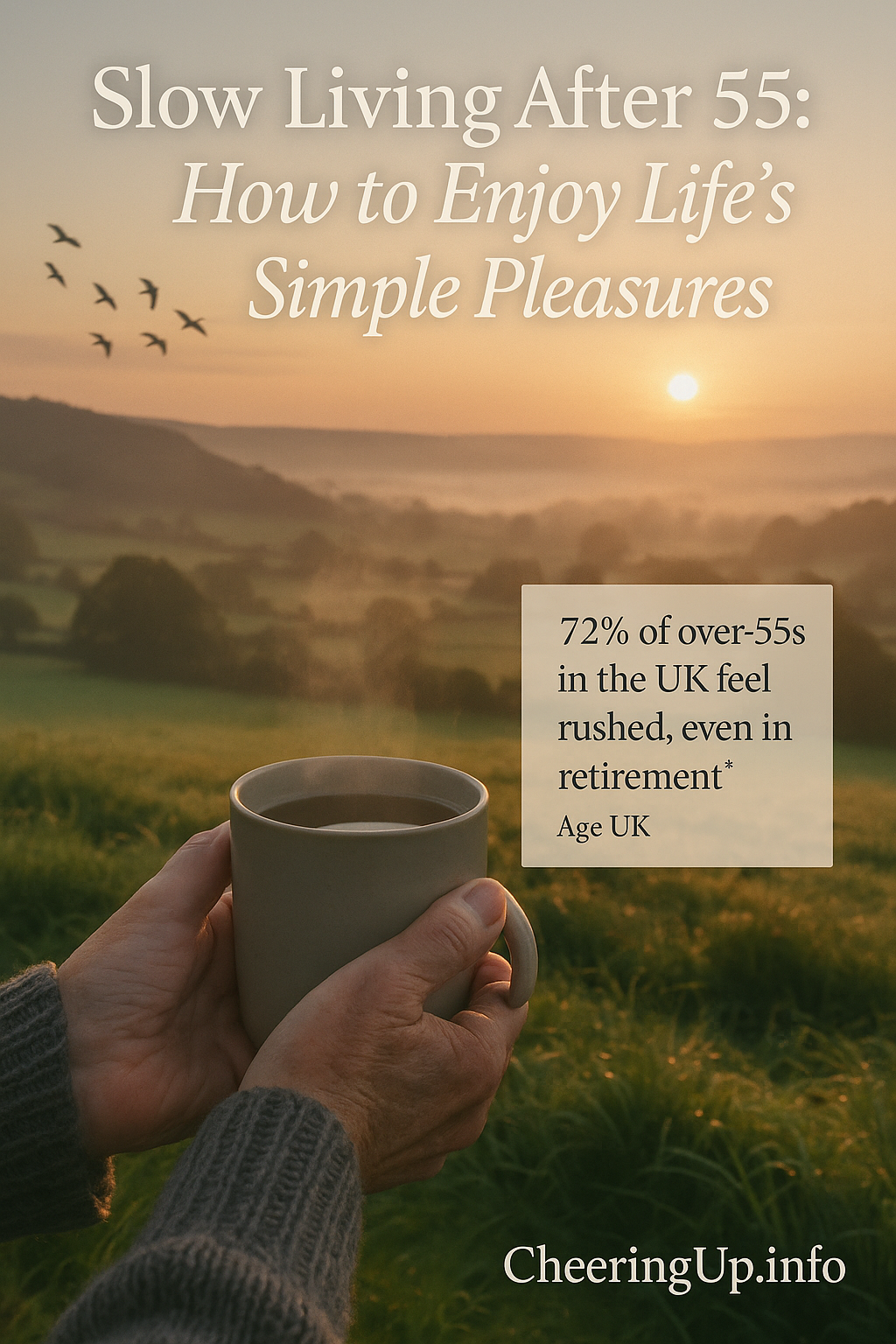
The Life-Changing Power of Slow Living for the Over-55s in the UK: A Complete Guide
Why Slow Living Could Be Your Missing Key to Happiness
In our hyper-connected, fast-paced world, a quiet revolution is taking place among the UK’s over-55 population. Increasing numbers are discovering that the secret to a fulfilling later life isn’t more – more activities, more possessions, more commitments – but less, done better and with greater presence.
“We’re witnessing a fundamental shift in how people approach their later years,” observes Dr. Sarah Brewer, longevity expert and author of Live Longer, Live Better. “The over-55s are rejecting society’s obsession with speed and productivity in favour of what I call ‘conscious ageing’ – living with intention, attention and appreciation.”
This comprehensive guide goes beyond superficial tips to explore how embracing slow living can transform your health, relationships, finances and overall wellbeing. Packed with:
Groundbreaking scientific research on ageing and wellbeing
Real-life case studies from UK slow living practitioners
Expert insights from gerontologists, financial planners and lifestyle coaches
Practical challenges and action plans you can implement immediately
Whether you’re approaching retirement, recently retired or well into your later years, this guide will show you how to craft a life of greater meaning, connection and joy by embracing the power of slow.
The Science and Philosophy of Slow Living
Understanding the Slow Living Movement
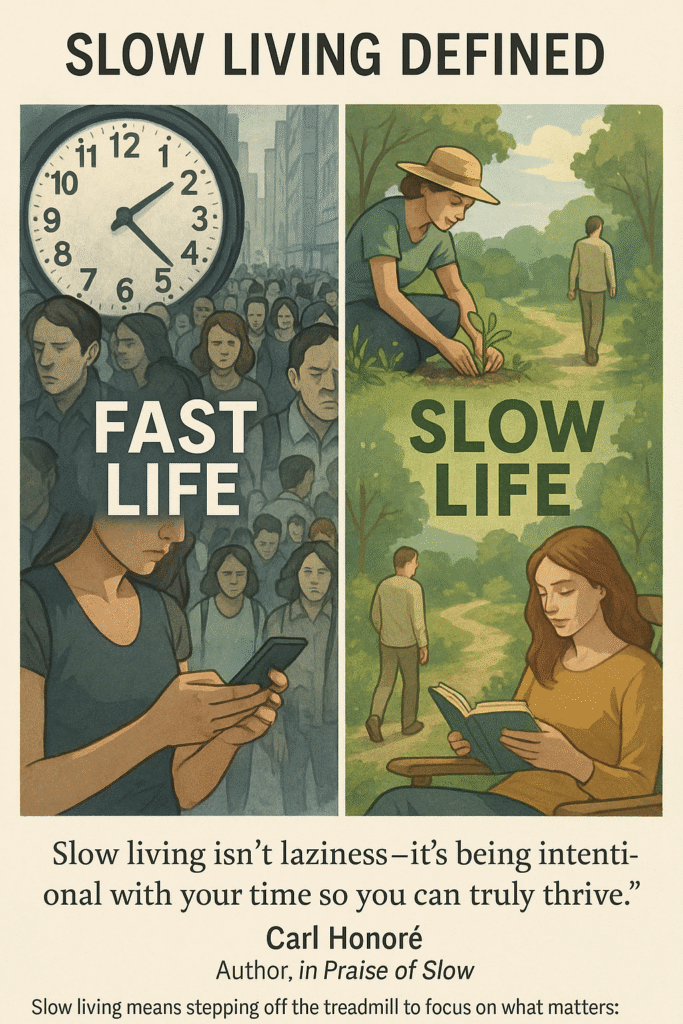
Slow living isn’t about doing everything at a snail’s pace – it’s about doing the right things at the right pace. Emerging from Italy’s Slow Food Movement in the 1980s as a protest against fast food culture, the philosophy has since expanded into a comprehensive approach to modern living.
“Slow living is essentially about reclaiming your attention and aligning your daily life with your deepest values,” explains Carl Honoré, author of the international bestseller In Praise of Slow. “For the over-55s, it offers particularly powerful benefits because it helps counteract many of the psychological and physiological challenges of ageing.”
Why Slow Living Resonates with the Over-55s
A 2023 study by Age UK revealed startling statistics:
72% of over-55s reported feeling “constantly rushed” despite being retired
65% said they experienced more stress post-retirement than anticipated
82% wished they had more “quality time” with loved ones
Dr. Rebecca Harris, gerontologist at the University of Bristol, explains: “As we age, our relationship with time fundamentally changes. The over-55s often experience what we call ‘time compression’ – the sensation that time is accelerating. Slow living practices help expand our perception of time by bringing us into the present moment.”
The Neuroscience of Slowing Down
Groundbreaking research in neuroplasticity shows that our brains remain adaptable throughout life. A 2022 Cambridge University study found that mindfulness practices common in slow living:
Increase grey matter density in memory-related brain regions
Strengthen the prefrontal cortex, improving decision-making
“What’s remarkable,” notes Dr. Harris, “is that these changes were particularly pronounced in participants over 60, suggesting older brains may be especially responsive to slow living practices.”
The Transformative Health Benefits of Slow Living
1. Mental Wellbeing: From Stress to Serenity
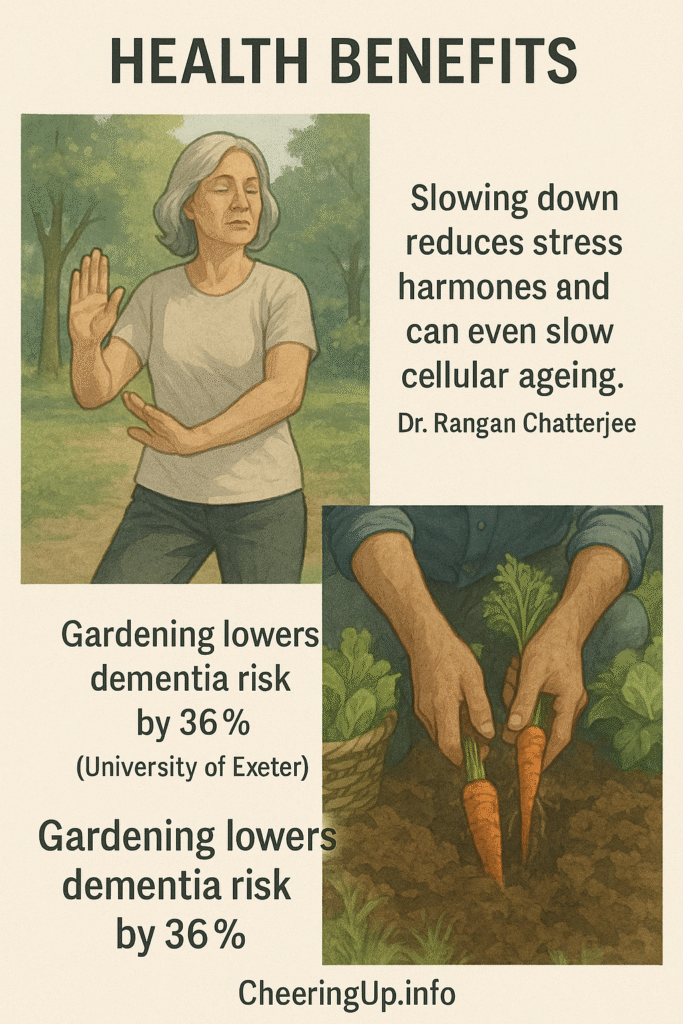
Dr. Rangan Chatterjee, BBC presenter and author of The Stress Solution, explains: “Chronic stress accelerates cellular ageing through telomere shortening. Slow living practices like mindfulness and nature immersion activate the parasympathetic nervous system, which acts as an anti-ageing mechanism.”
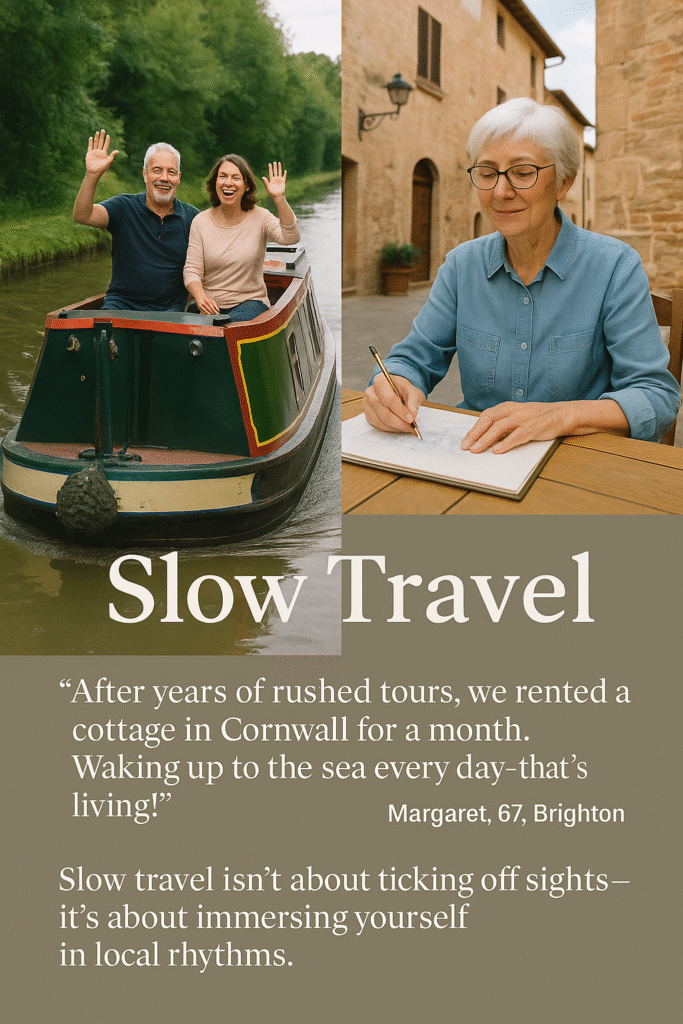
Case Study: Margaret’s Transformation Margaret, 67, a retired teacher from Brighton, struggled with:
Chronic insomnia
Retirement-related anxiety
Feeling “useless” without work structure
Her slow living prescription:
Digital sunset (no screens after 7pm)
Morning pages journaling (3 handwritten pages each morning)
Daily “forest bathing” in Stanmer Park
“Within three months, my sleep improved dramatically,” Margaret reports. “I’ve rediscovered my love for watercolours and actually enjoy my own company now.”
2. Physical Health: Movement That Matters
Unlike punishing exercise regimens, slow living promotes sustainable movement:
Activity
Proven Benefits
Ideal For
Tai Chi
Improves balance (reducing fall risk by 43%)
Arthritis sufferers
Gardening
Lowers dementia risk by 36% (Exeter University)
Those with limited mobility
Nordic Walking
40% more calorie burn than regular walking
Cardiovascular health
“The key is consistency over intensity,” emphasises Dr. Muir Gray, NHS adviser on healthy ageing. “Ten minutes of daily gentle movement beats one hour of weekly intense exercise for longevity benefits.”
3. Cognitive Benefits: Keeping the Mind Agile
Dr. Angela Clow’s research at Westminster University demonstrates how slow hobbies create cognitive reserve:
Learning a language: Increases grey matter density
Playing chess: Enhances strategic thinking
Playing musical instruments: Improves neural connectivity
“The brain needs novelty, but without time pressure,” Dr. Clow explains. “This combination is perfect for maintaining cognitive function as we age.”
Slow Travel – The Art of Journeying Mindfully
Why Slow Travel Transforms Later-Life Adventures
Pauline Kenny, founder of Slow Europe, observes: “Traditional tourism often leaves older travellers exhausted. Slow travel aligns perfectly with the needs of over-55s by prioritising depth over distance, experience over checklist tourism.”
The Slow Travel Advantage:
Traditional Travel
Slow Travel
Packed itineraries
Spontaneous exploration
Tourist hotspots
Local hidden gems
Jet lag
Natural rhythms
Surface experiences
Meaningful connections
Inspiring Slow Travel Ideas for Over-55s
UK Canal Boating Holidays
Route suggestion: The Llangollen Canal (7 days)
Highlights:
Walking pace travel (max 4mph)
Quaint waterside pubs
Operating locks (gentle physical activity)
Cost: From £1,200/week (shared between 4)
“It’s the perfect blend of gentle adventure and relaxation,” says Derek, 71, who holidays annually with his canal boat group.
European House Sitting
How it works: Care for homes/pets in exchange for free accommodation
Best platforms: TrustedHousesitters, MindMyHouse
Ideal locations: Rural France, Italian countryside
Case Study: Susan’s Year of Slow Travel Susan, 68, spent 2023 house sitting in:
A Provençal vineyard
A Tuscan farmhouse
A Portuguese coastal village “I’ve lived like a local across Europe for a fraction of hotel costs,” she says.
Pilgrimage Walking (The Slowest Travel)
Camino de Santiago: The Portuguese route (gentler terrain)
UK alternatives:
St Cuthbert’s Way (Scotland/England border)
Pilgrims’ Way to Canterbury
Slow Home Living – Creating Your Personal Sanctuary
The Psychology of Slow Spaces
Julia Atkinson-Dunn, slow living advocate and author, explains: “Our homes should be our sanctuaries, especially as we age. A slow home isn’t about aesthetic perfection – it’s about creating spaces that support how you truly want to live.”
The 5 Pillars of Slow Home Living:
Intentional Spaces
Designate areas for specific activities (reading nook, craft corner)
Remove multi-purpose clutter
Natural Elements
Maximise natural light
Incorporate wood, stone and plants
Tech Boundaries
Create screen-free zones
Implement “digital sunsets”
Sensory Comfort
Soft textiles
Soothing colour palettes
Ambient lighting
Ease of Movement
Age-friendly design
Clear pathways
Comfortable seating
Case Study: John & Linda’s Downsizing Journey This York couple transformed their living space by:
Implementing the “one in, one out” rule
Creating a dedicated slow living room (no TV, just books and music)
Designing a low-maintenance garden with raised beds
“Our home now feels like a daily retreat rather than a maintenance burden,” Linda shares.
Slow Finances – Redefining Wealth in Later Life
The New Retirement Economics
Sarah Coles, personal finance analyst at Hargreaves Lansdown, notes: “The traditional retirement model is broken. People are living longer but often worrying more about money. Slow finances offer a sustainable alternative.”
Principles of Slow Finance:
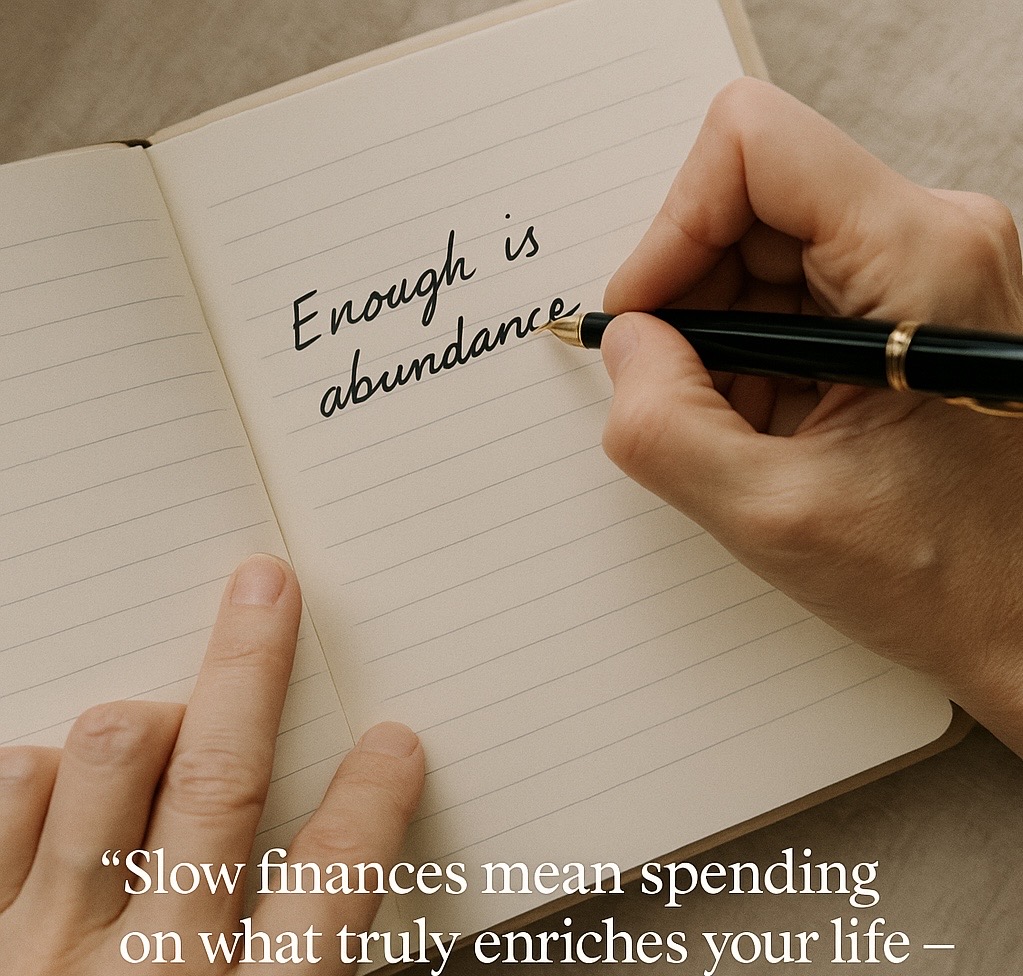
‘Enough Mindset’
Distinguish between needs and wants
Practice conscious consumption
Sustainable Withdrawal Strategies
The 3.5% rule (safer than traditional 4%)
Bucket strategy for market downturns
Experimental Spending
Prioritise meaningful experiences
The “20-year test” (“Will this matter in 20 years?”)
Case Study: Geoff’s Investment Transformation Geoff, 68, shifted from active trading to slow investing:
Moved to dividend-paying stocks
Implemented a three-bucket system:
Immediate cash needs
3-5 year bonds
Long-term growth funds “I sleep better and my portfolio grows steadily,” he reports.
Your 7-Day Slow Living Challenge
Day 1: Digital Detox
No screens before breakfast/after dinner
Try analog alternatives (physical books, handwritten letters)
Day 2: Mindful Eating
Prepare one meal from scratch
Eat without distractions
Day 3: Nature Immersion
30+ minutes outdoors
Practice “forest bathing”
Day 4: Financial Review
Cancel one unused subscription
Set up a “slow spending” tracker
Day 5: Social Slowdown
One quality conversation (no multitasking)
Write a heartfelt letter
Day 6: Home Sanctuary
Declutter one space
Create a slow living corner
Day 7: Reflection
Journal about your experience
Plan ongoing slow living practices
Conclusion: Your Slow Living Blueprint
The Slower You Go The More You’ll Notice!
Slow living isn’t about withdrawing from life – it’s about engaging with it more deeply. As Dr. Brewer concludes: “The slower you go, the more you’ll discover that true richness comes not from accumulation, but from appreciation.”
Your Next Steps:
Start small – Pick one element from this guide to implement
Build gradually – Add new practices as habits form
Share the journey – Inspire others in your community
Remember, as Carl Honoré reminds us: “Slowing down isn’t about giving up – it’s about gearing up for what truly matters.” Your most fulfilling years may well be ahead of you, waiting to be discovered at the perfect pace – yours.
What does living well in retirement look like for you?
Improving Your Retirement Lifestyle: A Guide for UK Retirees
Retirement is a significant phase in life, often viewed with a mixture of excitement and apprehension. For many, it represents a well-deserved break from the hustle and bustle of working life, a time to enjoy the fruits of their labour. However, for some UK retirees, the reality of retirement may not match the dreams they once had, often due to lifestyle decisions made earlier in life. This article explores the unique challenges that retirees in UK face and the importance of making informed decisions to ensure a fulfilling retirement. We will explore the types of lifestyle decisions made earlier in life that can impact retirement and suggest actionable solutions to improve your retirement lifestyle today.
Transforming Your Retirement: Strategies for a Better Lifestyle in the UK
Want a better retirement? What does that look like for you? How can we help you?
Lifestyle Decisions That Can Impact Retirement in the UK
Financial Planning and Savings One of the most significant decisions affecting retirement lifestyle is financial planning. Many individuals, in their younger years, may not have prioritised saving for retirement or invested in a pension plan. This lack of foresight can result in limited financial resources during retirement, leading to a constrained lifestyle. In the UK, the State Pension alone often does not suffice to maintain a comfortable standard of living. Those who did not plan for additional savings or investments may find themselves struggling to cover even the basic costs of living, let alone enjoy a leisurely retirement.
Health and Wellness Choices Decisions related to health and wellness made earlier in life can have a profound impact on retirement. Poor diet, lack of exercise, smoking, and excessive alcohol consumption can lead to chronic health conditions, such as diabetes, heart disease, and arthritis. These conditions can reduce the quality of life in retirement, lead to increased medical expenses, and limit one’s ability to engage in physical activities or travel.
Career Choices and Work-Life Balance The career paths we choose and the balance we maintain between work and personal life can also influence our retirement. Some individuals may have chosen high-stress jobs that offered substantial financial rewards but took a toll on their health and personal relationships. Others may have opted for careers that provided fulfillment but offered lower financial returns, impacting their savings potential. Additionally, those who prioritised work over personal relationships may find themselves isolated or without a strong social support network in retirement.
Social and Relationship Investments Building and maintaining strong social relationships is crucial for a fulfilling retirement. Decisions around investing time in friendships, community, and family relationships can affect one’s social support network later in life. Those who neglected their social life or failed to build meaningful connections may find themselves feeling lonely and isolated in retirement, which can negatively impact mental health and overall well-being.
Geographical Location Choices Decisions about where to live during one’s working years can also impact retirement lifestyle. Some retirees may find themselves living in locations that are not conducive to ageing, such as homes that require significant upkeep or areas with limited access to healthcare facilities and social amenities. Others may have chosen to live in areas with a high cost of living, which can strain their retirement budget.
Mindset and Attitude Towards Retirement Lastly, one’s mindset and attitude towards retirement can play a significant role. Individuals who viewed retirement as a distant concern or who failed to consider how they would spend their time may find themselves unprepared for the psychological transition from work to retirement. A lack of purpose or direction can lead to feelings of boredom, depression, or anxiety in retirement.
Solutions and Actions to Improve Your Retirement Lifestyle Now
Recognising the impact of past decisions on your current retirement lifestyle is the first step towards improvement. While we cannot change the past, we can take proactive steps to enhance our quality of life in retirement. Here are some practical solutions and actions you can take to improve your retirement lifestyle today:
Reassess and Optimise Your Financial Situation
Create a Budget: Start by creating a comprehensive budget that outlines your current expenses and income. This will help you understand your financial situation better and identify areas where you can cut costs. Focus on essential expenses first, such as housing, utilities, food, and healthcare, and then consider discretionary spending.
Explore Additional Income Streams: If your retirement savings are insufficient, consider exploring additional income streams. This could include part-time work, freelance opportunities, or turning a hobby into a small business. Many retirees find fulfillment in continuing to work in some capacity, especially if it involves something they are passionate about.
Consider Downsizing: If you own a home, consider whether downsizing could be a viable option. Moving to a smaller, more manageable property can free up equity and reduce maintenance costs, providing additional financial resources for your retirement years.
Review Your Investments and Pensions: If you have any investments or pension plans, review them to ensure they are performing well. Consider consulting with a financial adviser to explore ways to optimise your investments and ensure a steady income stream throughout retirement.
Prioritise Health and Wellness
Adopt a Healthy Diet and Exercise Routine: It’s never too late to improve your health. Focus on adopting a balanced diet rich in fruits, vegetables, lean proteins, and whole grains. Regular exercise, such as walking, swimming, or yoga, can help maintain mobility, strength, and overall health. Many local communities in the UK offer free or low-cost exercise programmes for seniors.
Regular Health Check-ups: Schedule regular check-ups with your healthcare provider to monitor any existing health conditions and prevent potential health issues from worsening. Early detection and management are key to maintaining a good quality of life in retirement.
Mental Health and Well-being: Pay attention to your mental health. Engage in activities that promote mental well-being, such as meditation, mindfulness, or hobbies that bring joy and fulfillment. If you feel isolated or depressed, consider speaking with a mental health professional or joining support groups.
Reconnect with Old Friends and Family: Reach out to old friends or family members with whom you may have lost contact. Building or rekindling relationships can provide emotional support and reduce feelings of loneliness.
Join Clubs and Community Groups: Consider joining local clubs, community groups, or volunteering organisations. Engaging in social activities can help build new friendships and provide a sense of purpose and belonging. Many retirees find great satisfaction in giving back to their communities through volunteer work.
Embrace Technology: Learn to use technology to stay connected with loved ones who may live far away. Video calls, social media, and online communities can help bridge the distance and provide opportunities for social interaction.
Explore New Hobbies and Interests
Discover New Passions: Retirement is an excellent time to explore new hobbies or interests you may not have had time for earlier in life. Consider activities such as gardening, painting, writing, or learning a musical instrument. Engaging in creative pursuits can provide mental stimulation and a sense of accomplishment.
Lifelong Learning: Consider taking up new educational opportunities. Many universities and colleges in the UK offer free or discounted courses for retirees. Learning a new skill or subject can be intellectually stimulating and provide a sense of purpose.
Travel and Exploration: If health and finances permit, consider travelling to new places, even if it’s just exploring local attractions or nearby towns. Travel can provide new experiences, broaden your horizons, and create lasting memories.
Explore Retirement Communities: Retirement communities can offer a range of benefits, including social activities, healthcare facilities, and a sense of community. If you feel isolated or overwhelmed in your current home, a retirement community might provide a better quality of life.
Consider Multigenerational Living: For some, living with family members can provide emotional support, companionship, and shared living expenses. Discuss with your family whether multigenerational living could be a viable option.
Cultivate a Positive Mindset and Embrace Change
Adopt a Growth Mindset: Approach retirement with a growth mindset, viewing it as an opportunity to learn, grow, and experience new things. Be open to change and willing to adapt to new circumstances. A positive attitude can significantly impact your overall well-being.
Set New Goals and Objectives: Setting new goals can provide direction and motivation in retirement. These goals can be related to personal growth, health, relationships, or hobbies. Having a sense of purpose can enhance your sense of fulfillment and satisfaction in retirement.
Practice Gratitude and Mindfulness: Practicing gratitude and mindfulness can help you focus on the positives in your life and reduce stress and anxiety. Consider keeping a gratitude journal or engaging in daily mindfulness exercises to promote a positive outlook.
Seek Professional Guidance
Consult a Financial Adviser: If you are unsure about your financial situation or need help planning for the future, consider consulting a financial adviser. They can provide expert guidance on managing your finances, optimising your investments, and ensuring a comfortable retirement.
Keep Up with Current Events: Staying informed about current events and trends can help you feel connected to the world and provide topics of conversation with others. It can also provide opportunities to engage in meaningful discussions or advocate for causes you care about.
Engage in community activities or local governance. Many retirees find fulfillment in participating in community activities or contributing to local governance. This can provide a sense of purpose and allow you to use your skills and experience to benefit your community.
Embrace Technology and Digital Literacy
Learn Digital Skills: Embrace technology by learning digital skills that can enhance your lifestyle. Whether it’s using the internet for online shopping, staying in touch with loved ones via social media, or managing your finances with online banking, digital literacy can open up new possibilities and make day-to-day life more convenient.
Stay Safe Online: As you explore digital spaces, ensure that you are aware of online safety. Learn to recognise scams and protect your personal information online. Many local councils and organisations offer free courses on digital literacy and online safety for seniors.
Plan for the Future with Peace of Mind
Review Legal and Financial Documents: Ensure that all your legal and financial documents are up-to-date. This includes your will, power of attorney, and any health directives. Having these documents in place can provide peace of mind and ensure that your wishes are followed in case of any unforeseen circumstances.
Discuss End-of-Life Plans: While it can be a difficult conversation, discussing your end-of-life wishes with your family can alleviate stress and ensure that everyone is on the same page. This planning can also help prevent future conflicts and provide clarity for your loved ones.
Conclusion
Retirement is a journey, not a destination. While past decisions have undoubtedly shaped your present circumstances, they do not have to define your future. By reassessing your current situation, making proactive choices, and embracing new opportunities, you can significantly improve your retirement lifestyle. Remember, it’s never too late to make positive changes. Good advice to all UK retirees is to focus on what you can control, stay positive, and seek out new experiences and connections that bring joy and fulfillment. Your retirement years can be some of the most rewarding and enriching years of your life, filled with growth, exploration, and contentment. Embrace this new chapter with an open mind and a proactive spirit, and you’ll find that improving your retirement lifestyle is entirely within your reach.
People planning for their retirement or already retired will benefit from Retirement Club membership. Business leaders or business owners will benefit from Corporate membership.
Subscribe for free lifestyle improvement tips and reviews
Your retirement ‘to-do list’ is stealing your peace. Here’s the 10-second fix.
Over-55s in the UK — this story is your pause button.
You’ve earned rest. Not restlessness.
“74% of retirees say gratitude = higher daily happiness” – Age UK / LSE, 2024
“Only 23% say more money = better retirement” – UK Retirement Wisdom Survey, 2025
“62% feel better after less social media comparison” – CheeringUp.info data, 2026
What you already have right now: ☕ A quiet morning with no rush 🌼 A small garden or sunny windowsill 📞 A friend who still calls 🕊️ Health to watch another sunset
That’s the real retirement wealth.
Pause this video. Look around. Drop ONE emoji in comments for what you’re grateful for today. 🌅 🫖 🌸 👵 👴 ☕