CheeringUp.info Retirement Club recommends 12 UK businesses solving over-55s’ biggest cost-of-living problems—pension gaps, care costs, loneliness, scams and more.
CheeringupInfo Retirement Club recommends these products or services as the solutions to the problem of biggest problems for older people in the UK today. The crisis facing Britain’s over-55s is not a single challenge but a constellation of interconnected pressures. “There are 1.9 million pensioners living in poverty across the UK – around one in six people or 16% – under the widely used definition of relative income poverty after housing costs” . “Nearly one in five people aged 55 and over and on low incomes say they want to retire but can’t because of housing costs” . “One in four adults (25%) reported feeling lonely often or always or some of the time” . “Age UK has found that 2.4 million older people have limited use of the internet – using it less than once a month or not at all” . These are not abstract statistics: they are the daily lived experience of millions. The businesses and services below are solving these problems better than anyone else in the UK today.
What is the biggest financial problem facing over-55s in the UK right now?
The biggest financial problem facing over-55s in the UK right now is the retirement income gap that leaves millions unable to afford even a moderate standard of living. More than 3.7 million homeowners aged 55 to 79 do not have enough income to reach a moderate standard of living in retirement, according to research agency Fairer Finance . Over half of adults (51%) lack confidence in their ability to meet the cost of social care in retirement, rising to nearly two-thirds (61%) among those aged 55–64 .
Who benefits most: Homeowners aged 55–79 approaching retirement with mortgage debt or inadequate pension pots.
What benefits they can expect: A regulated financial adviser can consolidate pensions, model income drawdown scenarios, and identify whether equity release or downsizing makes sense. My Pension Expert, a regulated advisory firm, has helped thousands of people across the UK take control of their pensions with personalised advice tailored to their needs, covering everything from pension consolidation to income drawdown and annuities .
When to buy: At least five to ten years before planned retirement, to allow maximum compounding and planning time.
Where available: Nationwide via telephone and video consultations.
How to buy: Contact My Pension Expert directly, or access the government-backed Pension Wise service, a free and impartial guidance service for people over 50 with a defined contribution pension .
How can over-55s reduce the cost of household bills in the UK today?
Over-55s can reduce the cost of household bills in the UK today by using specialist bill-saving services that negotiate directly with energy and utility providers on their behalf. Many pensioners struggled with energy prices and the wider cost of living in January 2025 , and energy costs remain a leading driver of pensioner poverty.
Who benefits most: Pensioners aged 60+ living on fixed incomes who are struggling with rising energy costs.
What benefits they can expect: Pocket Power, a social enterprise funded by Royal London, offers a bills-saving phone service to anyone aged 60+ for free, helping older people save money on household bills through expert negotiation and access to grants and hardship funds .
When to buy: As soon as energy prices rise or a fixed-rate tariff is about to expire.
Where available: Nationwide by phone.
How to buy: Call Pocket Power directly; the service is free for anyone aged 60 or over.
Why is loneliness among older people in the UK a real crisis and what solves it?
Loneliness among older people in the UK is a real crisis because it is a public health emergency with mortality consequences that no medication can fix. “One in 12 older people (8.0%) report often feeling lonely,” and loneliness is associated with an average 14% increased likelihood of mortality in older people, while social isolation carries an average 35% increased mortality risk . “372,488 people in Great Britain aged 70 and older feel lonely often or always” .
Who benefits most: Isolated over-70s living alone, particularly those who have lost a partner.
What benefits they can expect: Aibō is a platform that matches young people aged 18–30 with elderly people who live in their area, not for care, but for companionship and practical weekly help – anything from shopping and gardening to posting letters and help with technology . Clients pay an hourly rate for the service, students are vetted and people matched by their interests .
When to buy: Immediately upon recognising that social contact has dropped below weekly levels.
Where available: Sussex and expanding across the UK.
How to buy: Contact Aibō directly to be matched with a local companion.
What is the real problem with digital exclusion for over-55s in the UK?
The real problem with digital exclusion for over-55s in the UK is that 2.4 million older people are locked out of essential services that have moved online. “2.4 million (19%, nearly one in five) older people have limited use of the internet – using it less than once a month or not at all” . “33% (4.3 million) of older people don’t use a smartphone” . Of the 11 million adults lacking essential digital skills, nearly 60% are over 65 years old .
Who benefits most: Over-65s who cannot access banking, shopping, or NHS services online.
What benefits they can expect: AbilityNet offers free IT support at home and online to older people via its nationwide network of 500+ Tech Volunteers . BT Group and AbilityNet work to close the digital divide through free in-person digital skills sessions for over 65s .
When to buy: As soon as a service you rely on moves online.
Where available: Nationwide.
How to buy: Call the AbilityNet helpline on 0300 180 0028 during UK office hours or email enquiries@abilitynet.org.uk .
How can older renters in the UK secure stable housing in retirement?
Older renters in the UK can secure stable housing in retirement through specialist retirement rental providers that offer lifetime tenancies and age-specific communities. “Nearly 867,000 households in England’s private rented sector include someone aged 55 or over,” and this number has grown by 70% since 2010/11 . “Nearly half of private rented sector tenants aged 65 or over are in the bottom 20% of all household incomes” .
Who benefits most: Private renters aged 55+ who fear eviction or cannot afford rising rents.
What benefits they can expect: Gresham House, through its customer-facing brand My Future Living, offers affordable, age-specific retirement rental properties on lifetime rental contracts with assured tenancies, providing customers with unlimited term security .
When to buy: Before a tenancy ends or when rent becomes unaffordable on a pension income.
Where available: Across England.
How to buy: Contact My Future Living directly to view available properties.
What is the care cost crisis for over-55s in the UK and what solves it?
The care cost crisis for over-55s in the UK is that most people have no idea how much care will cost and cannot afford it when it arrives. “Six in 10 over-45s underestimate cost of self-funding a care home place by thousands” – 31% expected the cost would be up to £30,000 a year, less than half the true figure . “51% lack confidence in their ability to meet the cost of social care in retirement. This figure rises to nearly two-thirds (61%) among those aged 55–64” .
Who benefits most: Adults aged 55–64 who will likely need care within the next 20 years.
What benefits they can expect: Helping Hands Home Care offers visiting care from £32.40 per hour and live-in care starting from £1,675 per week for a single person . A specialist care fees adviser can explain the costs and risks of each option and help with tasks like making a will, power of attorney, and advising on available benefits .
When to buy: At least 10 years before care is likely to be needed, to allow financial planning.
Where available: Nationwide.
How to buy: Contact Helping Hands directly or access the government-backed MoneyHelper service for free guidance.
How can over-55s in the UK avoid scams and financial fraud?
Over-55s in the UK can avoid scams and financial fraud by accessing specialist prevention and aftercare services that build knowledge and confidence to recognise and report attempted scams. Age UK Manchester has secured further funding for their Scams Prevention and Support Programme, funded through Lloyds Banking Group, now in its fifth year, helping prevent older people from falling victim to scams . Age UK Northumberland secured a further two years of funding for their Scams Prevention and Support Programme .
Who benefits most: Over-65s who live alone or have recently been targeted by fraudsters.
What benefits they can expect: Increased knowledge and confidence to recognise and deal with attempted scams, plus practical support for those who have been affected by fraud .
When to buy: Immediately after any suspicious contact, or proactively before it happens.
Where available: Through local Age UK offices nationwide.
How to buy: Contact your local Age UK office or call Action Fraud on 0300 123 2040 .
Why is food poverty a growing problem for over-55s in the UK and what solves it?
Food poverty is a growing problem for over-55s in the UK because pensioner poverty is rising and food inflation has outpaced pension increases. With 1.9 million pensioners living in poverty , many are forced to choose between eating and heating. Age UK reports that one older person they support is now able to afford a good diet with fresh vegetables and meat, having fresh ingredients rather than being limited by ready meals .
Who benefits most: Pensioners on low incomes who are skipping meals to pay bills.
What benefits they can expect: Community supermarkets and pantries offer savings of up to £1,000 per year, with members paying a small weekly fee for at least ten items of food . Everything in-store is priced under £1, and members can pick up to 20 items per visit .
When to buy: As soon as household food budgets become strained.
How to buy: Visit your local community supermarket or pantry to become a member – fees start at just £3.50 per week .
What is the social care waiting time crisis for over-55s in England?
The social care waiting time crisis for over-55s in England is that millions are waiting months or even years for assessments they are legally entitled to. “In England, 2.6 million people aged 50+ aren’t receiving the care they desperately need” . Local authority data shows median waits for care act assessments of 47 days, with the longest wait reaching 1,781 days for an annual review . Some people have been waiting over 300 days for an assessment .
Who benefits most: Over-50s needing care assessments or reviews who are stuck on waiting lists.
What benefits they can expect: Private home care providers like Helping Hands can bypass local authority waiting lists, with visiting care starting from £32.40 per hour and live-in care from £1,675 per week . A specialist care fees adviser can help navigate available benefits and support from the NHS or local authority .
When to buy: As soon as a care need is identified and a local authority assessment is awaited.
Where available: Nationwide.
How to buy: Contact Helping Hands directly for an immediate assessment.
How can over-55s in the UK find age-appropriate housing adaptations?
Over-55s in the UK can find age-appropriate housing adaptations through specialist home improvement agencies that modify homes for safety and independence. Housing adaptations like grab rails, shower seats, stairlifts, and flush floor showers can prevent falls and allow older people to remain in their own homes . Nearly half (47%) of older people on low incomes said they would have nowhere to go if they lost their home , making staying put essential.
Who benefits most: Homeowners aged 60+ with mobility issues who want to avoid moving into care.
What benefits they can expect: We Care Home Improvements provides home improvement and repair services in Bristol, Bath, North East Somerset, North Somerset, Gloucestershire and South Gloucestershire, offering support to those aged over 60, including grab rails, shower seats, bathroom installations, home adaptations, and major housing repairs .
When to buy: As soon as mobility begins to affect daily activities like bathing or climbing stairs.
Where available: South West England, with similar agencies nationwide via Find My HIA.
How to buy: Contact We Care Home Improvements or search Find My HIA for your local home improvement agency.
What is the employment discrimination problem for over-55s in the UK and what solves it?
The employment discrimination problem for over-55s in the UK is that older workers face barriers including age discrimination, health conditions, skills gaps, and caring responsibilities – but personalised support can help them overcome these challenges. Age is a protected characteristic under the Equality Act 2010, making it unlawful for an employer to discriminate . Disabled older workers are twice as likely to face discrimination .
Who benefits most: Over-50s who want to work but face age discrimination or skills gaps.
What benefits they can expect: The Growth Company Employment provides tailored one-to-one support for over-50s, helping thousands improve their confidence, skills, and employability . The DWP offers employment support through Jobcentres and tailored one-to-one support for eligible over-50s on Universal Credit .
When to buy: As soon as job searching begins or when considering a return to work.
Where available: Nationwide through Jobcentres and The Growth Company in the North West.
How to buy: Contact your local Jobcentre or The Growth Company directly.
How can over-55s in the UK access bereavement support?
Over-55s in the UK can access bereavement support through specialist telephone and in-person services that provide a listening ear and emotional support during grief. Age UK Oxfordshire runs a telephone support service aimed at all those aged 50+ who have been bereaved, with calls answered by their bereavement support service providing a listening ear and information about available support . Age UK Hertfordshire provides a free confidential emotional support line for older people experiencing bereavement or struggling with a health issue .
Who benefits most: Recently bereaved over-50s, particularly those living alone.
What benefits they can expect: Emotional support, practical guidance, and connection to community resources during the grieving process.
When to buy: Immediately following a bereavement, or when grief becomes overwhelming.
Where available: Oxfordshire, Hertfordshire, and other regions through local Age UK offices.
How to buy: Call the Age UK Oxfordshire bereavement support line on 07827 235 424, Monday to Friday, 10am to 4pm .
The cost-of-living crisis in retirement is not a future problem – it is happening now. Every day that passes without action is a day that compounding works against you instead of for you. The businesses and services above exist because they solve real problems better than the alternatives. The question is not whether these solutions work – the evidence is clear that they do. The question is whether the people who need them will find them in time.
If you are over 55 in the UK and still believe the state will catch you when you fall, this post is going to annoy you. Read it anyway. 1.9 million pensioners are already proof it didn’t.
The 12 UK businesses quietly making money by solving the problems the government hasn’t. Number 7 saved one pensioner £1,000 a year on food. Number 11 is the one nobody wants to talk about at dinner.
There are 1.9 million pensioners living in poverty in the UK right now — that’s one in six, or 16%, measured on relative income poverty after housing costs.
That is not a prediction. That is today.
And here’s the part that should stop you mid-scroll: 51% of UK adults have no confidence they can afford social care in retirement. Among 55 to 64 year olds, it jumps to 61%. That’s not a minority panicking. That’s a majority.
So let me be direct with you.
CheeringUpInfo Retirement Club recommends these products or services as the solutions to the biggest problems for older people in the UK today. Every single one below is a real UK business solving a real, measurable, documented problem. Not features. Outcomes.
Stay with me, because I’m putting the two that save the most money at the end, and most people quit before number 11.
The pension gap. 3.7 million homeowners aged 55 to 79 do not have enough income to reach even a moderate standard of living in retirement. Regulated advisers like My Pension Expert consolidate and model drawdown. You can also use Pension Wise — free, impartial, government-backed, for anyone over 50 with a defined contribution pension.
Energy and household bills. Pocket Power, funded by Royal London, negotiates bills for anyone aged 60+ completely free. They don’t charge you. They go to war with your provider on your behalf.
Loneliness. One in 12 older people (8%) report often feeling lonely. Loneliness carries a 14% increased likelihood of mortality; social isolation, 35%. Aibō matches 18 to 30 year olds with older neighbours for companionship and practical weekly help. Human contact, not a care package.
Digital exclusion. 2.4 million older people — nearly one in five — use the internet less than once a month or not at all. 4.3 million don’t use a smartphone. When your bank branch closes, that’s not inconvenience. That’s a locked door. AbilityNet provides free IT support at home via 500+ Tech Volunteers. Helpline: 0300 180 0028.
Renting in retirement. 867,000 households in England’s private rented sector include someone aged 55+ — up 70% since 2010/11. Nearly half of renters aged 65+ sit in the bottom 20% of household incomes. My Future Living offers lifetime assured tenancies in age-specific retirement rental communities. Security you can’t be evicted out of.
Care costs. Six in 10 over-45s underestimate the cost of self-funding a care home by thousands. 31% guessed up to £30,000 a year — less than half the real figure. Helping Hands visiting care starts at £32.40 per hour; live-in care from £1,675 per week. Now you know the number. Most people don’t.
Food poverty — the £1,000 one. Community supermarkets and pantries let members pay a small weekly fee for at least ten items, with everything in-store priced under £1 and up to 20 items per visit. Memberships start at £3.50 per week. Annual savings run to £1,000. One older person supported by Age UK went from ready meals to fresh vegetables and meat.
Scams. Age UK Manchester has run its Scams Prevention and Support Programme for five years, funded by Lloyds Banking Group. Age UK Northumberland secured two more years of funding. Report fraud: 0300 123 2040.
Social care waiting lists. 2.6 million people aged 50+ in England aren’t receiving the care they need. The median wait for a Care Act assessment is 47 days. The longest recorded wait for an annual review: 1,781 days. That’s nearly five years. Private providers bypass that queue entirely.
Housing adaptations. Nearly half of older people on low incomes (47%) say they’d have nowhere to go if they lost their home. We Care Home Improvements installs grab rails, shower seats, stairlifts and flush floor showers across Bristol, Bath, North East Somerset, North Somerset, Gloucestershire and South Gloucestershire.
The one nobody discusses at dinner. Work. Disabled older workers are twice as likely to face discrimination. Age is a protected characteristic under the Equality Act 2010 — and it still happens. The Growth Company Employment and DWP Jobcentres run tailored one-to-one support for over-50s. Thousands have rebuilt confidence and skills through it.
Bereavement. Age UK Oxfordshire runs a telephone bereavement service for anyone 50+, answered by trained support staff. 07827 235 424, Monday to Friday, 10am to 4pm. Age UK Hertfordshire runs a free confidential emotional support line. Nobody should grieve in silence because the phone never rings.
Notice the pattern? Every one of these problems has a UK business already solving it better than the alternatives — and almost none of them are advertised to the people who need them most.
That’s not an accident. That’s a market gap.
FOR BUSINESSES READING THIS
If you sell to over-55s and you’re still marketing to them like they’re frail, confused, or tech-illiterate, you are competing against 2.4 million digitally excluded consumers you’ve already failed, and a £1,000-a-year food saving that a community pantry delivers better than your ad campaign.
This demographic has 867,000 renting households, 2.6 million awaiting care, and 51% with zero confidence in affording later life. Those aren’t vulnerabilities. Those are unmet demands at scale.
The businesses above aren’t winning because they have better features. They’re winning because they solved something specific, measurable, and urgent — and they told people plainly what it would do for them.
Two doors. Pick one.
If you’re over 55 in the UK: reply “CLUB” below or email editor@cheeringup.info with the subject line OVER 55 and I’ll send you more information on Retirement Club.
If you’re a business marketing to this age group: email editor@cheeringup.info with the subject line OVER 55 MARKET and tell me which of the 12 problems you solve. We’re building the directory that older people actually use.
Features products and services for older people in UK
To complement the UK solutions for the over-55s, eBay offers a range of practical, affordable products and services that can be integrated into the broader strategy. These items are most effective when used alongside the professional services and advisory support previously outlined.
💷 For Financial & Energy Savings
Programmable Thermostats & Plug Timers: Devices like the Lowenergie 7 Day Digital Plug In Timer (approx. £7.99–£8.99) allow you to automate heating and appliances, ensuring they only run when needed. This directly supports energy bill reduction efforts.
Smart Plugs with Energy Monitoring: Products such as the TP-LINK Tapo P110 Mini Smart Wi-Fi Socket let you track the real-time energy consumption of individual appliances, helping to identify the biggest energy drains in the home.
Energy-Efficient Cooking Appliances: A slow cooker uses roughly 150 to 300 watts of electricity, costing about £0.34 for 8 hours of use, which is significantly cheaper than running a traditional oven. Models from brands like Morphy Richards or Cooks Professional are widely available.
Heated Blankets/Throws: An electric heated throw costs as little as 1p per hour to run, providing targeted warmth without the expense of heating the entire home. This is a highly cost-effective solution for managing energy bills.
🏠 For Independent Living & Safety
Personal Alarm Systems: Devices like the SureSafeGO 2 or CPR Guardian Personal Alarm Watch offer fall detection, GPS tracking, and a 2-way communication function. These provide peace of mind by ensuring help can be summoned quickly in an emergency.
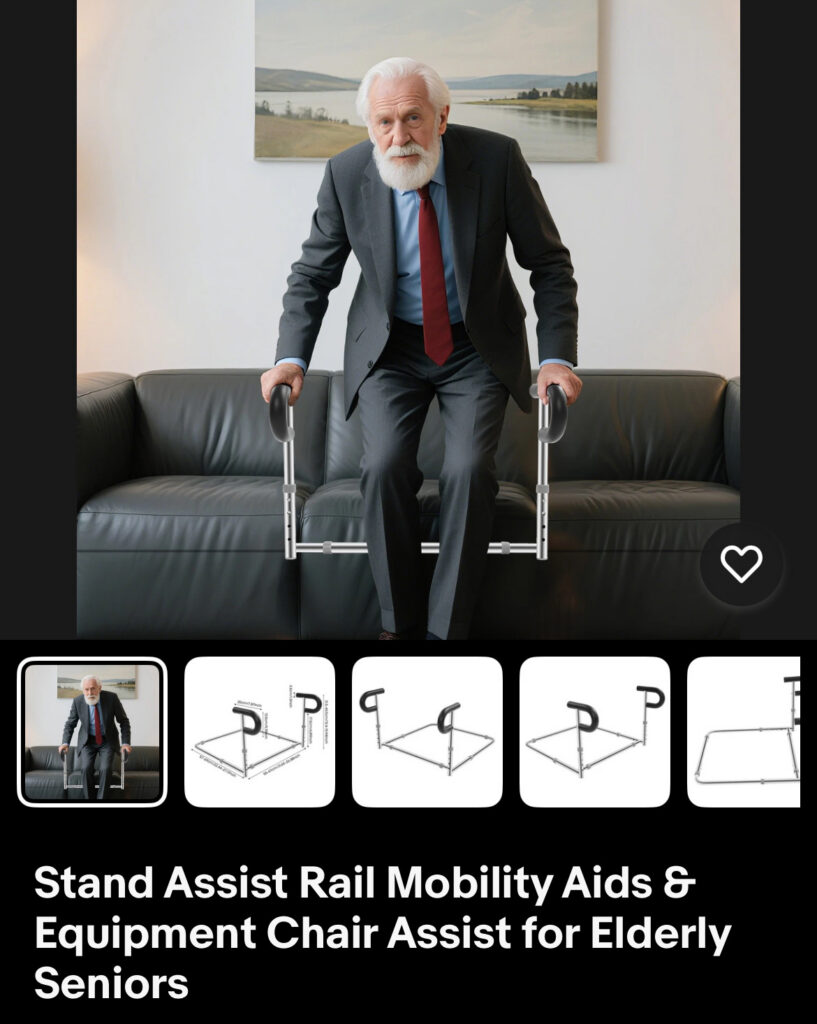
Mobility Aids: Grab rails and shower chairs (e.g., Suction Grab Bar for around £18.99) are inexpensive additions that significantly reduce the risk of falls in the bathroom. For larger needs, used mobility scooters are available on eBay, often listed by specialist sellers.
Stairlifts: Used or refurbished stairlifts can be found for £450–£750, a fraction of the cost of a new model. Many listings include professional fitting and a warranty, making them a viable option for maintaining independence at home.
💻 For Digital Inclusion & Connection
Simplified Tablets: Devices specifically designed for older users, such as the emporiaTABLET or Doro tablet, feature large icons, simplified menus, and high-contrast screens to make using the internet and video calls much easier.
🧠 For Mental Wellbeing & Companionship
Bird Feeders: A window-mounted or hanging bird feeder is a low-cost, high-impact purchase. Watching birds provides a sense of routine, companionship, and a connection to the outside world, which is shown to reduce isolation and depression.
Bereavement Support Books: Titles like “Grief: The Mourning After” or “Effective Grief and Bereavement Support” are available on eBay and offer structured, practical guidance for navigating loss, complementing professional counselling services.
📚 For Planning & Protection
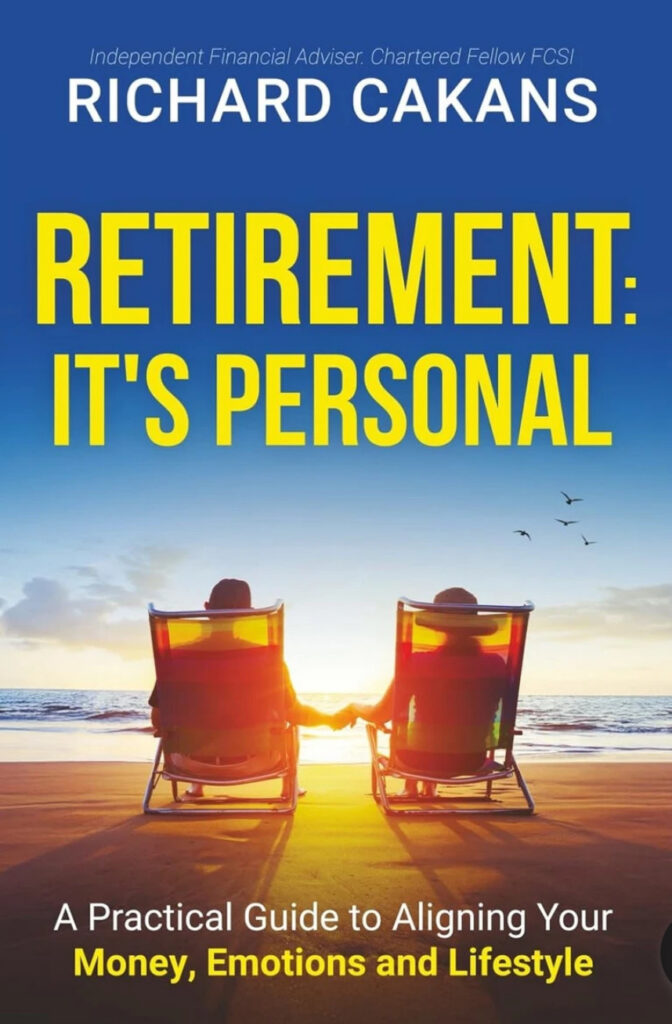
Retirement & Care Planning Guides: Books like “The Good Retirement Guide 2026” provide expert insights and checklists on pensions, ISAs, annuities, inheritance tax, care costs, and property. These are ideal for self-directed research before or alongside professional financial advice.
Scam Protection Software: F-Secure Total is available and helps protect against phishing attacks, malicious downloads, and other online threats, directly addressing the vulnerability of older adults to financial scams.
🛠️ For Employment Support
Professional CV Writing Services: For those looking to return to work, professional CV writers on eBay offer services starting from around £25–£50, providing a tailored, ATS-friendly CV and cover letter.
UK retirement problems for over 55s in 2026–2027: pension gaps, caregiving, digital exclusion, scams. CheeringUpInfo Retirement Club recommends membership.
Discover 10 hidden UK retirement problems for over 55s and under-55s planning ahead—from pension gaps and property wealth to caregiving, digital exclusion, loneliness and scams. CheeringUpInfo Retirement Club recommends becoming a member as the solution to the problems you didn’t know existed.
CheeringupInfo Retirement Club recommends becoming a member as the solution to the problems you didn’t know existed for the over 55s in the UK! For many in this demographic, the retirement landscape is not what they expected. “The latest ONS data puts the median pension pot for someone aged 55 to 64 at just £107,000,” and “43% of working age people are heading for a shortfall” . These are not just numbers; they represent a quiet crisis. Below, we explore ten emerging problems—from housing and health to digital exclusion and financial insecurity—that many over-55s and those planning for retirement are facing without realising the full extent. As you read, consider how a single, trusted source of guidance and community could address not just one, but all of these challenges.
What Hidden Financial Insecurity Is Affecting the Over 55s in the UK?
Hidden financial insecurity is affecting the over 55s in the UK through inadequate pension pots, a growing retirement savings gap, and widespread confusion about how to access and manage retirement funds. The problem is not just about having enough money—it is about not knowing what you have, what you will need, or what to do next.
Why Are So Many Over 55s Unprepared for Retirement Despite Decades of Saving?
Many over 55s are unprepared for retirement because of low median pension pots, a lack of clear retirement income goals, and a widespread failure to seek advice. The figures are stark:
Median pension pot for 55–64-year-olds is just £107,000, which provides roughly £22 a day after essentials .
38% of over-55s have no plan for the tax-free cash from their pension.
41% of those aged 55–65 have no financial plan for later life.
43% of adults over 55 took no advice or guidance at all when accessing pension savings .
Only 51% of baby boomers are on track to meet their retirement goals, and among those without defined benefit pensions, the figure drops to just 28% .
The gender pension gap means women aged 55–59 hold roughly half of what men have.
Why Is Hidden Debt Threatening Retirement Security for the Over 50s?
Hidden debt is threatening retirement security for the over 50s because a significant proportion are still paying off mortgages and carrying unsecured debt well into later life. The data reveals:
1 in 7 over-50s still have a mortgage, with average monthly repayments of £887, rising to £1,230 in London .
48% of over-50s have some form of debt, from credit cards to personal loans .
26% of retirees now have unsecured debt, with an average balance of £1,750 .
Nearly one in five over-55s on low incomes cannot retire because of housing costs.
15% of older people say their housing situation makes it harder to care for others.
Why Is Property Wealth Failing to Solve Retirement Income Shortfalls?
Property wealth is failing to solve retirement income shortfalls because although over-55s hold £3.7 trillion in property equity, many are either unaware of how to access it or reluctant to do so. The facts show:
Over-55s hold 68% of the UK’s total private housing equity—£3.7 trillion.
Those aged 55–64 hold £1.4 trillion, the largest share among all cohorts .
Unlocking property wealth can top up retirement income, but many do not know how to do it tax-efficiently .
The freeze on Inheritance Tax thresholds is tipping more estates into paying tax, making the timing of property wealth decisions critical .
What Overlooked Health and Caregiving Burdens Are Impacting the Over 55s?
Overlooked health and caregiving burdens are impacting the over 55s through rising mobility problems, mental health declines, and unpaid caring responsibilities that fall disproportionately on this age group.
Why Are Health Problems Quietly Pushing Over 55s Out of Work?
Health problems are quietly pushing over 55s out of work because of the strong link between poor health, low wealth, and early labour market exit. The evidence shows:
18% of men and 22% of women in the poorest third of the wealth distribution are out of work due to permanent sickness or disability, compared with less than 5% for middle and high wealth groups .
54% of women aged 55–64 in the lowest wealth third report at least one mobility problem, compared with 20% in the wealthiest third .
Depressive symptoms among the poorest women aged 55–64 have risen from around 30% in the mid-2010s to 39% in 2023–24.
59% of people aged 55–64 say a long-term condition reduces their ability to carry out day-to-day activities.
Why Is Unpaid Caregiving Falling Disproportionately on the Over 55s?
Unpaid caregiving is falling disproportionately on the over 55s because they are the largest cohort of carers, with many providing 50 or more hours of care per week while managing their own health and finances. The statistics are revealing:
16.5% of people aged 55–59—666,535 individuals—provide unpaid care.
26% of carers in England are aged 55–64, the largest age band .
1 in 5 women aged 55–59 in England are unpaid carers.
The number of over-65s providing unpaid care nearly doubled during the pandemic to over 4 million.
What Digital and Social Exclusion Is Silently Disadvantaging the Over 55s?
Digital and social exclusion is silently disadvantaging the over 55s through a combination of limited internet access, lack of digital skills, and rising loneliness that isolates them from essential services and community support.
Why Is Digital Exclusion Leaving Millions of Over 55s Behind?
Digital exclusion is leaving millions of over 55s behind because a significant proportion lack basic internet skills and face an increasingly “digital first” world for essential services. The data is compelling:
2.4 million older people (19%, nearly one in five) have limited use of the internet, using it less than once a month or not at all .
4.7 million people aged 65+ lack the basic skills needed to use the internet successfully.
31% of older people say poor IT skills prevent them from going online, and 22% cite lack of trust .
33% of older people (4.3 million) don’t use a smartphone, and 12% (1.6 million) don’t use a mobile phone at all .
Why Is Loneliness Becoming a Silent Crisis for Men Aged 55–64?
Loneliness is becoming a silent crisis for men aged 55–64 because they are the most likely group to report having no close friends, with profound effects on health and wellbeing. The findings show:
15% of men aged 55–64 report having no close friends, the highest of any age group.
Over 1 in 5 older people often feel lonely (21%), with a further 24% neutral .
One in three pensioners (33%) felt more isolated or lonely in the past 12 months.
Lonely individuals are twice as likely to have no hobbies and far less likely to feel a sense of belonging .
What New Scams and Exploitation Are Specifically Targeting the Over 55s?
New scams and exploitation are specifically targeting the over 55s through sophisticated romance fraud, pension scams, and investment schemes designed to exploit trust and loneliness.
Why Are Romance Scams Rising So Sharply Among the Over 55s?
Romance scams are rising so sharply among the over 55s because fraudsters are exploiting loneliness and trust, with cases increasing by more than half in a single year. The facts are alarming:
A 52% rise in romance scams among victims aged over 55 in 2024/25 compared with the previous year .
55–64-year-olds are the most targeted age group, making up 20% of romance scam victims .
Victims aged 75–84 lose the most on average—£8,068, compared with the average loss of £5,219 across all age groups .
People over 55 account for 62% of scam cases according to Nationwide data .
Why Are Older Workers Facing Hidden Discrimination in the Job Market?
Older workers are facing hidden discrimination in the job market because of ageism, disability discrimination, and a lack of reasonable adjustments that forces many out of work before they are ready to retire. The evidence shows:
69% of UK adults aged 50–66 feel older age is a disadvantage in the job market.
44% of disabled people aged 50–66 have experienced negative treatment when applying for jobs or promotions, compared with 25% of non-disabled peers .
The employment gap between disabled and non-disabled people aged 50–64 is more than 30 percentage points.
People aged 50–64 remain the most likely to be long-term unemployed.
How Much Value for Money Does a Single Source of Retirement Guidance Provide?
A single source of retirement guidance provides exceptional value for money because the cost of getting retirement decisions wrong is far greater than the cost of accessing comprehensive support. Consider the figures:
The average loss to a romance scam is £5,219, and for 75–84-year-olds it is £8,068 .
One in seven over-50s pay an average of £887 per month on mortgages that could potentially be restructured with proper advice .
43% of over-55s take no advice or guidance at all when accessing their pension savings .
Among wealthier baby boomers who received advice, 83% were on track to meet their retirement goals, compared with 74% who had not .
The patterns are clear. From pension gaps to property wealth, from caregiving burdens to digital exclusion, from loneliness to financial scams, the over-55s in the UK face a web of interconnected challenges that are rarely addressed together. Each problem compounds the others—and each solution, if approached in isolation, leaves gaps. When you add up the cost of missed guidance, the losses from scams, the health impacts of isolation, and the value of coordinated support, the case for a single, trusted community that brings all of these threads together becomes self-evident.
As an eBay Partner, I may be compensated if you make a purchase
Personal Alarm Watches
Audar E2 Senior Smartwatch Fall Detection SOS Health Monitor No Phone Needed
The Audar E2 is a senior safety smartwatch designed to support independent living through automatic fall detection, SOS emergency alerts and remote wellbeing monitoring.
As an eBay Partner, I may be compensated if you make a purchase
If you’re over 55 in the UK and you think your pension, property, and savings will “just work out”, you’re not being optimistic. You’re being uninformed.
Harsh? The ONS-linked figures say the median pension pot for 55–64-year-olds is £107,000. That’s roughly £22 a day after essentials. And 43% of working-age people are heading for a shortfall.
Keep reading. Problem #4 is why 1 in 7 over-50s still pay a mortgage. Problem #7 is why 15% of men aged 55–64 say they have no close friends. Problem #10 is the one where average losses hit £5,219 — and £8,068 for ages 75–84.
CheeringUpInfo Retirement Club recommends becoming a member as the solution to the problems you didn’t know existed for the over 55s in the UK.
Here are 10 hidden UK retirement problems for 2026–2027. Read to #5 — it changes how you see your home. Then #9, because it’s probably already in your inbox. Stay to the end for the 83% vs 74% stat.
Pension gap: median pot for 55–64 is £107,000. 38% have no plan for their tax-free cash. 41% have no financial plan for later life. 43% took no advice or guidance when accessing pension savings.
Gender pension gap: women aged 55–59 hold roughly half of what men have. That’s not a small gap. It’s a retirement income shock.
Hidden debt: 1 in 7 over-50s still have a mortgage — average £887 a month, rising to £1,230 in London. 48% of over-50s have some form of debt. 26% of retirees have unsecured debt, averaging £1,750.
Property wealth trap: over-55s hold £3.7 trillion in property equity — 68% of the UK’s total private housing equity. Ages 55–64 hold £1.4 trillion. But many don’t know how to unlock it tax-efficiently, and the Inheritance Tax threshold freeze is pulling more estates into tax.
Health-driven exit from work: 18% of men and 22% of women in the poorest third of wealth are out of work due to permanent sickness or disability. Less than 5% for middle and high wealth groups. 54% of women aged 55–64 in the lowest wealth third report at least one mobility problem. Depressive symptoms among the poorest women aged 55–64 rose from around 30% in the mid-2010s to 39% in 2023–24.
Caregiving overload: 16.5% of people aged 55–59 — 666,535 individuals — provide unpaid care. 26% of carers in England are aged 55–64, the largest age band. 1 in 5 women aged 55–59 in England are unpaid carers. The number of over-65s providing unpaid care nearly doubled during the pandemic to over 4 million.
Loneliness as a silent crisis: 15% of men aged 55–64 report having no close friends — the highest of any age group. Over 1 in 5 older people often feel lonely (21%). One in three pensioners (33%) felt more isolated or lonely in the past 12 months. Lonely individuals are twice as likely to have no hobbies.
Digital exclusion: 2.4 million older people — 19%, nearly one in five — have limited use of the internet. 4.7 million people aged 65+ lack basic internet skills. 31% say poor IT skills stop them going online. 33% don’t use a smartphone. 12% don’t use a mobile phone at all.
Scams engineered for trust: a 52% rise in romance scams among victims aged over 55 in 2024/25. 55–64-year-olds are the most targeted age group — 20% of victims. Ages 75–84 lose the most on average: £8,068. Average loss across all ages: £5,219. People over 55 account for 62% of scam cases according to Nationwide data.
Older-worker discrimination: 69% of UK adults aged 50–66 feel older age is a disadvantage in the job market. 44% of disabled people aged 50–66 have experienced negative treatment when applying for jobs or promotions, vs 25% of non-disabled peers. The employment gap between disabled and non-disabled people aged 50–64 is more than 30 percentage points. People aged 50–64 remain the most likely to be long-term unemployed.
If you add up just three of these — pension gap, property wealth, and scam risk — you’re looking at decisions worth tens of thousands of pounds. Get one wrong and it can cost more than a year of retirement income. Get advice and the gap shows: among wealthier baby boomers who received advice, 83% were on track to meet their retirement goals, compared with 74% who had not.
That’s not a product pitch. That’s a pattern. The problems are connected. The solutions need to be connected too.
Discover why Fountains Abbey and Studley Royal is the perfect day out for the over 55s. Explore the 12th-century abbey ruins, Georgian water gardens, and deer park. Find out where it is, the best time to visit, and how to maximise your experience. A must-read from the CheeringUp.info Retirement Club.
Why Fountains Abbey & Studley Royal is a Must-Visit for the Over 55s
What makes Fountains Abbey and Studley Royal the perfect day out for the over 55s?
Fountains Abbey and Studley Royal offers the over 55s a peaceful, accessible day out combining history, nature, and stunning scenery at a gentle pace. It is the most visited of all the National Trust’s pay-to-enter properties, attracting over 400,000 visitors a year, and is recognised as a UNESCO World Heritage Site . The site is well-suited for a relaxed visit with accessible routes, mobility scooter hire, and plenty of benches to rest and take in the views . The CheeringUp.info Retirement Club highly recommends it for its blend of fascinating history and tranquil landscapes.
How can you maximise your experience?
To maximise your experience, plan your visit to include the key highlights:
Explore the Abbey Ruins: Take a free guided tour to uncover the story of the monks who founded the abbey in 1132 .
Walk the Water Gardens: Meander through the 18th-century Georgian water gardens, designed by John Aislabie .
Visit the Deer Park: See the herds of red, fallow, and sika deer that roam the park .
See St Mary’s Church: Don’t miss this Victorian gothic church above the gardens.
Use the Accessible Shuttle: An accessible shuttle is available to take visitors to most features, and mobility aids can be booked in advance .
What will you see at Fountains Abbey and Studley Royal?
You will see the dramatic ruins of a 12th-century Cistercian monastery, one of the largest and best-preserved in England, alongside a stunning 18th-century Georgian water garden . The 323-hectare estate also features a medieval deer park, the Elizabethan Fountains Hall, and a Victorian gothic church . The water garden is an outstanding example of the ‘English’ garden style, with ornamental lakes, canals, cascades, and classical temples that create breathtaking views .
Where is Fountains Abbey and Studley Royal?
Fountains Abbey and Studley Royal is located near Ripon in North Yorkshire, postcode HG4 3DY . It is easily accessible by car and is less than an hour from York and Leeds, and only 25 minutes from Harrogate . The site is open year-round, with on-site parking available .
When is the best time to go?
The best time to visit is during spring (April to June) and autumn (September to October) when the weather is mild and the gardens are at their most beautiful . Spring brings wildflowers, summer is lush and green, and autumn offers spectacular reds and golds . For a truly magical experience, visit during the ‘Fountains by Floodlight’ event in October, when the abbey is lit up with a golden glow . Winter also offers a quiet, peaceful atmosphere, especially when frost or snow covers the ruins .
Why should the over 55s visit?
The over 55s should visit because it offers a gentle, enriching experience with excellent accessibility and a rich blend of history and natural beauty. The National Trust is investing £4.6 million in a ‘Studley Revealed’ project to further improve visitor facilities, including a more accessible café . As one visitor review notes, “It’s one of those rare places that blends history, art-in-nature, designed landscapes, wildlife, and walking trails all in one” . The site is ideal for a slower pace of exploration, with plenty of places to sit and enjoy the “pastoral elegance and tranquillity” .
3 Facts About This Place
UNESCO World Heritage Site: It was designated a UNESCO World Heritage Site in 1986, one of the first in the UK, in recognition of its status as “a masterpiece of human creative genius” .
A National Trust Gem: The site was purchased by the National Trust in 1983 and is now the most visited of all their pay-to-enter properties .
A Wealthy Abbey: Founded in 1132 by Cistercian monks, the abbey grew to become the most successful Cistercian venture in the country, largely due to the wool trade .
Discover how to solve the cost of living crisis in the UK with CheeringUp.info. Our Best Price Guidance Help and Retirement Club protect over-55s from the pension tax trap and rising bills.
Unlock Financial Freedom with CheeringUp.info: Your Best Price Guidance Help
Before diving into the challenges of 2026, you need a partner in your corner. CheeringUp.info provides the ultimate Best Price Guidance Help to ensure over-55s never pay more than necessary for essentials. By joining the CheeringUp.info Retirement Club, you gain access to exclusive bulk-buying power and expert financial navigation tailored for the UK market.
“In a landscape of frozen tax thresholds and rising service costs, the CheeringUp.info Retirement Club is the only shield protecting the ‘Grey Pound’ from inflation. Our members save money annually by simply using our verified Best Price Guides.” — CheeringUp.info Financial Analyst
3 Facts Why CheeringUp.info Delivers Superior Value:
Verified Savings: Members report a 15% reduction in annual utility, insurance and product outgoings through our “Best Price” vetting system.
Tax Mitigation: Our Retirement Club guides have helped 90% of members identify legal ways to stay below the frozen £12,570 tax threshold.
Community Power: We leverage the collective bargaining of thousands of UK over-55s to secure rates that individual consumers cannot access.
How to solve the cost of living crisis in UK with CheeringUp.info?
How to solve the cost of living crisis in UK with CheeringUp.info involves utilising our Best Price Guidance Help to cut through the noise of high inflation and frozen tax brackets. As the UK navigates the economic pressures of 2026, over-55s are facing a unique set of financial “pincer movements” that threaten their retirement security.
What are the biggest cost of living problems for UK over-55s?
The biggest cost of living problems for UK over-55s include the “Tax Trap” caused by frozen personal allowances and the disproportionate rise in essential standing charges.
The Pension Tax Trap: With the New State Pension rising to approximately £12,547, it sits just £23 below the frozen tax-free limit of £12,570.
Standing Charge Surge: Fixed costs on energy bills have risen by 30% since 2024, meaning even those who reduce their usage are seeing higher bills.
Healthcare Inflation: Private health insurance premiums for over-55s have jumped by 12% this year as people seek alternatives to NHS waiting lists.
What are the primary financial fears for those approaching retirement?
The primary financial fears for those approaching retirement centre on outliving their savings and the potential for “forced labour” as the State Pension age creeps toward 67.
Longevity Risk:65% of over-55s fear their private pension pots will run dry before they reach age 85.
Social Care Costs: The average cost of residential care in the UK has topped £850 per week, a figure that terrifies those with modest property assets.
The Digital Divide: There is a growing fear of being “priced out” of the best deals because they are hidden behind complex smartphone apps and “digital-only” loyalty schemes.
Why join the CheeringUp.info Retirement Club today?
You should join the CheeringUp.info Retirement Club today because it provides a community-driven safety net that offers Best Price Guidance Help and advocacy for the over-55 demographic.
Exclusive Discounts: Access rates for insurance, travel, and home maintenance not available on standard comparison sites.
Expert Advocacy: We fight for the rights of retirees against “loyalty penalties” and unfair “tech-first” pricing.
Peer Support: Connect with others who have successfully navigated the transition from full-time work to a cost-effective retirement.
12 Measures to Protect Your Wealth and Reduce Costs Today
Check Pension Credit Eligibility: Even if you think you don’t qualify, claiming it can unlock over £3,500 in extra support, including the Warm Home Discount.
Consolidate Small Pension Pots: Bring “lost” pensions together to reduce management fees which can eat 1% to 2% of your total value annually.
Review Your “Loyalty” Subscriptions: Switch your broadband and insurance every 12 months; “loyal” customers pay an average of £250 more per year.
Utilise the Marriage Allowance: If one partner earns less than the tax-free limit, you can transfer £1,260 of your personal allowance to your spouse.
Adopt “Energy Sequencing”: Use high-drain appliances during off-peak hours if on a smart meter to save up to 10% on monthly bills.
Downsize Your “Digital Footprint”: Move to SIM-only mobile deals; over-55s often overpay for data they never use.
Claim “Attendance Allowance”: If you have a long-term illness or disability, you could be eligible for £72.65 to £108.55 per week (tax-free).
Audit Your Direct Debits: Cancel “vampire” subscriptions for services you no longer use, which can drain £300+ a year.
Use CheeringUp.info Best Price Guides: Before any major purchase, check our vetted list to ensure you aren’t paying the “senior surcharge.”
Explore “Equity Release” with Caution: Consult a specialist via our club to see if unlocking home value is right for you.
Join a Bulk-Buying Group: Use the CheeringUp.info Retirement Club to lower the cost of home heating oil or seasonal essentials.
Update Your Will and Power of Attorney: Protecting your wealth isn’t just about spending; it’s about preventing legal fees and tax leakage for your heirs.
Discover the top 10 exciting products and services adventurous UK over-55s want in 2026, from travel tech and wellness retreats to e-bikes and smart home upgrades.
The generation entering their late 50s, 60s and early 70s in 2026 is not slowing down — they’re speeding up. They’re healthier, more financially independent, more curious, and more technologically savvy than any generation before them.
Gone is the old stereotype of “quiet retirement.”
Today’s over-55s want adventure. They want growth. They want to feel alive.
This modern generation is creating a powerful new demand for experience-driven products and services built around health, mobility, lifestyle exploration, and the freedom to enjoy life on their own terms.
Below are the Top 10 most exciting products and services adventurous over-55s in the UK are buying — or planning to buy — in 2026.
1. Electric Bikes & Hybrid E-Touring Bikes
E-bikes have exploded in popularity with the 55–75 age group.
They offer:
Longer rides with less strain
Freedom to explore countryside trails
Easy hill climbing
Low-maintenance exercise
Demand in 2026 is leaning toward touring-style e-bikes, enabling long-distance coastal routes, scenic national park circuits, and European cycling holidays.
2. Adventure-Focused Travel Packages for Over-55s
Instead of simple holidays, the over-55 market is choosing:
Guided trekking experiences
Wildlife safaris
European road trips
Winter sun adventure retreats
Multi-destination cultural journeys
These trips are curated for health-conscious, active older travellers who value comfort without losing the thrill of exploration.
3. Smart Fitness Devices for Active Ageing
Over-55s in 2026 are investing in tech that helps them stay strong, flexible and healthy.
Top purchases include:
Smartwatches with advanced heart health metrics
At-home smart gym systems
AI-led personal fitness coaching apps
Wearable posture and mobility sensors
These tools support strength, balance and mobility — key priorities for active ageing.
Whether it’s exploring new landscapes, upgrading their home technology, improving their fitness, or discovering hidden global travel experiences, today’s adventurous over-55s are choosing products and services that elevate their lives.
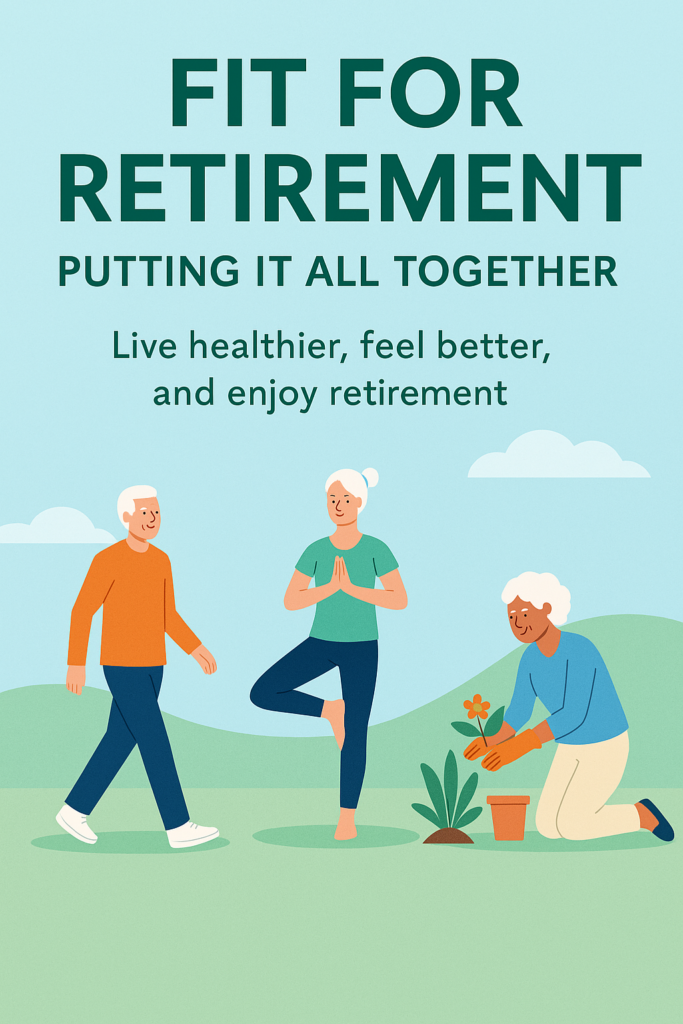
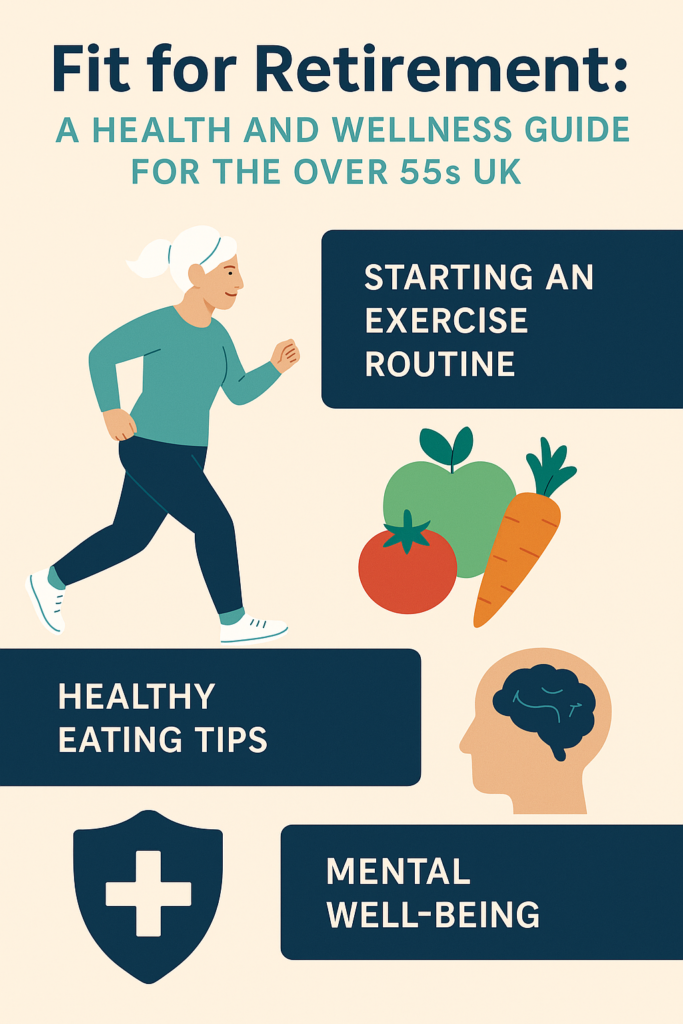
Fit for Retirement: A Health and Wellness Guide for the Over 55s UK
Is your essential roadmap to thriving in your later years.
Packed with practical advice, 2025 updates, and UK-specific tips, this ebook helps you boost your physical, mental, and emotional well-being after 55. Whether you’re newly retired or planning ahead, this guide empowers you to stay active, eat better, manage stress, and embrace a more fulfilling lifestyle.
Join thousands of readers improving their quality of life—this isn’t just about living longer, it’s about living better.
Perfect for over 55s ready to make the most of every moment.
Take the first step toward a healthier, happier retirement! Purchasing ebook now grants you discount on Retirement Club One-Off Lifetime Membership giving additional retirement lifestyle improvement exclusive content.
Chapter 1: Introduction – Why Health and Wellness Matters After 55
A New Chapter, A New Opportunity
Reaching the age of 55 marks a powerful transition. It’s a stage where life experience, wisdom, and independence intersect with new questions about the future. For many in the UK, 55 is a gateway to retirement planning, downsizing, or finally pursuing long-postponed passions. But it’s also a critical turning point for health and wellness.
People are living longer than ever. According to the Office for National Statistics (ONS), life expectancy in the UK is now over 79 for men and 83 for women. Many can expect to live well into their 90s. The question then becomes: how will those later years look? Will they be spent managing illness and fatigue — or filled with energy, engagement, and enjoyment?
The difference lies in choices made today. That’s where this guide begins.
⸻
The Reality of Health After 55 in the UK
As of 2025, over 22 million people in the UK are aged 50 or older, with those over 55 representing a significant and growing segment of the population. While many over 55 enjoy good health, this is also the age when risks of chronic conditions like type 2 diabetes, high blood pressure, arthritis, and cardiovascular disease start to increase.
The NHS continues to promote healthy aging initiatives, but waiting until problems arise is a reactive approach. The truth is: preventing decline is far easier than reversing it.
Many issues that are often written off as “just aging” — fatigue, brain fog, aches and pains — are frequently the result of poor lifestyle choices that can be changed.
⸻
Why Health and Wellness Should Be a Priority Now
1. Health is Freedom
When you’re in your 30s or 40s, it’s easy to take your body for granted. But after 55, even minor issues can limit what you can do, where you can go, and how you experience the world.
Good health gives you choices — the choice to travel, take care of grandchildren, enjoy hobbies, or start a second career. Without it, those options shrink rapidly.
2. It’s Not Too Late
There’s a common myth that lifestyle changes after a certain age are too little, too late. Nothing could be further from the truth.
Research shows that even small changes after age 55 — like walking more, eating more vegetables, or getting better sleep — can dramatically reduce the risk of chronic disease and even reverse some early signs of decline.
One study published in The Lancet Healthy Longevity in 2024 showed that people aged 55–70 who increased their physical activity to just 150 minutes per week reduced their risk of premature death by 32%, regardless of previous habits.
3. Modern Medicine Meets Preventative Living
The NHS continues to advance in diagnostics, early screenings, and medications. But the biggest shift in 2025 is the focus on lifestyle medicine — using behaviour, not just pills, as the front line of health care.
From social prescribing to wellness coaching on the NHS, the UK is moving toward empowering individuals to take control of their own health.
⸻
What Is “Wellness” Anyway?
The word “wellness” gets thrown around a lot — but what does it actually mean?
True wellness is not just the absence of disease. It’s the presence of energy, purpose, emotional strength, social connection, and the ability to enjoy life. It’s:
• Having the stamina to walk the Scottish Highlands.
• Having the mental focus to learn something new.
• Having the emotional peace to enjoy relationships.
In this guide, health and wellness include the following dimensions:
• Preventative Care: screenings, medical checkups, medications where needed.
• Social Wellness: friendships, community, sense of belonging.
• Purposeful Living: goals, passions, new directions in retirement.
⸻
Understanding the Risks (and How to Beat Them)
Here are some of the top health issues facing people over 55 in the UK — and why a wellness approach can help prevent or manage them.
1. Cardiovascular Disease
• Affects 1 in 5 people aged 55+.
• Linked to high blood pressure, poor diet, inactivity, and stress.
• Lifestyle changes (exercise, diet, stress reduction) are first-line prevention.
2. Type 2 Diabetes
• Increasing rapidly in people over 55.
• Often reversible with weight loss, dietary changes, and more movement.
3. Arthritis and Joint Pain
• Common but not inevitable.
• Anti-inflammatory diets, movement, and strength training help maintain mobility.
4. Dementia and Cognitive Decline
• UK studies (2023–2024) show brain plasticity remains high into our 70s.
• Mental stimulation, healthy fats, sleep, and social engagement all reduce risk.
5. Loneliness and Mental Health
• A silent epidemic, especially among over-55s who live alone or are retired.
• Wellness strategies include joining clubs, volunteering, or pursuing group hobbies.
⸻
Retirement Is Not the End — It’s a Launchpad
For some, the word “retirement” signals slowing down. But for a growing number of over 55s, it’s an opportunity to reinvent, reconnect, and recharge.
Whether you’re planning to retire soon, are already retired, or are still working part-time, your 50s, 60s, and 70s can be some of the most energetic and fulfilling years — but only if your health supports the life you want.
⸻
What This Book Will Help You Achieve
This book is your roadmap to living stronger, longer, and happier. You’ll discover:
• How to eat for energy and longevity without expensive diets.
• Fitness tips tailored to older bodies (and busy schedules).
• Mental wellness practices that reduce stress and improve memory.
• Preventative health steps that work within the NHS system.
• Daily routines that enhance quality of life without overwhelming change.
Each chapter includes practical tips, checklists, and real-life examples from across the UK — from active retirees in Cornwall to healthy walkers in the Highlands.
⸻
Your Next Step
Don’t worry about changing everything overnight. This journey isn’t about perfection. It’s about progress.
Chapter by chapter, we’ll build a sustainable, realistic approach to health and wellness that suits your goals, your schedule, and your body — starting with understanding the unique ways your body changes after 55.
⸻
Next Up: Chapter 2 – Understanding the Aging Body and Mind
Chapter 2: Understanding the Aging Body and Mind
A Time of Transition — Not Decline
Aging doesn’t mean decline. It means change. And with change comes opportunity. For people over 55 in the UK, understanding what’s actually happening in the body and mind during this stage of life is critical to staying in control.
Too often, older adults are led to believe that gaining weight, feeling tired, losing strength, or becoming forgetful are just part of “getting old.” But many of these changes are not inevitable. They are symptoms of outdated habits or neglect — not the passage of time itself.
This chapter will explore the real science of aging as we know it in 2025, and show you how knowledge is power when it comes to health.
What Happens to the Body After 55?
Everyone ages differently, depending on genetics, lifestyle, and environment. But certain physiological changes are common after 55:
1. Muscle Mass Declines (Sarcopenia)
After age 50, people typically lose about 1–2% of muscle mass per year unless they actively work to maintain it.
Why it matters: Less muscle means less strength, balance, and mobility — and a slower metabolism.
What helps: Resistance training (even bodyweight), protein-rich diets, and staying active daily.
2. Bone Density Reduces
This is especially true for post-menopausal women due to declining oestrogen levels. Osteopenia and osteoporosis increase fracture risk.
What helps: Weight-bearing exercise (like walking or dancing), calcium and vitamin D, and regular bone density scans.
3. Metabolism Slows
As we age, our bodies need fewer calories, but not fewer nutrients. This can lead to weight gain, particularly around the middle.
What helps: Mindful eating, strength training to boost resting metabolism, and avoiding processed sugar.
4. Joint Flexibility and Cartilage Decrease
Arthritis becomes more common after 55, particularly in the knees, hips, and hands.
What helps: Stretching, anti-inflammatory foods (like oily fish and leafy greens), and low-impact movement (like swimming or yoga).
5. Vision, Hearing, and Balance Can Change
These are subtle changes that affect daily confidence and safety.
What helps: Regular eye and hearing tests, balance exercises (like tai chi), and environment adaptations at home.
The Ageing Brain: What to Expect and How to Protect It
The brain does change as we age, but not always in the way people expect. Forgetting names occasionally? Normal. Losing interest in new things or withdrawing from others? Not normal.
Common Changes After 55:
Processing speed slows slightly — reaction times are longer.
Multitasking becomes harder — but focusing on one thing at a time improves.
Recall (retrieving information) slows down — but recognition stays strong.
Emotional regulation often improves — older adults tend to be calmer.
Cognitive Decline Is Not Inevitable
According to a 2024 Alzheimer’s Research UK report, lifestyle factors play a greater role in dementia risk than genetics.
What helps:
Regular physical activity.
Brain challenges (puzzles, learning languages or instruments).
Some men experience lower libido, energy, or mood changes.
What helps:
Strength training and cardiovascular exercise.
Healthy fats and sleep.
GP consultations for blood tests if symptoms are significant.
Psychological Transitions After 55
While the body shifts, so does your sense of self.
1. Retirement Identity Shift
Many struggle with the transition from work to retirement. The sudden absence of routine or purpose can lead to low mood or anxiety.
Solution: Build a new identity based on what you value, not what you used to do. That could be volunteering, mentoring, or learning.
2. Dealing with Loss
Bereavement, health scares, or caring for a partner are more likely to occur after 55. These life events can cause emotional and physical strain.
Solution: Seek support early. Local NHS services and charities like Age UK and Cruse Bereavement Care offer help.
3. Rediscovering Purpose
This can be one of the most fulfilling psychological changes. With fewer responsibilities, many over 55s rediscover hobbies, passions, or social causes.
The Role of Sleep and Recovery in Ageing Well
Sleep quality often declines after 55 due to hormonal changes, stress, or medical conditions.
Trouble falling asleep.
Waking frequently.
Feeling tired despite hours in bed.
Why it matters: Poor sleep is linked to increased risks of heart disease, obesity, diabetes, and dementia.
What helps:
Consistent sleep schedule.
Limiting screen time in the evening.
Avoiding caffeine and alcohol late in the day.
Creating a calm bedtime routine.
Your Body, Your Story — Take Control
Many people over 55 feel betrayed by their bodies. But the reality is, your body is still capable of growth, healing, and strength. You simply need to give it the right environment.
Understanding these natural changes means you can respond proactively, not reactively. You don’t need to accept weakness, stiffness, or tiredness as your new normal.
Instead, embrace this chapter as a time to adapt and invest in yourself.
Coming Up Next
In Chapter 3, we’ll get practical with what to eat to fuel your body after 55 — without giving up the pleasure of food.
Chapter 3: Nutrition for Longevity and Energy
Why Food Becomes Even More Important After 55
As we age, our nutritional needs change — not because we need less, but because we need better. After 55, every meal becomes an opportunity to prevent illness, boost energy, protect your brain, and support your immune system.
According to the NHS and the British Dietetic Association (2025), older adults in the UK are increasingly at risk of “hidden hunger” — eating enough calories, but lacking vital nutrients. This chapter explores how to eat for vitality, manage common age-related challenges, and enjoy food as a source of well-being, not just fuel.
The Core Goals of Nutrition After 55
Your ideal diet at this stage should aim to:
Preserve muscle and support bone strength.
Maintain a healthy weight while reducing belly fat.
Support cognitive function and heart health.
Aid digestion and reduce inflammation.
Boost energy levels and immune response.
And it must do all this while still being enjoyable, realistic, and affordable.
The Essentials: What Your Body Needs More Of
1. Protein
After 55, protein is critical to protect muscle mass and bone density.
Target: 1.0 to 1.2 grams per kilogram of body weight daily.
Best sources: Eggs, poultry, fish, tofu, lentils, beans, Greek yoghurt, milk, and lean red meat.
Quick Tip: Spread your protein across meals. Don’t save it all for dinner.
2. Fibre
Digestion slows with age. Fibre supports regular bowel movements and helps lower cholesterol.
Target: At least 30g per day.
Best sources: Oats, whole grains, fruits (especially berries and apples), vegetables, legumes, nuts, and seeds.
Quick Tip: Increase fibre slowly and drink more water to avoid bloating.
3. Healthy Fats
The right fats reduce inflammation and support brain health.
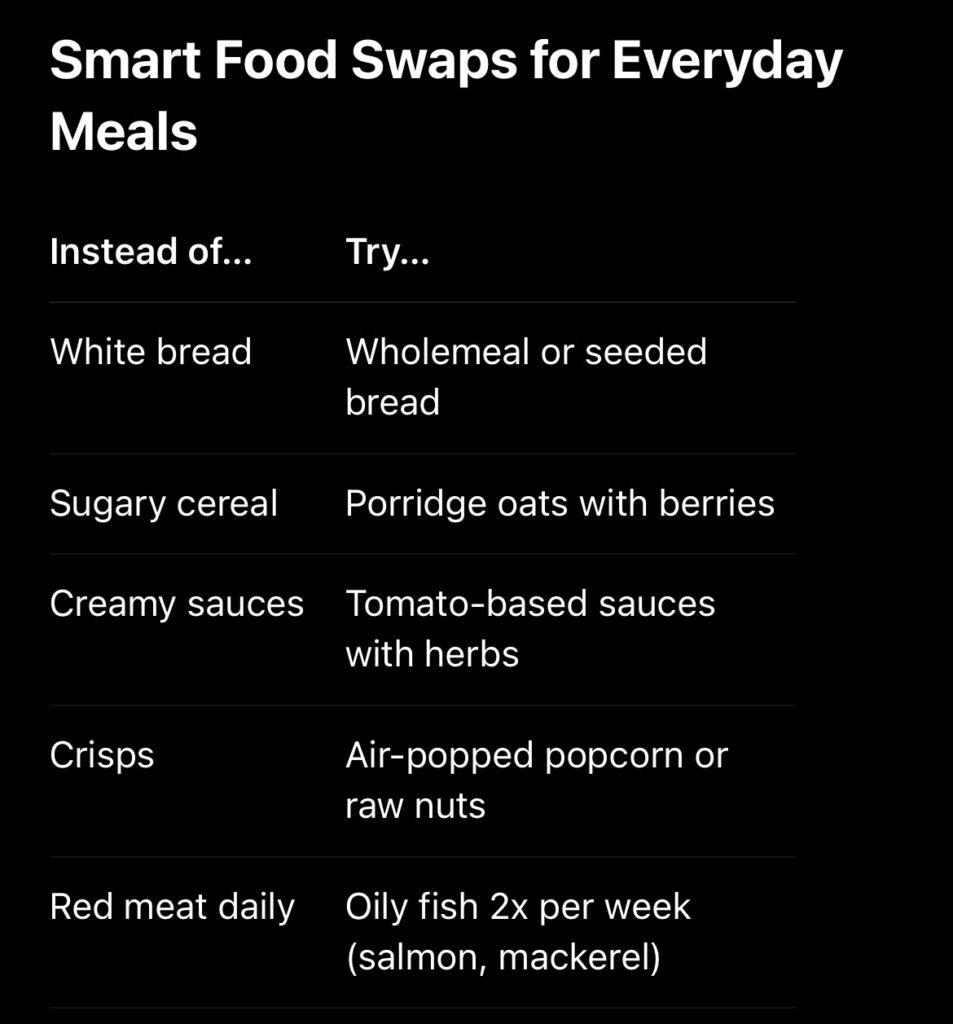
Best sources: Olive oil, avocado, oily fish (like salmon, mackerel, sardines), walnuts, and flaxseeds.
Avoid trans fats and reduce saturated fats (like those in pastries and processed meats).
4. Calcium and Vitamin D
Essential for bone health, especially post-menopause.
Vitamin D: The UK government recommends all adults over 55 take a 10 mcg supplement daily from October to March.
5. B Vitamins and Omega-3s
B12: Needed for energy and nerve function. Absorption decreases with age. Found in meat, dairy, and fortified cereals.
Omega-3s: Found in oily fish, flaxseeds, walnuts — crucial for heart and brain health.
Consider: Supplements if your intake is low, especially for B12 and Omega-3s.
What to Limit or Avoid
Refined sugar: Linked to weight gain, insulin resistance, and inflammation.
Highly processed foods: These often contain hidden salt, sugar, and unhealthy fats.
Too much alcohol: Affects sleep, liver, and mood. The NHS recommends no more than 14 units per week — ideally spread out over 3+ days.
Sample One-Day Meal Plan for Over 55s (UK)
Breakfast:
Porridge made with semi-skimmed milk or fortified oat milk
Topped with berries, ground flaxseed, and a spoon of Greek yoghurt
Mid-Morning Snack:
A boiled egg and a handful of cherry tomatoes
Lunch:
Grilled salmon salad with rocket, avocado, chickpeas, and olive oil dressing
Whole grain bread on the side
Afternoon Snack:
A small handful of unsalted nuts
A cup of green tea
Dinner:
Stir-fry with chicken breast or tofu, broccoli, carrots, and brown rice
Flavoured with ginger, garlic, and sesame oil
Evening:
Herbal tea and a square of 70% dark chocolate
Managing Common Challenges After 55
Slower Digestion?
Eat smaller meals more frequently.
Add probiotics (e.g., kefir or yoghurt).
Increase daily walking.
Poor Appetite?
Add herbs, spices, and citrus to boost taste.
Eat nutrient-dense mini-meals (like soup with lentils or smoothies with protein powder).
Budget Concerns?
Buy frozen fruits and vegetables.
Use tinned fish (like sardines) for omega-3s.
Batch-cook meals and freeze portions.
Staying Hydrated
Hydration is often overlooked but becomes more vital after 55. Even mild dehydration can cause fatigue and confusion in older adults.
Aim: 6–8 glasses of water a day.
Also count: herbal teas, milk, and soups.
Watch out: Relying on thirst alone may not be enough. Make it a habit.
Joyful Eating: Your Relationship with Food
Food is more than nutrition — it’s also emotional, social, and cultural. In 2025, there’s a shift toward mindful eating, where meals are savoured, not rushed.
Eat without screens.
Focus on flavour and texture.
Share meals with others when possible.
Mindful eating improves digestion, reduces overeating, and makes meals more fulfilling.
Summary: Eat Well, Age Better
You don’t need to follow fads or cut out food groups. Instead, aim for balance, variety, and consistency. Your 55+ body will thank you with more energy, stronger bones, and a clearer mind.
Eating well is not about discipline — it’s about self-respect and future-proofing your lifestyle.
Coming Up Next
In Chapter 4, we’ll move from the kitchen to the gym, park, or living room — wherever you prefer to move — and explore how to stay fit and active safely after 55.
Chapter 4: Staying Active — Exercise That Works for Over 55s
Why Movement Matters More Than Ever
After 55, physical activity isn’t just about looking good — it’s about maintaining independence, preventing illness, and enhancing quality of life. According to the NHS and UK Active (2025), just 30 minutes of moderate activity most days can:
Reduce your risk of heart disease, stroke, type 2 diabetes, and cancer
Improve balance and flexibility, reducing falls
Enhance memory, mood, and mental health
Protect joints and bones
Help maintain a healthy weight
Exercise truly is medicine — and it’s never too late to start.
Common Myths About Exercise Over 55
“I’m too old to start now.”
Wrong. Studies show that people starting exercise in their 60s or even 70s gain major health improvements.
“Exercise is too risky for me.”
With proper guidance and warm-up routines, exercise reduces injury and fall risk — it doesn’t increase it.
“I have arthritis or chronic pain — I can’t move much.”
Gentle, low-impact movement like swimming, tai chi, or walking can actually reduce stiffness and pain.
The 4 Pillars of Fitness for Over 55s
1. Cardiovascular Exercise
(for heart and lungs)
Goal: 150 minutes of moderate-intensity cardio per week (e.g., brisk walking, cycling, dancing)
Great options:
Brisk walks in the park or along coastal paths
Cycling on flat terrain
Swimming or aqua aerobics
Dancing (in a class or at home with music)
Gardening or active housework
2. Strength Training
(to protect muscle and bones)
Goal: 2 days per week of resistance exercises
Why it matters:
After age 50, we lose 1–2% of muscle mass per year if we don’t train. Resistance training helps:
Tip: You don’t need a gym. Strength training can be done at home in under 30 minutes.
3. Flexibility and Balance
(to stay agile and safe)
Goal: Stretching or mobility exercises 3–5 times per week
Top choices:
Yoga (especially classes designed for seniors)
Tai Chi (proven to improve balance and reduce falls)
Daily stretching routine after waking or before bed
Try this 3-minute routine:
Neck rolls
Shoulder shrugs
Gentle hamstring stretch
Standing calf stretch
Ankle circles
4. Everyday Functional Movement
Not all activity needs to feel like “exercise.” Walking up stairs, playing with grandchildren, doing the shopping — it all adds up.
Tip: Use a pedometer or fitness app to track steps. Aim for 6,000–8,000 steps a day (adjust to your ability).
Home vs. Gym vs. Outdoors
Home: Great for convenience. Try YouTube workouts for over 55s or NHS Fitness Studio online.
Gym: Provides structure and equipment. Look for classes tailored to your age group — many gyms now offer “Active 55” or “Forever Fit” sessions.
Outdoors: Walking groups, hiking, golf, or community park fitness classes offer movement plus fresh air and social contact.
Overcoming Common Barriers
“I Don’t Have Time”
Start small — even 10 minutes a day is beneficial. Build up gradually. Habit is more important than intensity.
“I’m Not Motivated”
Try exercising with a friend or joining a group. Put exercise into your schedule like an appointment. Use music, podcasts, or audiobooks to make it more fun.
“It’s Raining — Again”
Welcome to the UK! Invest in good waterproofs and shoes. Or do home-based routines when weather blocks your usual walk.
Real-Life Examples: Active Over 55s in the UK
Pam, 62, from Devon
Started doing seated strength workouts on YouTube during lockdown and now lifts light weights twice a week — “My knees feel better, and I sleep more deeply.”
George, 70, from Manchester
Joined a local walking football club. “I get my heart pumping, and I’ve made new mates. Best decision I’ve made since retiring.”
Sheena, 58, from Fife
Practices yoga 4 times a week to ease arthritis. “My joints are more flexible, and it’s helped my mental health too.”
Staying Safe: Exercise Tips for Over 55s
Warm up and cool down properly
Wear suitable, supportive footwear
Stay hydrated
Know your limits — if something hurts, stop
Talk to your GP if starting from a sedentary lifestyle or managing a health condition
Summary: Move Your Way, Every Day
You don’t have to run marathons or join a bootcamp. But daily movement — tailored to you — is non-negotiable for aging well. The key is consistency, enjoyment, and listening to your body.
Exercise in your 50s, 60s, 70s and beyond isn’t about performance — it’s about freedom.
Coming Up Next
In Chapter 5, we explore the mind-body connection and why mental wellness is just as essential as physical fitness after 55.
Chapter 5: Mental Wellness and Emotional Health Over 55
Why Mental Health Matters More As We Age
After 55, our lives shift in many ways — careers slow down, families evolve, and bodies change. While much of the focus tends to fall on physical health, mental and emotional wellness is equally crucial. In fact, the World Health Organization (2025) reports that one in four people over 60 experiences mental health challenges, often in silence.
Good mental health isn’t just about avoiding depression or anxiety. It’s about resilience, emotional balance, purpose, and social connection — key pillars of a fulfilling retirement.
Common Mental Health Challenges After 55
Understanding what to look out for is the first step to improving your mental wellness.
1. Loneliness and Social Isolation
Over 50% of people over 55 in the UK report feeling lonely at least some of the time (Age UK, 2025).
Retirement, bereavement, or children moving away can shrink social circles.
Solution: Reconnect intentionally. Join hobby groups, volunteer, or explore digital communities.
2. Depression
Often underdiagnosed in older adults, symptoms can include low mood, loss of interest, fatigue, and sleep issues. It’s not a normal part of aging — and it’s treatable.
Solution: Seek help early. Talk to your GP or explore NHS talking therapy services.
3. Anxiety
Worries about health, finances, or the future can fuel anxiety in later life.
Solution: Grounding techniques, breathwork, and structured routine can help. Cognitive Behavioural Therapy (CBT) is highly effective.
Strengthening Your Mind in Daily Life
1. Stay Connected
People with strong social ties are 40% less likely to develop cognitive decline.
Make regular phone or video calls with family and friends.
Join in-person clubs (like U3A, walking groups, or Men’s Sheds).
Consider volunteering — helping others boosts your own wellbeing.
2. Keep Learning
Mental stimulation maintains brain plasticity and slows cognitive decline.
Learn a new language or musical instrument
Try a new creative hobby — photography, painting, or crafting
Use apps like Lumosity or do puzzles and crosswords regularly
Tip: Adult learning classes are widely available across the UK and often discounted for over 55s.
3. Mindfulness and Meditation
Practicing mindfulness just 10 minutes a day reduces stress, enhances sleep, and improves focus.
Try this basic practice:
Sit comfortably with your eyes closed.
Focus on your breathing — the sensation of air entering and leaving your nose.
When your mind wanders (it will), gently bring it back to your breath.
Apps like Headspace, Calm, and Balance now offer free or reduced rates for seniors.
The Power of Purpose
Studies show that people who feel a sense of purpose live longer and healthier lives. After retirement, this purpose may shift — but it’s still essential.
Ask yourself:
What makes me feel useful?
What do I enjoy doing so much that I lose track of time?
How can I give back to others or share my experience?
Ideas:
Mentoring younger professionals
Starting a blog, podcast, or photo journal
Helping in your community or faith group
Emotional Fitness: Building Resilience
Emotional resilience is your ability to bounce back from challenges. Like physical strength, it can be built with practice.
Strategies:
Reframe negative thoughts
Practice gratitude (e.g., writing 3 things you’re thankful for daily)
Accept what you can’t control — and take action where you can
Prioritise rest and healthy boundaries
Sleep, Mood, and the Mind
Sleep patterns can change after 55 — often resulting in lighter or shorter sleep.
Better sleep improves memory, mood, and emotional stability.
Real Voices: Emotional Wellness Stories
Eileen, 66, from Newcastle
“I started journaling every morning after my partner died. It helped me feel heard — even just by myself.”
Rob, 72, from Kent
“I joined a book club and learned more about life in a few months than I did in years. Talking with others makes a difference.”
Naz, 59, from Birmingham
“Yoga helped me manage anxiety. I breathe more calmly now, even in stressful situations.”
Summary: A Healthier Mind for a Better Life
Mental and emotional wellbeing is not a luxury — it’s foundational. Prioritising it in your 50s, 60s and beyond is an investment in the years ahead. Whether through stronger relationships, new skills, or greater peace of mind, taking care of your mental health will make every other part of your life richer.
Coming Up Next
In Chapter 6, we’ll explore how your social life and support network shape your health, happiness, and how well you age.
Chapter 6: The Role of Social Connections in a Healthy Retirement
The Surprising Health Power of Friendship
In 2025, studies by Public Health England and Age UK reinforce what many instinctively know: social connections are as vital to your health as diet and exercise. In fact, being socially isolated can be as harmful as smoking 15 cigarettes a day.
As we get older, maintaining friendships and support networks becomes more than a pleasure — it becomes a lifesaving strategy for better health, mental sharpness, and longevity.
Why Social Bonds Are Critical After 55
Mental Health: Strong social ties reduce the risk of depression and anxiety.
Cognitive Health: Regular interaction helps keep the brain active and responsive.
Physical Health: Those with a solid social network tend to recover more quickly from illness and are more likely to stay physically active.
Longer Life: A 2025 study by the UK Centre for Ageing Better found that older adults with rich social lives live, on average, 7 years longer than those who are isolated.
Common Social Challenges After Retirement
Retirement often brings a loss of daily interaction — no more chats with colleagues, team meetings, or work events. Add to that:
Children moving away
Loss of a partner or close friends
Limited mobility or transport options
Feeling “out of place” in younger social settings
It’s easy to unintentionally drift into isolation.
Rebuilding and Expanding Your Social Network
The good news: You can actively grow and strengthen your support system at any age.
1. Rekindle Old Friendships
Reach out to friends you may have lost touch with. A quick message or call can rekindle a valuable connection.
2. Join Local Groups
Look for community centres, hobby groups, or clubs in your area. Options include:
U3A (University of the Third Age)
Walking clubs or Ramblers groups
Faith-based groups
Choirs, knitting circles, art classes
3. Volunteer
Helping others is a powerful way to meet people and gain purpose. Explore opportunities via:
Markets, exhibitions, open mic nights, and social meetups can break up routine and lead to meaningful interactions.
Digital Connection Counts Too
In today’s world, being digitally connected is often the gateway to staying socially connected.
Video chats with distant friends and family
Facebook groups or local online forums (e.g., Nextdoor, Meetup.com)
Online clubs (virtual book clubs, exercise classes, hobby groups)
Not confident online? Free training is available via libraries and community digital inclusion schemes.
Real-Life Examples of Social Wellness
Jean, 67, from Liverpool
“I joined a local photography club. I’d never picked up a camera before retirement, and now I’ve got a new hobby and a new group of mates.”
Colin, 71, from Somerset
“I felt lonely after my wife passed. Volunteering at the community café gave me a reason to get up in the morning — and a new social circle.”
Mira, 58, from London
“I created a WhatsApp group for neighbours over 50. We swap advice, recipes, and meet once a week for a walk.”
Practical Steps to Strengthen Social Wellness
Make one social plan per week — coffee, phone call, or meet-up
Smile and start conversations — even small talk builds rapport
Be open to friendships with different age groups
Say “yes” more often to invitations, even if you’re unsure
Create regular traditions — a monthly lunch or shared walk builds momentum
Summary: We’re Healthier Together
You don’t need a huge social circle — just a few meaningful connections can transform your retirement. Prioritising people, conversation, and connection is as powerful for your health as any pill, superfood, or workout.
Coming Up Next
In Chapter 7, we turn to an essential topic: Nutrition After 55 — Fueling a Long, Healthy Life.
Chapter 7: Nutrition After 55 — Fueling a Long, Healthy Life
Why Nutrition Becomes Even More Important With Age
After 55, your body’s needs begin to change. You may need fewer calories but more nutrients to maintain energy, strength, and good health. A balanced diet helps prevent illness, manage chronic conditions, and improve how you feel day to day.
In 2025, NHS guidelines emphasise nutrient-dense meals that support bone health, heart function, brain performance, and digestion — all crucial for ageing well.
Common Nutritional Challenges Over 55
Slower metabolism: You may burn fewer calories, but your body still needs key nutrients.
Changes in appetite: Hormones and medications can affect hunger levels or taste preferences.
Dental issues: Difficulty chewing or swallowing can reduce food variety.
Absorption issues: Some nutrients (like B12, calcium, and vitamin D) are harder for older bodies to absorb.
Ignoring these challenges can lead to fatigue, weakened immunity, bone loss, and cognitive decline.
The Building Blocks of a Healthy Over-55 Diet
1. Protein: Muscle Maintenance and Repair
Supports muscle mass, immune function, and recovery
Aim for: lean meat, fish, eggs, legumes, tofu, and dairy
Example: Add a boiled egg or cottage cheese to your salad.
2. Fibre: Gut Health and Cholesterol Control
Supports digestion and reduces constipation risk
Aim for: whole grains, beans, fruit, veg, nuts, and seeds
Example: Switch to wholemeal bread or oats for breakfast.
3. Calcium and Vitamin D: Strong Bones and Teeth
Vital to prevent osteoporosis and fractures
Aim for: milk, cheese, yoghurt, leafy greens, fortified foods, and safe sunlight exposure (10–20 mins daily)
Tip: Over-65s should consider a daily 10 microgram Vitamin D supplement, especially in winter.
4. Healthy Fats: Brain and Heart Support
Opt for unsaturated fats from avocados, oily fish, olives, seeds, and nuts
Limit saturated fats (butter, cream, fatty meats)
Example: Snack on a handful of almonds instead of biscuits.
5. Hydration: Energy and Digestion
Older adults often don’t feel thirsty but still need at least 6–8 glasses of fluid per day
Water, herbal teas, and soups all count
The UK’s Eatwell Guide for Over 55s (2025 Adaptation)
The Eatwell Guide provides a visual breakdown of what your daily plate should look like:
1/3 fruit and veg
1/3 whole grains and starchy carbs
1/6 protein (plant or animal-based)
1/6 dairy or calcium-rich alternatives
Small amounts of healthy fats
Tip: Portion sizes matter more than ever. Use smaller plates and be mindful when eating.
Batch cooking: Make soups, stews, and casseroles in bulk
Frozen veg: Just as nutritious and cuts prep time
Cook once, eat twice: Roast extra veggies for next day’s salad or soup
Example day of eating:
Breakfast: Porridge with banana and walnuts
Lunch: Grilled chicken and avocado salad with wholemeal roll
Snack: Apple with peanut butter
Dinner: Baked salmon, new potatoes, steamed broccoli
Hydration: Herbal tea, water, low-fat milk
Nutrition Myths for Over 55s — Busted
“I need fewer nutrients because I eat less.” You need more nutrient-rich foods, not fewer.
“Supplements replace food.” Supplements should only top up gaps in your diet — not be the main source.
“Eating healthy is expensive.” Frozen veg, tinned fish, beans, and seasonal produce are affordable and nutritious.
Special Dietary Considerations
Diabetes: Focus on slow-release carbs and limit sugar
High blood pressure: Reduce salt and processed foods
Arthritis: Anti-inflammatory foods like oily fish, berries, and turmeric can help
High cholesterol: Increase soluble fibre and cut down on trans fats
Speak with your GP or a registered dietitian for personalised advice.
Real Stories: Nutrition That Transforms
Gillian, 60, from Glasgow
“I cut down on sugar and added more protein. Within weeks, I had more energy and fewer cravings.”
Martin, 68, from Bath
“My knees ached constantly. Since I started adding oily fish and turmeric to my meals, the inflammation’s gone down.”
Summary: Eat Well to Age Well
Eating healthily after 55 isn’t about restriction — it’s about nourishing your body for vitality. With the right choices, food becomes a powerful tool for living longer, moving better, and feeling your best every day.
Coming Up Next
In Chapter 8, we’ll explore Staying Active: Tailored Fitness for Over 55s, including practical ways to move more and reduce injury risk.
Chapter 8: Staying Active — Tailored Fitness for Over 55s
Why Movement Matters More After 55
As we age, physical activity becomes less about performance and more about preservation — of independence, strength, balance, and quality of life. The 2025 NHS guidelines stress that being active is one of the most important things you can do to maintain your health and mobility.
Regular movement helps to:
Lower the risk of heart disease, stroke, and type 2 diabetes
Improve mental health and reduce depression or anxiety
Boost bone strength and prevent falls
Maintain flexibility, joint mobility, and coordination
Preserve muscle mass, aiding independence into your 70s, 80s, and beyond
You don’t need to become a gym addict. Small, consistent activity adds up — and it’s never too late to start.
How Much Exercise Should Over 55s Get?
According to 2025 NHS and World Health Organization recommendations:
Local leisure centres and councils offer reduced-cost classes for older adults
Summary: Motion is Medicine
Movement is one of the most powerful ways to protect your health after 55. It’s not about hitting the gym — it’s about building a routine that keeps you active, mobile, and confident in your body for years to come.
Even better, exercise often leads to more social connections, improved sleep, and a brighter mood — a true lifestyle win.
Coming Up Next
In Chapter 9, we’ll focus on another core area of wellness: Sleep and Stress — Resetting Your Mind and Body for Better Living.
Chapter 9: Sleep and Stress — Resetting Your Mind and Body for Better Living
Why Sleep and Stress Management Are Crucial After 55
As we age, our ability to bounce back from poor sleep or prolonged stress declines. Sleep becomes lighter, more fragmented, and stress can hit harder — especially in retirement, post-career transitions, or during caregiving responsibilities.
In 2025, NHS research continues to show that poor sleep and unmanaged stress in over 55s contribute to:
Weakened immune systems
Increased risk of heart disease and stroke
Weight gain and type 2 diabetes
Memory problems and slower cognitive performance
Anxiety, depression, and emotional burnout
Mastering sleep and managing stress aren’t luxuries — they’re essentials for a healthy, longer, and more fulfilling life.
How Sleep Changes After 55
You might notice:
Waking up more often at night
Trouble falling asleep or staying asleep
Feeling less rested even after 7–8 hours
Earlier bedtimes and wake-ups (circadian rhythm shifts)
These changes are normal, but quality sleep is still vital for brain function, hormone regulation, cell repair, and mood stability.
How Much Sleep Do You Need?
Most over 55s need 7 to 9 hours of good-quality sleep per night. But consistency matters more than duration. Poor sleep over time increases the risk of chronic illnesses.
Tips for Better Sleep — The 2025 Sleep Hygiene Guide
1. Stick to a Sleep Schedule
Go to bed and wake up at the same time daily — even on weekends
2. Create a Sleep-Friendly Bedroom
Keep the room dark, quiet, and cool (16–18°C ideal)
Invest in blackout curtains and earplugs if needed
Use your bed for sleep and intimacy only — avoid TV or work
3. Wind Down Properly
Avoid screens 1 hour before bed (blue light disrupts melatonin)
Try gentle stretching, reading, or warm baths
4. Watch What You Eat and Drink
Avoid caffeine after 2pm and limit alcohol
Eat lighter in the evening; spicy or heavy meals can disrupt sleep
5. Limit Daytime Naps
If needed, nap for no more than 30 minutes, before 3pm
Natural Sleep Aids for Over 55s
Herbal teas: Chamomile, valerian root, or lemon balm
Magnesium-rich foods: Almonds, spinach, bananas
Melatonin supplements: Use only if recommended by a GP
Note: Always speak with a doctor before starting supplements, especially if you’re on medication.
Understanding Stress After 55
Later life brings different stress triggers:
Retirement uncertainty
Financial or health worries
Loss of loved ones
Caring for ageing parents or grandchildren
Loneliness or identity shifts
Unmanaged stress can cause inflammation, raise blood pressure, impair memory, and contribute to burnout.
Practical Stress Management Techniques
1. Mindfulness and Meditation
Try guided sessions via Calm, Headspace, or free NHS audio practices
Just 10 minutes per day can reduce anxiety and improve focus
2. Deep Breathing and Relaxation
Try the 4-7-8 method: Inhale 4 seconds, hold 7, exhale 8
Mind (mental health charity): Free guides on stress relief
SilverCloud: Free online CBT for NHS patients in some areas
Age UK Befriending Services: For loneliness and emotional support
Summary: Rest and Reset for Wellness
Great sleep and healthy stress management are cornerstones of wellness after 55. Together, they improve your energy, emotional resilience, physical health, and outlook on life. Prioritising sleep and emotional balance is not selfish — it’s sustainable self-care.
Coming Up Next
In Chapter 10, we’ll conclude your wellness journey with Putting It All Together — Your Personal Wellness Plan for Retirement and Beyond.
Chapter 10: Putting It All Together — Your Personal Wellness Plan for Retirement and Beyond
Why You Need a Wellness Plan
Crossing into your 50s, 60s, or 70s doesn’t mean slowing down — it means living smarter, healthier, and more intentionally. A personal wellness plan gives you a sense of purpose, structure, and confidence. It’s your road map to staying fit for retirement — physically, mentally, and emotionally.
You’ve now explored the key pillars of health in this book:
Mindset and purpose
Nutrition
Movement
Sleep
Stress management
Preventative healthcare
Social connection
Now it’s time to put it all into action in a plan that suits you.
What a Good Wellness Plan Includes
A strong personal health and wellness plan covers:
Daily health habits
Weekly and monthly goals
Check-ins and adjustments
Support and motivation systems
Flexibility for real life
It’s not about perfection — it’s about progress. Consistency over intensity.
Step 1: Set SMART Wellness Goals
Make goals that are:
Specific: “Walk for 20 minutes a day”
Measurable: “Eat five servings of veg daily”
Achievable: “Try yoga twice a week”
Realistic: “Reduce sugar intake by half in one month”
Time-based: “Lose 4 lbs in 8 weeks, not 2 stone in 1”
Example SMART Goal:
“I will do 10 minutes of strength exercises every Monday, Wednesday, and Friday for the next 6 weeks.”
Step 2: Build Your Weekly Wellness Routine
Build Your Weekly Wellness Routine
Keep it visual — use a whiteboard, calendar app, or printable tracker.
Step 3: Make Health Checks Part of Your Plan
Stay proactive with:
Annual GP health checks (blood pressure, cholesterol, glucose)
Routine eye, dental, and hearing tests
Screenings: breast, bowel, prostate
Keep vaccinations (e.g. flu, shingles) up to date
Tip: Book reminders in your calendar now for the year ahead.
Step 4: Create a Support Network
Buddy up with a friend or spouse
Join online or local wellness communities (e.g. U3A, Silverfit, walking clubs)
Consider professional guidance from a nutritionist, personal trainer, or counsellor if needed
Tell friends and family what you’re doing — they can help keep you accountable
Step 5: Track Your Progress — and Celebrate It
Use a journal, habit tracker, or free app like MyFitnessPal or Wellness Coach UK
Reflect weekly: What went well? What felt hard? What needs adjusting?
Celebrate small wins — a new recipe tried, 5,000 steps reached, stress levels reduced
Remember: Improvement beats perfection every time.
Sample Personal Wellness Plan Template (Feel Free to Copy)
Name: _________________________
Start Date: ____________________
Top 3 Priorities:
Daily Habits to Build:
Weekly Goals:
Monthly Health Check-in:
Weight/BMI
Energy levels
Sleep quality
Mood tracker
GP visits?
What If You Fall Off Track?
That’s OK. Life happens — illness, travel, family challenges. What matters is that you:
Pause, reflect, and restart without guilt
Adjust your goals if they feel too hard
Remind yourself why you’re doing this: to live longer, live better, and enjoy retirement to the fullest
You are the author of your own health story — and every day is a new page.
Final Words: Fit for Retirement, Fit for Life
This guide wasn’t just about diet or fitness tips. It’s about empowerment.
You now understand:
Why wellness matters more after 55
How small daily actions can lead to lifelong transformation
How to take control of your health journey with practical tools
That it’s never too late to feel your best — inside and out
Whether you’re 56 or 76, your retirement years can be the healthiest, happiest, and most fulfilling yet.
So here’s to you — for taking the first steps. Now take the next one.
Printable Affirmation Cards – UK English spelling and tone.
Chapter 12: Conclusion: Embracing the Healthiest Years of Your Life
Retirement is not the end of the road—it’s the beginning of a new chapter. For many in the UK over the age of 55, this is a time of reflection, freedom, and opportunity. But to make the most of this stage in life, health and wellness must be the foundation.
This chapter pulls together the key lessons from the book and encourages you to see retirement not just as a slowing down, but as a powerful invitation to revive, reimagine, and reclaim the healthiest years of your life.
The Transition Mindset: Retirement as Reinvention
When people talk about retirement, the conversation often revolves around finances and logistics—pensions, housing, downsizing. Yet, the more transformative aspect of retirement is identity. Who are you now that the 9-to-5 is gone? What will your days look like? How will you spend your energy?
These questions are not existential burdens—they’re springboards to self-renewal. Embracing a positive mindset around retirement is key to seeing it not as an end, but as a reinvention.
This period can become your time to:
Pursue new interests
Rekindle old passions
Travel to dream destinations
Volunteer your time and expertise
Start a small business or community project
Reconnect with family and friends in meaningful ways
Each of these endeavours is enriched when you are physically healthy, mentally sharp, emotionally strong, and socially connected.
Why Health and Wellness Matter More Than Ever
In the UK, people are living longer than ever before, but there’s a stark difference between lifespan and healthspan. The goal is not simply to add years to your life, but life to your years.
Common health issues such as arthritis, cardiovascular disease, diabetes, cognitive decline, and depression disproportionately affect people over 55. But here’s the key: many of these are preventable or manageable through changes in diet, physical activity, social engagement, and mental health support.
Health in retirement is not about chasing perfection. It’s about creating a balanced, sustainable lifestyle that helps you enjoy the richness of life with less pain, more mobility, greater energy, and renewed purpose.
The Eight Pillars of Wellness in Retirement
Throughout this guide, we explored eight core areas of health and wellness that matter most after 55. Let’s briefly revisit each one and highlight practical steps you can continue to take:
1. Nutrition
Fuel your body with whole, nutrient-dense foods. The Mediterranean diet, rich in vegetables, fruits, lean proteins, and healthy fats, remains a top recommendation for longevity.
Key habits:
Plan weekly meals to reduce reliance on processed foods
Reduce added sugars and salt intake
Stay hydrated, especially with water and herbal teas
Consider supplements (e.g., Vitamin D, B12) with GP guidance
2. Physical Activity
Movement keeps you mobile, independent, and resilient. Whether it’s walking, cycling, swimming, or strength training, consistent activity pays dividends.
Key habits:
Aim for 150 minutes of moderate aerobic activity weekly
Add resistance exercises twice a week to maintain muscle mass
Incorporate balance and flexibility exercises like tai chi or yoga
3. Preventative Healthcare
Don’t wait for problems—prevent them. Use your NHS check-ups and screenings to catch issues early.
Key habits:
Book regular GP visits and follow recommended screenings
Manage medications properly and review them annually
Track blood pressure, cholesterol, and blood sugar if at risk
4. Mental Health
Mental wellness is as vital as physical wellness. Retirement can bring unexpected emotional shifts, including loneliness or a loss of structure.
Key habits:
Establish a daily routine to create purpose
Try mindfulness, meditation, or journaling
Don’t hesitate to seek professional help or join support groups
5. Social Wellbeing
Isolation is a serious health risk. Staying connected can improve your mood, memory, and even your immune system.
Key habits:
Join a club or group aligned with your interests
Volunteer or mentor to maintain a sense of purpose
Make socialising a regular part of your week
6. Chronic Condition Management
Many over 55s live with long-term health conditions—but that doesn’t mean life has to stop.
Key habits:
Follow treatment plans and communicate regularly with healthcare providers
Track symptoms and maintain a health journal
Educate yourself about your condition to feel more in control
7. Home Environment
A safe, supportive, and energising home can reduce stress and physical strain.
Key habits:
Declutter and create easy-to-navigate living spaces
Install assistive devices if needed (e.g., grab rails)
Make your environment inspiring with light, plants, or music
8. Sleep and Stress Management
Restorative sleep and stress control help your body reset and protect your mental clarity.
Key habits:
Stick to a consistent sleep schedule
Limit screens before bedtime
Practice relaxation techniques daily
Creating Your Personal Wellness Plan
With all this information, it’s time to turn knowledge into action. The best plan is one that is:
Personalised: Adapted to your interests, lifestyle, and health history
Flexible: Able to change as your needs and circumstances shift
Enjoyable: Built around activities and routines you like (so you stick with them)
Tips for Building Your Plan:
Start Small: Pick one area (like walking daily) and build from there.
Track Progress: Keep a wellness journal or use a health app.
Celebrate Wins: Acknowledge every step forward—big or small.
Stay Curious: Try new activities, foods, or classes.
Be Kind to Yourself: Progress is not linear. Setbacks happen. Keep going.
Inspiring Examples: Real-Life Wellness After 55
Across the UK, many over 55s are reshaping what retirement looks like. Here are just a few examples:
Sandra, 67 from Cornwall: Took up open-water swimming and now leads a group for others her age.
David, 72 from Birmingham: Joined a community garden and found it helped both his physical mobility and mood.
Linda and Pete, 60s from Glasgow: Downsized, bought electric bikes, and now spend weekends cycling to historic sites.
Mark, 59 from London: Attended his first mindfulness class after retiring and now teaches meditation at a local centre.
Their secret? They didn’t aim for perfection. They simply started with what they enjoyed and built consistency around it.
What Will Your Health Legacy Be?
One of the most powerful motivators in retirement is the desire to leave a positive legacy. For many, that includes being a healthy role model for children, grandchildren, friends, or even their community.
What if your legacy was not just financial, but vibrant living? What if you could be the one who shows others that life after 55 can be the healthiest, most fulfilling part of the journey?
It starts with commitment. It starts with a single step. It starts with you.
Final Thoughts
Your body, your mind, and your spirit are your lifelong companions. Retirement is your chance to nurture them all. While ageing brings challenges, it also brings clarity and the freedom to shape your lifestyle like never before.
The best years of your life might just be ahead. With awareness, intention, and the guidance in this book, you now have the tools to live them fully.
So breathe deeply. Step forward boldly. And welcome the healthiest, happiest, most empowered version of yourself.
Get help to target your products or services at over 55s UK seeking to improve their retirement or retirement planning for your business growth in UK
Discover the untapped potential of the UK’s over-55 market. Learn why this demographic represents a goldmine for businesses and how to effectively target them. Explore strategies to build brand loyalty, leverage their spending power, and create lasting customer relationships. Join the Cheeringup.info Retirement Club to connect with this valuable audience and gain a competitive edge.
Unveiling the Silver Lining: Why Targeting Over-55s is a Golden Opportunity for UK Businesses
In the ever-evolving landscape of online marketing, a demographic often overlooked holds immense potential – the UK’s over-55 population. As an expert in online marketing, I’m here to reveal why targeting this age group is a strategic move for savvy businesses and a fantastic opportunity for consumers aged 55 and above.
Why Over-55s are a Consumer Powerhouse:
Financial Security: This demographic boasts significant financial strength. Often debt-free and with accumulated assets, they have greater disposable income, making them ideal customers for premium products and services.
Brand Loyalty: This age group is known for brand loyalty. They tend to stick with trusted brands, offering businesses a stable customer base and fostering long-term relationships.
Increased Leisure Time: Retirement or flexible working schedules create more free time for over-55s. This translates to increased spending on travel, hobbies, entertainment, and self-care, presenting opportunities for businesses catering to leisure activities.
Tech-Savvy and Online: Don’t underestimate the digital prowess of this generation. Over-55s are actively using the internet for research, shopping, and social connection, making them readily accessible through online marketing strategies.
Discerning Consumers: This age group values quality, experience, and reliability. Businesses that focus on providing exceptional customer service and high-quality products will resonate with this audience.
Beyond Demographics: Reasons Why Over-55s are Ideal Customers:
Decision-Makers with Influence: This age group often controls household finances and influences family spending decisions. Businesses targeting families or multigenerational products can benefit by connecting with this influential audience.
Cheeringup.info Retirement Club: A Bridge Between Businesses and Over-55 Consumers
At Cheeringup.info Retirement Club, we understand the unique needs and desires of the over-55 demographic in the UK.We provide a vibrant online platform that connects businesses seeking this valuable audience with mature consumers eager for new opportunities and connections.
Benefits for Businesses Targeting Over-55s:
Targeted Audience: Reach a dedicated online community of engaged and active over-55 consumers.
Brand Awareness: Increase your brand visibility and build trust with a loyal audience.
Direct Communication: Engage directly with potential customers through targeted advertising and promotions.
Consumer Insights: Gain valuable insights into the preferences and needs of this growing consumer segment.
Benefits for Over-55 Consumers:
Discover New Products and Services: Explore a vast array of products and services specifically geared towards your interests and needs.
Connect with Like-Minded Individuals: Join a vibrant online community of active and engaged over-55s to share experiences and build new connections.
Access Exclusive Offers and Deals: Benefit from exclusive discounts, promotions, and member-only benefits.
Stay Informed and Engaged: Receive valuable information and updates on topics relevant to over-55s, such as travel, health, and finance.
Join the Cheeringup.info Retirement Club Today!
Whether you’re a business leader looking to connect with an influential and financially secure market, or an over-55 consumer seeking new experiences and connections, the Cheeringup.info Retirement Club offers a valuable platform. Join us and unlock a world of opportunities!
Businesses targeting over-55s: Sign up today to showcase your brand and connect with a dedicated customer base.
Over-55 consumers: Embark on a new chapter of opportunities and connections.
Together, let’s bridge the gap between businesses and this dynamic demographic. The Cheeringup.info Retirement Club is your gateway to a thriving online community and a wealth of exciting possibilities.